
When you lose a spouse, paperwork has a way of showing up before you have the energy for it. If an IRA is part of what you inherited, you get a set of options that no other beneficiary gets. And the option you pick can change your required minimum distribution schedule, your tax bill, and your flexibility for years.
I am going to walk you through the three main paths a surviving spouse usually has:
- Treat the IRA as your own
- Keep it as an inherited IRA (stay a beneficiary)
- Roll it over to your own IRA (a common way to “treat as your own”)
The right move depends on your age, whether you need money soon, and which type of IRA you inherited (traditional vs Roth). If you are unsure, this is one of those situations where it is worth getting a CPA or fee-only advisor involved before you sign the election paperwork.

First, confirm what you inherited
Before you choose a path, get these basics clear. One detail can flip the best answer.
- IRA type: Traditional IRA or Roth IRA
- How you are listed: You are the sole primary beneficiary, or there are other beneficiaries involved
- Your spouse’s age at death: Were they already required to take RMDs?
- Your age right now: This matters for RMD timing and early withdrawal rules
- Whether you need access soon: If you might need distributions before age 59.5, that strongly affects the decision
One quick clarification that helps here: the age when RMDs must start has changed in recent years and depends on birth year under current law. If you are not sure whether your spouse was “already required” to take RMDs, ask the custodian or your CPA what applied in the year of death.
If you are not the sole beneficiary, or a trust or estate is involved, your options may be more limited and the “spousal rollover” may not be available in the same way.
Option 1: Treat the IRA as your own
“Treat as your own” means you become the account owner for tax purposes. From that point forward, the IRA works like any other IRA in your name.
How this is done
Most commonly, you do this by moving the inherited assets into an IRA titled in your name, often called a spousal rollover. Some custodians also allow you to retitle the account as your own if you are the only beneficiary. Either way, the end result is the same: you are the owner.
RMD impact
- Traditional IRA: Your future RMDs are based on your age and the current RMD rules.
- Roth IRA: As the owner, you generally do not have RMDs during your lifetime.
This is one of the biggest reasons spouses choose this path, especially if they do not need the money right away and want to keep tax-sheltered growth going.
Early withdrawal (age 59.5) tradeoff
Here is the “gotcha” that trips people up. Once you treat it as your own, distributions you take before age 59.5 may be subject to the 10% early withdrawal penalty (on top of ordinary income tax for traditional IRA withdrawals), unless an exception applies.
If you are under 59.5 and think you may need to tap these funds soon, keeping it as an inherited IRA first can preserve penalty flexibility. We will cover that next.
When this option tends to fit
- You are 59.5 or older, or you are confident you will not need IRA withdrawals before then
- You want RMDs based on your age (and potentially delayed longer than your spouse’s schedule)
- You inherited a Roth IRA and want to avoid lifetime RMDs
Example
If you are 67, do not need the money right now, and you want the account to blend into your own retirement plan, treating it as your own is often the simplest long-term setup.
Option 2: Keep it as an inherited IRA
This means the IRA stays titled as an inherited account, usually something like: “[Deceased Name] IRA (deceased date), FBO [Your Name], Beneficiary.” You are not the owner. You are the beneficiary.
Why spouses sometimes choose this
The biggest practical reason is access.
- No 10% early withdrawal penalty: Distributions to a beneficiary from an inherited IRA are generally not subject to the 10% early withdrawal penalty, even if you are under 59.5.
You still owe income tax on withdrawals from a traditional inherited IRA, but skipping that 10% penalty can be a major difference if you need income to cover living expenses.
RMD impact and timing basics
RMD rules for a spouse-beneficiary inherited IRA can get technical because they depend on whether your spouse had reached their required beginning date (the point when RMDs had to start under the rules in effect for them).
In plain English, the inherited-account route often means:
- If your spouse was already taking (or required to take) RMDs, you may have to continue RMDs on a beneficiary schedule.
- If your spouse died before RMDs started, you may have more flexibility in how and when you begin distributions, but you still need to follow the applicable spouse-beneficiary RMD rules for your situation. Do not assume it means “no RMDs for years.”
Custodians often default to setting up an inherited IRA and then letting you elect a spouse treatment later. That is fine. What matters is that you do not accidentally miss a required distribution for the year, because the penalties for missed RMDs can be steep.
What about Roth inherited IRAs?
With an inherited Roth IRA, withdrawals are often tax-free if the Roth was held long enough (tax-free earnings generally require the Roth to meet the 5-year rule). But beneficiaries may still have distribution requirements depending on the situation. Treating the Roth as your own is the cleanest way for many spouses to avoid lifetime RMDs, but again, age and cash needs matter.
Example
If you are 52 and you may need to pull money out to cover living expenses, keeping the account as an inherited IRA can help you access funds without the 10% early withdrawal penalty that would usually apply to an IRA you own.
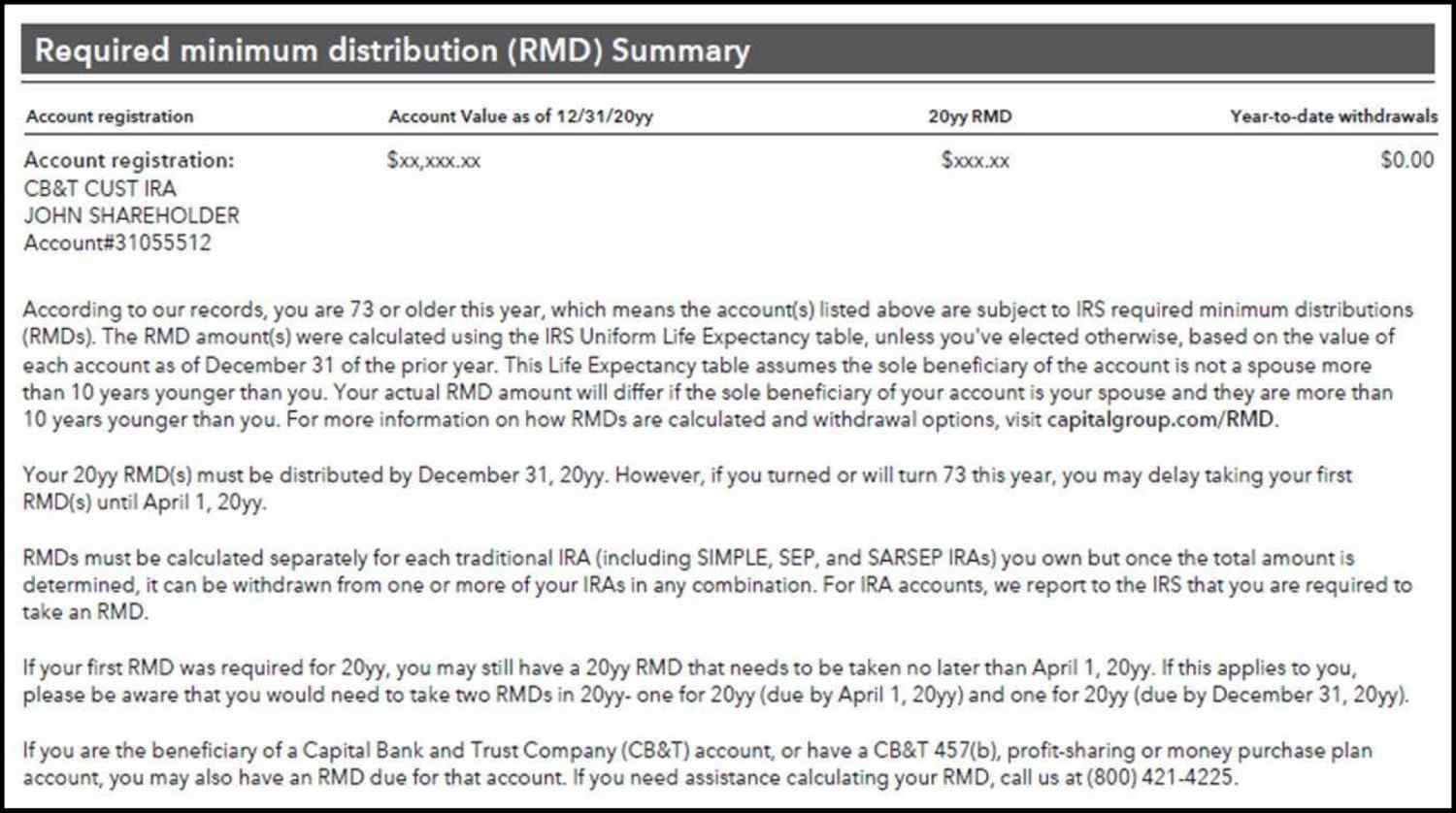
Option 3: Roll it over to your own IRA
A rollover is usually the real-world way a spouse executes Option 1, treating the IRA as their own. The key point is that once the rollover is complete, you are the owner and the owner rules apply.
Direct rollover vs taking a check
If you decide to roll the account into your own IRA, push for a trustee-to-trustee transfer (sometimes called a direct rollover). That means the money moves from one custodian to the other without being paid to you personally.
If the distribution is paid to you and you later deposit it, you can run into withholding issues, timing issues, and potentially a taxable distribution if done incorrectly. Inherited IRAs are not a place to get cute with DIY workarounds.
Deadlines to respect
Two timing issues matter most:
- Year-of-death RMD: If your spouse was required to take an RMD for the year they died and it was not taken yet, it generally still needs to be taken. This is often handled before completing a rollover.
- 60-day rollover rule: This is mainly a risk if you take possession of the funds. A direct transfer helps you avoid relying on this rule.
If what you inherited is an employer plan (like a 401(k)) rather than an IRA, the same general spousal concepts can apply, but the plan can have its own paperwork, restrictions, and timing rules. Confirm the plan’s process before you move anything, and whenever possible use a direct transfer.
Quick comparison
Here is the simplest way to compare the three paths.
- Need access before 59.5? Keeping it as an inherited IRA often helps avoid the 10% penalty.
- Want to delay RMDs based on your own age? Treat as your own or do a spousal rollover.
- Inherited a Roth IRA and want maximum simplicity long term? Many spouses prefer treat as your own to avoid lifetime RMDs.
- Concerned about making the wrong permanent move? Starting with an inherited IRA can preserve flexibility while you decide, but you still must follow any required distribution rules.
How this ties to the 10-year rule
One point of confusion I see a lot: the 10-year rule that applies to many non-spouse beneficiaries is not the same decision framework as the spouse options above.
As a surviving spouse, you typically have choices other beneficiaries do not, including the ability to treat the IRA as your own. If you are trying to understand what would happen if the account later passes to your children or another non-spouse beneficiary, read our guide to The 10-Year Rule for Inherited Retirement Accounts.
Decision checklist
- Am I under 59.5 and might need this money soon? If yes, strongly consider keeping it as an inherited IRA for now.
- Was my spouse already required to take RMDs? If yes, confirm whether a year-of-death RMD is still due and how the custodian will handle it.
- Is this a Roth? If yes and you do not need early access, treating it as your own can reduce lifetime distribution hassle.
- Do I want to name my own beneficiaries and align this with my retirement plan? Ownership (treat as your own) usually integrates more cleanly with your overall plan. Either way, put a reminder on your calendar to review and update beneficiary designations once the dust settles.
- Can I get this done via a direct transfer? If yes, do that. Avoid checks payable to you unless a professional is guiding the process.
Common mistakes
- Mixing up “beneficiary” and “owner” rules. The early withdrawal penalty and RMD schedule can change overnight depending on how the account is titled.
- Accidentally triggering a taxable distribution. Taking possession of funds and redepositing them incorrectly is a costly error.
- Missing an RMD deadline. If an RMD is required and not taken, penalties can apply. Confirm year-of-death obligations.
- Assuming a custodian’s default setup is your best option. Many firms default to inherited IRA titling first. That is not wrong, but do not stop there if a spouse rollover makes more sense for you.
FAQ
Can I change my mind later?
Often, a surviving spouse can start with an inherited IRA and later elect to treat it as their own via rollover or retitling, assuming the situation qualifies. The reverse is not always as easy. Once you treat it as your own, assume it is effectively permanent. Reversing it later is often difficult or not allowed.
Do I have to take an RMD the year my spouse dies?
It depends on whether your spouse was required to take an RMD for that year and whether they already took it. This is a detail to confirm with the custodian because it can affect the order of operations before a rollover.
If I roll it into my IRA, does it affect my current IRA contributions?
No. A spousal rollover is not the same as an annual contribution. It does not count against contribution limits.
Does the 10-year rule apply to me as the spouse?
Spouses usually have special options that can avoid the standard 10-year framework that applies to many non-spouse beneficiaries. But if you are planning for who inherits after you, learn how the 10-year rule can apply to them: The 10-Year Rule for Inherited Retirement Accounts.
The bottom line
If you are a surviving spouse, the inherited IRA decision is less about “one best rule” and more about matching the account to your real life.
- Need flexibility before 59.5? Keeping it as an inherited IRA can help you avoid the 10% penalty.
- Want fewer RMD headaches and a cleaner long-term plan? Treating it as your own, usually via a spousal rollover, is often the smoother route.
If you are close to a cutoff age, dealing with a year-of-death RMD, inheriting from an employer plan, or deciding between inherited IRA versus rollover for a Roth, bring your spouse’s date of death, your ages, and the account type to your CPA or a fee-only advisor and have them sanity-check the election before you move the money. The best choice is the one you will not regret at tax time.