A little light on the numbers, and on the timing.
If your Social Security benefit was reduced by the Windfall Elimination Provision (WEP) or the Government Pension Offset (GPO), the Social Security Fairness Act is the change you have been watching. The part that creates the most day-to-day questions is not the policy argument, it is the timing: when your monthly amount updates, whether you receive a retroactive payment, and how all of it shows up in your my Social Security account.
This guide is split into two lanes:
- What you can do today to verify the bill status and to get your paperwork in order.
- What to watch for if it becomes law and SSA implements it, including how a higher payment and any back pay may appear.
This is an implementation-monitoring guide, not a status announcement. I am also not going to reteach the old WEP or GPO formulas.

Status and dates
The one detail that keeps people from spiraling is the calendar. This law does not matter in the abstract. It matters on the month your record is actually updated.
- Status (verify it yourself first): I am not going to guess at an enactment date here. I am also not going to pin this to a single bill number because bill numbers and versions can change by Congress and session. In recent Congresses there have been specific bill numbers tied to the Social Security Fairness Act, and that is exactly why I prefer you verify the current vehicle in the current Congress before you plan around headlines.
- What to look for on Congress.gov: Search Social Security Fairness Act. Open the result that matches the current Congress, then confirm: (1) Latest Action and its date, (2) whether it shows Became Law (Public Law number), and (3) any effective date or retroactivity language in the text.
- What counts for your personal timeline: The date that matters is the date SSA processes your record and issues a written notice showing your updated amount. News is not a payment schedule.
If you want the cleanest paper trail for your own timeline, it is the notice SSA posts to your online account and the mailed letter you receive once your adjustment is processed.
Solid vs conditional
This topic is time-sensitive. Implementation details can change based on SSA guidance, your benefit type, and what information SSA already has on file about your pension.
- Solid: If Congress enacts a change to WEP and GPO, SSA would be responsible for implementing the new statute.
- Conditional: The exact payment impact, timing, and any transition rules depend on the final enacted law and SSA’s implementation instructions, including any limits on effective dates or retroactive months. Even when a change is straightforward on paper, some records update automatically and some require manual review.
Who it covers
The Fairness Act matters to people who receive Social Security and also have (or had) a pension from work that did not pay Social Security payroll taxes for part of their career. Historically, that situation could trigger:
- WEP, which reduced some worker benefits (your own retirement or disability benefit) when you also had a noncovered pension.
- GPO, which reduced some spousal and survivor benefits when you also had a noncovered government pension.
Some people were affected by WEP but not GPO, or GPO but not WEP. And some people had a pension and were never subject to either rule. Coverage depends on payroll history, not the job title.
Common real-world groups that were often impacted include certain teachers, firefighters, police officers, and other public employees in specific states and agencies.
If you are not yet claiming
If you have not started Social Security yet, nothing hits your bank account because you are not being paid. What you can watch instead is your estimate in my Social Security and the language in SSA publications once they update guidance.
One practical reminder: WEP is tied to a worker benefit. GPO is tied to spouse and survivor benefits. Your claiming strategy and the benefit type you eventually draw can determine which rule matters to you, if any.
How your monthly benefit changes
If an enacted change eliminates WEP and/or GPO reductions and if SSA implements it on your record under the final statute’s effective-date rules, the intended outcome is simple: the reduction that used to be applied is no longer applied for the months the law covers. Here is what that would look like in practice.
If WEP applied
- Your monthly benefit amount should increase for covered months because the WEP reduction is no longer applied.
- In general, your updated benefit becomes the amount Social Security would have paid without WEP, based on your earnings record and claiming details, subject to the final statute, the effective date, and SSA guidance.
If GPO applied
- Your spousal benefit or survivor benefit should increase for covered months because the GPO reduction is no longer applied.
- For some households, the change can be dramatic because GPO could reduce a spousal or survivor benefit to a very small amount or even to zero.
Important: this type of change does not rewrite the underlying spousal and survivor rules (who qualifies, family maximums, timing rules, and so on). It changes whether a government pension reduction is taken off the top.
One quick real-life example: if a survivor benefit was previously reduced to $0 because of GPO, the change you are looking for is the return of a monthly survivor amount for months covered by the new law, not a new survivor eligibility decision.
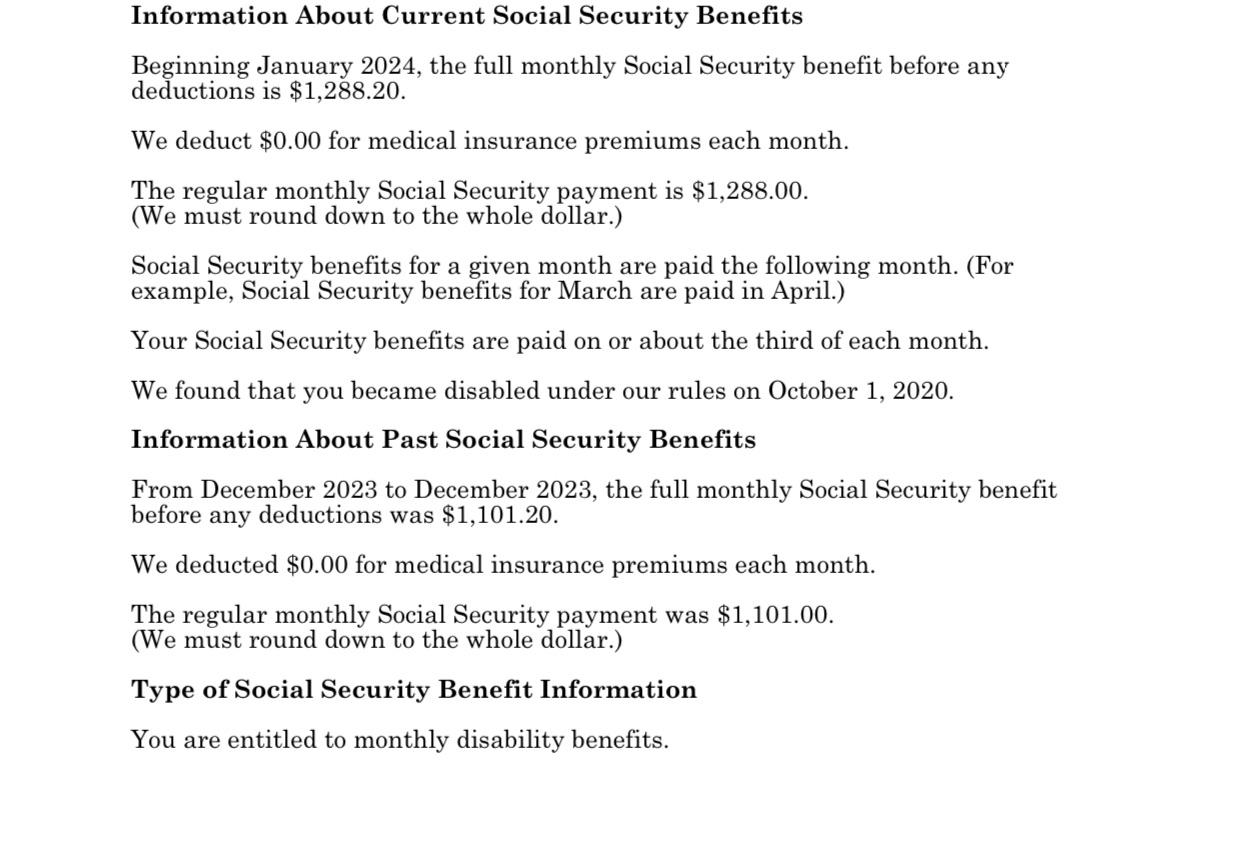
When the higher payment shows up
Social Security benefit changes rarely flip like a light switch for everyone on the same day. In practice, updates tend to roll out as SSA processes records.
Here is what you can reasonably expect if a change is implemented for you:
- Your new monthly amount may appear online before you see it deposited. Online updates and payment cycles do not always sync perfectly.
- Your payment date usually stays the same. Most retirement, spouse, and survivor benefits are paid on a Wednesday schedule based on birth date. A smaller group is paid on the 3rd of the month, including people who started benefits before May 1997 and some people who also receive SSI.
- A notice often follows. SSA commonly sends a mailed letter and may also post an online notice explaining a change in benefits.
If you receive both Social Security and a pension, keep an eye on your net deposit as well as the gross amount. Medicare premiums, tax withholding, or other deductions can affect what lands in your bank account.
Retroactive payments
Some people may be due a one-time payment to cover prior months that were reduced by WEP or GPO. Whether you are due retroactive money, and for which months, depends on the final law and on how SSA applies it to your record.
If retroactive amounts are issued, they can arrive in a few different ways:
- A separate deposit from your normal monthly benefit payment, often with a description that looks different from your usual Social Security deposit.
- A lump sum rather than a series of corrected monthly deposits.
- A payment that arrives after your monthly amount changes, because ongoing benefits can be updated before a retroactive calculation is finalized.
Also worth knowing: if you have deductions such as Medicare premiums, an overpayment recovery, or federal tax withholding, the retroactive payment can be affected by those items too. Do not be surprised if the gross change you expect is not the exact net deposit you receive.

What to check online
When you suspect your record has been updated, open your my Social Security account and look for these practical clues. You are trying to confirm two things: (1) your ongoing monthly amount is correct, and (2) any retroactive payment is accounted for.
What you may see first
- Benefit Verification Letter updates are often the cleanest early confirmation of a new ongoing amount.
- Payment History is where off-cycle or one-time deposits tend to show up.
- Mailed notices may arrive after you notice an online change, not before.
If you like an order-of-appearance checklist, this is a common sequence: (1) Benefit Verification Letter updates, (2) current monthly amount updates, (3) any retroactive calculation and deposit, (4) mailed notice catching up after the fact.
1) Current amount
- Look for your current payment amount and compare it to your most recent award letter or benefit verification letter.
- If you are on Medicare, note whether the displayed amount is before or after Medicare premiums are withheld.
2) Payment history
- Check Payment History for any off-cycle payments or unusual one-time amounts.
- Confirm the Direct Deposit bank account on file is still correct before you expect any lump sum.
3) Letters and notices
- View or save your Benefit Verification Letter after the change. It is a clean way to confirm the updated monthly benefit SSA recognizes.
- Look for Notices or Messages related to the adjustment.
4) Withholding and deductions
- Confirm whether you have federal tax withholding elected and whether it has changed.
- If Medicare is deducted, confirm the current premium withholding aligns with what you expect.
If something looks off, take screenshots for your own records and write down the date you noticed the change. If you call SSA, also write down who you spoke with and any reference number they provide.
If your amount does not change
Seeing no update right away does not automatically mean you were missed. A few common explanations:
- Your benefit was never reduced by WEP or GPO. Some people had a pension and still were not subject to these rules.
- The bill is not enacted or not implemented yet. This is why verifying Congress.gov matters.
- SSA has not processed your record yet. Implementation can take time, especially for cases involving multiple benefit types or pension details.
- Your record needs clarification. If SSA does not have complete pension information, they may need documentation to remove a reduction cleanly.
- You are receiving a different benefit type than you think. For example, someone may be paid as a widow(er) while also having a retirement benefit on their own record. Only the portion that was being reduced by WEP or GPO changes, and only for months covered by the final law.
- Multiple pensions or mixed work history can slow things down. If you have more than one noncovered pension, or you moved between covered and noncovered jobs, it can take longer to match the right pension information to the right months.
If you believe WEP or GPO applied to you and nothing changes after a reasonable implementation window, contacting SSA is the next step.
What to gather before you call
- Your Social Security number (or the last four digits if asked).
- The type of benefit you receive (retirement, disability, spouse, survivor).
- The name of your pension system(s), and the month and year you started each pension.
- Your pension award letter or a recent pension statement showing gross amount.
- Any SSA notices that mention WEP or GPO, plus dates and dollar amounts if you have them.
- Your best callback number and your current mailing address, so they can send any follow-up request in writing.
Spouses and survivors
A common follow-up question is simple: “Does my government pension still shrink my spousal or survivor check?”
If the final enacted law removes GPO and SSA applies it to your record under the effective-date rules, the practical result is that GPO should no longer reduce spousal or survivor benefits for months covered by that law for people who were previously subject to it.
That means the action item is not recalculating the spousal percentage. It is watching for:
- An updated ongoing monthly survivor or spousal amount in your account.
- A possible retroactive payment, if retroactive months apply to your situation.
For couples managing two benefits, it can help to list out which benefit is paid on which record and which person is the beneficiary. SSA notices are very specific about whose record a benefit is paid on.
Scams to avoid
Big, high-profile Social Security changes tend to attract scammers. If you get a call, text, or email claiming you must pay a fee, confirm your bank account, or click a link to get your increase, treat it as a red flag. Use SSA’s official website and official phone numbers to make contact, and do not give out personal information based on an unexpected message.
FAQ
Will I have to apply?
Some updates may be automatic, but not every record is simple. If SSA needs additional pension details to remove a reduction or to calculate any retroactive amounts, they may contact you or you may need to follow up. Checking your my Social Security account regularly is the easiest first step.
Will back pay be taxed?
Social Security benefits can be taxable depending on your income. If you receive a lump sum that covers prior months, keep your Form SSA-1099 and read the IRS instructions for handling a lump-sum Social Security payment, or bring those documents to a tax professional. The IRS method that can allocate part of a lump sum to prior years is optional and fact-specific, and it does not always reduce tax for everyone.
Why did I get a new amount but no lump sum?
It can happen if there is no retroactive period that applies to your situation, if you are not owed prior months under the final law’s effective date, or if SSA updates the ongoing benefit first and processes the retroactive piece later.
Could my deposit change by less than expected?
Yes. Medicare premiums, tax withholding, and other deductions can change your net deposit even when your gross benefit increases.
The simplest next step
If you were hit by WEP or GPO in the past, treat this like a small home audit:
- Verify the bill status on Congress.gov (Latest Action, Became Law, and any effective date language).
- Log in to my Social Security.
- Confirm your current monthly benefit.
- Scan Payment History for any separate, one-time retroactive deposit.
- Save the updated Benefit Verification Letter once it appears.
A little light goes a long way here. When a change shows up, it should show up somewhere you can point to later, even if you first spot it in your bank account.