
Losing a spouse or parent is hard enough. The last thing you need is a confusing maze of rules when you are trying to keep your household steady.
Social Security survivor benefits can provide ongoing monthly income to a widow or widower, a divorced spouse, dependent children, and sometimes even dependent parents. But the details matter, especially your age, your work income , and how many family members are claiming.
This guide walks you through the rules in plain English so you can figure out what you might qualify for and what to ask Social Security before you file.
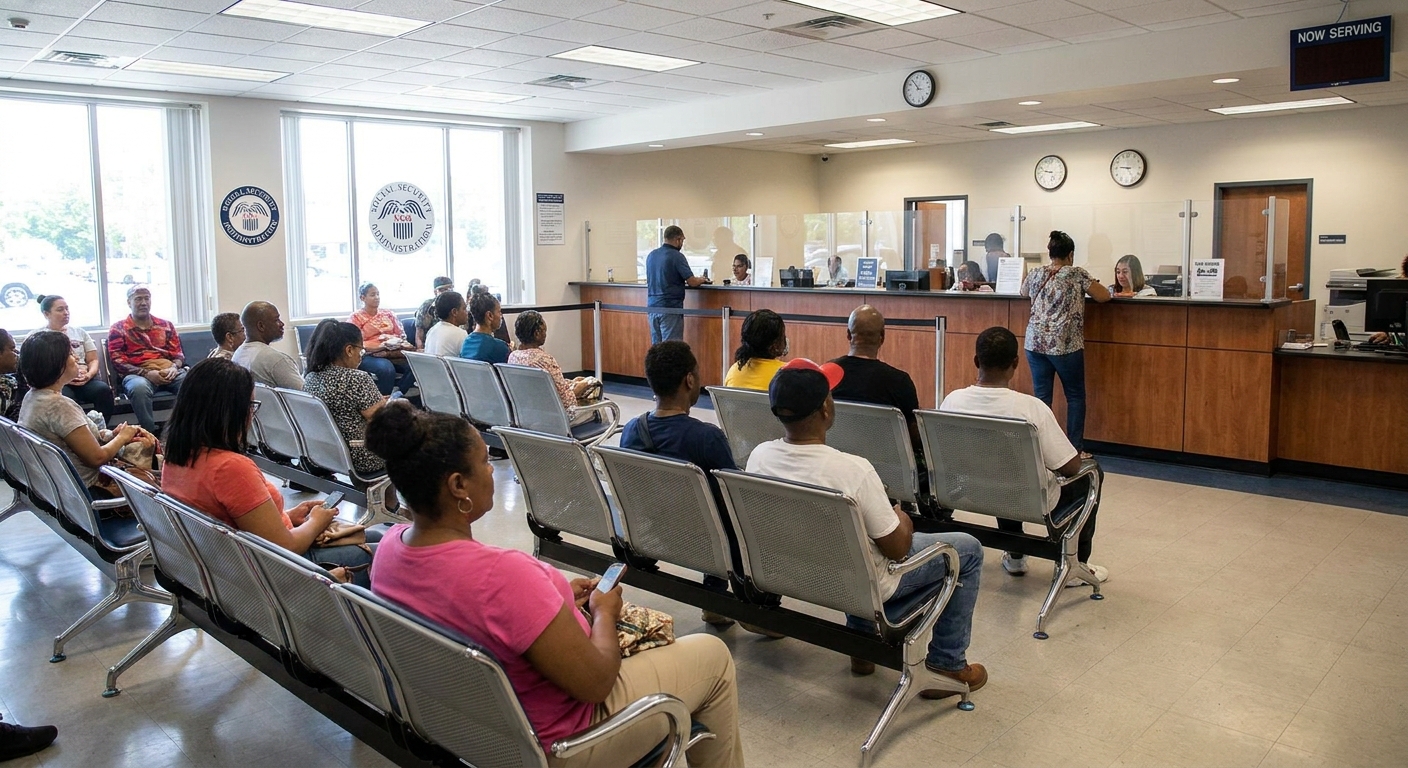
What survivor benefits are (and what they are not)
Survivor benefits are monthly payments based on a deceased worker’s Social Security record. Think of them as a slice of the benefit the worker earned, paid to eligible family members after the worker dies.
They are different from:
- The $255 lump-sum death payment (a one-time payment that is very limited and has strict eligibility rules).
- Your own retirement benefit (based on your own work record).
- Life insurance or pension survivor benefits (separate programs).
Most survivors are choosing between two benefits:
- Survivor benefits on the deceased person’s record
- Retirement benefits on their own record (and sometimes switching later)
And the order you take them can seriously change your lifetime income.
Who can receive Social Security survivor benefits?
Survivor benefits can go to several types of family members. Here are the most common.
Widows and widowers
You may qualify as a widow or widower if you were legally married to the worker and the marriage lasted long enough under Social Security rules (often at least 9 months, with exceptions such as accidental death and certain other situations).
You can potentially claim:
- As early as age 60 (reduced benefit)
- As early as age 50 if you are disabled and meet Social Security’s definition of disability
- At any age if you are caring for the deceased worker’s child who is under age 16 or disabled and receiving benefits on the worker’s record (often called “mother’s” or “father’s” benefits, even though it applies to any gender)
Divorced surviving spouses
If you are divorced, you may still qualify for survivor benefits on an ex-spouse’s record if:
- The marriage lasted 10 years or longer, and
- You meet the age or child-in-care rules for survivors, and
- You meet remarriage rules (below)
Remarriage rules: If you remarry after age 60 (or after age 50 if disabled), you can generally still receive survivor benefits based on a prior spouse’s record.
Also good to know: Your ex-spouse’s claiming status does not control whether you can receive survivor benefits. Eligibility is based on the deceased worker’s record and your relationship history.
Dependent children
Unmarried children may qualify if they are:
- Under age 18, or
- 18 to 19 and a full-time student in high school (up to a Social Security-defined limit), or
- Any age if they became disabled before age 22 and meet disability rules
Dependent parents (less common)
In some situations, a parent age 62 or older who was financially dependent on the deceased worker may qualify. This is less common, but it exists.

How much are survivor benefits?
Survivor benefits are based on the deceased worker’s benefit amount, but the percentage you receive depends on who you are and when you claim.
Widow or widower benefit amounts
- At full retirement age for survivors: up to 100% of the deceased worker’s benefit amount.
- As early as age 60: reduced. The minimum is commonly described as about 71.5% at age 60, rising up to 100% as you get closer to your survivor full retirement age.
- Disabled widow or widower (as early as 50): reduced, generally around 71.5%.
- Child-in-care (any age, caring for child under 16 or disabled): typically 75%.
Important: The “full retirement age” used for survivor benefits is tied to your birth year. For people born in 1962 or later, survivor full retirement age tops out at 67. Survivor benefits and retirement benefits also have different reduction schedules.
Children’s benefit amounts
Eligible children generally receive 75% of the deceased worker’s benefit amount, subject to the family maximum rules covered below.
What if the deceased worker claimed early or delayed?
Survivor benefits are influenced by what the worker was receiving or would have received. These are simplified, high-level scenarios (Social Security has additional guardrails and special limits in some cases):
- If the worker had not claimed yet: Social Security generally starts from the worker’s earned amount at full retirement age and then applies survivor rules.
- If the worker claimed early: the survivor benefit is usually based on the worker’s reduced amount, though some rules can protect survivors from extremely low amounts in certain situations.
- If the worker delayed past full retirement age: delayed retirement credits can increase the worker’s benefit, and that higher amount can carry into the survivor benefit calculation.
The family maximum
This is where many families get blindsided.
Social Security has a family maximum on a single worker’s record. If multiple people are eligible (for example, a surviving spouse plus two children), the total paid on that record can be capped. When the cap applies, Social Security reduces certain family members’ payments so the total stays under the maximum.
Key things to know:
- The survivor family maximum is formula-driven and is calculated from the worker’s record. In many cases it falls roughly in the 150% to 188% range, but it can vary.
- Not everyone is reduced the same way. Typically, reductions apply to auxiliary beneficiaries (often children and a spouse caring for children). The rules can get technical.
- Benefits can change over time. When one child ages out, for example, the remaining beneficiaries may see their amounts increase because there is more room under the family maximum.
A quick example: If two children each qualify for 75% and a surviving spouse receives a child-in-care benefit of 75%, the “add up” number is 225% of the worker’s amount. If the family maximum on that record is 175%, Social Security will reduce some of those checks so the total paid across the family stays at 175%. When a child later ages out, the remaining benefits can increase.
If you have more than one family member filing, ask Social Security directly: “What is the family maximum on this record, and how will each beneficiary’s amount be adjusted?”
Age rules and timing
Here is the quick timing cheat sheet for the most common survivor claims.
Widow or widower
- 60: earliest in most cases (reduced)
- Full retirement age for survivors: up to 100% of the worker’s benefit (tops out at age 67 for those born in 1962 or later)
Disabled widow or widower
- 50: earliest if disabled and eligible
Widow or widower caring for the deceased’s child
- Any age: if the child is under 16 or disabled and entitled on the worker’s record
- Note: this benefit usually ends when the youngest qualifying child turns 16 (unless the child is disabled)
Children
- Under 18 (or up to 19 if still in high school full time)
- Any age if disabled before 22 and eligible
Earnings limits
If you receive survivor benefits before reaching your full retirement age for survivors, Social Security applies an earnings test if you work.
In plain terms: if you earn above the annual limit, Social Security may withhold some (or even all) of your survivor checks for part of the year.
How the earnings test works (high level)
- The limit changes most years.
- In most years before the year you reach full retirement age, Social Security generally withholds $1 in benefits for every $2 you earn above the limit.
- In the year you reach full retirement age, the rule is more generous for the months before you hit full retirement age. Social Security generally withholds $1 for every $3 you earn above a higher limit, and only counts earnings before the month you reach full retirement age.
- Once you reach full retirement age, the earnings test no longer applies.
Two important clarifications:
- This is based on earned income (wages and self-employment), not things like withdrawals from a 401(k) or IRA.
- “Withheld” does not always mean “lost forever.” At full retirement age, Social Security may recompute your benefit to credit months that were fully or partially withheld due to earnings.
If you are still working full time, ask yourself this before claiming early: Will the earnings limit wipe out most of my checks anyway? If yes, it might make sense to delay and avoid the headache.
Survivor benefits vs your own retirement benefit
This is the planning move I wish more people knew about: in many cases, you can take one benefit first and switch to the other later.
One check at a time
You cannot receive your full survivor benefit and your full retirement benefit at the same time. If you qualify for both, Social Security typically pays one amount, and if one benefit is higher, you receive the higher total (often described as your own benefit plus an additional amount to reach the survivor level).
Why switching is even possible
Many people assume a survivor filing triggers “deemed filing” the way some spousal benefit claims do. In general, survivor benefits follow different rules , which is why switching strategies can be so valuable.
Option A: Take survivor benefits first, then switch to your own retirement later
This can be a strong strategy if your own retirement benefit will grow by waiting (especially if you can delay to age 70 and earn delayed retirement credits). Example:
- Start survivor benefits at 60 (reduced).
- Let your own retirement benefit grow.
- Switch to your own maxed-out retirement benefit later.
Option B: Take your own retirement first, then switch to survivor benefits later
This can make sense if the survivor benefit will be larger and you want to let the survivor benefit reach its maximum at your survivor full retirement age.
Option C: Take the larger one at the best time
Sometimes the simplest move is best. If one benefit is clearly larger and you need stable income now, you might claim that one and stick with it.
Marcus note: The biggest mistake I see is people assuming they must pick one benefit forever. In many cases, you can sequence benefits to protect your cash flow now while still maximizing the bigger check later.
Practical next step: Create a simple two-column list: “My benefit at 62, FRA, 70” and “Survivor benefit at 60, survivor FRA.” Then confirm the actual amounts with Social Security. The best choice is usually obvious once you see the numbers side by side.
Special situations
Remarriage
- If you remarry before age 60 (or 50 if disabled), you generally cannot receive survivor benefits on a prior spouse’s record while that marriage is in place.
- If you remarry after age 60 (or 50 if disabled), you generally can still receive survivor benefits on the prior spouse’s record.
Multiple marriages
If you qualify on more than one deceased spouse’s record, you generally cannot collect two survivor benefits at once. Social Security will typically pay the higher amount.
Adopted children and stepchildren
Some stepchildren, adopted children, and in certain cases grandchildren may qualify if they meet dependency and relationship rules. If your household is blended, it is worth asking Social Security for a clear determination rather than assuming.
Divorced surviving spouse basics
Divorced survivors often miss out simply because they do not realize they qualify. The survivor benefit is based on the deceased ex-spouse’s record. It does not reduce benefits paid to the ex-spouse’s current spouse, and it does not require the ex-spouse’s current family to approve anything.
Retroactive benefits (worth asking about)
In some situations, survivor benefits may be paid retroactively for a limited period. Rules vary by scenario and timing, so ask Social Security: “Can my claim be made retroactive, and if so, by how many months?”
How to apply
Many survivor claims cannot be completed fully online. Typically, you will apply by phone or at a local Social Security office.
What to gather before you call
- Death certificate (often handled with the funeral home, and Social Security may already have it, but it is smart to have a copy available)
- Your Social Security number and the deceased worker’s Social Security number
- Marriage certificate (or divorce decree if applying as a divorced survivor)
- Birth certificates for children applying
- Banking information for direct deposit
- Your most recent W-2 or self-employment info if you are working (helps with earnings test questions)
Tip: If you are unsure whether to start now or later, you can still call and ask for benefit estimates and filing options. You do not have to file the same day you request information.

Common mistakes to avoid
- Claiming early without checking the earnings limit. Working income can reduce or temporarily eliminate checks.
- Assuming divorced spouses do not qualify. If you were married 10+ years, you may be eligible.
- Not asking about the family maximum. If kids are involved, your expected amount may be reduced.
- Forgetting you can switch benefits later. Sequencing survivor and retirement benefits can add up to thousands over time.
- Not confirming which “full retirement age” applies. Survivor FRA timing matters for reductions.
A quick checklist
- Confirm eligibility: widow/widower, divorced survivor, child, or dependent parent.
- Confirm timing: earliest date you can start, and your survivor full retirement age (up to age 67 depending on birth year).
- Ask about your amount: what percentage applies and what the monthly benefit would be.
- Ask about the family maximum: what it is on this record and how it affects each person.
- Check earnings: will the earnings test reduce benefits this year?
- Compare strategies: survivor first vs your own retirement first, and when to switch.
- Ask about taxes: will benefits be taxable based on your total income this year?
If you are close to filing, consider calling the Social Security Administration for a benefit estimate and a clear filing date plan, and if the decision affects other income sources, talk with a trusted financial planner or tax professional. A 15-minute conversation can prevent a costly timing mistake.