
If you are married and thinking about filing taxes separately, there is a Medicare detail that can surprise you later: IRMAA, the income-related monthly adjustment amount. It is a surcharge added to your Medicare Part B premium and, if you have drug coverage, an additional amount for Part D.
The key twist is that IRMAA thresholds are much lower for “Married filing separately” when you lived with your spouse at any point during the year. But there is an exception if you did not live with your spouse at any time during the year. The difference matters, because IRMAA can add thousands of dollars per year to your Medicare costs.

Quick refresher: what IRMAA is
IRMAA is a Medicare surcharge based on your modified adjusted gross income (MAGI), using information from your federal tax return. Medicare generally looks at your income from two years earlier to set your current-year IRMAA.
IRMAA matters only if you have Part B and or Part D. No Part D coverage means no Part D IRMAA, even if you owe Part B IRMAA.
For IRMAA purposes, MAGI is essentially your adjusted gross income (AGI) plus certain add-backs. The most common one people miss is tax-exempt interest (for example, interest from municipal bonds). That is why someone can feel “not that high income” and still trip an IRMAA threshold.
Two practical implications follow you around like a tiny shadow:
- One-time income spikes (large IRA withdrawals, Roth conversions, capital gains, selling a business, big bonuses, etc.) can cause IRMAA even if your income returns to normal later.
- Your filing status can change which income brackets apply, and “Married filing separately” has a special rule that is unusually strict when you lived with your spouse.
The married-separate rule
For IRMAA purposes, Social Security separates married-filing-separate taxpayers into two situations. The exact dollar brackets vary by year, so treat the notes below as the rule shape and confirm the current-year SSA IRMAA table before you decide.
1) Married filing separately and you lived with your spouse
This is the common scenario. If you filed as married filing separately and you lived with your spouse at any point during the year, the IRMAA system uses dramatically lower thresholds.
Here is the part many people do not realize until it is too late: based on published SSA IRMAA tables in recent years, this category has often worked like a two-outcome setup. Below the first cutoff, there is no IRMAA. Above it, the table has effectively placed you in the top IRMAA tier for that year, rather than stepping you up gradually. Because SSA updates the brackets and amounts each year, confirm the current-year table before you lock in a filing choice.
2) Married filing separately and you did not live with your spouse
If you filed married filing separately and you did not live with your spouse at any time during the year, Social Security generally applies the standard (non-MFS-lived-with) IRMAA thresholds. Practically, this tends to resemble the threshold set used for single and head-of-household filers, but do not treat that as a substitute for the current SSA table.
Important: This is an all-or-nothing test based on whether you lived with your spouse at any time during the tax year. If you lived with your spouse even briefly during the year, you generally fall into the harsher “lived with spouse” treatment. Because it is a high-stakes point, rely on the official wording and your facts for that tax year, not a casual definition of “separated.”
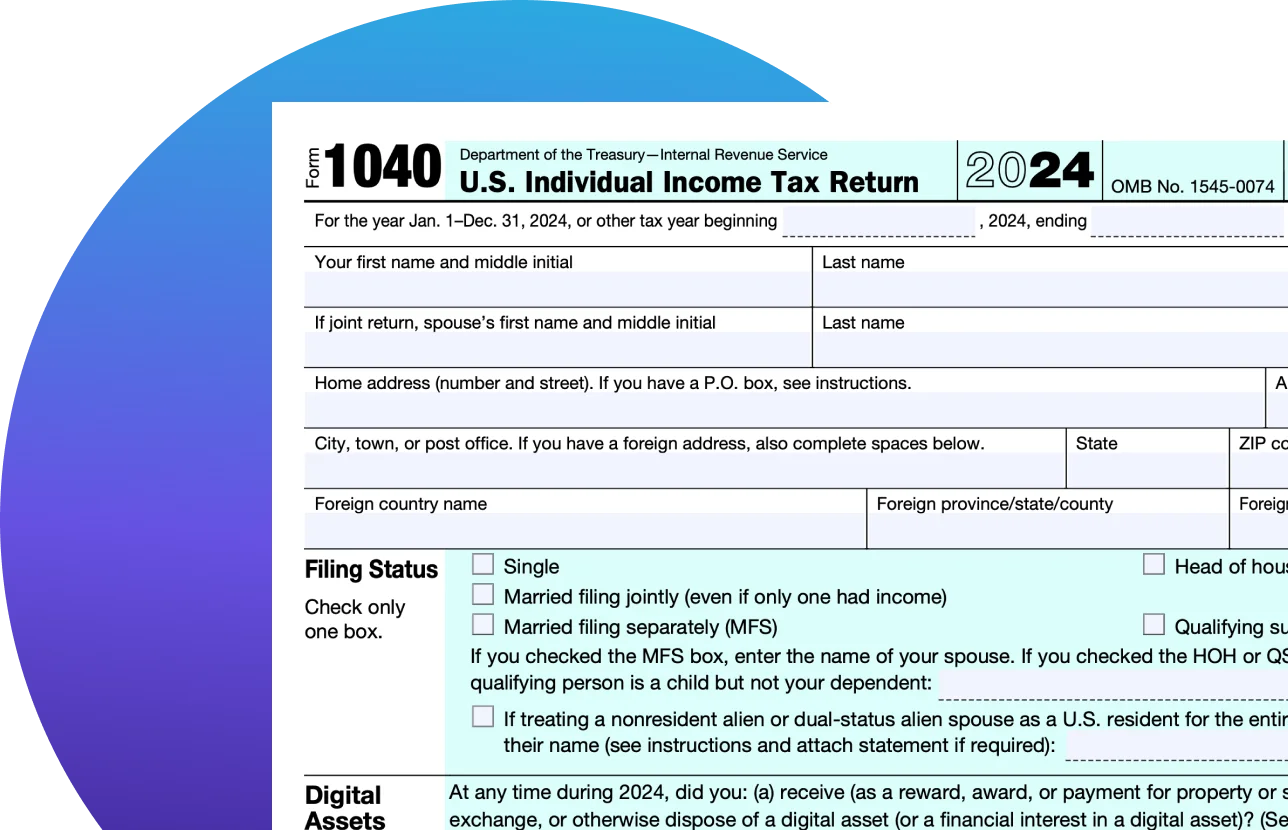
How couples are assessed
IRMAA is charged per person.
- If you file married filing jointly, Social Security looks at the joint MAGI and typically assigns the same IRMAA tier to both spouses if both are on Medicare. Even if only one spouse earned most of the income, both spouses on Medicare can owe the surcharge because the assessment is based on the joint return.
- If you file married filing separately, each spouse’s IRMAA is based on their own return.
What IRMAA can add
Because the exact IRMAA brackets and dollar amounts change by year, the safest way to think about it is in tiers: once your MAGI crosses a threshold, Medicare adds a monthly amount to Part B and usually a separate monthly amount for Part D.
Real-world scale (2024 example): In 2024, the Part B IRMAA add-on ranged from $69.90 per month up to $419.30 per month per person, depending on income tier (SSA 2024 IRMAA amounts). Part D IRMAA in 2024 ranged from $12.90 per month up to $81.00 per month per person.
So even a mid-level outcome can look like $100 to $300 extra per month across Part B and Part D for one person, or $1,200 to $3,600 per year. Higher tiers can be much more.
IRMAA is not a one-time penalty. It is set for the year Social Security determines it for, and it is re-determined annually. It can also be adjusted if Social Security receives a corrected tax return or approves a reconsideration.
A simple cliff example
Here is a concrete way to think about the married-filing-separately trap without locking you into any one year’s brackets.
Example: You file married filing separately and you lived with your spouse at some point during the year. Your MAGI ends up just $1 over the first cutoff for that category. In several recent SSA IRMAA tables, that has not moved you into “the next tier.” It has put you into the top IRMAA level for Part B (and Part D) for that year.
Now run the same household as married filing jointly with the same combined income: because the joint thresholds are typically much higher, that same income might produce no IRMAA at all or a much lower tier.
That is why married filing separately can feel like it “should not matter,” then ends up being a premium shock two years later.
Why filing separately is tempting
People do not choose married filing separately for fun. Usually there is a reason, such as:
- Liability concerns (you do not want to be jointly responsible for a spouse’s tax position).
- Income-driven student loan plans, where separate filing may help in some cases depending on the plan and current rules.
- High medical expenses, where separate filing might make it easier to clear an AGI-based deduction threshold in some situations.
- Separation, where joint filing is not practical.
The tradeoff is that separate filing often comes with higher overall taxes and fewer credits. Then Medicare can add another layer of cost through IRMAA, especially if you lived with your spouse.

Planning tradeoffs
1) Compare total cost
Filing separately can lower or raise your income tax, but it can also change:
- Medicare premiums (Part B and Part D IRMAA)
- Eligibility for deductions and credits
- Tax rate on capital gains in some cases
A clean way to evaluate the decision is to run two projections for the same year, one as married filing jointly and one as married filing separately, then add estimated Medicare premium effects for the two-year lookback window.
2) Roth conversions can trigger IRMAA faster
Roth conversions can be a smart long-term strategy. But if you file separately and lived with your spouse, a conversion that seems moderate can push you into IRMAA territory much faster than expected. Sometimes the best answer is not “do not convert.” It is “convert in smaller pieces over multiple years.”
3) If you are separated, confirm the rule
The “did not live with your spouse at any time during the year” exception is powerful, but strict. If you lived together at any point during the year, you may lose the exception and face the much lower thresholds.
4) Remember the two-year lag
IRMAA can show up later. A high-income year at 63 can affect Medicare premiums at 65. A big income event at 66 can affect your premiums at 68. When you model filing status, look ahead.
Where IRMAA and MFS collide
One spouse has high income
It is natural to think separate filing protects the lower-income spouse. IRMAA is assessed per person, and separate filing can prevent your premiums from being pulled up by your spouse’s income. The catch is that the married-separate, lived-with-spouse thresholds can be so low (and in some recent years so cliff-like) that you may trigger IRMAA on your own income anyway.
Large RMDs
Required minimum distributions raise MAGI and can push you into IRMAA. If you are filing separately while living with your spouse, the IRMAA hit can arrive sooner.
A big capital gains year
Capital gains increase MAGI for IRMAA. If you are planning a large sale, run the numbers on whether filing jointly could keep your Medicare costs lower overall.
How IRMAA is billed
Social Security typically sends an IRMAA determination notice when it sets or changes your surcharge. Part B IRMAA is generally collected with your Part B premium, often withheld from Social Security benefits, or billed if you do not receive benefits yet.
Part D IRMAA is separate from your drug plan premium. You keep paying your plan premium to your plan, and the IRMAA portion is collected separately. If you receive Social Security or Railroad Retirement benefits, it is commonly withheld from those payments. If you do not receive benefits, you are typically billed directly, and payment methods can vary.
If the IRMAA year no longer fits
Sometimes IRMAA is triggered by a year that no longer reflects your current reality, because your income dropped after a life change. In that case, you may be able to ask Social Security for an IRMAA reconsideration (often called an appeal).
The common path is filing Form SSA-44 and documenting a qualifying life-changing event. Those events can include things like retirement or work stoppage, a work reduction, marriage, divorce or annulment, death of a spouse, loss of income-producing property, loss of pension income, or certain employer settlements.
This is especially relevant if you filed separately during a transition year and then your income dropped. If Social Security approves the reconsideration, it can use a more current estimate rather than the older tax return.
If you amended a tax return to reduce income, it can take time for that information to flow through to Social Security systems. In some cases, you may need to follow up so the updated return is reflected in your IRMAA determination.
What to do next
- Estimate MAGI the way Medicare does, including tax-exempt interest and any one-time income events.
- Run both filing statuses (MFJ vs. MFS) and compare total cost, including possible Part B and Part D IRMAA.
- Model the two-year lookback so you know which tax year is likely to drive your Medicare premiums.
- Check the current SSA IRMAA table for the year that will apply to you, especially if you are considering married filing separately.
- If your income dropped after a life event, consider whether an SSA-44 reconsideration could apply.
For current-year IRMAA brackets and dollar amounts, verify the latest figures directly with Social Security or Medicare resources before you decide.
FAQ
If my spouse has high income, can I file separately to avoid their IRMAA?
IRMAA is based on your tax return, so separate filing can prevent your Medicare premiums from being affected by your spouse’s income. The catch is that if you lived with your spouse, the IRMAA thresholds for married filing separately are so low (and in some recent SSA tables essentially cliff-like) that you may trigger IRMAA on your own income anyway. This is a “measure twice” decision.
If we both file separately, can we both get hit with IRMAA?
Yes. IRMAA is assessed per person, and each spouse’s surcharge is tied to their own return.
What does “did not live with your spouse” mean?
It means you did not live with your spouse at any time during the tax year. Because the outcome can be expensive, it is worth confirming your situation matches the official rule before relying on the exception.
Does filing separately always increase taxes?
Not always, but it often reduces access to credits and favorable tax treatment. The bigger Medicare planning point is that separate filing can also change your IRMAA exposure.
The bottom line
Married filing separately is one of those choices that can solve a specific problem and quietly create another. For Medicare, the big issue is simple: if you lived with your spouse at any point during the year, IRMAA thresholds for separate filers are much lower. In several recent SSA tables, that structure has also behaved more like a cliff than a gentle set of tiers.
Before you commit to separate filing, it is worth running a full-cost comparison that includes income tax and potential Part B and Part D IRMAA, keeping the two-year lookback in mind. A little light up front can spare you a pricey surprise two years later.