
IRMAA is one of those Medicare “gotchas” that can feel downright unfair: you retire, your income drops, and then you are assessed a surcharge because your tax return from two years ago was higher.
The good news is that Social Security built a fix for this. If you had a qualifying life-changing event that reduced your income, you can ask Social Security to use a more current picture of your finances by filing Form SSA-44.

Below is a simple, step-by-step breakdown of how IRMAA appeals work, what events qualify, what documentation to gather, and how timing matters.
Quick refresher: what IRMAA is and why it happens
IRMAA stands for Income-Related Monthly Adjustment Amount. It is an added surcharge on top of your:
- Medicare Part B premium (doctor and outpatient coverage)
- Medicare Part D premium (prescription drug coverage)
Social Security determines whether you owe IRMAA using your MAGI from your federal tax return, usually from two years prior. (MAGI for IRMAA is generally your adjusted gross income, plus tax-exempt interest, and certain other add-backs.)
That two-year lookback is the whole reason IRMAA surprises people. A high-income year from work, a big capital gain, or a one-time payout can follow you into Medicare even if your current income is much lower.
The two-year tax lag vs current-year reality
Think of IRMAA like this:
- Medicare year: what you are paying now
- Tax year used: generally two years ago
- Appeal goal: replace that old, higher income with a more accurate estimate tied to a qualifying life-changing event
Here is the key concept: an IRMAA appeal is not just “my income is lower now.” It is “my income is lower now because I had an SSA-recognized life-changing event.”
If your income dropped for reasons that do not fit the approved list, Social Security may deny the SSA-44 route and you may need a different path, like requesting a reconsideration if the IRS data was wrong or outdated (for example, an amended return that has not carried through yet).
When Form SSA-44 helps (and when it does not)
SSA-44 is a good fit when
- You had a qualifying life-changing event recognized by Social Security.
- The event caused your MAGI to drop.
- You can reasonably estimate your income for the year of the event and the following year (SSA-44 requests both).
SSA-44 is usually not the right tool when
- You simply had a lower-income year with no qualifying event.
- Your IRMAA is based on incorrect tax information. In that case you may request a review or reconsideration based on corrected IRS data.
- Your income is lower only because of market fluctuations, normal business ups and downs, or voluntary choices not tied to a listed event.
If you are unsure which bucket you are in, start by reading your IRMAA determination notice carefully. It should explain why you were assessed IRMAA and how to challenge it.
Life-changing events that can reduce IRMAA
Social Security recognizes specific events for an IRMAA request using Form SSA-44. Only these SSA-listed events qualify for this process. Other income drops, even big ones, usually do not.
Work stoppage (retirement)
This is the most common “yes, you can appeal” scenario. If you stopped working and your income dropped, SSA-44 is often the right move.
Documentation ideas: letter from employer, final paystub, proof of pension start, unemployment statement (if applicable), or any official document showing the work stoppage date.
Work reduction
If you did not fully retire but you cut your hours or your job changed in a way that meaningfully reduced your income, you may qualify under work reduction.
Documentation ideas: employer letter noting reduced hours or changed role, paystubs showing the before and after, or a signed statement explaining the change.
Marriage
Marriage is a listed life-changing event on SSA-44. In practice, filing SSA-44 only helps if the marriage results in a reduction in your MAGI (otherwise it will not lower IRMAA).
Documentation ideas: marriage certificate and documentation supporting the income change.
Divorce or annulment
These events can change filing status and household income quickly. If your income dropped due to divorce or annulment, it can be a valid basis for an SSA-44 request.
Documentation ideas: divorce decree or annulment order, plus documentation supporting the income change.
Death of a spouse
This is a painful one, and it is also one of the clearest reasons Social Security allows a premium adjustment. Household income may drop significantly after a spouse dies.
Documentation ideas: death certificate and evidence of changes in ongoing income (for example, pension adjustments).
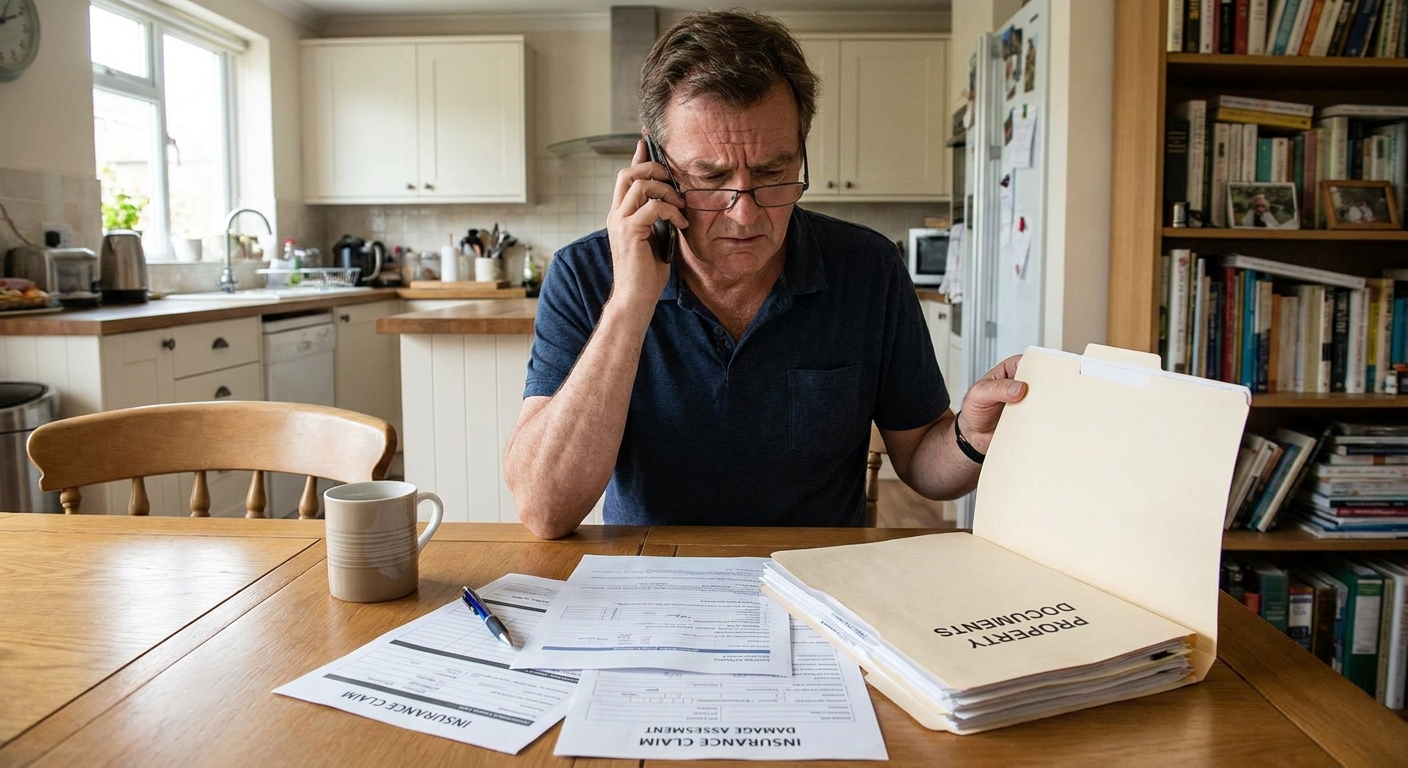
Loss of income-producing property
If you lost income from property due to something outside your control, this may qualify. Common examples include a disaster or other event that caused the property to stop producing income.
Documentation ideas: insurance claims, police reports, disaster assistance paperwork, property management statements showing lost rent, or documents showing the date and cause of loss.
Loss of pension income
If a pension was reduced or stopped, and that reduction drove your income down, you may be able to appeal.
Documentation ideas: pension plan letter showing the reduction or termination, bank statements reflecting the change, or a benefits statement.
Employer settlement payment
This category is specifically for an employer settlement payment as defined by SSA (often related to employment disputes, back pay, or similar). Not every settlement fits this box, and non-employer settlements (such as many personal injury settlements) generally do not apply.
Documentation ideas: settlement agreement, employer statement, and tax documents showing how it was reported.
Important: Social Security may request additional proof beyond what you submit. The cleaner and more official your documentation, the smoother this process tends to go.
Timing: when to file SSA-44
When it comes to IRMAA requests, timing is not about being perfect. It is about being prompt.
File once the event happens and you can estimate income
You can file Form SSA-44 after the event happens when you can make a reasonable estimate of your modified adjusted gross income for:
- the year the life-changing event occurred, and
- the following year
Do not wait for next year’s tax return if you do not have to
A common mistake is waiting until you file taxes to “prove” your lower income. If your IRMAA is already hitting your monthly Medicare costs, that delay can cost you real money.
But do not guess wildly
SSA-44 asks for an estimate. That does not mean you should throw a dart at a number. Use what you know now: pension amounts, Social Security benefits, required minimum distributions, part-time wages, expected capital gains, and any one-time income you can foresee.
If you underestimate and later end up with higher income, Social Security can later match your estimates to your filed tax return and IRMAA can be recalculated. Your goal is a realistic estimate, not the lowest possible number.
How to fill out Form SSA-44
Form SSA-44 is refreshingly direct. It basically asks:
- What life-changing event happened and when did it happen?
- What are your new estimates for adjusted gross income (AGI) and tax-exempt interest for the year your income was reduced?
- What are your new estimates for AGI and tax-exempt interest for the following year?
- What proof are you providing?
Step 1: Choose the correct life-changing event
Select the event that best matches your situation. If you are retired, that is usually work stoppage, not work reduction, unless you truly only reduced hours.
Step 2: Estimate income the way SSA-44 asks for it
On SSA-44 you will typically provide estimated AGI and tax-exempt interest. Social Security uses that to calculate Medicare MAGI for IRMAA. If you work with a tax pro, ask them to help you estimate those fields specifically.
Step 3: Attach documentation that proves the event and supports your estimate
Try to include:
- One document that clearly proves the life event occurred (for example, an employer letter, divorce decree, death certificate).
- One or more documents that support the income change (paystubs, benefit statements, pension letters, rental statements, etc.).
Step 4: Keep copies of everything
This is one of those “future you will be grateful” habits. Scan the form and attachments or keep a paper copy in a dedicated Medicare folder.
Quick MAGI reminder (what counts for IRMAA)
For IRMAA, Medicare MAGI is generally your AGI + tax-exempt interest, plus certain add-backs (such as some foreign income exclusions). Filing status matters too (single vs married filing jointly), which is why divorce and widowhood can change the outcome.
Where to submit SSA-44 and what happens next
In many cases, you will submit Form SSA-44 to your local Social Security office and they will issue a new determination if approved. You can typically:
- bring it to your local Social Security office,
- mail it to your local office,
- fax it to your local office, or
- call Social Security to confirm the best submission method for your situation
After review, Social Security will either:
- approve the request and reduce or remove your IRMAA, or
- deny it, in which case you can move to the next level of appeal described in your notice
If you are approved, the change can affect your Part B premium and your Part D IRMAA amount. Depending on timing, amounts you already paid may be refunded or credited.
Note on Part D: Part D IRMAA is separate from your plan premium. Some people see it added to their Social Security benefit withholding, while others may be billed directly. Where it shows up depends on how you receive benefits and how you pay premiums.
Documentation checklist by event
Use this as a starting point. Social Security can request more, but this usually gets you in the ballpark.
- Work stoppage (retirement): employer letter showing retirement date, final paystub, unemployment notice (if any), pension award letter
- Work reduction: employer letter showing reduced hours, paystubs before and after, written explanation of change
- Marriage: marriage certificate, evidence of income change (if relevant)
- Divorce/annulment: divorce decree or annulment order, documentation showing income change
- Death of spouse: death certificate, benefit changes from pensions or annuities
- Loss of income-producing property: insurance claim, disaster assistance paperwork, police report (if applicable), rental statements showing lost income
- Loss of pension income: letter from plan administrator, benefit statement showing reduction
- Employer settlement payment: settlement agreement, employer letter, relevant tax forms

Common mistakes that slow down an IRMAA request
1) Solving the wrong problem
If your IRMAA is wrong because the IRS data is wrong, SSA-44 might not fix it. SSA-44 is for a life-changing event. Wrong tax data is a different issue.
2) Mixing up AGI, MAGI, and what SSA-44 actually asks for
SSA-44 generally asks for estimated AGI and tax-exempt interest, which Social Security uses to compute Medicare MAGI for IRMAA. If your estimate is missing big categories, your request can get messy later.
3) Not explaining the story simply
Even with documentation, a short written explanation can help. For example: “I retired in June. My 2026 income included wages through June. My 2027 income will be Social Security plus a small pension.” Clear beats clever.
4) Waiting too long
If you know you qualify, file. Every month you pay IRMAA is a month you might have avoided.
A quick example
Let’s say you retired in 2026. Your income in 2024 was high because you worked full time. Social Security could assess IRMAA for your 2026 Medicare premiums using your 2024 tax return.
If retirement in 2026 is a qualifying life-changing event and your income dropped, you can file SSA-44 to ask Social Security to base the IRMAA decision on your new, lower income estimate instead of the old 2024 number.
In plain English: SSA-44 is how you tell Medicare, “That was old income. Here is what life looks like now, and here is why it changed.”
If SSA-44 is denied
Denials happen, and it is not always the end of the road. Your determination notice should explain how to escalate.
If you are denied:
- Read the reason carefully. Many denials are about missing documentation or an unclear event category.
- Gather additional proof and resubmit or move to the next appeal level as instructed.
- If your issue is wrong IRS data (not a life-changing event), pursue the path for corrected tax information.
It also helps to know there are formal appeal levels after the new determination. The notice will spell out what comes next, but the typical path includes:
- reconsideration,
- an administrative law judge hearing,
- Medicare Appeals Council review, and
- federal court (in limited situations)
If the dollars are significant, it can be worth asking a tax professional or Medicare-focused advisor to help you tighten up your income estimate and documentation.
Bottom line
IRMAA is based on a two-year-old snapshot of your income. If your finances changed because of a qualifying life-changing event, Form SSA-44 is your best shot at getting Medicare premiums back in line with reality.
Focus on three things:
- Pick the correct life-changing event category.
- Estimate income realistically for the relevant years (the SSA-44 AGI and tax-exempt interest fields).
- Submit strong documentation quickly.
If you want to keep going, pair this with our IRMAA bracket content so you can see exactly what income ranges trigger surcharges and how big the difference can be.