
The day your car gets totaled is stressful enough. The “gap” part can make it worse: you find out the insurance company is only paying what the car was worth, but your loan payoff is higher.
I have been there financially, not with a total loss specifically, but with that same gut-punch feeling of realizing a bill is bigger than the cash coming in. Gap insurance is meant to be the bridge. The trick is knowing the order of operations, what paperwork matters, and what to do while you wait.
If you are skimming, the call order is usually: auto insurer first, then your lender for a payoff statement, then your gap provider.
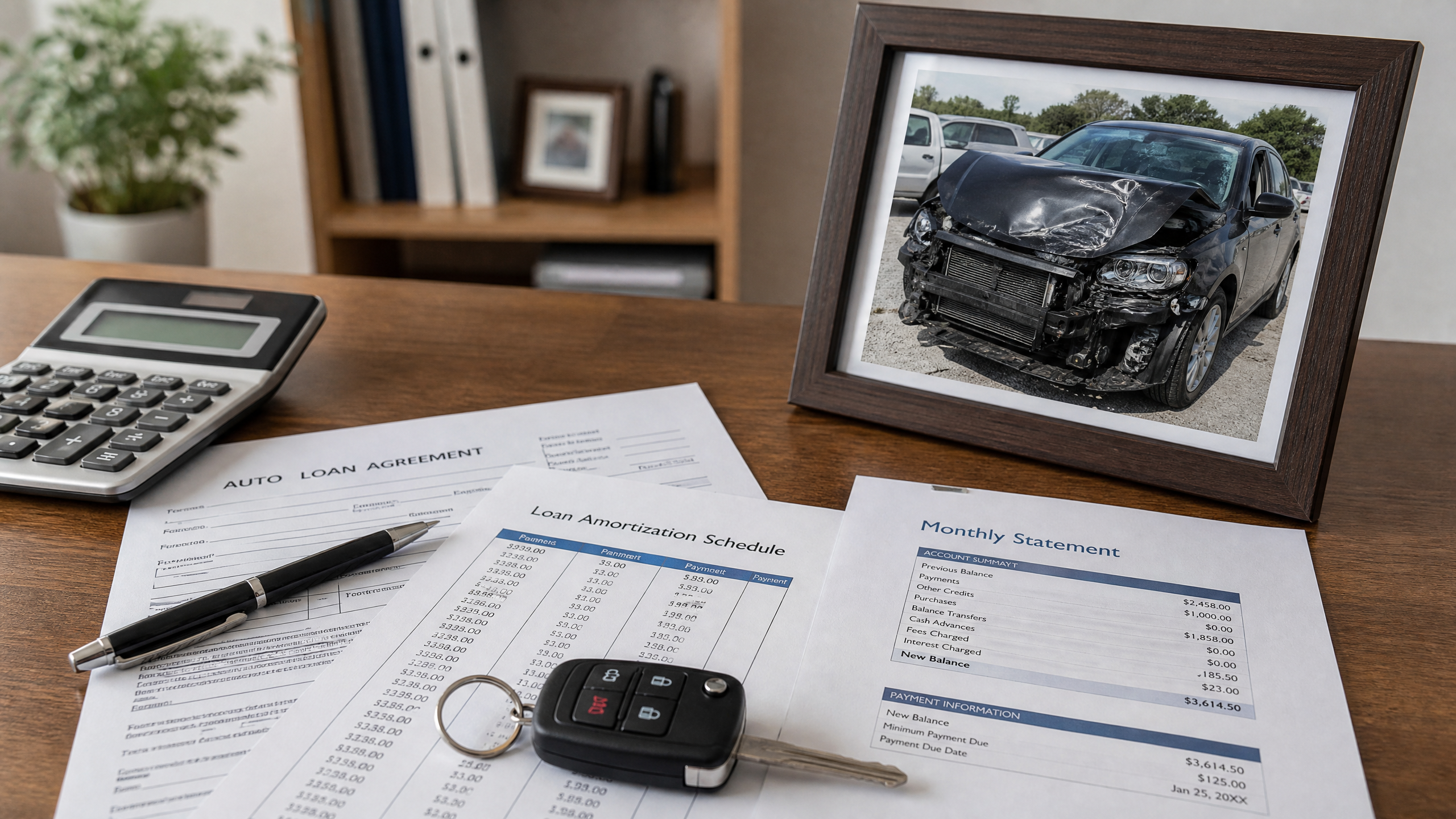
First, make sure gap applies to your situation
Gap insurance generally pays the difference between your primary auto insurance settlement (usually actual cash value, or ACV) and what you still owe on your loan or lease after a total loss.
Lease note: many lease agreements include GAP automatically or build it into the lease terms. It is still worth confirming whether you have separate gap coverage and, if so, who administers it.
Quick eligibility checklist
- Your car is a total loss (declared totaled by your auto insurer after theft or a major accident).
- You have gap coverage through your insurer, dealer, lender, lease company, or a third-party provider.
- You still owe more than the settlement after the auto insurer subtracts the deductible and applies any fees allowed in the settlement calculation.
Important: gap usually does not cover late payments, extended warranties, past-due amounts rolled into your loan, or some add-ons. Your exact rules depend on your contract, so grab it now if you can.
Step-by-step: How the gap claim process works
Most gap claims go smoother when you treat them like a checklist project. Here is the typical sequence.
Step 1: Open the auto insurance claim and confirm “total loss”
Gap is usually a secondary step to your primary auto claim. In some cases, especially when gap is an endorsement with the same carrier, the process can feel more integrated. Either way, gap generally cannot be finalized until your auto insurer:
- Declares the vehicle a total loss
- Issues a written settlement offer
- Explains where the settlement money is being sent (lienholder, you, or both)
If you have a loan, the settlement payment often goes to the lender first, because they are the lienholder.
Step 2: Ask your insurer for the documents gap will want
Before you hang up with your auto adjuster, ask for:
- Total loss settlement letter (or settlement statement)
- Valuation report showing how ACV was calculated
- Proof of payment (when issued) or check stub details
- Deductible confirmation
Even if your gap provider does not request every item, having them ready prevents a week of back-and-forth.
Step 3: Call the gap provider and start the claim
Your gap coverage might be:
- On your auto policy as an endorsement
- Bundled into your loan paperwork through the dealer or lender
- Included in a lease contract
Find the customer service number on your policy, contract, lender portal, or original paperwork and ask, “What is your exact required document list and deadline for filing?” Then write it down.

Documents you will usually need
Gap providers vary, but most ask for a similar packet. Here is what commonly shows up on the list.
Common gap claim document checklist
- Gap claim form (their form)
- Total loss settlement letter from your primary auto insurer
- Proof of the settlement amount paid (check copy, payment confirmation, or disbursement details)
- Loan or lease contract (original retail installment contract or lease agreement)
- Current loan payoff statement from your lender (must be dated, often within a short window like 10 to 30 days)
- Payment history (sometimes requested to confirm you were not severely delinquent)
- Police report (common for theft claims)
- Vehicle title paperwork or proof the lienholder was listed (varies by state and provider)
- Any cancellation or refund info for add-ons if your contract requires it
Two documents people forget
- Payoff statement with “per diem” interest: This shows how much interest accrues each day. If the gap provider pays later than expected, that per diem can matter.
- Settlement breakdown that shows the deductible: Some gap plans cover the deductible up to a limit, others do not. Even when the provider can verify internally, having it in your packet helps avoid delays and keeps everyone on the same page.
Pro tip from my spreadsheet-loving brain: create a folder on your phone called “Total Loss Claim” and save every PDF, photo, and email there the moment you receive it.
Deadlines: file fast even if you are still waiting on paperwork
Gap contracts often include a filing deadline, and it can be shorter than people expect. In some contracts, the window can be as short as 30 days from the total loss determination, but it varies widely. Your only safe move is to confirm the deadline in your specific contract or with the administrator.
If you are waiting on one last document, do this:
- Open the gap claim now and ask if you can submit documents in stages.
- Get your claim number and the adjuster or department contact info.
- Ask what “complete file” means in their process, and what date they count as received.
Filing early does two things: it protects you if there is a strict deadline, and it starts the clock on the provider’s review timeline.
Keep making your loan payments while the gap claim is open
This is the most painful advice, but it is also the most important.
Until the loan is officially paid off, your lender still expects payments. If you stop paying, you can rack up late fees, damage your credit, and in some cases create complications for the gap claim if your contract excludes coverage when the account is seriously delinquent.
How to protect your budget while you pay on a car you no longer have
- Call the lender immediately and ask about a payment deferral or hardship extension due to total loss.
- Ask if they can waive late fees while insurance funds are in transit.
- Keep proof of every payment you make during the claim period.
- Pause extra principal payments and focus on required minimums until the claim resolves.
If you have the cash, keep payments current and treat it as temporary. If you do not, communicate early and document everything.
Typical payout timeline: what to expect
The biggest driver of timing is how quickly your primary auto insurer finalizes the total loss settlement, and how quickly your lender posts that payment. Whether your gap is an auto-policy endorsement or a dealer or lender product can also affect speed.
Common ranges
- Auto insurer declares total loss: often within a few days to a couple of weeks (longer if liability is disputed or information is missing)
- Settlement offer issued: commonly 1 to 3 weeks after total loss is confirmed
- Lender posts insurance payment: frequently 3 to 10 business days after the check is received
- Gap provider review and payment: often 2 to 6 weeks after they have a complete file
Some claims do take longer, especially when valuations are challenged, the vehicle is a theft with extra investigation steps, documents are missing, or multiple companies are slow to respond.
Where the gap money usually goes
Most of the time, the gap payment is sent directly to the lender or leasing company, not to you. If there is any overage, some contracts send it to you, others do not allow overages at all.
How gap payout amounts are calculated
At a high level, gap payout is usually:
- Loan or lease payoff balance (as of a specified date)
- Minus the primary insurer settlement (what was actually paid)
- Minus any excluded amounts (late fees, past-due payments, some add-ons, negative equity from a prior loan, and similar items depending on contract)
Example (simplified)
- Loan payoff: $24,800
- Auto insurer settlement (after deductible): $21,500
- Potential gap amount: $3,300 (subject to contract limits and exclusions)
If something looks off, the two biggest culprits are (1) the payoff statement date and per diem interest, and (2) exclusions in the gap contract.
Refunds that can lower what you owe
This is an easy place to miss money when you are overwhelmed.
Two calls worth making
- Call your auto insurer about canceling or transferring coverage after the total loss is processed. Depending on timing and billing, you may be owed a prorated refund for unused premium.
- Call the warranty or add-on providers (service contract, maintenance plan, tire and wheel, key replacement, credit insurance). Many products can be canceled after a total loss with a prorated refund. That refund may go to you or your lender, but either way it can reduce the remaining balance.
Keep it simple: ask what their cancellation steps are, what proof they need (total loss letter is common), and where the refund check will be sent.
If the gap claim is delayed, do these 5 things
- Ask what is missing and request the missing item list in writing.
- Confirm the lender has posted the primary insurance payment. Gap often cannot finalize until that posts.
- Send a fresh payoff statement if the current one is expiring.
- Document every call (date, time, who you spoke with, what they said).
- Escalate politely to a supervisor if your claim is stuck with no updates.
It is not overkill. Claim departments handle huge volumes and a clean paper trail keeps you from being the file that falls to the bottom of the pile.
If your gap claim is denied
A denial is not always the final answer. Many denials come down to one of three things: coverage rules, delinquency rules, or documentation issues.
Common denial reasons
- The loss is not covered (for example, certain exclusions, fraud findings, or a contract that only covers specific scenarios)
- The loan was too delinquent based on the contract terms
- Required documents were not received by the deadline
- The remaining balance includes excluded items (rolled-in negative equity, service contracts, carryover balances)
- The vehicle value dispute is actually the issue (sometimes the real fight is with the primary insurer’s ACV, not the gap provider)
What to do next
- Request the denial letter and the specific contract section they relied on.
- Appeal with evidence: updated payoff statement, proof of on-time payments, missing documents, or corrections.
- If ACV is the root problem, focus on negotiating the primary insurer settlement. A higher settlement reduces the gap you need and can change the math.
- Ask your lender for options if a balance remains: refinance, payment plan, or hardship modifications. Not fun, but better than ignoring it.
If you believe the denial is unfair or the provider is not following your contract, you can also file a complaint with your state’s insurance regulator. For dealer or lender-sold products, ask who underwrites or administers the gap policy and direct complaints to the appropriate entity.
Total loss settlement tips that can reduce the gap
Gap helps when you are underwater, but you still want the highest legitimate primary settlement possible.
Before you accept the settlement offer
- Review the comparable vehicles used in the valuation. Make sure trim, mileage, packages, and condition are accurate.
- Be careful with modifications: aftermarket parts do not always increase ACV unless they were declared, endorsed, or valued under your policy rules. Receipts can help, but they are not a guarantee.
- Ask how taxes and fees are handled in your state. Whether they are included depends on state law, policy form, and how your insurer structures total loss settlements.
- Clarify the deductible treatment so you know what gap may or may not cover.
You are allowed to ask questions. You are allowed to request corrections. Being calm and specific can add real dollars.
FAQ
Do I file the gap claim before or after the insurance settlement?
Usually after you have the total loss settlement documentation, but you can often open the gap claim earlier to get a claim number and confirm the document list and deadlines. The gap provider typically cannot pay until the primary settlement is finalized.
Will gap insurance reimburse my deductible?
Sometimes. Some gap contracts include limited deductible coverage, others exclude it completely. Your settlement letter usually shows the deductible amount, which helps with the calculation and can reduce follow-up questions.
Will gap pay if my car was stolen and never recovered?
Often yes, as long as your primary auto insurer treats it as a total loss and the theft is covered under your comprehensive coverage. You will likely need a police report and total loss paperwork.
Do I keep the salvage money?
In most total loss situations, the insurer takes the vehicle and handles salvage. If you keep the vehicle (owner retention), your primary settlement is typically reduced to reflect the salvage value. That can increase what you still owe, and some gap contracts reduce or exclude coverage when you retain the salvage. Ask both your primary insurer and your gap provider before agreeing to keep the vehicle.
What if the gap payment does not fully pay off the loan?
Then you likely have a remaining balance that is excluded by the gap contract or outside coverage limits. Ask for a detailed explanation in writing and talk to your lender immediately about repayment options.
A simple checklist you can follow today
- Get the car declared a total loss and request the settlement letter.
- Call your lender for a payoff statement with per diem interest.
- Open the gap claim and confirm deadlines and required documents.
- Submit documents in one clean packet if possible, or in stages if needed.
- Keep making loan payments (or negotiate a deferral) while the claim is pending.
- Check for refunds you can claim (unused premium, service contracts, add-ons).
- If delayed or denied, ask for specifics in writing and escalate with documentation.
If you are in the thick of this right now, my best advice is to treat it like a small project: one folder, one checklist, one call log. It turns an overwhelming mess into a process you can actually finish.