
If you are on Medicare (or about to be), selling a home can feel like stepping on a financial landmine. I get it. When I was digging out of debt, surprises were what blew up my budget the fastest. With Medicare, one big surprise is IRMAA, the income-related monthly adjustment amount that can add a surcharge to Part B and Part D.
So, does a home sale raise Medicare IRMAA premiums?
Sometimes. A home sale only raises IRMAA if it increases the MAGI Medicare uses and the increase pushes you into a higher IRMAA bracket. The sale itself is not the trigger. The taxable income from the sale is.
The key idea: IRMAA uses MAGI from 2 years ago
IRMAA is determined using your modified adjusted gross income (MAGI) from your federal tax return, with a two-year lookback.
That means:
- If you sell a home in 2026, the income from that sale shows up on your 2026 tax return (filed in 2027), and it can affect your 2028 Medicare premiums.
- If you sell in 2025, it can affect 2027 Medicare premiums.
This is why a one-time event, like selling a longtime home, can cause a one-time IRMAA bump two years later. It is not forever. But it can be expensive for that year.
What Medicare means by MAGI
Here is the part that trips people up: the “MAGI” used for IRMAA is not just “whatever felt like income that year.” It starts with your adjusted gross income (AGI) and then adds back certain items. The big one for many retirees is tax-exempt interest (like interest from municipal bonds).
Why it matters: a taxable capital gain from a home sale increases AGI, which usually increases your IRMAA MAGI too. And even if your taxable income is low, tax-exempt interest can still raise your IRMAA MAGI.
When a home sale counts toward MAGI for IRMAA
Here is the clean way to think about it: IRMAA MAGI follows your tax return. With a home sale, the question becomes: How much of your profit is taxable?
Step 1: Figure out your gain on the sale
Your gain is generally:
- Sale price
- Minus selling costs (like agent commissions)
- Minus your adjusted basis (roughly what you paid, plus qualifying improvements)
If the result is a profit, that is your capital gain.
Step 2: Apply the home-sale exclusion
If the home was your primary residence and you meet the ownership and use tests, you may be able to exclude:
- Up to $250,000 of gain if you file single
- Up to $500,000 of gain if you are married filing jointly
Important for IRMAA: Gain excluded under the home-sale exclusion typically does not show up in AGI at all, which means it typically does not increase the MAGI Medicare uses for IRMAA.
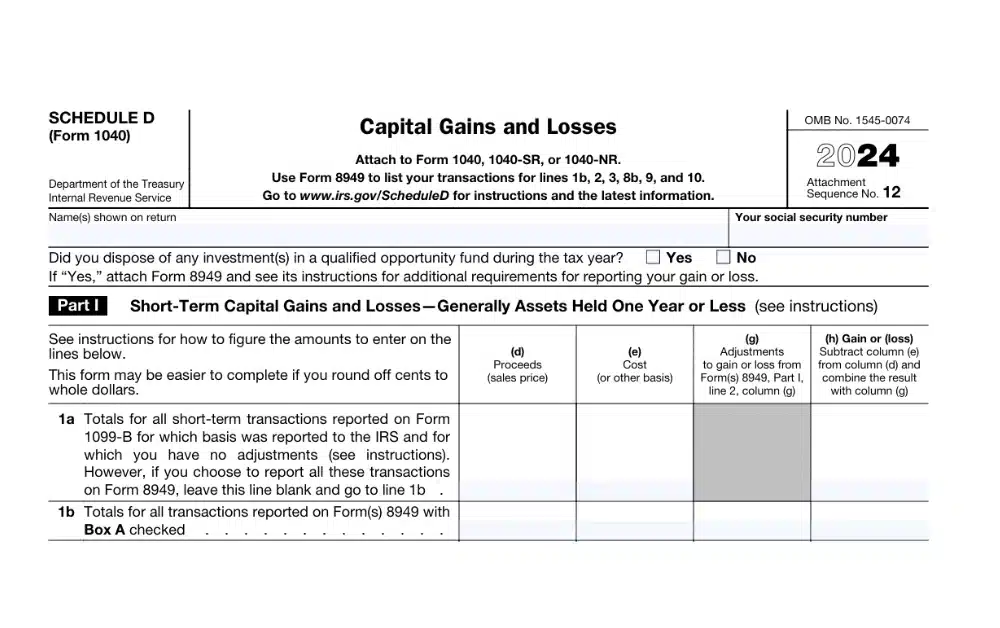
Step 3: Any gain above the exclusion is taxable and can raise MAGI
If your gain is larger than the exclusion amount, the leftover gain is typically taxable capital gain reported on your return. That taxable capital gain increases your AGI and therefore usually increases MAGI for IRMAA purposes.

Two examples
The examples below are simplified on purpose. IRMAA thresholds change over time, and your specific MAGI depends on all your income sources and what is included in your IRMAA MAGI (including tax-exempt interest).
If you are close to a bracket line, it is worth checking current-year IRMAA brackets for your filing status before you finalize a sale.
Example A: Fully excluded gain, no IRMAA impact from the sale
Scenario: Married couple, sold their primary home in 2026.
- Home sale gain: $300,000
- Exclusion (married filing jointly): $500,000
- Taxable gain: $0
Result: The home sale itself does not add taxable income or increase AGI. If their other income stays the same, the sale does not increase the MAGI Medicare uses for IRMAA. No bracket bump from the sale.
Example B: Taxable gain can trigger IRMAA
Scenario: Single filer, sold their primary home in 2026.
- Home sale gain: $400,000
- Exclusion (single): $250,000
- Taxable gain: $150,000
Let’s say their baseline income is about $90,000 of AGI or MAGI in a typical year.
In the year of the sale, their income could jump to roughly:
- $90,000 baseline income
- + $150,000 taxable capital gain
- = $240,000 (roughly, before any other MAGI add-backs)
Result: That one-time spike could push them into a higher IRMAA surcharge tier when Medicare looks back two years later.
In plain English: you might sell in 2026, feel fine in 2027, then get the “surprise” higher Part B and Part D premiums in 2028.
Why this feels confusing
A common question I hear is: “If the home sale is tax-free, can it still raise my Medicare premiums?”
Usually, no, as long as “tax-free” truly means the gain is excluded under the primary-residence home-sale exclusion. If the gain is excluded, it typically does not increase AGI and does not increase IRMAA MAGI.
But there are a few gotchas that can make a sale partially taxable:
- You do not meet the ownership or use test for the exclusion.
- You used part of the home for business or rental, and you have depreciation recapture that is taxable. This often comes up when part of the home was a home office, rental unit, or the home was a rental for a period of time.
- The home was not your primary residence (for example, a vacation home or rental).
- Your gain is above $250,000 or $500,000 after accounting for basis and selling costs.
If any of those apply, you can end up with taxable gain, which is the part that matters for IRMAA.
Partial exclusions happen
One more nuance: some people qualify for a partial home-sale exclusion if they sold because of certain life events (often related to work, health, or other unforeseen circumstances). If that is you, the sale might be partially excluded and partially taxable.
That is still an IRMAA issue, just a smaller one. The taxable portion is what can raise your MAGI.
How long does the IRMAA increase last?
Because a home sale is usually a one-time event, the IRMAA impact is often one year.
Example timeline:
- 2026: You sell the home. Taxable gain (if any) is earned in 2026.
- 2027: You file your 2026 tax return.
- 2028: Medicare uses your 2026 MAGI to set your 2028 IRMAA.
- 2029: Medicare uses your 2027 MAGI. If your income goes back down, the surcharge often goes away.
One caution: it is not guaranteed to be only one year. If the income from the sale is spread across multiple tax years (for example, an installment sale with payments in more than one year) or you stack multiple big income events in back-to-back years, IRMAA can stick around longer.
Is a home sale a life-changing event for IRMAA appeals?
For most people, a voluntary home sale is not one of the life-changing events that lets you ask Social Security to reduce IRMAA using Form SSA-44.
SSA-44 is generally for specific events like work stoppage, work reduction, marriage, divorce or annulment, death of a spouse, loss of income-producing property due to circumstances beyond your control, and certain employer settlements.
If you are looking for the appeal route, head over to our dedicated SSA-44 explainer here: Form SSA-44: How to Request a Medicare IRMAA Reduction.
If you sold your home because of something more complex (for example, a situation that might qualify as “loss of income-producing property” in the SSA definition), it is worth reading that page carefully and talking to a professional before assuming you qualify.
How to reduce the chance of an IRMAA spike
You cannot always avoid higher MAGI after a big sale, but you can often plan around it. A few options to discuss with a tax pro or financial planner:
Lock down your cost basis
Many people overpay taxes (and inflate MAGI) by forgetting improvements that increase basis. Keep receipts for major upgrades like a new roof, kitchen remodel, windows, HVAC, or additions.
Be careful with installment sales and timing
In some cases, spreading income across years can reduce a single-year MAGI spike. But it can also create two different years of higher income, so this is a “get advice first” category.
Avoid stacking other income in the same year
If you have control over certain moves, like large Roth conversions or big IRA withdrawals, doing them in the same year as a taxable home sale can stack income and push you higher than necessary.
Plan for the two-year delay
If you know an IRMAA year is coming, treat it like a scheduled bill. Build it into your retirement cash flow plan so it is annoying, not destabilizing.
Quick FAQ
Does the cash from selling my house count as income for IRMAA?
Not directly. IRMAA looks at MAGI, not cash in your bank account. What matters is the taxable portion of your gain (if any) that shows up on your tax return, plus any MAGI add-backs like tax-exempt interest.
If I sell my home and buy another one, does that avoid IRMAA?
Buying another home does not erase taxable gain. What matters is the gain, the exclusion rules, and what becomes taxable on your return.
What if my income drops the year after the sale?
That is common. Because of the two-year lookback, you might see IRMAA for the year based on your sale year, then see it drop off once Medicare uses the lower-income year after that.
Bottom line
Selling a home can raise Medicare IRMAA premiums, but only when it creates taxable income that increases the MAGI Medicare uses. If your entire gain is sheltered by the $250,000 or $500,000 home-sale exclusion, the sale typically does not push you into an IRMAA surcharge bracket.
The tricky part is timing. A one-time spike hits your Medicare premiums two years later, which is why it feels like it comes out of nowhere.
If you suspect a sale year will create taxable gain, I would run a rough “MAGI preview” before you close. Even a simple back-of-the-napkin estimate can tell you whether you are flirting with an IRMAA bracket line, and that is often the difference between a calm plan and a nasty surprise.