
When my grandparents started needing more help at home, my family’s conversations changed fast. Suddenly we were juggling doctor visits, medications, transportation, and the bigger question no one loves to ask out loud: “What happens if they need nursing home care?”
If you are comparing options for someone who has Medicare and Medicaid, you will usually hear about D-SNPs. But there is another program that comes up a lot in long-term care conversations: PACE, short for the Program of All-Inclusive Care for the Elderly.
PACE and D-SNPs can both serve people who are dual eligible, but they are not the same thing. They are built differently, they cover services differently, and enrolling in PACE is a much bigger shift than simply picking a Medicare Advantage plan.

What PACE is, in plain English
PACE is a Medicare and Medicaid program that provides comprehensive medical care and long-term services and supports through one organization. Think of it as a care model that wraps primary care, specialty care, therapy, prescriptions, transportation, and personal care into one coordinated package.
A key detail: PACE is provider-based. It is not just an insurance card. Your care is delivered through the PACE organization’s team and center, plus PACE-contracted specialists and hospitals, rather than being able to see any provider who takes your plan.
Most PACE participants have an interdisciplinary team that may include a primary care provider, nurse, social worker, therapists, a dietitian, and other staff who build and update one care plan.
Who qualifies for PACE
PACE eligibility is fairly specific, and it is also not available everywhere. Availability varies by state, county, and program service area. In general, a person must meet all of the following:
- Age 55 or older.
- Live in a PACE service area served by a local PACE organization.
- Be certified by the state as needing a nursing-home level of care.
- Be able to live safely in the community with PACE support at the time of enrollment. This can include living at home, with family, or in certain residential settings, depending on state rules.
Important nuance: “Nursing-home level of care” does not always mean the person currently lives in a nursing home. It means their functional or medical needs are serious enough that, without supports, nursing home care could be appropriate.

The level of care test
States run level-of-care determinations, often through Medicaid or an affiliated assessment agency. While the exact scoring and forms vary by state, the assessment generally looks at:
- Activities of daily living (ADLs): bathing, dressing, toileting, transferring, eating, and continence.
- Instrumental activities (IADLs): cooking, managing medications, housekeeping, shopping, and handling money.
- Cognitive and behavioral needs: dementia, confusion, wandering risk, safety awareness.
- Medical complexity: chronic conditions, frequent hospitalizations, wound care needs, injections, oxygen, and other ongoing clinical needs.
- Caregiver situation: whether there is reliable help at home and the level of strain on caregivers.
If you are helping a parent or relative through this step, my best advice is to document reality, not the “good day” version. If mom can bathe independently only when someone is standing by to prevent a fall, that is not fully independent.
What PACE covers
PACE is designed to cover the full spectrum of care a frail older adult might need, with an emphasis on keeping participants safely in the community. Covered services typically include:
Medical care
- Primary care and ongoing care coordination
- Specialist visits (through PACE arrangements)
- Hospital and emergency services
- Lab work, imaging, and preventive care
Prescriptions and therapies
- Prescription drugs (PACE includes drug coverage for participants)
- Physical, occupational, and speech therapy
- Durable medical equipment and supplies (when medically necessary and authorized in the care plan)
Long-term services and supports
- Adult day health services
- Personal care assistance
- Home health services
- Social work support and caregiver education
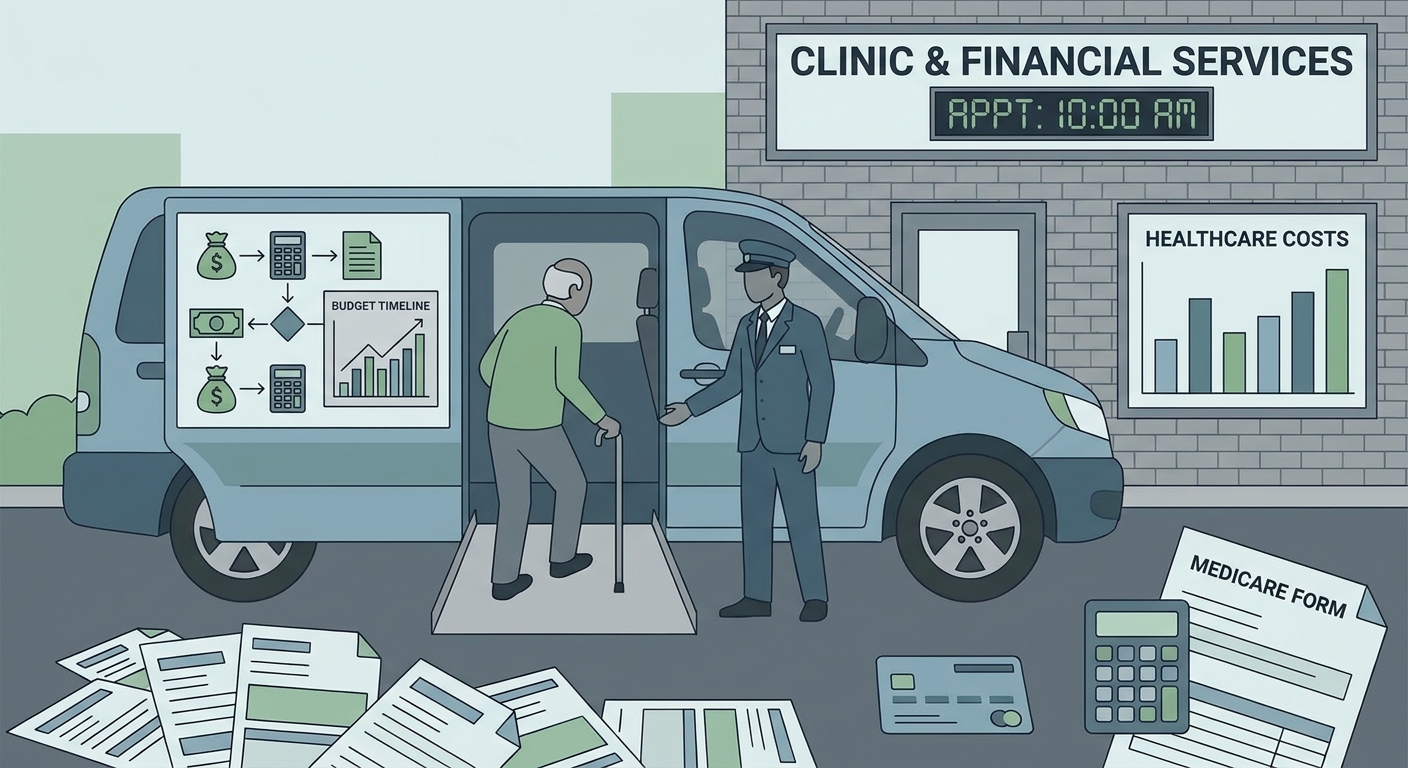
- Transportation to medical appointments and PACE center services
Dental, vision, and hearing
PACE often includes dental, vision, and hearing services, but the exact scope can vary by PACE organization and what the care team determines is medically necessary and authorizes in the care plan. It is still worth asking about up front because these needs can be expensive and easy to neglect when budgets are tight.
One of the biggest selling points of PACE is coordination. Instead of you trying to stitch together multiple providers, authorizations, ride services, and benefits, the PACE team is responsible for building and updating one care plan.

How PACE is paid for
PACE is funded through a combined payment approach:
- Medicare pays the PACE organization a monthly amount for each participant who is eligible for Medicare.
- Medicaid pays the PACE organization a monthly amount for each participant who is eligible for Medicaid and long-term care services in that state.
Those monthly payments are intended to cover the participant’s medically necessary covered services. In other words, the PACE organization is paid to manage the whole package of care, not just individual appointments.
What you pay depends on your coverage and your state’s rules:
- If someone has Medicare and Medicaid, most participants pay $0 for PACE-covered services. That said, state Medicaid rules can affect cost-sharing in some situations, and certain Medicaid eligibility categories can come with separate rules.
- If someone has Medicare but not Medicaid, they can often still enroll in PACE, but they may owe a monthly premium. The premium is set by the PACE organization within program rules, and it generally covers the Medicare portion and long-term care services together. Because PACE includes prescription drug coverage, people typically would not keep a standalone Part D plan when they enroll.
Because rules and costs vary, it is smart to ask the local PACE organization for a written breakdown of premiums (if any) and what is included.
Why PACE is not a D-SNP
This is the part that trips people up.
A D-SNP is a type of Medicare Advantage plan designed for people who have both Medicare and Medicaid (dual eligibility). You enroll in the plan, use the plan’s provider network, and the plan helps coordinate benefits with Medicaid.
PACE is a care delivery program with an integrated financing and care team model. You are not just selecting an insurer. You are joining an organization that takes responsibility for managing and delivering most of your care.
Big practical differences
- Provider flexibility: With a D-SNP, you generally choose providers within the plan’s network. With PACE, care is centered around the PACE team, the PACE center, and PACE-contracted providers. It can feel more all-in.
- Level of need: PACE requires a nursing-home level-of-care determination. Many D-SNPs do not require that.
- Scope of long-term care: PACE is built to include long-term services and supports as part of the standard model. D-SNP coverage of extra supports varies by plan and state Medicaid rules.
- Care coordination intensity: PACE is designed for frequent touchpoints and active care management, often including adult day health services and transportation.
- How services are accessed: PACE often routes services through its center and team. A D-SNP works more like traditional insurance with a provider directory and referrals, even if it offers case management.
If you like to think in systems, here is the simplest way I can put it: a D-SNP is primarily a plan; PACE is primarily a program built around a care team and a center.
PACE downsides to know
PACE can be a lifesaver for the right person, but it is not friction-free. The common tradeoffs include:
- You usually have to switch doctors: PACE care is organized through its providers and contracts. If your loved one is attached to a specific primary care doctor or specialist, this can be the hardest part.
- Center-based care is real: Many programs rely heavily on the PACE day center for services and monitoring. Some participants go often, others less. The schedule depends on the care plan, but it is still a different rhythm than occasional office visits.
- Geography matters: PACE is local. If family is planning a move, even just across county lines, eligibility and continuity can get complicated.
- Care is coordinated through the program: Out-of-area and non-routine services often need to be coordinated or authorized through PACE. In an emergency, you can go to the nearest ER, but follow-up care still tends to route through the program.
- Nursing facility care, if needed, is usually through PACE contracts: If a nursing home stay becomes medically necessary, the program typically uses PACE-contracted facilities, and the interdisciplinary team helps determine the setting and duration.
None of these are dealbreakers automatically, but families do better when they know what they are signing up for.
PACE vs. D-SNP check
If you are trying to decide which direction to explore first, these questions usually clarify things quickly:
- Does the person meet nursing-home level of care? If yes, PACE might be on the table. If not, a D-SNP may be the more realistic option.
- Is there a PACE program nearby? PACE is not available everywhere, and service areas are local.
- Does the person need hands-on supports like transportation, day services, and help with daily activities? That is where PACE can shine.
- Do they want to keep their current doctors? With any option, networks matter, but PACE can be more restrictive because of how care is organized.
How to find and apply
The process is usually straightforward, but it is more involved than clicking “enroll” on a plan comparison tool.
- Find a local PACE organization and confirm the address is within its service area. You can also check Medicare.gov or your state Medicaid site for PACE listings.
- Request an intake meeting to learn how the program works, what services are offered locally, and what participation looks like week to week.
- Complete the state level-of-care assessment if it is not already on file.
- Go through the PACE organization’s health assessment so the interdisciplinary team can build a care plan.
- Review enrollment paperwork and effective dates, including what happens to any current Medicare Advantage plan if the person is switching. Enrollment often starts at the beginning of a month, but timing varies and assessments can take days or weeks.
If you are helping a parent, bring a list of medications, a summary of recent hospital stays, and a candid snapshot of day-to-day challenges at home. The goal is to design the right supports, not to pass a test.
FAQ
Can you have PACE and a D-SNP at the same time?
No. You cannot be enrolled in PACE and a Medicare Advantage plan at the same time, including a D-SNP. Enrolling in PACE replaces the way you receive your Medicare benefits, and it also typically becomes the hub for Medicaid-covered long-term care services for participants who have Medicaid.
Does PACE pay for nursing home care?
PACE is designed to help people stay in the community, but if nursing facility care becomes medically necessary, PACE can cover it when it is authorized under the program’s rules. In practice, that usually means using PACE-contracted facilities, with the care team coordinating the stay and ongoing plan.
Is PACE only for people with Medicaid?
No. Many PACE programs allow enrollment for people who have Medicare but do not qualify for Medicaid. However, out-of-pocket cost can be higher without Medicaid, and not every situation is financially practical.
Why would someone choose a D-SNP instead of PACE?
A D-SNP can be a better fit if the person does not meet nursing-home level of care, wants more flexibility in choosing providers, or simply does not want a center-based care model. Also, D-SNP availability is often broader than PACE availability.
What is the biggest gotcha before enrolling in PACE?
The biggest change is that your care becomes organized through the PACE program and its provider arrangements. For many families that coordination is a relief. For others, switching away from familiar doctors or adjusting to a new care routine can be hard.
The bottom line
If you remember one thing, make it this: PACE is a nursing-home level-of-care program that bundles medical care and long-term supports through one organization. A D-SNP is a Medicare Advantage plan for people who have both Medicare and Medicaid.
Both can be valuable. But they solve different problems. If your loved one is struggling to safely live at home without significant support, PACE is worth a serious look, especially when coordination and transportation are pain points.