
The first time I saw a Form 1099-LTC in the wild, I had the same reaction a lot of people do: Wait… if they sent a tax form, does that mean I owe taxes on this money? Totally fair question.
Here is the good news: many long-term care (LTC) insurance benefits are not taxable, especially when the policy is tax-qualified and the benefits are paying for actual long-term care for a chronically ill person.
Where people get tripped up is when a policy pays a fixed daily or monthly amount (instead of reimbursing actual bills). In that case, you can end up with taxable income if your payments are more than what the IRS allows for a tax-free per-diem benefit.
- Most common scenario: tax-qualified reimbursement benefits for qualified care are usually tax-free.
- Most common surprise: per-diem or indemnity benefits can be partly taxable if they exceed IRS limits and your qualified expenses.
- Best first step: look at your 1099-LTC and your policy to confirm whether benefits were reimbursement or per-diem.
Start here: are LTC benefits taxable?
In general, long-term care insurance benefits are excluded from taxable income when:
- The policy is tax-qualified (more on that below), and
- The insured person is chronically ill, and
- The benefits are for qualified long-term care services (generally provided under a plan of care from a licensed health care practitioner).
Benefits are more likely to become taxable when the policy pays cash benefits not tied to actual expenses (per-diem or indemnity benefits) and the payments exceed IRS limits.
Also, some older or non-tax-qualified contracts can have different rules, which is why the policy paperwork matters.
One more point that calms people down: who receives the check is not the main tax issue. Whether the insurer paid you or paid a facility directly, the key questions are still reimbursement vs per-diem and whether the care is qualified.
What tax-qualified means
A tax-qualified long-term care insurance contract is one that meets federal requirements under Internal Revenue Code Section 7702B. This matters because tax-qualified benefits are generally treated like health insurance benefits, meaning they are usually excluded from income.
To receive benefits, the insured typically must be certified as chronically ill by a licensed health care practitioner.
What counts as chronically ill
While your insurer handles the certification process, the tax concept usually boils down to one of these:
- You need substantial assistance with at least two activities of daily living (ADLs) for at least 90 days, or
- You require substantial supervision due to severe cognitive impairment (for example, Alzheimer’s disease or similar conditions).
Common ADLs include bathing, dressing, eating, transferring, toileting, and continence.
Reimbursement vs per-diem
LTC policies generally pay benefits in one of two ways. This is the single biggest factor in whether benefits can become taxable.
Reimbursement policies
A reimbursement policy pays you back for eligible long-term care expenses, up to your daily or monthly maximum. You submit bills or the provider bills the insurer.
Tax-wise, reimbursement benefits are usually simple:
- If the expense is a qualified long-term care service and the contract is tax-qualified, the reimbursement is generally not taxable.
- Because the benefit is tied to actual costs, you typically do not run into the IRS per-diem limit problem.
Per-diem or indemnity policies
A per-diem (sometimes called indemnity) policy pays a set dollar amount per day or per month once you qualify, regardless of your actual bills.
That flexibility can be great. You might use the cash for family caregiver help, home modifications, or to cover gaps.
But here is the trade-off: per-diem benefits can become taxable if they are more than the IRS allows you to exclude from income.

When per-diem benefits are taxable
If you receive per-diem (indemnity) LTC benefits, the IRS generally allows you to exclude from income the greater of:
- Your actual qualified long-term care expenses for the period, or
- The IRS per-diem limit for that year (stated as a daily dollar limit and indexed annually).
If your per-diem benefits are more than the greater of those two numbers, the excess is generally taxable income.
A quick example (made-up numbers, real idea)
Let’s say your indemnity policy pays you $450 per day.
- Your qualified LTC expenses for the day average $250.
- The IRS per-diem limit for that tax year is $400 per day.
The greater number is $400. Your benefit is $450. That extra $50 per day is the part that may be taxable (once you add it up over the year).
Important: the IRS per-diem limit changes over time. Do not guess. Look up the per-diem limit for the tax year in question (or ask your tax preparer what number they are using) and keep documentation of actual care costs.
What Form 1099-LTC reports
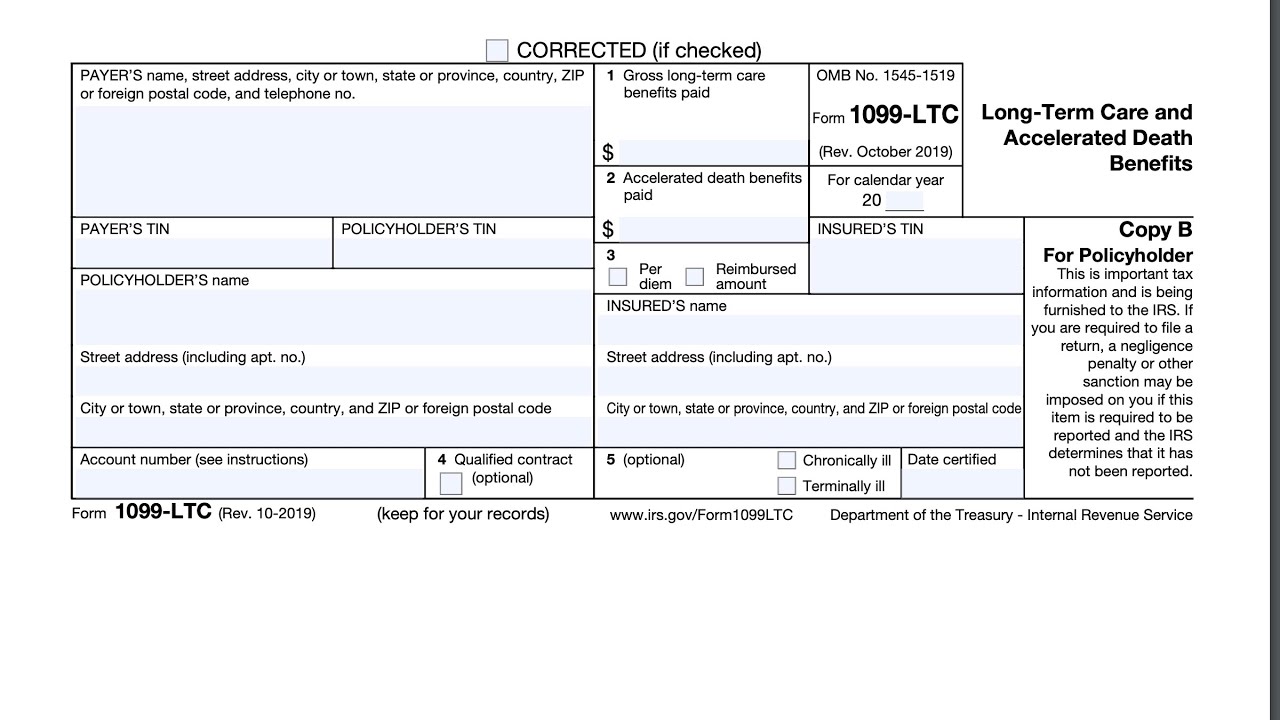
Form 1099-LTC reports payments made under a long-term care insurance contract or accelerated death benefits paid because of chronic illness.
Most people see a 1099 and assume it is fully taxable. With LTC benefits, that is not how it works.
What you will typically see on the form
- The total benefits paid during the year
- An indicator for whether the benefits were paid as reimbursements or as per-diem/indemnity
- Who received the payments (you, your provider, or someone else depending on the setup)
Why the form matters
Think of the 1099-LTC as an information form. It gives you and the IRS a record of what was paid and how it was paid. Your job when filing is to determine whether any portion is taxable, which mostly comes down to:
- Is this a tax-qualified contract?
- Were benefits reimbursement or per-diem?
- If per-diem, did benefits exceed the greater of the IRS limit or your actual qualified expenses?
If you receive per-diem benefits, good recordkeeping is your friend. Save invoices, caregiver agreements, and proof of payment so you can support the amount of qualified expenses you claim.
One practical note: getting a 1099-LTC does not mean you automatically enter it as taxable income. Many people keep it with their tax records and only report taxable amounts if they have per-diem benefits that exceed limits. Still, do not ignore it.
What counts as qualified LTC services
Qualified long-term care services generally include necessary diagnostic, preventive, therapeutic, curing, treating, mitigating, and rehabilitative services, plus maintenance or personal care services required by a chronically ill individual, generally under a plan of care.
In plain English, this often means things like:
- Home health aides helping with bathing, dressing, and transfers
- Skilled nursing care
- Assisted living or nursing home care that is primarily for long-term care services
- Certain therapy services when part of the care plan
Your insurer’s definition of covered services and the IRS definition of qualified services are not always identical, but they overlap heavily for tax-qualified policies.
Expenses that may not qualify
This is a big one because it affects both taxes and expectations. Some expenses are real and necessary, but still may not count as “qualified long-term care services” for tax purposes.
Common examples that often do not qualify on their own include:
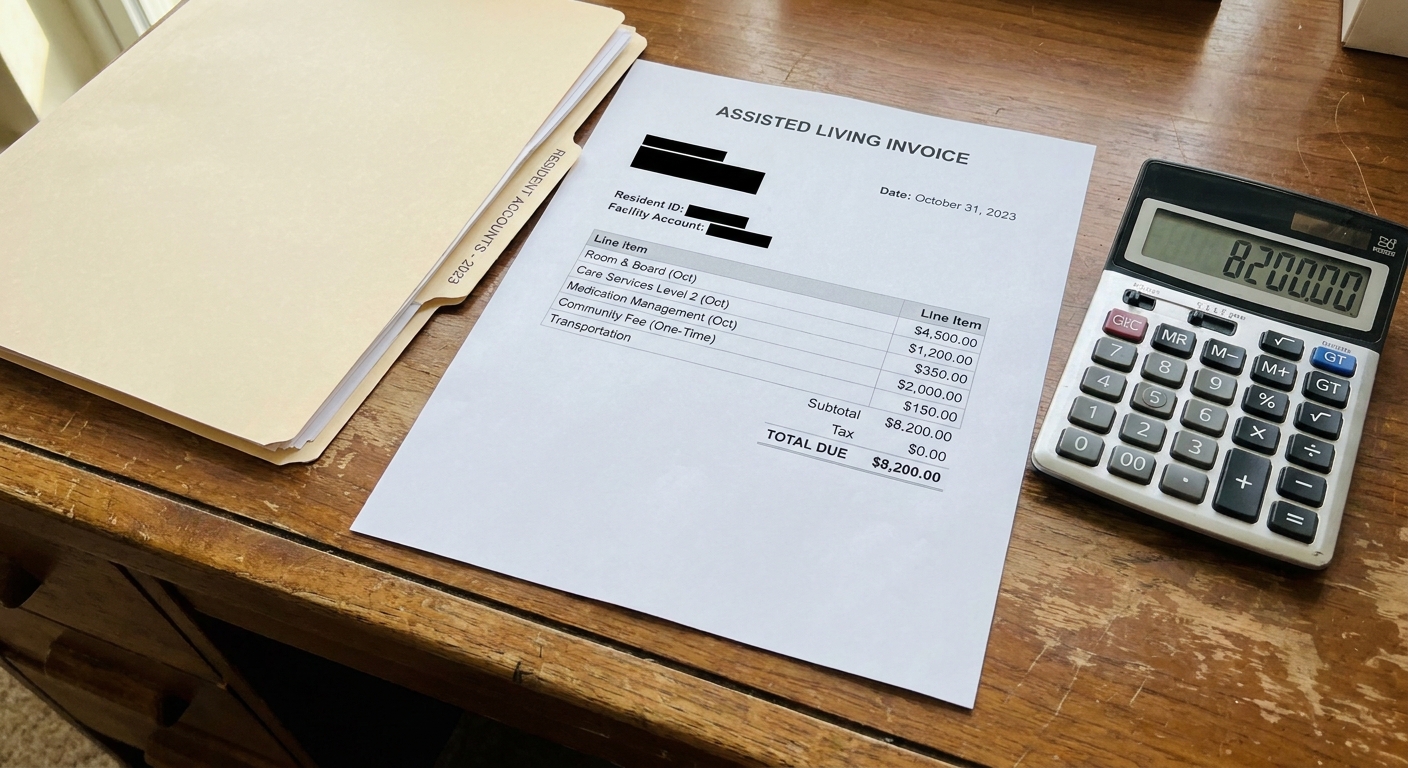
- Room and board and meals in some settings, especially if the cost is basically regular living expenses
- Household expenses like rent, mortgage, utilities, or basic groceries
- General lifestyle spending like entertainment and travel
- Services not required by a plan of care for a chronically ill person
The nuance: room and board and meals can be part of qualified costs in facility settings when the primary reason for being there is to receive qualified long-term care services for a chronically ill individual, and the care is provided under a plan of care. In other words, it is not that these charges are always nonqualified. It is that they are easy to misclassify when the bill is really a housing bill with some help layered in.
If you have an indemnity policy, this is also where people can accidentally create taxable income. If you receive $X in per-diem benefits but your actual qualified care costs are much lower, the overage can become taxable.
Accelerated death benefits
Some life insurance policies let you access part of the death benefit early through an accelerated death benefit or a chronic illness rider. These payments can also show up on Form 1099-LTC.
The tax treatment depends on how the benefit is structured. If it is treated like qualified long-term care (and the insured is chronically ill), benefits are often excluded from income under similar rules, including the per-diem limitation for cash-style benefits.
This is one of those areas where policy language really matters. If you are unsure whether you have “true LTC” coverage or a life insurance rider that behaves differently, ask the carrier for a plain-English description of how benefits are paid and reported.
Are you at risk of taxable benefits?
If you want a quick gut-check, run through this list:
- You are probably fine if your benefits are paid as reimbursement for qualified care.
- Pay closer attention if your policy pays a flat $200 per day or $6,000 per month regardless of bills.
- You may have taxable income if your per-diem payments are higher than both (1) the IRS per-diem limit and (2) your actual qualified LTC expenses.
My recordkeeping tip
If you or a parent is receiving per-diem benefits, set up a simple folder system (paper or digital) for:
- Invoices from facilities or home care agencies
- Caregiver agreements if paying a family caregiver
- Proof of payment (bank statements, canceled checks)
- The care plan and chronic illness certification
It is not fun paperwork, but it is much better than trying to recreate a year of care expenses at tax time.
Quick note on state taxes
Many states follow the federal tax treatment, but not all rules are identical. If you are in a state with its own income tax, it is worth confirming whether your state conforms to the federal exclusion rules for LTC benefits.
FAQ
Do I have to report a 1099-LTC on my tax return?
Often the benefits are not included in taxable income, but the form is still part of your tax records. Whether anything needs to be entered depends on how you received benefits (reimbursement vs per-diem) and how your tax software or preparer handles informational forms. If you receive a 1099-LTC, do not ignore it. Make sure it is treated correctly.
What if the insurer paid my nursing home directly?
That is common with reimbursement-style benefits. In many cases, it results in non-taxable benefits when the policy is tax-qualified and the care is qualified. The tax outcome is driven more by reimbursement vs per-diem than by who physically received the payment.
Can I deduct long-term care expenses if insurance paid the benefits?
You generally cannot double-dip. If the insurance benefits paid the expense tax-free, you typically cannot also deduct the same expense as an unreimbursed medical expense. If you have per-diem benefits, the math can get tricky because you may have out-of-pocket costs above what was covered. When dollars are significant, ask a tax professional to help you avoid double counting.
Does getting a 1099-LTC mean I am being audited?
No. It is a standard information form. The IRS receives a copy, but that is normal reporting, not an automatic red flag.
The bottom line
Many tax-qualified long-term care insurance benefits are not taxable, especially when they reimburse actual qualified care expenses for a chronically ill person.
The biggest situation where taxes can pop up is with indemnity or per-diem policies. If your cash benefit is more than the greater of your actual qualified expenses or the IRS per-diem limit, the excess is generally taxable.
If you have a Form 1099-LTC and you are not sure what type of benefits you received, start by checking the box on the form that indicates per-diem vs reimbursement (often labeled in Box 3 on recent versions). From there, match benefits to qualified expenses and confirm the IRS per-diem limit for the year. When the numbers get large, looping in a CPA for one year can save a lot of stress.