
If you have ever looked at your auto policy and thought, “Wait, why am I paying for coverage that sounds like the other driver’s job?” you are not alone. I remember staring at my own declarations page years ago, trying to cut costs while I was digging out of debt, and UM and UIM felt like optional fluff.
Then I learned the hard truth: uninsured and underinsured motorist coverage exists because not everyone follows the rules, and even “insured” drivers often carry limits that do not come close to what a serious crash can cost.

Let’s break down what uninsured motorist (UM) and underinsured motorist (UIM) coverage pays, what it does not, and the limits worth comparing so you can make a decision you will not regret later.
UM vs. UIM in plain English
Uninsured motorist (UM) coverage helps when the at-fault driver has no car insurance (or in some situations, cannot be identified, like a hit-and-run).
Underinsured motorist (UIM) coverage helps when the at-fault driver has insurance, but their liability limits are too low to fully cover your losses.
Both coverages are about the other driver’s lack of ability to pay, but they pay benefits through your policy.
What uninsured motorist pays (UM)
UM coverage is often split into two buckets. What is available and required depends on your state and insurer, and many people only carry the bodily injury piece.
UM bodily injury (UMBI)
UM bodily injury is the big one. It generally helps pay for injuries to you and your passengers when an uninsured driver causes a crash.
Common expenses UMBI can cover include:
- Medical bills (ER visit, surgery, physical therapy, follow-up appointments)
- Lost wages if you cannot work
- Pain and suffering (this is the big difference vs. some “medical payments” style coverages)
- Ongoing impairment damages in severe cases (for example, reduced earning ability)
- Funeral expenses if a crash is fatal
UM property damage (UMPD)
In some states, you can also buy uninsured motorist property damage. This can help pay to repair or replace your car (and sometimes certain property items) after an uninsured driver hits you.
Two important gotchas:
- UMPD availability varies by state. Some states do not offer it, and some insurers only offer it under certain conditions.
- UMPD may have a cap and may have a deductible. It is often not as robust as collision coverage.
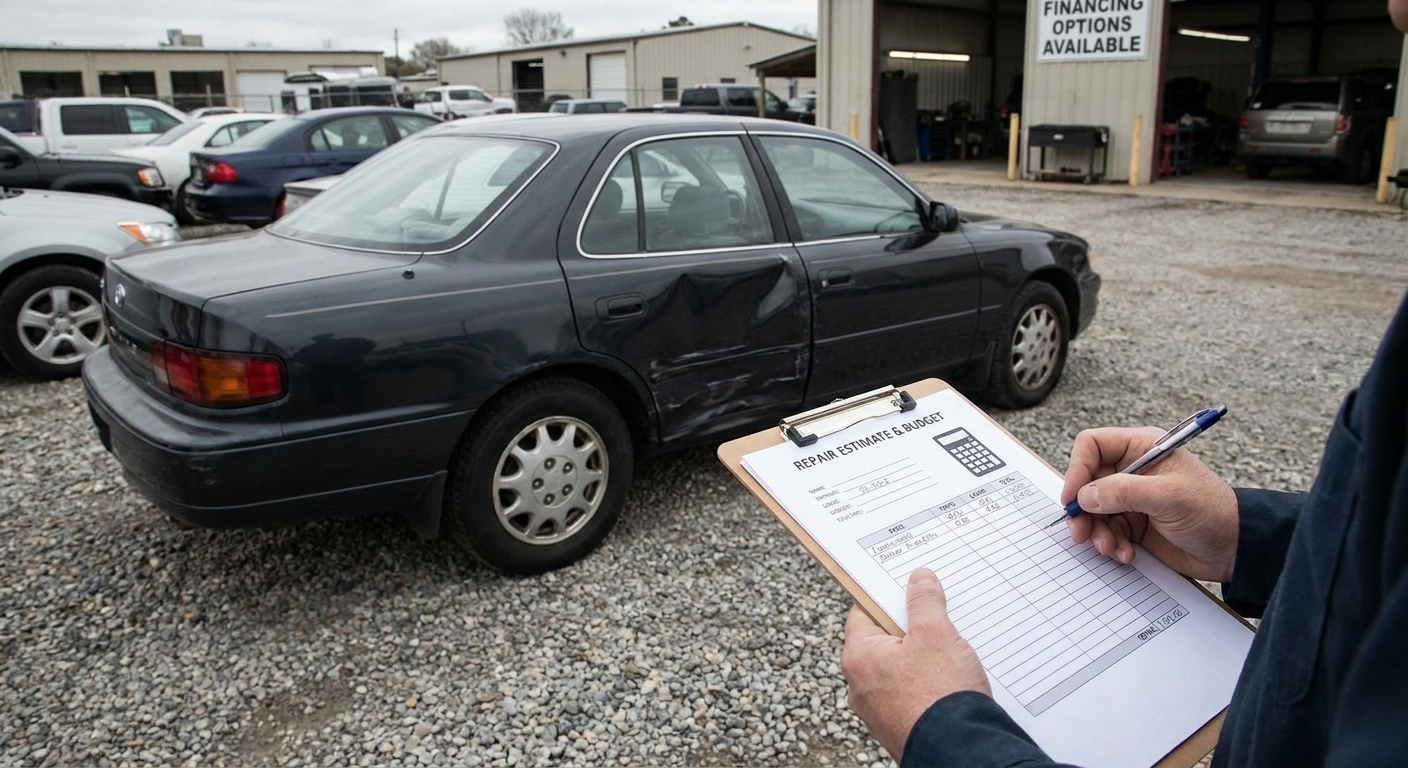
Hit-and-run note: Many policies treat a hit-and-run driver as “uninsured,” especially for injuries. But some states and policies require physical contact with the other vehicle for UM to apply in a hit-and-run, and property damage rules are even more state-specific. If you are ever hit and the other driver flees, call the police and your insurer as soon as you can, because documentation matters.
What underinsured motorist pays (UIM)
Underinsured motorist coverage is usually focused on bodily injury, and it steps in when the at-fault driver’s liability coverage is not enough.
UIM bodily injury (UIMBI)
Think of UIMBI as protection when the other driver’s limits are too small. Depending on your state, it may work like a true “extra layer,” or it may work more like difference-in-limits that is reduced by what the other driver’s insurer pays.
Example: the other driver carries $25,000 of bodily injury liability per person, but your injury claim totals $90,000. Once their insurer pays the $25,000 limit, your UIMBI may cover some of the remaining eligible costs, up to your UIM limit, subject to how your state applies the coverage (often reduced by the other driver’s payment).
UIM property damage (UIMPD)
Underinsured motorist property damage exists in some places, but it is less common and more state-dependent than bodily injury. In many states it is not offered at all, and some carriers restrict it if you already carry collision. Most drivers will not see UIMPD as a meaningful option when they shop.
UM/UIM vs. collision
This is where a lot of people get tripped up, especially if you just read the names and assume everything overlaps.
Collision pays for your car
Collision coverage helps repair or replace your vehicle after a covered loss when you hit another car or object, no matter who caused the accident. You generally pay a deductible, then the insurer pays the rest (up to your car’s value, if it is a total loss). Like any coverage, collision can have exclusions and conditions, so the details in your policy matter.
If you want to go deeper on how deductibles change your premium and risk, check out our guide on Car Insurance Deductibles: $250 vs $500 vs $1,000.
UM/UIM mainly pays for injuries
UM/UIM is primarily about bodily injury losses caused by a driver who has no insurance or not enough insurance. Depending on your state and policy, it may also help with vehicle damage (UMPD or UIMPD), but that is not the core benefit in many states.
You can use both
It is possible to have a crash where:
- Collision pays to fix your car (minus your deductible), and
- UM/UIM bodily injury pays for injuries, lost wages, and related damages.
After the dust settles, your insurer may pursue the at-fault driver for reimbursement (this is called subrogation). If they recover money, you may get your deductible back in some cases. The timing and rules vary.
What UM/UIM usually does not pay
UM and UIM are powerful, but they are not a blank check. Common exclusions and limitations include:
- Damage to your own car if you do not have UMPD (or your state does not allow it). In many situations, that falls to collision.
- Your injuries if you caused the accident. UM/UIM is generally tied to the other driver being at fault.
- Normal wear, pre-existing damage, or unrelated medical issues. The crash has to be the cause.
- Gaps above your policy limits. If your losses exceed your UM/UIM limits, you may still be on the hook.
- Business use issues if you drive for work or gig apps but do not have the correct endorsement (this depends on your policy terms).
Also, UM/UIM rules are extremely state-specific. Some states require UM, some require insurers to offer it, and some allow you to reject it in writing. The practical takeaway is the same: understand what you are buying, and do not assume your friend in another state has the same rules you do.
UM/UIM limits to compare
When you shop for car insurance, it is easy to focus on the monthly price and ignore the numbers that actually matter. UM/UIM is one of those areas where limits matter more than deductibles (because injury claims can get expensive fast).
1) Match your liability limits
A common rule of thumb is to carry UM/UIM limits that are equal to your own bodily injury liability limits.
Why? If you hurt someone badly, you would want your liability limits to protect your finances. UM/UIM is the mirror image: it helps protect you if someone else’s insurance is missing or weak.
2) Per person vs per accident
Limits often look like 100/300, meaning:
- $100,000 per person for bodily injury
- $300,000 per accident total for all injured people combined
If you regularly drive with family or carpool, the “per accident” number matters more than most people realize.
3) Stacking rules
Some states allow stacked UM/UIM coverage, meaning you can combine limits across multiple vehicles on the same policy (or sometimes across policies). Other states only allow non-stacked coverage.
This is one of those “fine print” items worth asking your agent or insurer about, because stacking can significantly increase protection, but it can also increase premium.
4) Property damage options
If your insurer offers UMPD or UIMPD, check:
- Whether it is available in your state
- The maximum payout limit
- Whether there is a deductible
- Whether it conflicts with, duplicates, or is restricted by your collision coverage

5) Reduced-by vs add-on language
How UIM applies can depend on state law and policy language. In some places, the amount you can collect under UIM may be reduced by what the at-fault driver’s insurer already paid. In other places, it may function more like an add-on layer.
Because this varies, the best move is to ask a direct question when you get a quote: “If the other driver has $25,000 and I have $100,000 of UIM, what is the most my policy could pay in a serious injury claim?”
Payout example
Let’s say you are rear-ended at a stoplight. The other driver is at fault. Here are three common scenarios.
Scenario A: The other driver is uninsured
- Your medical bills and missed work total $45,000.
- You have UM bodily injury limits of 100/300.
UMBI could pay up to $45,000 (assuming the claim is eligible), because it is under your $100,000 per-person limit.
Scenario B: The other driver is underinsured
- Your injury claim totals $120,000.
- The other driver has $50,000 per person of liability coverage.
- You have UIMBI limits of 100/300.
The other driver’s insurer pays $50,000 (their limit). Your UIM could potentially cover some of the remaining $70,000, up to your UIM limit and depending on your state’s rules. In a reduced-by state, your $100,000 UIM limit may be reduced by the $50,000 already paid, meaning the maximum available from UIM could be $50,000. In an add-on state, it may be closer to the full $70,000 (still capped by your limit).
Scenario C: Your car is totaled
- Your car is worth $18,000.
- You have collision with a $1,000 deductible.
- You do not have UMPD (or it is not available).
Your collision coverage would typically pay the car’s value (minus your deductible), so roughly $17,000. Injury-related losses would be separate and could fall under UM/UIM bodily injury if the other driver is uninsured or underinsured.
How UM/UIM works with other coverage
Depending on your state, you may also have:
- MedPay (Medical Payments)
- PIP (Personal Injury Protection)
These coverages can help pay medical bills after a crash, sometimes regardless of fault. UM/UIM can overlap, but it often kicks in differently, especially when you are seeking compensation for lost wages or pain and suffering.
Also, your health insurance may pay some treatment costs, but that does not automatically make you whole. Deductibles, copays, out-of-network charges, and missed work can still be major financial hits. UM/UIM is one way drivers protect themselves from that gap.
Pedestrian and cyclist note
In many states and policies, UM/UIM can follow you beyond the car, meaning it may cover you if you are hit as a pedestrian or while biking. It is not universal, so check how your policy defines an “insured person.”
How to file a UM/UIM claim
If you ever have to use UM/UIM, a few practical steps can make the process smoother:
- Report the crash and document it. A police report, witness info, and photos can matter, especially in hit-and-run claims (and in some places, the physical-contact requirement makes details critical).
- Notify your insurer promptly. UM/UIM claims can have strict notice rules.
- Get medical documentation early. UM/UIM injury claims are still injury claims, so treatment notes and work-loss paperwork matter.
- Do not sign a settlement too fast. For UIM, many policies have a consent-to-settle requirement so your insurer can protect subrogation rights. If you accept the other driver’s settlement without following the process, you could accidentally jeopardize your UIM claim.
Some policies also use arbitration to resolve disputes about fault or the value of injuries. Deadlines and procedures vary by state, so if you are dealing with a serious injury, it is worth reading the claim conditions section of your policy and asking direct questions.
Is UM/UIM worth it?
For many households, UM/UIM is one of the best values on the policy because a serious injury claim can become a life-changing expense.
I look at it like this: you can be a careful driver and still get financially sideswiped by someone else’s bad decisions or bare-minimum coverage.
UM/UIM is especially worth a hard look if:
- You have savings you are trying to protect
- You have people who depend on your income
- You do a lot of driving (commuting, road trips, rideshares as a passenger)
- You carry strong liability limits and want your coverage to be symmetrical
Umbrella policy note
Some people ask whether an umbrella policy covers uninsured and underinsured motorist claims. The answer depends on the umbrella insurer and the state, and many umbrellas do not automatically extend UM/UIM.
If you are exploring that route, see our overview of umbrella insurance and then confirm in writing what your policy does and does not include.
Quick FAQ
Do I pay a deductible for UM/UIM?
For UM/UIM bodily injury, deductibles are typically not the main feature like they are with collision, but rules can vary. For UM property damage, a deductible may apply depending on your state and insurer.
Does UM/UIM cover my passengers?
In many cases, yes, passengers in your car are often covered under UM/UIM bodily injury. The exact rules depend on your policy definitions and state law, and limits still apply.
What if the other driver lies about insurance?
Your insurer will verify coverage. If the other driver ends up uninsured, UM may apply. If they are insured but their limits are too low, UIM may apply.
Can I use UM/UIM if I was partially at fault?
This depends on your state’s fault rules (comparative negligence) and your policy terms. Even if UM/UIM is available, the payout may be reduced if you share fault.
Does UM/UIM cover a rental car?
Usually, rental reimbursement is a separate coverage. UM/UIM is primarily about injury losses and, in limited situations, property damage.
The takeaway
Uninsured and underinsured motorist coverage is there to pay when the other driver cannot, especially for injuries that can blow up your budget for months or years. Collision is still the workhorse for repairing your car, but UM/UIM can be the difference between getting back to normal and taking on debt you did not choose.
If you are reviewing your policy this week, start by comparing your UM/UIM limits to your liability limits. Then ask about stacking, whether your state has reduced-by or add-on UIM rules, and whether property damage options exist where you live. Those few minutes can prevent a very expensive surprise later.