
VA home loans are one of the most borrower-friendly ways to buy a home, thanks to perks like 0% down options, no monthly mortgage insurance, and competitive rates. But the VA does not hand out eligibility automatically. You qualify based on your military service history (or your spouse’s), your discharge status, and a few specific exceptions.
This guide walks you through the VA loan eligibility requirements, including minimum service rules for active duty and Guard or Reserve, acceptable discharge types, surviving-spouse rules (including remarriage exceptions), how entitlement fits into the picture, and what your lender will still verify even if the VA says you are eligible.
What “eligible for a VA loan” means
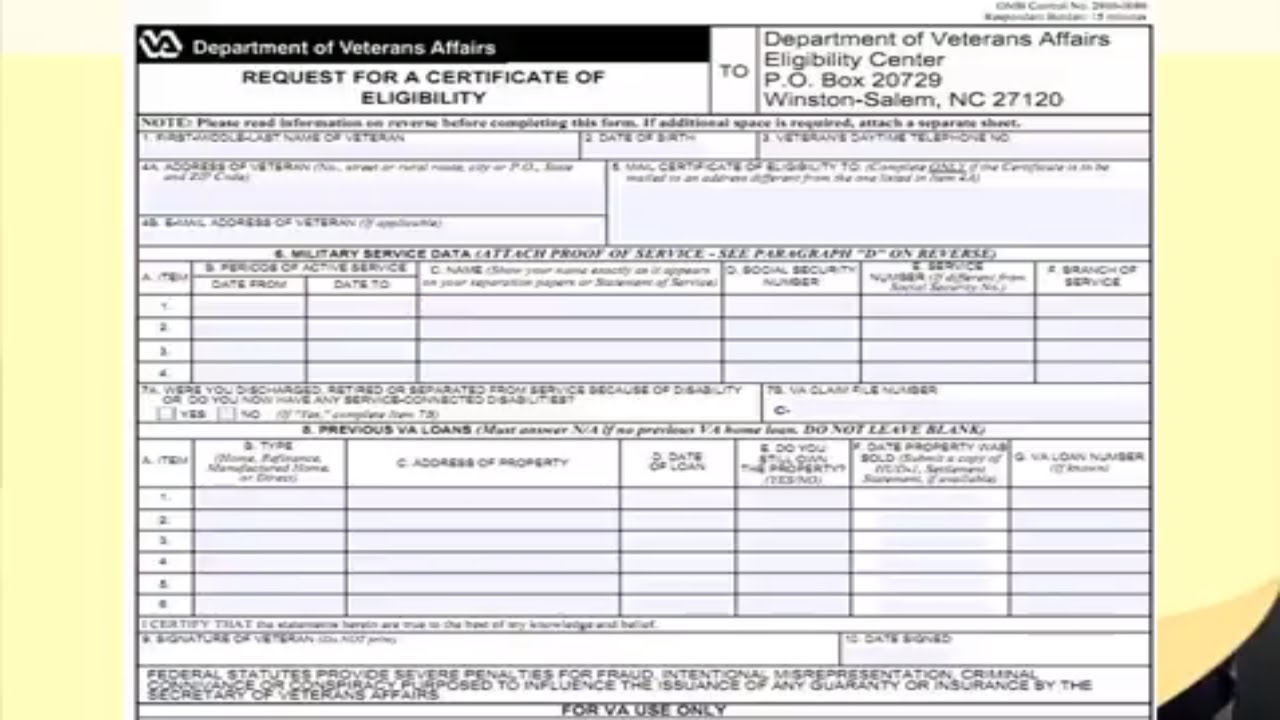
VA eligibility is mainly about whether the Department of Veterans Affairs recognizes your service as qualifying. If it does, the VA can issue you a Certificate of Eligibility (COE).
Two quick clarifiers that save a lot of stress:
- Eligibility is not loan approval. The VA sets the program rules, but your lender still decides whether to approve you based on credit, income, debt, and other underwriting factors.
- Eligibility and entitlement are related but not identical. Your COE shows you are eligible and also shows your entitlement status, which affects down payment requirements in some situations.
Minimum service requirements
The VA looks at when you served, how long you served, and how you were discharged. Minimum service rules can change depending on wartime vs peacetime service and whether you were active duty vs Guard or Reserve.
One important note that gets missed online: many borrowers who entered service after September 7, 1980 (enlisted) or after October 16, 1981 (officer) are subject to a 24-month or full-period-of-service rule, with exceptions (for example, certain hardship discharges, convenience of the government after a minimum period, or discharge due to a service-connected disability). If your service time is shorter than the basic benchmarks below, your entry date and discharge reason can make or break eligibility.
Active duty service members
In many cases, active duty members can qualify after a minimum period of continuous service. The VA generally requires:
- At least 90 days of active-duty service during wartime, or
- At least 181 days of active-duty service during peacetime.
If you are currently serving, your lender will typically use a statement of service and then the COE system to confirm eligibility.
Wartime vs peacetime: The VA uses specific date ranges to define wartime periods. If your service dates are close to a cutoff, it is worth verifying the official wartime period dates through the VA or your lender’s COE system.
Veterans (previously active duty)
For veterans, the VA generally uses the same wartime vs peacetime service concepts and then applies discharge rules. If your service length meets the requirement (or you fall under an exception) and your discharge is acceptable, you are generally in good shape.
If you were discharged for a service-connected disability, you may qualify even with less time served than the standard minimums.
National Guard and Reserve
Guard and Reserve eligibility is often met in one of two ways:
- Six years of creditable service in the Selected Reserve or National Guard and an honorable discharge (or continued service if you are still in good standing), or
- At least 90 days of qualifying active service under eligible orders, including many Title 10 activations and certain qualifying Title 32 service, depending on your service history.
Because Guard and Reserve documentation can be more complex, it is especially important that your COE matches your record. If something looks off, it is often a fixable paperwork issue, not an automatic no.
Other eligible categories
There are a few additional groups that can qualify in specific circumstances, such as certain Public Health Service or NOAA service. If your service does not fit neatly into the common buckets above, a COE request is still the best way to get a definitive answer.
Acceptable discharge types
Your discharge status is one of the biggest eligibility gates.
Discharge types that commonly qualify
- Honorable
- General under honorable conditions (typically acceptable for VA home loan eligibility)
Discharge situations that may block eligibility
- Other than honorable (often requires VA review and can be disqualifying)
- Bad conduct
- Dishonorable
If your discharge is not straightforward, the VA may require a Character of Discharge determination. This process is the VA reviewing your service circumstances to decide whether benefits can be granted.
Surviving spouse eligibility
Some surviving spouses can be eligible for a VA home loan benefit. While the details depend on the situation, the VA commonly looks at factors like:
- Whether the service member died in the line of duty or as a result of a service-connected disability
- Whether the surviving spouse has remarried
- Whether the surviving spouse is recognized as eligible for VA benefits under VA guidelines
In many cases, a surviving spouse must be unremarried to be eligible, but there are notable exceptions. For example, some surviving spouses can remain eligible if they remarry after age 57 and after December 16, 2003. Other exceptions can apply in certain DIC-related scenarios.
Two quick examples to make this concrete:
- If your spouse died from a service-connected condition and you have not remarried, you may qualify.
- If you remarried later in life, you might still qualify under an exception, but you should confirm through the COE process rather than guessing.
If you are a surviving spouse, ask the lender to pull your COE or work directly through the VA COE process, because the COE is what confirms eligibility.
Common eligibility holdups
When people say they were “denied a VA loan,” it is often either a lender denial (credit or income) or a documentation problem. Here are the service-related issues that most commonly create a hard stop or delay:
- Insufficient qualifying service time (especially for Guard or Reserve without enough creditable years or qualifying active orders)
- Discharge status that is not eligible (or requires a Character of Discharge determination)
- Missing or mismatched paperwork (dates, branch, SSN, or service component errors)
- Prior VA loan default or foreclosure that caused a loss to the VA that is still unresolved or unrepaid (can affect your ability to reuse the benefit)
How entitlement fits in
Entitlement is the VA’s way of describing how much of your loan the VA will guarantee. Think of it as the “benefit capacity” attached to your eligibility.
Here is the practical version:
- If you are eligible, you can have entitlement.
- If you have full entitlement, VA loan limits generally do not cap how much you can borrow with 0% down. Your actual borrowing power still depends on lender guidelines and your income, credit, and the home’s appraisal.
- If you have remaining (partial) entitlement because you have an active VA loan or you did not restore entitlement after a prior VA loan, you can often still use a VA loan again, but a down payment may be required depending on the purchase price and how much entitlement is available.
Your COE typically shows whether you have full entitlement available or if you have remaining entitlement tied to another VA loan.
How to get your COE
The COE is the document that proves to lenders that the VA considers you eligible. You can get it a few different ways, and the best option depends on how quickly you need it and how complicated your service history is.
Option 1: Ask your lender to pull it
Many VA-approved lenders can access the VA system and request your COE for you. For straightforward cases, this is often the fastest route.
Option 2: Apply online through the VA
You can request a COE through the VA’s online portal. This can be a good option if you want to see your entitlement status early, before you shop for a lender.
Option 3: Mail in the COE request
This is slower, but sometimes necessary when documentation is unusual or when the VA needs to manually review records.
Documents you may need
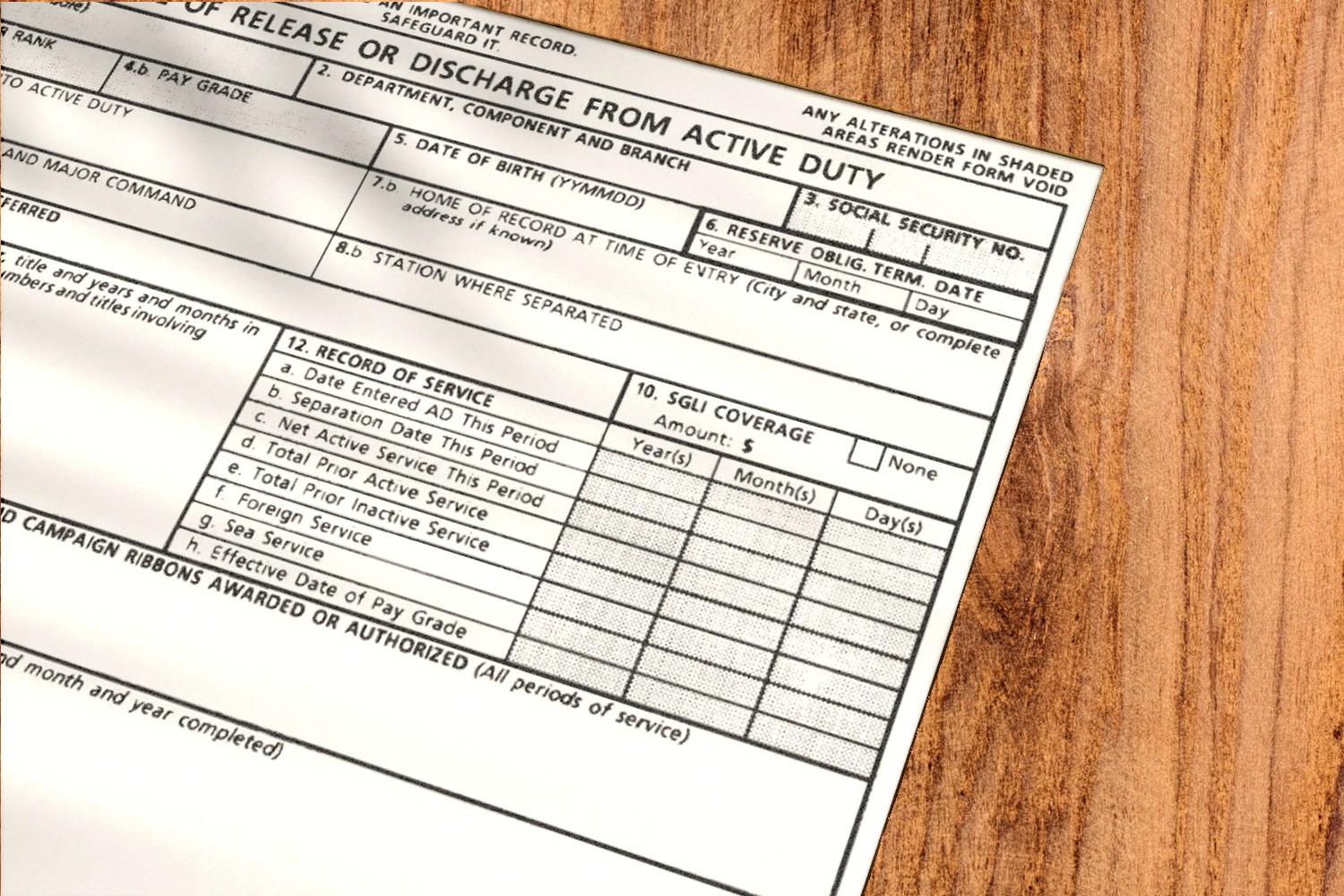
- Veterans: DD Form 214 (typically showing your character of service)
- Active duty: Statement of Service signed by your command
- Guard or Reserve: Evidence of service length and character of service (often points statements, orders, and discharge paperwork)
- Surviving spouses: VA-specific documentation (varies by scenario) plus marriage and death records as applicable
If your COE comes back with an error, do not panic. Most issues are solved by submitting the right supporting documents or correcting a record mismatch.
One more COE-related detail: your COE may also show whether you are exempt from the VA funding fee (commonly due to a qualifying service-connected disability). Funding fee status is not the same thing as eligibility, but it can have a big impact on your costs.
What lenders still verify
This part surprises people: a COE confirms eligibility, but it does not guarantee you get approved for the mortgage.
Credit and payment history
The VA does not set a universal minimum credit score. Lenders do. Many lenders look for a score in the typical conventional range, but approvals can happen below that depending on the overall file.
What underwriters really care about is whether you pay your bills on time and whether recent negatives are resolved.
Income, employment, and stability
Lenders verify that your income is steady and likely to continue. You will typically provide pay stubs, W-2s, tax returns (especially if you are self-employed), and verification of employment.
Debt-to-income and residual income
VA loans are known for flexibility on debt-to-income ratios, but that does not mean unlimited. VA underwriting also looks at residual income, which is the money you have left each month after major obligations. This is one reason VA loans can approve borrowers who look tight on paper but still have solid cash flow.
Appraisal and property requirements
The VA requires an appraisal that also checks basic safety and livability standards (called Minimum Property Requirements). This is about making sure the home is suitable for you to live in, not nitpicking cosmetic issues.

Quick checklist
- You have qualifying service (active duty, veteran, Guard or Reserve rules).
- Your discharge status is acceptable, or you have a path for VA review if it is not clear-cut.
- You can obtain a COE that accurately reflects your service and entitlement.
- You meet lender requirements for credit, income, and overall underwriting.
FAQ
Can I get a VA loan while I am still on active duty?
Yes, many active duty service members qualify. You will usually need a Statement of Service and your lender will help obtain your COE.
Does a VA loan require a certain credit score?
The VA does not set one minimum score for everyone. Individual lenders do, and they also look at your full credit profile, not just the score.
If I used a VA loan before, can I use it again?
Often yes. Whether you can buy with 0% down again depends on whether you have full entitlement available or remaining entitlement tied up in another VA loan.
What if my COE says I have remaining entitlement?
That typically means some of your entitlement is currently tied to another VA loan. You may still be able to use a VA loan, but the lender will calculate how much is available and whether a down payment is needed for your purchase price.
What is the fastest way to get a COE?
In many cases, having a VA-approved lender request it electronically is the fastest. If your situation is more complex, going through the VA directly may be necessary.
Next step
If you want the smoothest path, start by pulling your COE first, then talk to a VA-approved lender about a preapproval. That order helps you separate service eligibility from lender approval, so you are not guessing which hurdle you are actually dealing with.