
If you are a military retiree (or the spouse of one) turning 65, the Medicare paperwork can feel like a high-stakes game of “pick the wrong box and lose your coverage.” I get it. When I was digging myself out of debt, I learned the hard way that one missed detail can snowball into a real money problem. Health coverage at 65 has that same vibe.
Here is the reassuring part: when you have Medicare and TRICARE For Life (TFL), the system is designed to work together. Your job is mainly to enroll correctly, keep your eligibility records clean, and understand who pays first so you are not surprised by a bill.
One quick comfort point up front: TFL usually does not require a separate enrollment form or extra premium. For most people, it “turns on” when your Medicare enrollment is active and your TRICARE eligibility is reflected correctly in DEERS.

The basic setup
Think of TRICARE For Life as wraparound coverage for Medicare. In most situations:
- Medicare pays first for Medicare-covered services.
- TRICARE For Life pays second, covering some or all of what is left, based on TRICARE rules.
- You pay last, if anything remains after both programs process the claim.
This coordination is why many military retirees feel like their coverage gets stronger at 65, as long as they keep the right Medicare enrollment in place.
The Part A and Part B rule
If you are eligible for TRICARE For Life, having the right Medicare enrollment is the gatekeeper requirement.
Most people need Part A and Part B
For most military retirees, TRICARE For Life requires Medicare Part A and Medicare Part B once you are entitled to Medicare.
The Part A premium exception
Here is the nuance worth slowing down for, because this is where people accidentally talk themselves into a bad enrollment decision: in limited circumstances, if you are not eligible for premium-free Part A, TRICARE may allow you to keep TRICARE For Life with Part B only. Whether that applies depends on why you are entitled to Medicare (your entitlement basis) and your specific TRICARE status.
If you are in the “I have to pay for Part A” category, do not guess. Confirm your requirement with TRICARE before you enroll, delay, or decline anything.
Part A
Most people get Part A premium-free because they paid Medicare taxes long enough. Part A covers inpatient hospital care, skilled nursing facility care (under certain rules), hospice, and limited home health services.
Part B
Part B is the one with the monthly premium, and it is the one that trips people up. Part B covers outpatient care like doctor visits, lab work, imaging, durable medical equipment, and many preventive services.
In plain English: for most people who qualify for TFL, if you do not carry Part B when you are required to, you lose TRICARE For Life eligibility (with limited exceptions).
Common gotchas
- Delaying Part B because you have TRICARE. TRICARE (including TRICARE Prime and TRICARE Select) is not employer group health coverage for Medicare’s “I can delay Part B” rules. Delaying Part B can trigger late penalties, gaps, and problems turning TFL on later.
- Thinking VA health care replaces Part B. VA care can be excellent, but it is not the same as Medicare, and it does not automatically satisfy the requirements that keep TFL in place.
- Assuming you can keep TFL with Part A only. For most retirees, Part B is the key that keeps the TFL wraparound active.
If you are still working at 65, the rules can get nuanced. The main thing to pin down is whether you have active employment and a qualifying employer group health plan that lets you delay Part B without penalty. Only coverage based on current employment from a qualifying employer plan creates a Special Enrollment Period for Part B. TRICARE is not that. When in doubt, confirm enrollment timing with Medicare and TRICARE before you make a change. It is much easier to prevent a gap than to fix one.
Enrollment timing
This is the part that can create the most expensive mistakes if you rush it.
- Initial Enrollment Period (IEP): This is your first window around turning 65 to enroll in Medicare.
- Special Enrollment Period (SEP): If you are covered by a qualifying employer plan based on current work, you may be able to enroll in Part B later without a penalty.
- Late enrollment can hit twice: You can face Part B late enrollment penalties and you can also end up with a delay in TRICARE For Life coverage starting (or restarting) because TFL depends on your Medicare status being active and reflected correctly.
TRICARE coverage by itself does not create a Part B SEP. Only a qualifying employer plan based on current employment does.
Mini recap to keep you out of trouble: enroll in Part B during your IEP unless you have a true SEP based on current employment. Do not assume TRICARE buys you extra time.
If you are 64 and reading this, treat it like a deadline-driven admin project. Put dates on a calendar and do not assume it will “sort itself out.”
Keep DEERS updated
This one sounds boring until it breaks something. TRICARE eligibility runs through DEERS, and a surprising number of coverage hiccups trace back to old addresses, outdated marital status, or other record mismatches. Before you hit 65 (and again if anything major changes), make sure DEERS is correct so your TFL eligibility does not get hung up on paperwork.
Who pays what with Original Medicare
If you stay on Original Medicare (Part A and Part B) and have TRICARE For Life, many claims follow a predictable flow.
Typical doctor visit
- The provider bills Medicare.
- Medicare pays its share (after any Part B deductible and coinsurance rules).
- The remaining balance is sent to TRICARE For Life.
- TFL pays according to TRICARE cost-sharing rules, which often means little to no out-of-pocket cost for you on Medicare-covered services.
Hospital stay
- The hospital bills Medicare.
- Medicare processes under Part A rules.
- TRICARE For Life covers remaining eligible costs.
The big picture: Medicare-covered care is usually where TFL shines, because the wraparound often reduces or eliminates what you would have owed under Medicare alone.
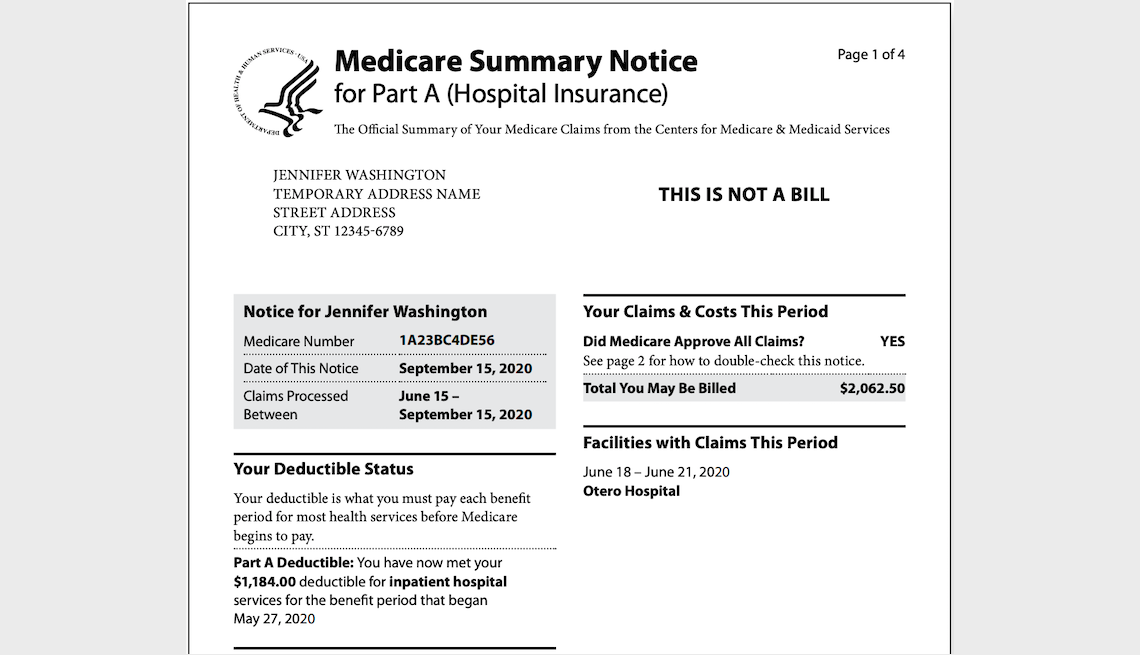
Provider billing basics
One landmine that shows up in real life: not every provider handles Medicare billing the same way.
Medicare assignment matters
If a provider accepts Medicare assignment, they agree to Medicare’s approved amount, and billing tends to be cleaner.
If a provider is non-participating, they can charge more within Medicare limits, including up to the Medicare limiting charge (generally up to 15% above the Medicare-approved amount). Even when the final out-of-pocket cost is still low, the paperwork and timing can get messier, which is how people end up with confusing bills.
My rule: if you are seeing a new provider and you are trying to keep costs predictable, ask one question up front: “Do you accept Medicare assignment?”
Pharmacy coverage
Prescription coverage is where people get understandably confused, because Medicare has Part D and TRICARE has its own pharmacy benefit.
TRICARE pharmacy basics
With TRICARE For Life, you typically keep access to the TRICARE Pharmacy Program, which can include:
- Military pharmacy (when available)
- TRICARE home delivery
- Retail network pharmacies
Do you need Part D?
Many military retirees do not enroll in Part D because the TRICARE pharmacy benefit is considered creditable prescription coverage. In practical terms, that usually means you can skip Part D without late enrollment penalties.
Still, it is smart to keep an eye out for any annual creditable coverage notice and confirm if you are unsure, especially if your situation changes.
There are also times Part D can be worth considering, for example:
- Your medications are cheaper under a specific Part D formulary.
- You want a pharmacy network that fits your travel routine better.
- You are comparing total annual drug costs and a Part D plan clearly wins for your prescription list.
Important: Medicare Part D and TRICARE pharmacy coverage are two separate systems. If you enroll in Part D, understand which card to use at the pharmacy and how each plan processes your prescriptions.

Medicare Advantage basics
Medicare Advantage (also called Part C) is an alternative to Original Medicare. You still have Medicare, but you get your Part A and Part B coverage through a private plan that uses its own network and plan-specific copays.
If you enroll in Medicare Advantage and keep TRICARE For Life, here is the main shift:
- Your Medicare Advantage plan becomes primary for Medicare-covered services.
- TRICARE For Life is usually secondary, after the Advantage plan processes the claim.
One practical warning: TFL generally pays after the Medicare Advantage plan processes the claim. If the Advantage plan denies a service as noncovered, or a provider will not or cannot bill the plan correctly, you can end up being billed. This is why people describe Medicare Advantage plus TFL as workable, but more dependent on clean billing.
What to watch for
- The provider must bill the Advantage plan first. If the claim does not go to the Advantage plan as primary, TFL cannot consistently do its part as secondary.
- Secondary billing can be less automatic. Original Medicare plus TFL is a common pairing with well-worn crossover processes. Medicare Advantage plus TFL can be smooth, but it is more plan-dependent and can create more billing friction.
- Networks still matter. TRICARE For Life does not erase a Medicare Advantage network. Out-of-network rules can change your costs and your access.
Potential upsides
- Extra benefits. Some plans bundle dental, vision, hearing, fitness perks, or OTC allowances.
- Predictable copays. Many plans use set copays instead of percentage coinsurance, which can feel more straightforward.
Potential downsides
- Referrals and prior authorizations. Medicare Advantage plans often use utilization controls that Original Medicare does not.
- Plan rules vary. Two plans in the same county can work very differently in the real world.
Part B still matters
Even with Medicare Advantage, you still must be enrolled in Medicare Part B and pay the Part B premium. If you are relying on TRICARE For Life, that Part B enrollment is still central.
If you are considering Medicare Advantage, I recommend doing a “real life” test before enrolling:
- Call your top providers and confirm they take the exact plan.
- Check that your preferred hospital is in network.
- List your prescriptions and confirm coverage and cost at your actual pharmacy.
- Ask the plan how claims coordinate when TRICARE For Life is secondary.
Summary: Medicare Advantage can be worth it if the network fits your life and the plan has a clear track record of clean secondary billing with TFL. If either of those is shaky, Original Medicare plus TFL is often the lower-drama option.

Overseas care
Medicare usually does not cover care outside the United States (with limited exceptions). For retirees who live overseas or travel extensively, this is a key detail.
In many overseas situations, TRICARE becomes the primary payer because Medicare is not paying. Overseas retirees often use TRICARE Overseas Program processes, and you may need to pay upfront and file claims depending on the provider and country.
If overseas living is part of your plan, confirm the current TRICARE overseas steps for your region before you need care.
TFL vs FEHB
I want to call this out clearly because it is a common point of confusion in military households with mixed careers.
TFL is Medicare wraparound
For most military retirees at 65, TRICARE For Life is designed to work with Medicare Parts A and B. Medicare is typically primary, and TFL is secondary for Medicare-covered services.
FEHB is separate
Federal Employees Health Benefits (FEHB) coverage for civilian federal employees has its own coordination rules with Medicare, and it is not the same as TRICARE For Life.
- FEHB plans vary by carrier and option.
- Some FEHB enrollees choose to take Part B, others do not, and the cost-benefit depends on the plan design and premiums.
- With FEHB, the “who pays first” question can change depending on whether you are actively working or retired.
Bottom line: Do not assume advice written for FEHB retirees applies to TRICARE For Life. TFL has its own rules and a stronger dependency on Part B enrollment.
Quick cheat sheet
Use this as a high-level reference. Your exact bill can still vary by provider participation and whether a service is covered.
- Original Medicare + TRICARE For Life (in the US): Medicare pays first, TFL pays second.
- Medicare Advantage + TRICARE For Life: Your Medicare Advantage plan pays first, TFL pays second (after the plan processes the claim).
- Care overseas (most cases): Medicare usually pays nothing, TRICARE rules apply and you may have to file claims.

Common questions
Will I have to file claims myself?
Often, no. Many providers bill Medicare, and the claim can cross over to TRICARE For Life automatically. But if you see a provider who does not bill correctly, if you are in a Medicare Advantage plan with messy coordination, or if you are overseas, you may have to submit paperwork.
If you get a bill that does not look right, do not pay it on autopilot. Here is a quick way to slow it down and fix it:
- Ask the billing office which insurer was billed first, and request they bill Medicare (or your Medicare Advantage plan) first.
- Ask for an itemized statement and compare it to your Medicare or plan explanation of benefits (EOB).
- If something was denied, ask what was denied and why, then request the provider submit the remainder to TRICARE For Life after the primary payer processes it.
Do I need Medigap if I have TFL?
Many people with TFL do not buy Medigap because TFL already acts like secondary coverage for Medicare-covered services. Paying for Medigap on top of Part B premiums can be redundant for a lot of households. Still, personal situations vary, especially if you want additional predictability for specific scenarios.
Can I use any doctor?
With Original Medicare, you usually have broad flexibility as long as the provider accepts Medicare. With Medicare Advantage, your flexibility depends on the plan’s network rules. TRICARE For Life does not remove Medicare Advantage network rules.
What if I only enroll in Part A and skip Part B to save money?
For TRICARE For Life eligibility, skipping Part B is usually the move that backfires. The Part B premium can sting, but losing TFL and taking on larger out-of-pocket exposure typically hurts a lot more. If you are not eligible for premium-free Part A, confirm your specific Medicare requirement with TRICARE because your situation may be different.
Does TFL have its own enrollment form or premium?
In most cases, there is no separate TFL enrollment form or monthly premium. The “price of admission” is staying TRICARE-eligible, keeping DEERS up to date, and carrying the Medicare coverage you are required to have (usually Part A and Part B).
My take
If you only remember two things from this page, make it these:
- Keep Medicare Part B if you want TRICARE For Life to stay in force, unless you have a confirmed exception that applies to you.
- Be cautious with Medicare Advantage unless you have confirmed your doctors, hospitals, prescriptions, and how claims coordinate with TFL.
If you are staring at enrollment forms and feeling that familiar money anxiety in your chest, pause and slow down. This is one of those life admin tasks where rushing costs real dollars. Take an afternoon, make a checklist, and confirm the details before you lock anything in.