
If your health has made it impossible to work, student loans can feel like a cruel extra weight. Total and Permanent Disability (TPD) discharge is a real federal program that can wipe out eligible federal student loans, but the process has rules and paperwork that are easy to mess up when you are already overwhelmed.
This guide walks you through the three ways to qualify (VA, SSA, or a medical professional), what forms you need, what happens to your loans after approval, and the mistakes that cause delays or denials. This is strictly about federal student loan TPD discharge, not private disability insurance and not medical debt relief.
What TPD discharge is (and is not)
TPD discharge is a federal student loan discharge program for borrowers who have a total and permanent disability. If you are approved, the U.S. Department of Education discharges eligible federal loans, meaning you no longer have to repay them.
TPD discharge can cover
- William D. Ford Federal Direct Loans (Direct Loans)
- Federal Family Education Loan (FFEL) Program loans that are federally held
- Federal Perkins Loans (federal or school-held, depending on the loan)
- TEACH Grant service obligation (and, if your TEACH Grant has already converted to a Direct Unsubsidized Loan, that loan may be eligible too)
TPD discharge is not
- Private student loan forgiveness (private lenders have their own rules)
- Social Security Disability (SSDI) approval itself, although SSA documentation can be used as a pathway
- Long-term disability insurance from an employer
- A workaround for temporary hardship, unemployment, or underemployment
If you are unsure whether your loans are federal, log into your account at StudentAid.gov and review your loan types and who services them.
Three ways to qualify
There are three official pathways to show you meet the total and permanent disability standard. You only need to qualify under one.
1) VA pathway (veterans)
You can qualify if you have documentation from the U.S. Department of Veterans Affairs showing you are unemployable due to a service-connected disability, often referred to as a VA determination of individual unemployability.
Why this matters: This pathway is usually the most straightforward because it relies on an established VA determination.
2) SSA pathway (Social Security)
You can qualify if you receive SSA disability benefits and your SSA documentation meets the Department of Education criteria (expanded under the July 1, 2023 rules). In plain English, the TPD review is looking for SSA proof of disability plus details that show your case fits an eligible category.
- Disability review schedule ("diary") information that meets the Education Department standard for TPD discharge eligibility
- Compassionate Allowances condition documentation (when reflected in SSA records used for the review)
- Other qualifying SSA indicators shown on the documentation used for the TPD evaluation
SSA paperwork can be confusing because SSA review categories and timelines are nuanced and do not always map cleanly to a simple number of years. What helps most is submitting SSA documentation that clearly shows your disability status and the basis or timing of your next scheduled disability review. If you are not sure what your paperwork says, request documentation directly from SSA and keep copies of everything you submit.
3) Medical professional certification
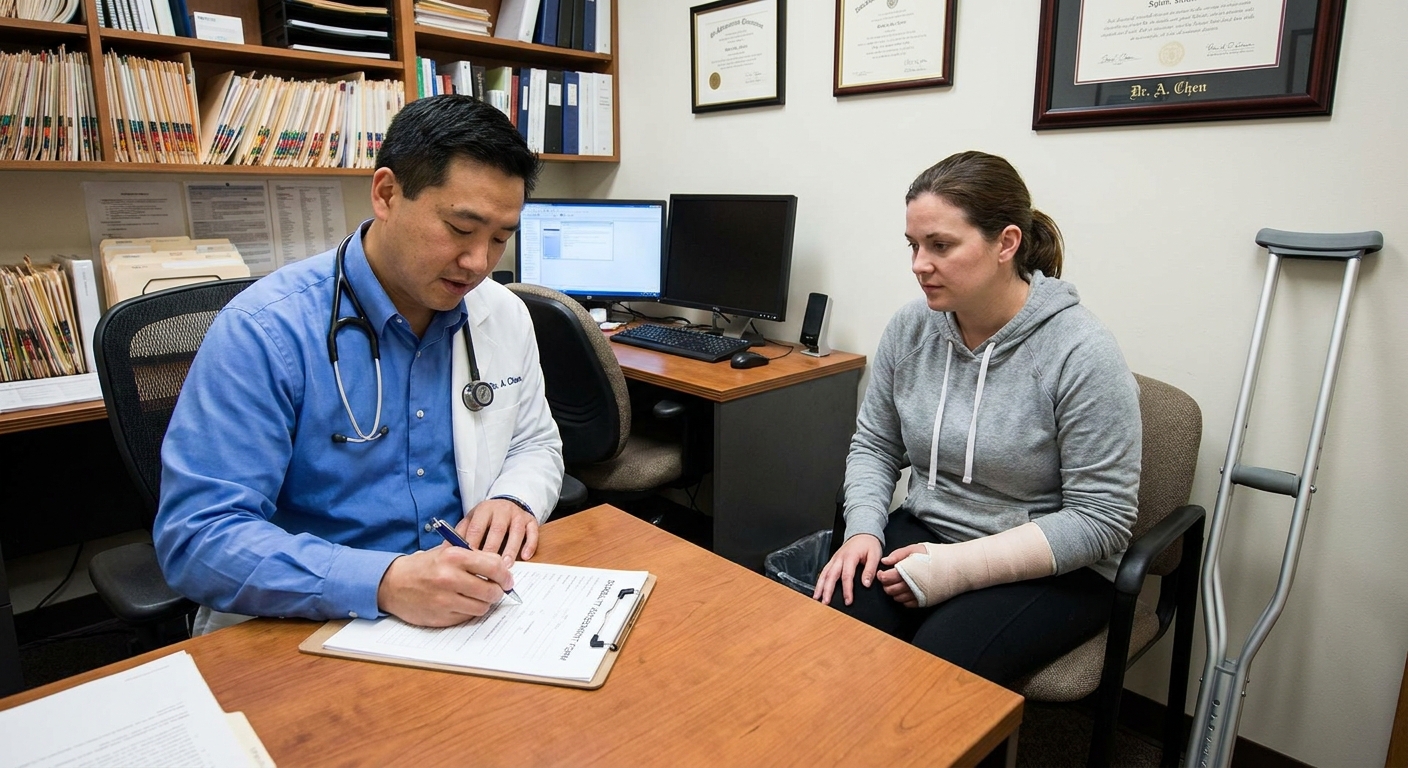
If you are not qualifying via VA or SSA documentation, an eligible licensed medical professional can certify that you are totally and permanently disabled.
As of the July 1, 2023 regulation updates, this certification can be completed by more than just a physician. The Department of Education allows certification by a:
- Doctor of Medicine (MD) or Doctor of Osteopathic Medicine (DO)
- Nurse Practitioner (NP)
- Physician Assistant (PA)
- Licensed psychologist
In general, this means your disability:
- Has lasted for a continuous period of at least 60 months, or
- Can be expected to last for a continuous period of at least 60 months, or
- Can be expected to result in death
This route is common, but it is also where a lot of applications get delayed because the certification is incomplete, uses unclear language, or is missing signatures or dates.
Quick eligibility checklist
Use this checklist to avoid wasting time on paperwork that cannot be approved.
- Your loans must be eligible. Most federal student loans are, but private loans are not.
- You should be pursuing TPD because work is not realistically possible. TPD is not a short-term relief program.
- You have a clear documentation path (VA letter, SSA documentation, or medical professional certification).
- You can request a pause on payments or collections while applying. In many situations, loans can be placed into a status that stops payments and pauses some collection activity during review. If you are in default, wage garnishment or Treasury offsets may take extra steps and extra time to stop, so confirm your status in writing and keep records.
If you are currently in default, do not assume you are out of options. TPD can still be relevant, but you need to be careful with timing, documentation, and communications with your servicer.
How to apply
TPD discharge applications are handled through the Department of Education's TPD discharge process. The easiest starting point is the official TPD site: DisabilityDischarge.com.
Step 1: Confirm your loans
- Log into StudentAid.gov to list your federal loans and servicers.
- Go to DisabilityDischarge.com to start an application and review requirements.
If you have FFEL loans: If your FFEL loans are not federally held (for example, they are commercially held), they may not be eligible as-is. Check who holds the loans in StudentAid.gov, and ask the TPD servicer what your options are, which may include consolidating into a Direct Consolidation Loan in order to access certain federal benefits.
Step 2: Pick a pathway and gather documents
- VA: Get your VA documentation showing unemployability due to a service-connected disability.
- SSA: Gather SSA documentation that shows disability status and the relevant review schedule or qualifying indicator used for the TPD evaluation.
- Medical professional: Schedule a visit specifically to complete the certification. Bring the form and a one-page summary of your condition and work limitations. If you see an NP, PA, or licensed psychologist regularly, ask them first. This can save you weeks of appointment delays.
Tip from someone who has filled out too many forms: Make a folder that includes your ID, loan list, contact info, and the exact documents you are submitting. It is much easier to respond quickly if the reviewer requests clarification.
Step 3: Submit and keep proof
Submit the application using the method listed on the official site (online upload or mail/fax options, depending on what is currently available). Whatever method you use:
- Save a full PDF copy of your completed application
- Save a copy of every supporting document
- Keep submission confirmation, fax confirmation, or certified mail receipt
Step 4: Respond fast to follow-ups
If you get a request for more information, respond as soon as you can. Most long delays happen because the application is missing a signature, date, or a required detail about the disability determination.

While your application is pending
During review, your federal loans may be placed into a status where payments are not required. This can also pause certain collection activity, depending on your situation and timing.
Still, do not rely on assumptions. After you apply, confirm with your loan servicer and the TPD servicer that your account reflects the correct status. Keep a record of dates, names, and what you were told.
If you have autopay
Consider turning off autopay while your application is pending so you do not accidentally keep paying when you do not have to. If you do this, document it and continue monitoring your account so you do not miss a required payment if your account does not switch status promptly.
After approval
If you are approved, your eligible federal student loans are discharged. In plain English, the balance is cleared and you are no longer required to make payments on those loans.
Refunds
Some borrowers may be eligible for a refund of payments made after a specific cutoff tied to their disability determination date or other program rules. The exact cutoff is not the same in every case, so ask the TPD servicer for the date they used in your approval and whether any payments after that date are refundable.
Credit report
A discharge typically updates how the loan is reported. Check your credit reports a few weeks after discharge and confirm the accounts show a zero balance and a closed status consistent with discharge.
Taxes
For federal taxes, the key rule to know is this: under the American Rescue Plan Act, qualifying student loan discharges are generally not treated as taxable income at the federal level through December 31, 2025, which includes TPD discharge. State tax rules can still differ, and rules can change after 2025. If taxes are a concern, consider a quick call with a tax professional and keep your discharge approval letter for your records.
Ongoing rules after discharge
A common fear is, "Will they take the discharge back?" The rules changed in recent years, and for many borrowers the old post-discharge monitoring period is no longer part of the process.
- Follow the instructions in your approval notice. Your approval letter is the final word on what you must do after discharge.
- Be careful with new federal aid. If you later take out a new federal student loan or receive a TEACH Grant, there can be extra steps or acknowledgments required because you previously received a TPD discharge.
- Keep your paperwork. Save your approval letter and any supporting documentation long-term. If there is ever a reporting issue, you will want proof on hand.
Common mistakes
These are the issues I see trip people up the most, especially when they are juggling health challenges and paperwork.
- Using the wrong documentation for the chosen pathway. VA and SSA paperwork must clearly meet the program requirements.
- Incomplete medical professional certification. Missing dates, missing license information, or vague language about limitations can cause delays.
- Not keeping copies. If you cannot prove what you submitted, you are starting over if something goes missing.
- Ignoring mail or portal messages. Requests for additional info often have deadlines.
- Assuming all loans qualify. Private loans do not. Some older federal loans may require specific handling depending on who holds them.
- Mixing up relief programs. Public Service Loan Forgiveness (PSLF), Borrower Defense, and TPD discharge are different programs with different rules.
- Paying a "helper" who promises instant forgiveness. TPD discharge has an official process. If someone is pressuring you to pay or share your FSA ID, treat that as a red flag.
TPD vs other options
TPD discharge is powerful, but it is not the only form of relief. Depending on your situation, one of these may be relevant too:
- Income-Driven Repayment (IDR): If you can work some and have low income, payments can be reduced, sometimes to $0.
- Deferment or forbearance: Usually temporary, and interest may continue to grow.
- PSLF: If you are working in qualifying public service and are able to maintain employment.
If the core issue is that your condition prevents meaningful work now and long-term, TPD discharge is usually the right lane.
TPD discharge FAQ
How long does TPD discharge take?
Processing time varies based on document completeness and volume. The fastest approvals generally come from clear VA or SSA documentation. Medical professional certifications can take longer if follow-up is needed.
Can I apply if my loans are in default?
Often, yes. Default does not automatically block TPD discharge. You may need to take extra care with communications and documentation because collections and offsets may be in play.
Does TPD discharge cover Parent PLUS loans?
If the borrower who is legally responsible for the Parent PLUS loan qualifies for TPD discharge, the Parent PLUS loan can be eligible as a federal loan type. Check your specific loan details at StudentAid.gov.
What if I am denied?
Denials can happen for fixable reasons like missing documents or unclear certifications. Review the denial reason carefully, correct what is missing, and reapply or follow the instructions for next steps provided in your notice.
Simple action plan
- 1) List your loans at StudentAid.gov.
- 2) Pick your best pathway: VA, SSA, or medical professional.
- 3) Create a document folder and collect everything you will submit.
- 4) Apply through DisabilityDischarge.com.
- 5) Track status weekly and respond fast to any follow-ups.
If you are dealing with a serious condition, paperwork is the last thing you want to think about. But done right, TPD discharge can remove a massive monthly burden and give you back some breathing room.
If you get stuck, contact the TPD servicer listed on DisabilityDischarge.com (currently Nelnet) or use the help options inside your StudentAid.gov account. You can also look up your federal student loan ombudsman resources through the Department of Education if you need help resolving a dispute.