
If you've ever looked at your credit card statement and thought, “Okay, I can swing the minimum,” you're not alone. Minimum payments are designed to feel doable. The problem is that “doable” and “debt-free” aren't the same thing.
I learned that the hard way in my 20s, when I was juggling student loans and credit cards and telling myself I'd pay it off “once things calm down.” Spoiler: life rarely calms down on schedule.
In this article, we're going to put real numbers to the minimum payment trap. You'll see what happens when you pay the minimum, what happens when you pick a fixed payment, and what happens when you use the avalanche method to attack high-interest balances first. No shame, no scare tactics, just math you can use.
Quick note: The numbers below are realistic, but still simplified. Issuers typically calculate interest using a daily periodic rate (average daily balance), and results vary slightly by statement cycle length. Minimum-payment formulas also vary by card. Use this as a clear model, then check your statement’s minimum payment disclosure for the exact rules your card uses.
What the minimum really does
Your minimum payment is the smallest amount your card issuer will accept to keep the account current. Paying it helps you avoid late fees and protects your credit from missed-payment damage. But minimum payments usually do three sneaky things at once:
- Interest accrues first. Interest builds during the month. When you pay, that interest has to be covered, and only what's left reduces principal. Early on, what's left can be painfully small.
- They shrink as your balance shrinks. That sounds nice until you realize shrinking payments can stretch the payoff timeline.
- They keep your balance “alive” for a long time. You can be paying for years and still feel like you're not making progress.
Most people aren't “bad with money” for falling into this. The system is built so the minimum is survivable, not so it's efficient.
How minimums are set (simple)
Card issuers use different formulas, but most minimum payments are based on some combination of:
- A percent of the balance (often around 1% to 3%)
- Plus interest and fees charged that month
- And a flat floor such as $25 or $35
A very common real-world setup looks like one of these:
- Minimum = interest + 1% of principal (plus fees), or a floor amount
- Minimum = X% of balance or (interest + fees + fixed amount), whichever is greater
Here's why that matters: if your minimum is basically “interest + a little principal,” you're technically moving forward, but slowly. And if your minimum drops over time, your payoff can drag out even more.
Quick reality check: If your APR is around 24%, that's roughly 2% per month in interest (24% / 12). It's an approximation, but good enough to see the trap.
Another reality check: Cash advances, penalty APRs, and fees can change the math fast. If any of those apply, double-check your statement terms.
Example 1: $3,000 at 24% APR
Let's say you have:
- Balance: $3,000
- APR: 24%
- Minimum payment model: interest + 1% of balance (a common approach), with a $25 floor
Scenario A: You pay the minimum
At 24% APR, the first month’s interest is roughly $60 (2% of $3,000). A minimum of “interest + 1%” would be about $60 + $30 = $90 to start.
That sounds decent until you realize what's happening: you're putting about $30 toward principal early on. And because the minimum drops as the balance drops, you don't keep the pressure on the principal.
What it feels like: You're paying every month, but your debt doesn't seem to care.
Scenario B: You choose a fixed $125 payment
Now you're consistently sending more than the “interest + a little principal” zone. You'll still pay interest, but you're forcing faster progress every month.
Scenario C: You pay $125 and use avalanche (if you have multiple cards)
If this card is your highest APR, you'd prioritize it first while paying minimums on everything else. Once it's gone, you roll that same payment into the next-highest APR debt.
Bottom line: With one card, avalanche is basically “pay more than the minimum.” With multiple cards, it becomes a strategy that can save real money.
Estimated payoff (ballpark)
Assumptions: no new charges, rates stay the same, interest approximated monthly, and the minimum recalculates as the balance drops. These are order-of-magnitude estimates to show direction, not a promise.
- Minimum payment (interest + 1%): often 5 to 7 years to finish, with roughly $1,700 to $2,400 in total interest.
- Fixed $125: about 2 years and a few months to finish, with roughly $700 to $900 in total interest.
If you want one concrete check, plug $3,000, 24% APR, and $125 into any payoff calculator and you'll usually get a finish line a little over 2 years out. That's the power of not letting your payment shrink with the balance.
Example 2: $8,000 at 19.99% APR
Here's a super common situation: a few years of “I'll handle it later” turns into a balance that's big enough to be stressful, but not so big that it triggers an obvious emergency plan.
- Balance: $8,000
- APR: 19.99% (about 1.67% per month, approximately)
- Minimum payment model: 2% of the balance (common simplified model), with a floor
Scenario A: Minimum payments
At about 20% APR, interest is roughly 1.67% per month. With a 2% minimum, you're paying about 0.33% of the balance toward principal early on. That's progress, but it's slow.
On $8,000, 0.33% is only about $26 toward principal in month one. That’s the trap in one line.
Scenario B: Fixed $300 payment
$300 creates a meaningful gap between interest and what you pay, so your principal drops faster and interest charges fall over time.
Scenario C: Fixed $300 plus avalanche (multiple debts)
If you also have a smaller card at 29.99% APR, avalanche has you crush the 29.99% first, then roll payments into this one. That usually reduces total interest and shortens the overall timeline.
Estimated payoff (ballpark)
Assumptions: no new charges, rates stay the same, interest approximated monthly, minimum recalculates as the balance drops. Order-of-magnitude estimates.
- 2% minimum payment: often 9 to 12 years to finish, with roughly $7,000 to $10,000 in total interest.
- Fixed $300: about 3 years to finish, with roughly $2,500 to $3,500 in total interest.
Example 3: $15,000 at 29.99% APR
This is where minimum payments can get truly brutal. At about 30% APR, interest is about 2.5% per month (approximately).
- Balance: $15,000
- APR: 29.99%
- Minimum payment model: issuers usually structure minimums to cover interest plus some principal (and/or enforce a higher minimum percentage), so the balance doesn't grow just from paying the minimum
Scenario A: Minimum payments
If you heard “the minimum is 2%,” you might think the minimum is around $300. But at about 2.5% monthly interest, $300 wouldn't even cover interest.
In real life, issuers typically avoid negative amortization by setting the minimum closer to “interest + a little principal” or by using a higher percentage, plus a floor. The “little principal” can still be tiny, but it's not usually zero.
Translation: You can pay hundreds per month and still feel stuck because so much of it is interest.
Scenario B: Fixed $500 payment
$500 isn't magic. It's just enough to consistently push down principal in a way you can see month to month. As your balance drops, the interest portion drops too, and your payoff speed picks up.
Scenario C: Avalanche (multiple cards)
At 29.99% APR, this balance is usually the one to target first. Avalanche can be the difference between “I'm always paying” and “I'm actually finishing.”
Estimated payoff (ballpark)
Assumptions: no new charges, rates stay the same, interest approximated monthly, and minimums are structured to include at least some principal. Order-of-magnitude estimates.
- Typical minimum (interest + small principal): often 10 to 15+ years to finish, with roughly $15,000 to $25,000+ in total interest.
- Fixed $500: about 4 to 5 years to finish, with roughly $10,000 to $13,000 in total interest.
Minimum vs fixed vs avalanche
- Minimum payments: Keep you current, but often keep you paying interest for a long time (and keep utilization higher for longer) .
- Fixed payments: Turn your payoff into a plan. You pick the finish line by picking the payment.
- Avalanche: A sequencing strategy for multiple debts that usually saves the most on interest. You focus extra money on the highest APR first while paying minimums on the rest.
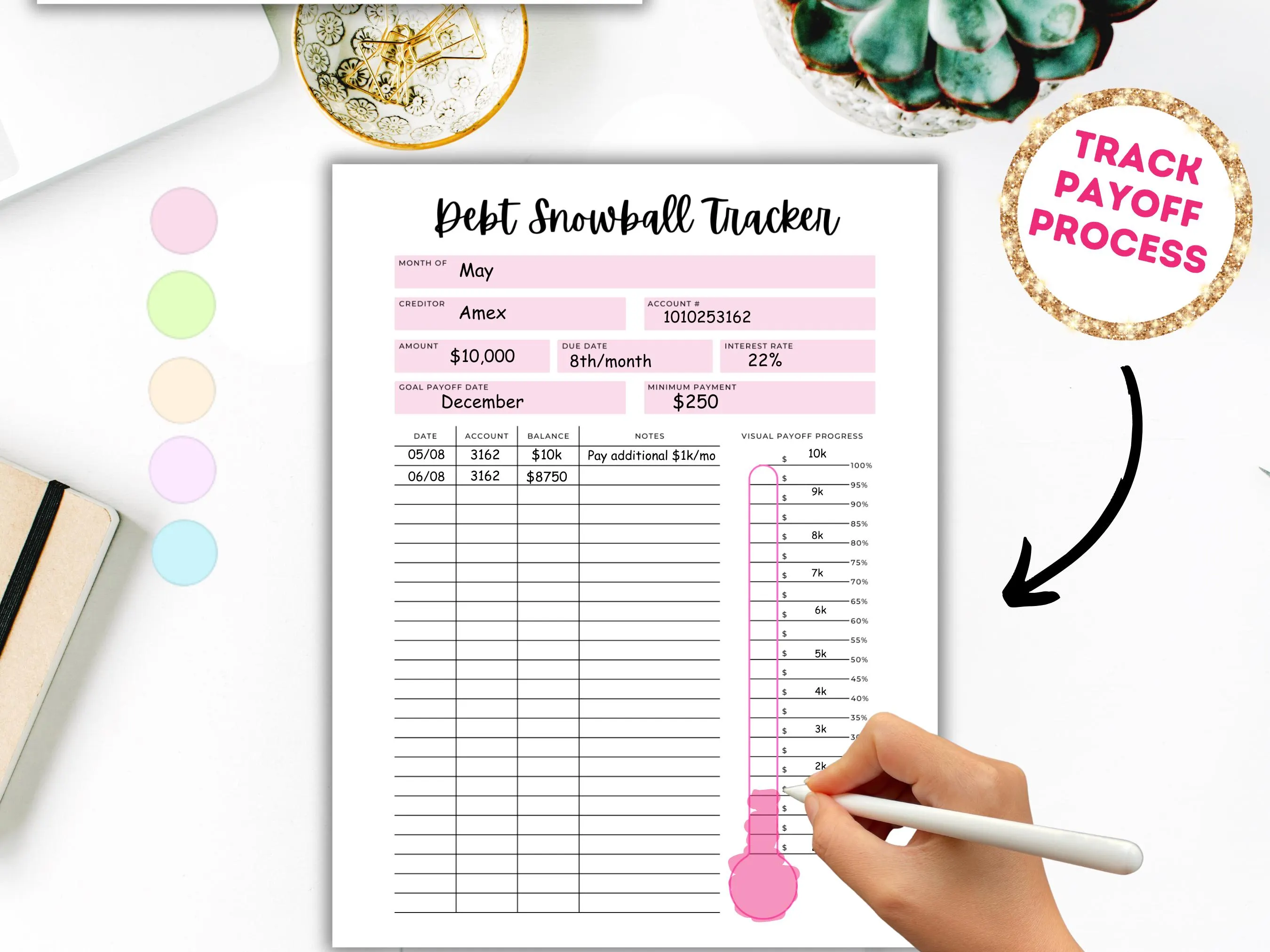
If you're motivated by quick wins, the snowball method (smallest balance first) can also work. But since this article is about escaping the minimum payment trap, the biggest lever is simple: pay more than the minimum whenever you can, even if it's not much more.
If you can only pay a little more
I've been there: you look at your budget and there's no magical extra $300 sitting around. That doesn't mean you're stuck. Small, consistent increases can change the math faster than you think.
1) Use a “minimum + $25” rule
If your minimum is $78, pay $103. If your minimum is $35, pay $60. This avoids the trap of your payment shrinking over time.
2) Automate the minimum, then add extra
Two separate payments can be psychologically easier. Minimum on payday so you're never late. Extra a week later when your checking account has stabilized.
3) Stop new charges during payoff
This is the part that quietly ruins a lot of payoff plans. If you pay $100 extra but add $100 in new spending, you didn't actually move forward. Even a temporary pause on card use can be a game-changer .
4) Call and ask for a lower APR
This isn't guaranteed, but it's free to ask. Sometimes the only option is a hardship program. Occasionally a lender may do a soft pull or require account changes, so ask what the terms are before you agree.
5) Use found money on purpose
Tax refunds, rebates, cash-back redemptions, a small bonus, selling something you no longer use. Decide in advance that a percentage goes to debt, even if it's 25%.

Two warnings
Warning 1: Skipping months kills momentum
If you're choosing between groceries and an extra card payment, buy the groceries. Always. But if the extra payment is optional and you can swing it, consistency matters. The interest meter doesn't take a break.
Warning 2: A lower minimum isn't a win
When your minimum drops, it feels like you got breathing room. You did, but it also means you're more likely to stay in debt longer. If you can, keep paying the old minimum or move to a fixed payment you control.
Pick your number and your date
If you do nothing else after reading this, do this one move:
- Look at your current minimum payment.
- Pick an extra amount you can commit to for 90 days, even if it's $10.
- Set a calendar reminder to reevaluate after 90 days and increase it by another small step if you can.
Then run the numbers once, so your brain stops guessing.
A quick DIY payoff check
You can use any free online payoff calculator or a simple spreadsheet. You just need:
- Your balance
- Your APR
- Your planned monthly payment (minimum or fixed)
- Your card’s minimum-payment formula (check your statement disclosure)
- Any annual fees or monthly fees that apply
- Whether you're still making new charges (this matters more than people think)
Getting out of credit card debt rarely comes from one heroic month. It usually comes from a boring plan you can repeat.
You don't have to be perfect. You just have to stop letting the minimum payment set your timeline.
FAQs
Does paying the minimum hurt my credit score?
Paying at least the minimum on time helps your payment history, which is a big part of your score. The bigger credit-score drag is often a high balance relative to your limit (credit utilization). Paying more than the minimum helps utilization drop faster.
Is it better to pay weekly or monthly?
Either works. What matters is total paid. Paying weekly or biweekly can help you avoid spending the money elsewhere and can slightly reduce interest by lowering your average daily balance, depending on timing and how your issuer calculates interest.
What if my minimum is all I can do right now?
Then pay the minimum and protect your on-time history while you stabilize the rest of your budget. Use the “minimum + $10” or “minimum + $25” approach as soon as you can. Even small increases add up over time.
What about 0% APR promos or balance transfers?
They can be powerful if you have a payoff plan and you stop new charges. Watch the transfer fee, the promo end date, and whether the rate jumps . If it's a store card or deferred-interest offer, read the fine print, because deferred interest can be nasty if you miss the payoff deadline.