
If you have ever bought something in a rush of excitement, then felt that sinking “why did I do that?” feeling the next day, you are not alone. Impulse spending is not a character flaw. It is a very normal human response to stress, boredom, clever marketing, and one-click checkout.
The problem is that impulse buys add up fast. A $28 “treat” here, a $67 gadget there, plus shipping, plus a return you never make, and suddenly your budget is bleeding.
The 30-day rule is one of the simplest speed bumps I have found for stopping that leak without turning life into a joyless no-fun zone. It helped me get serious when I was digging out of $60,000 of consumer debt, and it is still one of my go-to tools as a proud value-spender today.

What the 30-day rule is
The 30-day rule is straightforward:
- When you want to buy something non-essential, you wait 30 days before purchasing.
- You write down the item, the price, and where you found it.
- If you still want it after 30 days and it fits your budget, you buy it guilt-free.
That is it. No complicated tracking, no willpower Olympics. Just time.
Why it works: impulse purchases are often driven by a short-lived emotion. Time lowers the emotional temperature, so you can make a decision with your actual priorities, not a quick emotional high.
What counts as an impulse buy
The 30-day rule is meant for wants, not needs. Here is an easy way to sort it.
Great fits
- Clothes and shoes you do not need for work right now
- Home decor and “organizing” products (ironically, these get me every time)
- Gadgets, accessories, and upgrades
- Subscriptions, apps, and memberships you are not currently using
- Hobby purchases you “might” get into
- Furniture or big-ticket items you can live without for a month
Usually not a fit
- Groceries and household essentials
- Medication and urgent health needs
- Critical car or home repairs
- Replacing something that broke and you genuinely need to function (your only work laptop died, your only winter coat ripped, etc.)
If it is truly urgent, handle it. If it is “urgent” because it is on sale for the next three hours, that is exactly when the rule shines.
Why waiting works
Impulse spending often follows a predictable loop:
- Trigger: stress, boredom, scrolling, a sale email, a bad day
- Story: “This will make my life easier” or “I deserve this”
- Action: buy now
- Aftermath: guilt, clutter, money stress, sometimes debt
Waiting 30 days interrupts the loop. It also helps you separate three different feelings that look the same in the moment:
- Want: “This is fun.”
- Need: “This solves a real problem.”
- Avoidance: “If I buy this, I do not have to feel the stress I am trying to outrun.”
When you can name the real driver, the purchase decision gets a lot easier.
How to set it up
Make this easy on yourself. The best system is the one you will actually use.
Step 1: Pick a threshold
Some people apply the 30-day rule to everything over $25. Others use $50 or $100. If you are not sure, start with $50. It catches most impulse buys without turning your life into paperwork.
Step 2: Make a 30-day list
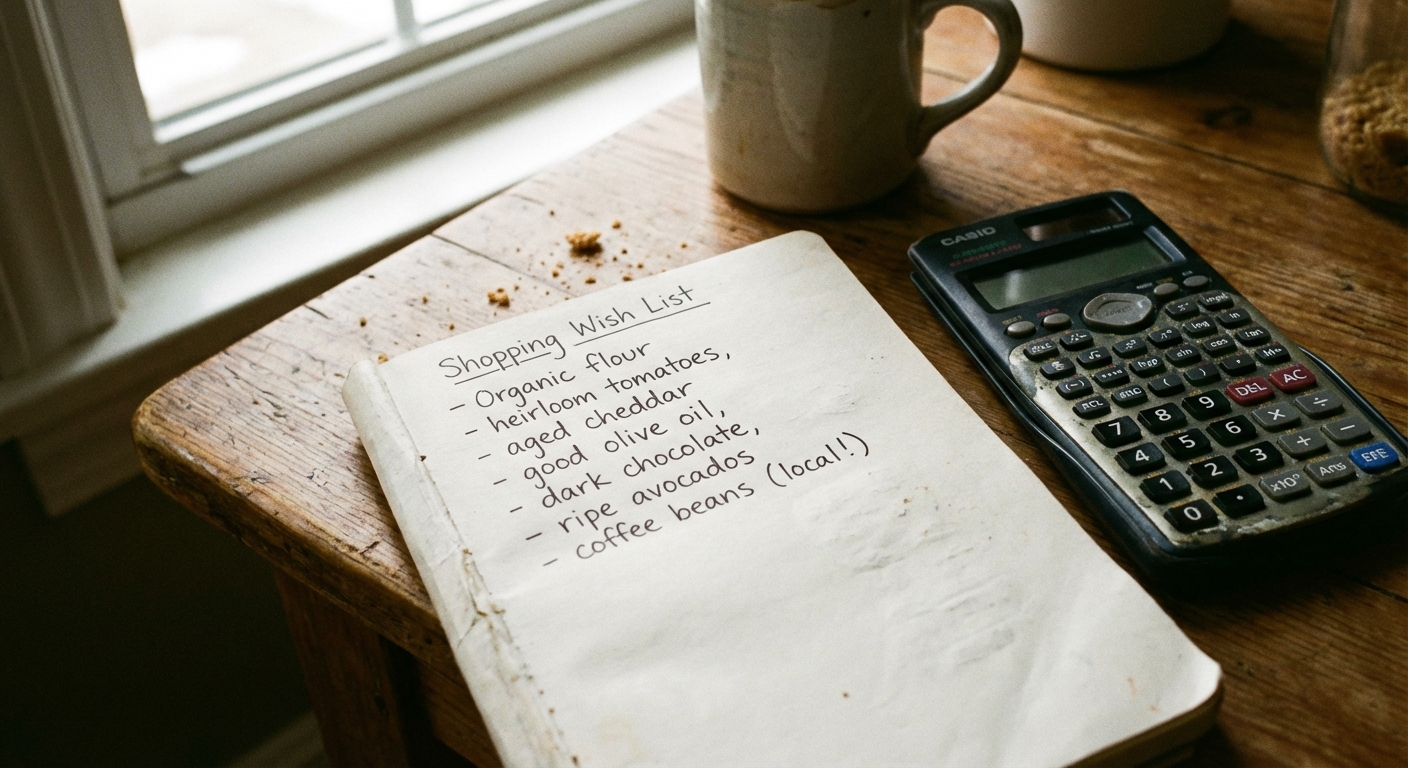
You can use a notes app, a spreadsheet, or a paper notebook. I love a spreadsheet, but do what you will keep up with.
- Item name
- Store or link
- Price (include shipping and taxes if you can)
- Date you added it
- Decision date (30 days later)
- Reason you want it
- Category (clothing, home, tech, etc.)
What to do during the wait
The waiting period is not just about resisting. It is about getting clarity.
1) Ask two questions
- What problem does this solve? Be specific.
- Is there a cheaper or free way to solve that problem? Borrow, buy used, repair, swap, or wait for a better deal.
2) Calculate the real cost
Impulse buys love hiding in small numbers. Bring the cost into the light:
- Total price with tax and shipping
- Any add-ons you will “need” for it to work (batteries, accessories, special detergent, storage bins)
- If it is financed: total cost with interest
If you are carrying credit card debt, a $200 impulse purchase does not always cost $200. If it sits on a card at 24% APR and you pay it off slowly, that same purchase can cost meaningfully more over time.
3) Do a quick price check
You are not trying to game the system. You are trying to buy smart.
- Check 2 or 3 reputable sellers
- Look for a used option (Facebook Marketplace, Craigslist, local resale shops)
- See if a previous model works just as well
4) Put it in your budget
This is the step that turns “I waited” into “I can afford it.” When day 30 hits, the question is not just “Do I still want it?” The question is:
“Do I still want it enough to choose it over something else?”
If you cannot fund it without blowing up your essentials, it is not a no forever. It is a “not yet.”
Sales and FOMO
Sales are designed to compress your decision time. The 30-day rule expands it again.
FOMO-proof scripts
- “If I need it, it will still be worth buying at full price.”
- “If I do not buy it now, I am not losing money. I am keeping money.”
- “There will always be another sale.”
Also, retailers often run the same promotions in cycles. If you wait, you may catch a similar deal later, or realize you did not want it as much as you thought.
Common edge cases
Gifts and holidays
If you cannot wait 30 days because of a birthday or holiday, use a smaller rule on purpose. Try a 48-hour or 7-day pause, plus a firm budget cap. If it is not in the gift budget, it is not a “yes,” even if it is perfect.
Trips and time-sensitive needs
If something broke and you truly need a replacement before a trip or a deadline, use an expedited version: wait 48 hours, compare options, then buy the best value you can afford with cash.
Subscriptions and digital purchases
For trials and subscriptions, friction is your friend. Cancel immediately after you sign up (you usually keep access until the trial ends), set a calendar reminder for renewal, and review subscriptions monthly.
Make it stronger
Create a fun money lane
The 30-day rule is not about never buying anything. It is about buying on purpose. A small monthly fun money category lets you enjoy spending without sabotaging goals.
Add friction
- Remove saved cards from shopping sites
- Delete shopping apps that trigger you
- Unsubscribe from promo emails
- Turn off push notifications
Fewer triggers equals fewer “oops” moments.
Replace the habit
If you shop when you are stressed, build a replacement list:
- 10-minute walk
- Text a friend
- Make a cup of tea
- Do a quick clean-up sprint
- Watch one episode of something you already pay for
Use a shorter rule
Thirty days is great for bigger wants, but you can customize the waiting period.
Good variations
- 24-hour rule: for smaller impulse buys, like $15 to $40
- 7-day rule: for mid-sized wants, like $40 to $150
- 30-day rule: for bigger purchases or anything you keep circling back to
Do not shorten it for these
- Anything you would put on a credit card because you do not have the cash
- Anything tied to a strong emotion (rough day, argument, “I need a win” mood)
- Anything with a return policy you know you will not use

Quick example
Let’s say you want a $180 air fryer because a video made it look life-changing.
- You add it to your 30-day list today.
- During the wait, you realize you already have a perfectly good oven and a sheet pan that does 80 percent of the job.
- You still like the idea, but now you are thinking clearly.
- You check prices and find a gently used one locally for $70.
- You decide either to buy used with cash, or to skip it and put $180 toward a goal that actually lowers your stress, like your emergency fund.
No shame. No deprivation. Just a smarter decision.
Where the saved money goes
If you just avoid purchases, it can feel like you are missing out. The fix is to redirect the money so you can see progress.
- Emergency fund: even $25 at a time adds up fast
- Debt payoff: extra payments buy back your future paycheck
- Sinking funds: travel, gifts, car repairs, holidays
- Big goals: a house down payment, a new-to-you car, a career course
Pro tip: when you skip an impulse buy, transfer that amount to savings the same day. It makes the rule feel rewarding, not restrictive.
Pitfalls
“I forgot what I added to the list.”
That is a success, not a failure. If you forget it, you did not need it. Keep the list anyway for pattern-spotting.
“I waited 30 days and still want it, but I cannot afford it.”
Now you have a clean next step: create a sinking fund and save for it. Wanting something is fine. Buying it before you can afford it is the issue.
“I used the rule, but I still buy too much.”
Time to raise your guardrails:
- Apply 30 days to anything over $25 for one month
- Set a monthly cap on non-essential spending
- Limit yourself to one “yes” from the list per month
When the rule is not enough
If shopping feels compulsive, secretive, or out of your control, a waiting rule may not be the right tool on its own. Consider talking to a therapist or a financial counselor, and look for support groups or resources that specialize in compulsive spending. You deserve help that actually fits what you are dealing with.
30-day rule checklist
- Write down the item, price, and date
- Wait 30 days
- During the wait, define the problem it solves
- Calculate the real cost (all-in)
- Compare alternatives (used, borrow, previous model)
- Decide if it fits your budget and priorities
- If yes, buy it confidently
- If no, transfer the money toward a goal
Bottom line
The 30-day rule is not about never buying anything fun. It is about making sure your spending matches the life you are trying to build.
If impulse buying has been quietly wrecking your budget, try this for one month. Add every tempting non-essential to a list. Give yourself permission to buy it later. Then watch how many “must-haves” fade when they are no longer powered by urgency.
Your future self will feel the difference, and so will your bank account.