
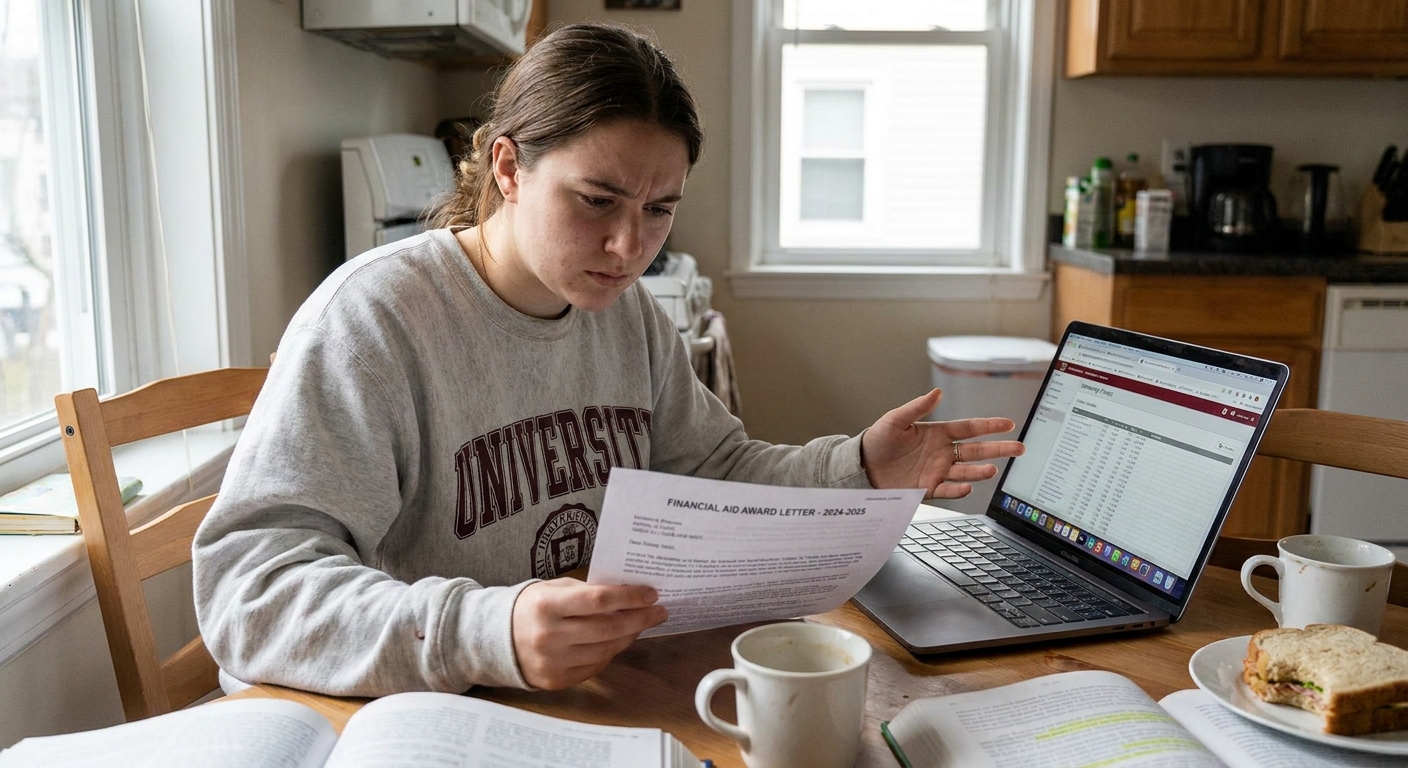
If you have ever looked at your student loan dashboard and thought, “Wait, why is my balance bigger than what I borrowed?” you are not alone. The difference usually comes down to one thing: when interest starts accruing .
One quick extra note, because it trips people up: federal student loans also charge an origination fee. That fee is taken out before your money is sent to your school, so you might receive slightly less than you accepted, while your loan principal is still the amount you borrowed. Depending on how your dashboard displays things, that can add to the confusion too.
Federal Direct Loans come in two main flavors for undergrads: Subsidized and Unsubsidized. They can look similar on paper, but their interest rules are very different during school, your grace period, and any time you pause payments.
Let’s walk through exactly how interest works in each stage, what “capitalization” means in normal human language , and how much unsubsidized borrowing can cost long term.
The quick difference
Subsidized loans are for undergraduate students with demonstrated financial need. The big perk is that the government pays the interest for you during certain periods.
Unsubsidized loans are available to undergrads (and grads) regardless of financial need. Interest starts building right away, even while you are in school.
- Subsidized: Interest is covered by the government while you are in school at least half time, during your grace period, and during eligible deferments.
- Unsubsidized: Interest accrues during school, grace, deferment, and most other “non-payment” periods. If you do not pay that interest as it accrues, it can get added to your balance later.
Interest rules by stage
1) While you are in school (at least half time)
Direct Subsidized Loans: Interest does not accrue during this period. Your balance basically “holds steady” (origination fees aside).
Direct Unsubsidized Loans: Interest starts accruing from the day the loan is disbursed. That does not mean you must make payments immediately, but the interest meter is running.

2) Your grace period (typically 6 months)
Direct Subsidized and Direct Unsubsidized Loans typically come with a six-month grace period after you graduate, leave school, or drop below half-time enrollment.
- Subsidized loans: Interest is still covered during the grace period.
- Unsubsidized loans: Interest continues to accrue during the grace period.
This is one of the most common “surprise” moments: you graduate, you have not made a single payment yet (normal), and your unsubsidized balance is already higher.
3) Repayment
Once repayment begins, both subsidized and unsubsidized loans accrue interest. From that point forward, the difference is not whether interest accrues, but whether you have any unpaid interest from earlier that can get tacked onto your balance.
One important detail: with most student loans, your monthly payment first covers interest, then the rest reduces principal. If you are on an income-driven plan with a low payment, you might not cover all the monthly interest, which can cause interest to pile up.
Capitalization (why your balance jumps)
Capitalization is when unpaid interest gets added to your principal balance. After that, you are effectively paying interest on a larger amount.
Think of it like this:
- Accrued interest is interest that has built up but is still sitting “on the side.”
- Capitalized interest is interest that gets rolled into the loan balance, so it becomes part of the amount future interest is calculated on.
Capitalization often happens at common transition points, like when you enter repayment or after certain deferments or forbearances end . It can also happen after some repayment plan changes. But not every pause or status change triggers capitalization, and the rules have changed over time, so check your servicer notices for the specific event you are considering.
This is why unsubsidized loans can quietly get expensive. Even if your interest rate is not terrible, capitalization can make your balance feel like it is growing faster than you expected.
Deferment and forbearance
Life happens. You might pause payments through deferment or forbearance. The interest rules here are a big part of the subsidized vs unsubsidized story.
Deferment
A deferment is a temporary pause on payments for specific situations (for example, returning to school at least half time or certain economic hardship situations).
- Subsidized loans: Interest is typically covered during eligible deferment periods.
- Unsubsidized loans: Interest accrues during deferment. If you do not pay it, it may capitalize when the deferment ends (depending on the deferment type and rules in effect).
Forbearance
Forbearance is also a pause or reduction in payments, often granted for financial difficulty or administrative reasons.
- Subsidized loans: Interest accrues.
- Unsubsidized loans: Interest accrues.
In other words: forbearance usually means everybody’s interest meter is running.

How much more does unsubsidized cost?
Exact numbers depend on interest rate, how long you are in school, and whether you pay interest along the way. But you can still get a useful “feel” for the difference.
Assumptions for the examples below (to keep the math simple):
- Fixed interest rate: 5.50%
- School time: 4 years
- Grace period: 6 months
- No payments made until repayment begins
- Simple interest accrues daily, but we use rough annual math for an estimate
- Simplification note: These examples assume the full amount is outstanding for the full 4.5 years. In real life, many students borrow in chunks each term or year, so the interest would often be somewhat lower.
Example A: Borrow $10,000 total
If it is subsidized: You enter repayment still close to $10,000 (since interest was covered during school and grace).
If it is unsubsidized: Interest accrues for about 4.5 years before repayment.
- Estimated interest: $10,000 × 5.50% × 4.5 ≈ $2,475
- Estimated balance at repayment (if interest is not paid): ≈ $12,475
Example B: Borrow $25,000 total
If it is subsidized: You enter repayment still close to $25,000.
If it is unsubsidized: Interest accrues for about 4.5 years before repayment.
- Estimated interest: $25,000 × 5.50% × 4.5 ≈ $6,187
- Estimated balance at repayment (if interest is not paid): ≈ $31,187
Example C: Borrow $40,000 total
If it is subsidized: You enter repayment still close to $40,000.
If it is unsubsidized: Interest accrues for about 4.5 years before repayment.
- Estimated interest: $40,000 × 5.50% × 4.5 ≈ $9,900
- Estimated balance at repayment (if interest is not paid): ≈ $49,900
Big takeaway: Unsubsidized loans can add several thousand dollars of interest before your first required payment. That does not automatically mean they are “bad,” but you want to borrow with eyes wide open.
How to minimize interest
You do not have to live on ramen to make a dent here. These are high impact, realistic moves.
Pay the interest in school (if you can)
If you have unsubsidized loans, paying even a small amount each month can prevent a big interest pileup.
- Ask your servicer for the monthly interest amount.
- Set up autopay for just that number.
- If your budget is tight, even $10 to $25 a month helps.
Borrow less than offered
Financial aid letters often make loans feel like “free money.” They are not. If you can cover books or a meal plan gap with a part-time job, a payment plan, or scholarships, you might save thousands later.
Use subsidized eligibility first
If you qualify for subsidized loans, they should generally be your first choice among federal loan options because the interest subsidy is real money.
Be careful with pauses
If you are considering deferment or forbearance, ask this question before you click anything:
“Will interest accrue during this pause, and will any unpaid interest capitalize afterward?”
Consider IDR, but check the current rules
Income-driven repayment (IDR) can lower payments, which may be a lifesaver. But if your payment does not cover interest, your balance can still grow.
Some plans have interest benefits that can limit how fast unpaid interest builds. For example, the SAVE plan has included an unpaid interest benefit under certain designs, but this is a fast-moving area and can be affected by policy updates and legal challenges. Before you count on an interest perk, confirm today’s rules on StudentAid.gov and with your servicer.
Which one should you choose?
If you have a choice (not everyone does), this is the usual priority order for most borrowers:
- Direct Subsidized Loans (cheapest over time, if you qualify)
- Direct Unsubsidized Loans (still have federal protections and flexible repayment)
- Then other options based on your situation (Parent PLUS, private loans, etc.)
The “right” answer depends on your major, expected income, total borrowing, and whether you have a plan for repayment. But purely from an interest standpoint, subsidized is the better deal.
FAQ
Do subsidized loans ever accrue interest?
Yes. Once you are in repayment, subsidized loans accrue interest like other loans. The subsidy mainly helps during school, grace, and eligible deferment periods.
Do unsubsidized loans accrue interest during deferment?
Yes. Unsubsidized loans accrue interest during deferment and forbearance. If you do not pay it, it can be added to your balance later through capitalization (depending on the situation and rules in effect).
Can I pay unsubsidized interest while I am in school?
Yes. You can make voluntary payments at any time. Many borrowers choose to pay just the interest to keep their balance from ballooning.
Where can I see whether my loans are subsidized or unsubsidized?
Check your federal student aid account on StudentAid.gov and your loan servicer portal. Loans are typically labeled “Direct Subsidized” or “Direct Unsubsidized.” You can also review your loan details or promissory note for the fine print.
How do I find my current interest rate?
Your rate is listed in your servicer portal and in your loan details on StudentAid.gov. Federal student loan rates can also vary by disbursement year, so checking your specific loans is more accurate than relying on a generic rate chart.
My bottom line
The difference between subsidized and unsubsidized loans is not a tiny technicality. It is a timing issue, and timing is money.
If you remember just one thing, make it this: unsubsidized loans usually start costing you interest immediately, including during school and many payment pauses. If you can afford to pay the interest as you go, you can save yourself a nasty balance surprise after graduation.