
If you have ever heard that student loans are “never” dischargeable in bankruptcy, you have heard a myth with a stubborn half-life. The real rule is harsher and more specific: most student loans are only dischargeable if you can prove undue hardship in a separate lawsuit inside your bankruptcy case.
This page focuses on what that undue hardship process actually looks like today: the tests courts use (including the famous Brunner test and how some courts apply it differently now), what an adversary proceeding is, when partial discharge is on the table, how income-driven repayment (IDR) plans interact with the analysis, what the DOJ and Department of Education (ED) guidance changed for many federal loans, what costs to expect, and what timelines feel realistic. I will avoid rehashing the general Chapter 7 versus Chapter 13 basics since you already have that covered elsewhere on Smart Cent Guide.
First, the key idea
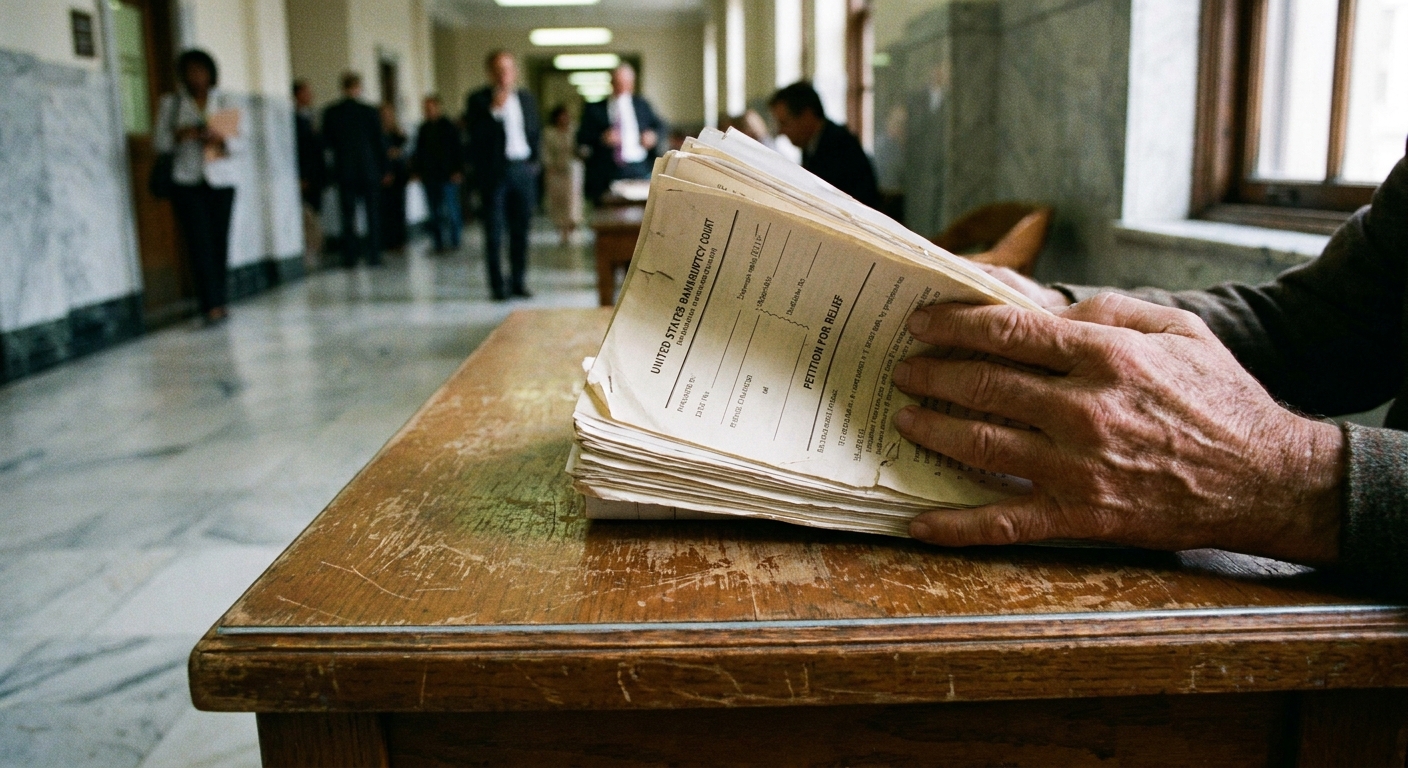
Even if you file bankruptcy, your student loans do not automatically disappear. To try to discharge them, you typically must file an adversary proceeding, which is basically a mini-lawsuit within the bankruptcy court.
Two precision points that matter in real life:
- If a debt is not actually covered by §523(a)(8), it may be dischargeable like other unsecured debt without proving undue hardship. However, you may still need litigation if the creditor disputes whether it qualifies.
- Even when cases settle early, that resolution is still usually documented through (or within) an adversary proceeding.
What happens in an adversary proceeding
- You file a complaint asking the court to determine your student loans are dischargeable due to undue hardship.
- The lender or servicer (and sometimes the U.S. Department of Education) responds and can contest the claim.
- Evidence is exchanged similar to other civil cases. Think documents, income proof, medical records if relevant, and sworn testimony.
- The case resolves by settlement or trial, and the judge issues a decision.
Practical takeaway: when people say “student loans in bankruptcy,” what they really mean is “student loans plus an adversary proceeding.” That extra step is the main reason it is uncommon, not impossible.
Newer federal loan process
There is a major update that changed how many federal student loan cases play out in bankruptcy.
In November 2022, the Department of Justice and the Department of Education issued joint guidance that created a more standardized way for the government to evaluate undue hardship in many federal student loan adversary proceedings. This is often described as DOJ’s student loan discharge process, and it uses borrower attestations plus internal DOJ and ED review.
The headline is simple: in the right case, the government can stipulate (agree) that undue hardship exists, which can avoid a full trial. Important: the guidance does not change the legal standard. The standard is still “undue hardship” under 11 U.S.C. §523(a)(8), and there is no guarantee of a stipulation.
What the guidance does
- Standardizes review of undue hardship factors for many federal student loans.
- Uses an attestation process where borrowers provide structured information about income, expenses, and hardship factors.
- Encourages appropriate stipulations so qualifying cases can resolve by agreement rather than trial.
Who it applies to
- Usually ED federal student loans in bankruptcy litigation where DOJ is representing ED.
- Not private loans. Private lenders are not bound by DOJ and ED guidance.
- Not every federal situation. Edge cases exist, but most borrowers will experience this only when DOJ is involved in the adversary proceeding.
Step by step
Exact practice varies by case and district, but in many federal-loan cases the flow looks like this:
- You file the adversary proceeding and serve the government.
- DOJ requests standardized information (the attestation and supporting documents). This typically covers your income, household size, recurring expenses, health or caregiving constraints, employment history, and loan history.
- DOJ and ED review the file internally against the undue hardship framework (often mapped to Brunner factors in Brunner jurisdictions).
- Possible outcomes: DOJ contests the case, or DOJ proposes a resolution. A proposed resolution may be a full discharge, a partial discharge, or another agreed treatment based on your facts.
- The judge still enters an order. Even when everyone agrees, court approval still matters.
What it looks like in real life
In many federal loan cases, the “fight” now looks less like a scorched-earth lawsuit and more like: file the adversary proceeding, complete the requested disclosures and attestations, and then see whether DOJ and ED will agree to a discharge (sometimes full, sometimes partial) based on the standardized review. This is one reason settlements have become more common in federal student loan bankruptcy litigation.
If your loans are federal, this guidance can meaningfully affect strategy, timeline, and the odds of a negotiated resolution. If your loans are private, you should expect a more traditional litigation posture in many cases.
The Brunner test
Most courts still use some version of the Brunner test to decide undue hardship. It is usually framed as three prongs you must prove.
Prong 1: Minimal standard
This is not “I would rather not.” It is more like “If I make these payments, I cannot cover basics.” Courts tend to look at necessities such as housing, utilities, food, transportation, medical costs, child care, and sometimes modest internet and phone expenses.
Prong 2: Hardship persists
Courts are trying to decide whether your situation is a long-term trap or a short-term squeeze. Stable limitations like chronic illness, disability, age-related job constraints, lack of usable degree value, or other barriers can matter here. The court is generally not looking for perfection, but it often wants something more than “things are tight this year.”
Prong 3: Good faith
This prong often creates the most anxiety. People hear “good faith” and assume it means you must have paid for years. In practice, courts may consider a broader set of behaviors, including:
- Whether you communicated with the servicer or tried to work out a solution
- Whether you minimized expenses and maximized income in a reasonable way
- Whether you explored options like deferment, forbearance, or IDR
- Why you did or did not enroll in repayment programs
Important nuance: good faith is not supposed to mean you must live in misery. Judges often understand that people can be broke and still buy their kid winter boots or keep a reliable car.
Brunner varies
Even when courts say they are applying Brunner, the strictness can vary a lot by jurisdiction and by judge. In some places, it has historically been applied like a near-impossible standard. In others, courts have adopted more realistic interpretations of what “minimal standard of living,” “persistence,” and “good faith” mean in modern life.
What “evolving” means
You may hear attorneys talk about Brunner “softening” or being applied with more flexibility. Usually they mean one or more of these trends:
- Less punishing views of budgets. Courts may accept that basic internet, reasonable transportation, and necessary medical spending are part of modern life.
- More realistic views of long-term hardship. Judges may recognize that some borrowers have structural barriers that do not magically resolve in a year or two.
- Less moralizing about repayment history. Especially when the borrower’s income simply never supported meaningful payments.
None of that guarantees a win. It just means the analysis is not always the “you must be permanently destitute” caricature people repeat online.
Jurisdiction note: which test applies is often tied to your federal circuit and local precedent. Some circuits are known for Brunner, while others use a broader totality approach. Instead of trying to guess based on internet forums, ask a local bankruptcy attorney what your district actually applies in student loan cases.
Other tests
Not every court uses Brunner. Some jurisdictions use a broader “totality of the circumstances” approach that weighs your full financial picture without forcing everything into the same three-prong box.
What does that mean for you? Two things:
- Location matters. The standard can vary depending on where your bankruptcy is filed.
- Facts still matter more. No matter the test, judges care about your income, expenses, health, dependents, job prospects, and repayment options.
If you are researching online, be careful about advice that treats the undue hardship test as identical nationwide. It is not.
Federal vs private strategy
If you take only one strategic point from this page, make it this: federal and private student loans often do not litigate the same way, even though the legal “undue hardship” concept is the umbrella.
Federal loans
- DOJ and ED guidance can make a stipulated resolution more realistic in the right facts.
- Documentation and consistency still matter, but the pathway to settlement can be more structured.
- IDR history and eligibility often show up as a central part of the evaluation.
Private loans
- Private lenders are not governed by DOJ and ED guidance and may take a more aggressive posture.
- The case can turn heavily on discovery, expert testimony in some situations, and the specific judge’s approach.
- Loan classification matters because some private debts marketed as “student loans” might not fit the bankruptcy code definition that triggers undue hardship rules.
That is why many attorneys start by sorting your loans into buckets: federal, private education loans that likely fall under the undue hardship rule, and private debts that might be argued as dischargeable like other unsecured debt.
Partial discharge
One of the most misunderstood parts of student loan discharge is this: it is not always all-or-nothing. In some cases, courts may grant a partial discharge or otherwise reduce the burden, for example by discharging a portion of the balance, interest, or specific loans.
Availability varies by jurisdiction and judge. Some courts are more open to partial discharge than others, and the legal pathway is not applied uniformly everywhere.
When it comes up
- Your finances show you can pay something, just not the full contractual payment
- The balance has ballooned due to interest and fees
- There is a split between older loans, private loans, and different repayment histories
Think of partial discharge as the court saying: “Paying all of this would be undue hardship, but paying some of it is not.” Whether this is available depends on the court’s approach and the facts of your case.
IDR overlap
IDR plans are a big deal in undue hardship cases because they change the question. If your IDR payment would be $0 or very low, a lender may argue that you are not facing undue hardship since you can stay in repayment without a crushing payment.
But it is not that simple. Courts treat IDR differently. Some view very low IDR eligibility as strongly cutting against undue hardship. Others take seriously the long-term reality of carrying debt for decades, including negative amortization and the administrative friction of staying in compliance.
How IDR can hurt
- Low IDR payments can make it harder to prove you cannot maintain a minimal standard of living while paying.
- Not enrolling in IDR can be framed as lack of good faith, depending on the judge and the reasons.
How IDR can help
- Negative amortization is real. If payments are too low to cover interest, balances can grow for years. Some courts take that long-term trap seriously.
- Administrative burdens. Annual recertification, documentation issues, and servicer errors can create instability, especially for borrowers with health issues, inconsistent income, or limited capacity.
- Retirement realities. A “manageable payment” today may still be unrealistic over decades, especially with medical costs or limited earning potential.
In other words, IDR is often part of the story, but it rarely ends the story by itself.
If you are considering bankruptcy partly because of student loans, document your IDR history like you would document a job search: dates, calls, screenshots, letters, and the reasons behind each decision. In undue hardship cases, paper trails matter.
What counts as student loans
“Student loan” for bankruptcy purposes is more specific than the way people use the phrase in everyday life. Undue hardship generally applies to debts that fall into one of the main §523(a)(8) buckets, such as:
- Federal student loans
- Loans made, insured, or guaranteed by a governmental unit
- Loans made under programs funded in whole or part by a governmental unit or nonprofit
- Qualified education loans (a tax-code defined category that many private education loans aim to fit)
However, not every private loan marketed as a “student loan” qualifies the same way, especially if it does not meet the qualified-education-loan requirements or was not used for eligible education costs at an eligible school. Sometimes the first win is correctly identifying which debts truly require an undue hardship showing and which might be treated like other unsecured debt.
One caution: even if a loan might be outside §523(a)(8), you may still need to press the issue if the creditor disputes classification. That can mean litigation, even if the argument is not technically “undue hardship.”
Costs and fees
Reality check: pursuing student loan discharge can cost more than a “standard” bankruptcy because an adversary proceeding adds attorney time, paperwork, and sometimes discovery and testimony. Some cases resolve relatively efficiently through stipulation, especially with certain federal loans, but others become full litigation.
If you consult an attorney, ask separately about (1) the base bankruptcy fee and (2) the expected range for the adversary proceeding, including what would increase costs (for example, contested discovery or trial).
Realistic timelines
The timeline depends on whether you settle, how crowded your court is, and how hard the other side fights. Federal loans can sometimes move faster now because the DOJ and ED process can support earlier stipulations in appropriate cases, but it is still not “instant.”
Typical ranges
- Planning and filing: a few weeks to a few months, depending on how quickly you gather documents and complete required counseling steps
- Starting the adversary proceeding: often soon after the bankruptcy filing, but timing varies by strategy and attorney
- Litigation to resolution: a few months for a settlement-driven case, or closer to a year or more if it goes deep into discovery and trial
Also note: even if you ultimately win, the stress and effort are front-loaded. Expect requests for documentation, budget details, and explanations for expenses that feel very personal.
What judges look for
Undue hardship cases are won and lost in the details. Courts are usually trying to answer two questions: (1) Is your budget honest and necessary? (2) Is your situation likely to stay constrained?
Budget items
- Housing: Is it reasonable for your area and household size?
- Transportation: Is the car payment necessary and modest, or does it look elective?
- Medical and mental health costs: These can be central if documented.
- Family obligations: Dependents, child support, caregiving responsibilities.
- Discretionary spending: Small comforts are not automatically disqualifying, but patterns that look avoidable can be challenged.
Match story to paperwork
I know this sounds obvious, but it is huge. If your narrative is “I have tried everything,” your documents should show attempts to increase income, reduce expenses, or work with servicers when possible. If your narrative is “I cannot because of health,” medical documentation becomes more important.
Settlement is common
Not every undue hardship case ends with a dramatic courtroom ruling. Some cases settle, which can include outcomes like:
- Partial discharge of principal or interest
- An agreed payment amount for a set period
- Discharge of certain loans but not others
- Other negotiated relief
Settlement depends on your facts, your court, and the parties involved. For many federal loans, the DOJ and ED guidance is a big reason settlements and stipulations may be more achievable than they used to be, especially when the documentation is clean and the hardship factors are clear.
Next-step checklist
I cannot give legal advice, but I can tell you what tends to make people feel less lost when they start exploring undue hardship.
Documents to gather
- Recent student loan statements showing balances, interest rates, and loan types
- IDR history: applications, approvals or denials, payment amounts, recertification records
- Tax returns (usually the last 2 years), recent pay stubs, and proof of other income
- A month-by-month spending snapshot: bank statements and credit card statements
- Medical documentation if health limits your earning capacity
- Proof of job search or training efforts if underemployed
- Federal loan cases: be ready to provide the kind of structured financial and hardship information commonly requested in the DOJ and ED attestation process
Questions for an attorney
- Which undue hardship test is commonly used in our jurisdiction?
- Do you handle adversary proceedings in-house?
- Are my loans federal, private, or a mix, and how does that change strategy?
- For federal loans, do you have experience with the DOJ and ED attestation and stipulation process?
- What facts in my situation are strongest and weakest under that test?
- Is partial discharge realistic here?
- How does my IDR eligibility affect strategy?
- What is a realistic timeline and cost range for my case?
If you are living with that constant “I can never get ahead” feeling, you are not weak. You are responding to math that is not working. The point of learning the undue hardship landscape is not to chase a fantasy. It is to understand whether there is a legitimate path for relief, and what that path demands from you in time, documentation, and emotional bandwidth.
Misconceptions
“Student loans can never be discharged.”
False. It is difficult and case-specific, but possible.
“You have to be homeless to qualify.”
Not the legal standard. Courts focus on a minimal standard of living, not punishment.
“If my IDR payment is $0, I cannot win.”
Not necessarily. IDR can be a major factor, but courts may still consider long-term hardship, balance growth, and realistic life constraints.
“The DOJ guidance means federal loans are easy to discharge now.”
Also false. The guidance can streamline review and increase the chance of a stipulation in the right case, but it does not change the legal standard, it does not guarantee a stipulation, and you usually still need an adversary proceeding.