
If you are self-employed, choosing the right retirement plan can feel like trying to do your taxes without coffee. You keep hearing “SEP IRA” and “Solo 401(k)” like they are basically the same thing, but the rules (and the contribution math) are not identical.
This guide breaks down the differences that actually matter for freelancers, consultants, and small business owners: contribution limits, catch-up contributions, setup and ongoing costs, paperwork, and how everything changes if you also have a W-2 job on the side.
Quick answer: which one is usually a better fit?
Most self-employed workers end up in one of these camps:
- You want the simplest setup with minimal admin: a SEP IRA is hard to beat.
- You want the highest possible contribution at lower to mid income levels, or you want catch-up after age 50: a Solo 401(k) often wins.
- You have (or might add) employees: a SEP can get expensive fast because contributions generally have to be made for eligible employees too. A Solo 401(k) is usually only for businesses with no common-law employees.
Now let’s make that decision with actual rules, plus a few numbers where they help.
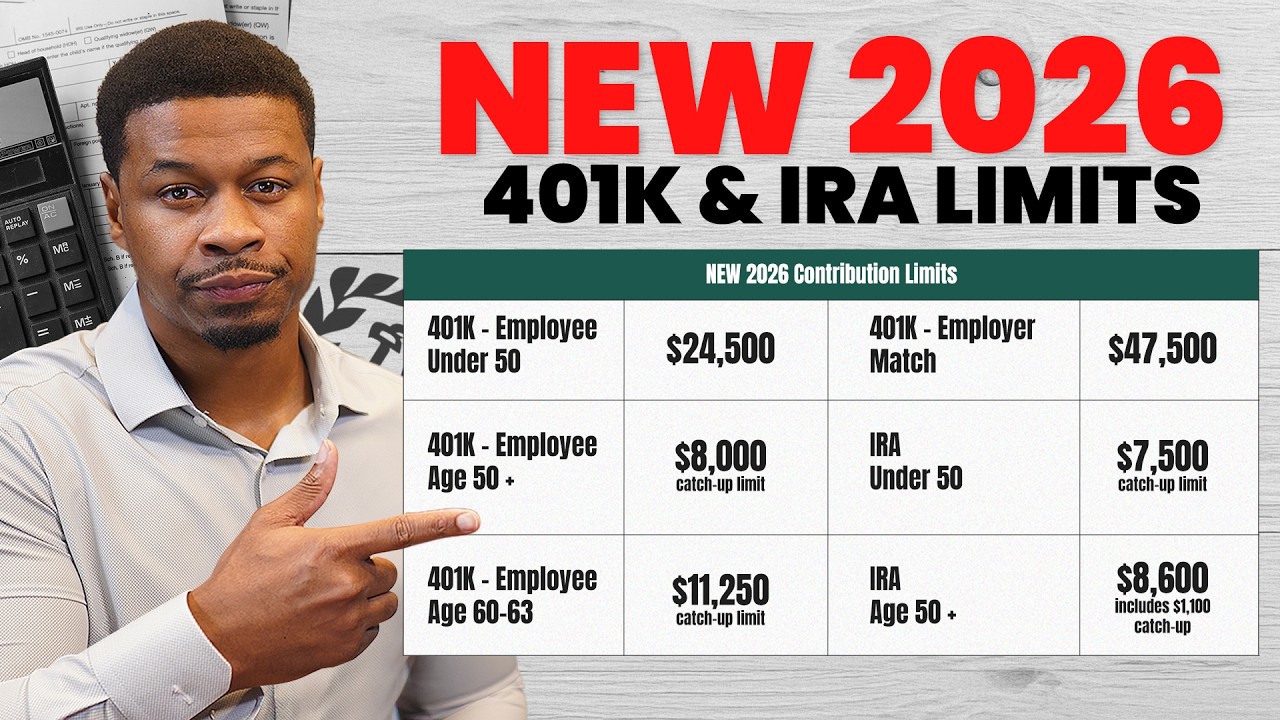
Key limits (check the current year)
Retirement plan limits change over time. Rather than hard-coding a number that goes stale, use this quick checklist and confirm the current-year limits on IRS pages or with your plan provider:
- 401(k) employee deferral limit: one shared limit across all your 401(k) plans for the year (W-2 and Solo 401(k) combined).
- Overall defined contribution limit: caps total employer + employee contributions for a Solo 401(k), and also caps SEP IRA contributions.
- Catch-up rules: apply to 401(k)s (if your plan allows them), not to SEPs.
Practical tip: If you are near the ceiling or have multiple jobs, verify limits for the exact tax year you are contributing for. This is one of the easiest places to make an honest mistake.
Eligibility: who can open each plan?
SEP IRA eligibility
A SEP IRA can work for a sole proprietor, single-member LLC, partnership, or corporation. You can open one even if you have employees, but that is where the “simple” part can get pricey.
In general, if you contribute for yourself, you may also need to contribute the same percentage of compensation for eligible employees. Plans can set certain eligibility rules within IRS limits (for example, age, service time, and minimum compensation), but you cannot just skip an eligible employee and fund only yourself.
Solo 401(k) eligibility
A Solo 401(k) is typically for a business owner (and possibly their spouse) with no common-law employees. If you later hire employees who meet your plan’s eligibility rules, you usually cannot keep it as a “solo” plan. In many cases you can amend or convert the plan into a standard 401(k) instead of abandoning it, but it is still a meaningful turning point with more admin and compliance.
Spouse exception: If your spouse legitimately earns income from the business, they can often participate and contribute too, which can dramatically increase your household’s tax-advantaged saving.

Contribution limits: SEP IRA vs Solo 401(k)
Both plans can allow large contributions, but they get there differently.
SEP IRA contributions (employer only)
A SEP IRA is funded with employer contributions only. Even if you are self-employed, you are still wearing the “employer” hat here.
- Contribution formula: up to 25% of compensation (for corporations) or roughly 20% of net self-employment earnings after adjusting for self-employment tax (for sole proprietors and partnerships). Note: the “about 20%” is due to a circular calculation and depends on how net earnings are defined for plan purposes.
- Annual cap: limited to the overall defined contribution plan maximum for the year.
- No employee deferrals: you cannot do an extra elective deferral on top of the employer amount.
Reality check: If your net income is modest, the SEP limit may feel smaller than you expected because the percentage-based formula is doing the driving.
Solo 401(k) contributions (employee + employer)
A Solo 401(k) is powerful because it lets you contribute in two layers:
- Employee elective deferral: you can contribute up to the annual 401(k) deferral limit (shared across all your 401(k) plans for the year).
- Employer profit-sharing: you can also contribute an employer amount (percentage-based, similar concept to a SEP).
- Combined annual cap: total contributions are capped by the annual overall limit (and potentially increased by catch-up if eligible).
Because of the employee deferral layer, a Solo 401(k) often lets you put away more at the same income level, especially if you are trying to save aggressively.
Worked example: $40,000 net profit
Here is an approximate, real-world illustration (not a substitute for a CPA calculation).
Assumptions
- Sole proprietor (Schedule C), no employees
- $40,000 net profit before retirement contributions
- We are estimating to show the gap, not trying to land on the exact dollar
SEP IRA (employer only)
A common rule of thumb is that a SEP IRA contribution for a sole proprietor lands around about 20% of net self-employment earnings after the self-employment tax adjustment.
That often ends up in the ballpark of around $7,000 to $8,000 on $40,000 of net profit.
Solo 401(k) (employee + employer)
With a Solo 401(k), you may be able to do:
- Employee deferral: up to the annual 401(k) deferral limit (subject to W-2 deferrals, if any)
- Employer profit-sharing: an additional amount similar to the SEP-style calculation
So at the same $40,000 net profit, a Solo 401(k) can often allow a meaningfully higher total than a SEP, because you are stacking two contribution types.
Translation: if your income is not yet high but you want to save hard, the Solo 401(k) is usually the faster elevator.
Catch-up contributions
If you are 50 or older, this is one of the cleanest deciding factors.
- SEP IRA: no catch-up contribution option. You are limited to the standard employer contribution formula and annual cap.
- Solo 401(k): allows catch-up contributions (assuming the plan is set up to permit them). This can increase how much you can shelter each year.
If you are in your 50s and trying to accelerate savings, the Solo 401(k) usually offers more room.
If you also have a W-2 job
This is where people accidentally overcontribute. The key idea is that the employee deferral limit follows you across jobs, but employer contributions are tracked separately by employer.
W-2 job + Solo 401(k) side business
- Your employee elective deferral limit is shared across your W-2 401(k) and your Solo 401(k). If you max it out at work, you cannot defer more as an “employee” in the Solo 401(k).
- You may still be able to contribute employer profit-sharing to the Solo 401(k) based on your self-employment income, even if you already maxed your deferral at the W-2 job.
Translation: a Solo 401(k) can still be useful for side hustle income even when your day job 401(k) is maxed, because the employer layer can add extra savings room.
W-2 job + SEP IRA side business
- A SEP IRA contribution is an employer contribution tied to your self-employment income.
- It generally does not interact with your W-2 employee deferral limit the way a second 401(k) would, because there is no employee deferral piece in a SEP.
In plain English: both can work alongside a W-2 retirement plan, but a Solo 401(k) requires more careful tracking of your employee deferrals across the year.

Roth, backdoor Roth, and why it matters
This is a big real-world differentiator that people rarely hear about until they are already deep in the paperwork.
Roth contributions
- Solo 401(k): many providers support Roth employee deferrals. Not all do, but it is common.
- SEP IRA: SEP contributions have traditionally been pre-tax only. SECURE 2.0 opened the door to Roth SEP treatment in theory, but in practice many brokerages have been slow to implement Roth SEP functionality. For most people who want Roth savings inside a self-employed plan, a Solo 401(k) is still the more practical route.
Backdoor Roth and the pro-rata rule
If you do (or plan to do) a backdoor Roth IRA, pay attention:
- SEP IRAs count as traditional IRA money for the IRS pro-rata rule. Having a SEP balance can make backdoor Roth conversions more complicated and potentially more taxable.
- Solo 401(k) balances usually do not count as IRA balances for pro-rata purposes, which can help keep backdoor Roth mechanics cleaner. (Confirm with your tax pro for your exact situation.)
Bottom line: if backdoor Roth is on your radar, a Solo 401(k) often plays nicer.
Loans: another practical difference
- Solo 401(k): may allow participant loans if your plan document permits it and your provider supports it.
- SEP IRA: does not allow loans. IRA loans are not a thing under IRS rules.
Most people should not plan on borrowing from retirement, but it is still a feature difference worth knowing upfront.
Setup costs and surprises
SEP IRA setup and costs
SEP IRAs are usually inexpensive and straightforward:
- Setup: typically quick to open at a brokerage.
- Ongoing administration: generally minimal.
- Common costs: investment expense ratios, trading fees (often $0 at major brokers), and possibly account fees depending on provider.
SEP IRAs are popular partly because you can keep the “business admin” side of the plan very light.
Solo 401(k) setup and costs
Solo 401(k)s can still be low-cost, but they are more likely to come with extra steps:
- Setup: you adopt a plan document and open the account. Some providers offer free plans, others charge setup fees.
- Ongoing administration: more moving parts, especially if your plan allows Roth contributions or loans (features vary by provider).
- Potential filing requirement: Form 5500-EZ is generally required once plan assets exceed $250,000 at year-end, and it is also generally required for the final year of the plan even if you are under that threshold. Confirm current rules for your situation.
If your brain loves checklists, you will be fine. If you want set-it-and-forget-it simplicity, the SEP is the calmer choice.
Deadlines
Deadlines are a practical difference that matters in real life, especially if you do not know your final net income until you finish your tax return.
SEP IRA deadlines
SEP IRAs are known for flexibility. In many cases, you can open and fund a SEP IRA up to your tax filing deadline, including extensions. That makes it a favorite for people who want to make last year’s contribution after the year is already over.
Solo 401(k) deadlines
Solo 401(k) timing has a few different “clocks,” and this is where people get tripped up. Think in three buckets:
- Plan establishment: under current rules, you can often establish a new Solo 401(k) by your tax filing deadline (including extensions) for the year you want to contribute for. Provider processes vary, so do not cut it close.
- Employer profit-sharing contributions: commonly can be made by your tax filing deadline (including extensions), similar to SEP timing.
- Employee deferral elections: for most setups, your election to make employee deferrals generally needs to be in place by December 31 of the tax year (even if the actual deposit happens later, depending on how you pay yourself and how your plan is administered). If you are self-employed, the “when is compensation available” nuance matters, so confirm with your provider or CPA.
My practical takeaway: if you regularly decide on contributions at tax time, a SEP IRA is usually easier. If you like contributing consistently throughout the year (and you like rules that behave like rules), a Solo 401(k) fits nicely.
Compliance note: deadlines and mechanics can change, and they can depend on plan documents and business structure. Verify with current-year IRS guidance and your plan provider.
Admin load
SEP IRA admin load
- Typically no annual plan filing for most small SEP arrangements.
- Fewer contribution types to track.
- Less risk of accidentally breaking a deferral rule, because there are no employee deferrals.
Solo 401(k) admin load
- More contribution buckets (employee deferral, employer contribution, catch-up if eligible).
- You need to monitor employee deferrals if you also have a W-2 401(k).
- Form 5500-EZ generally kicks in once plan assets exceed $250,000 at year-end (and usually for the final plan year).
This does not mean Solo 401(k)s are “hard.” It means they reward organization.
Employees
If you think you might hire help in the next year or two, this matters:
- Solo 401(k): generally not an option once you have eligible common-law employees, but you may be able to transition into a standard 401(k) rather than starting from scratch.
- SEP IRA: allowed with employees, but if they are eligible under your SEP’s rules (within IRS limits), you typically must contribute for them at the same percentage as you contribute for yourself.
So if you plan to hire, you are really deciding between: (1) a SEP that might require employer contributions for staff, or (2) stepping up to a more traditional small business retirement plan route later.
Real-world scenarios
Scenario 1: freelancer with $40,000 net profit
At moderate net profit, a SEP IRA contribution is limited by that employer percentage formula. A Solo 401(k) may allow a larger total contribution because you can stack the employee deferral plus the employer contribution. (See the worked example above for an approximate feel.)
Scenario 2: consultant with $180,000 net profit, no employees
At higher income levels, both plans can get you near the annual maximum contribution cap. The “winner” often comes down to whether you want Roth options (if available in your Solo 401(k)), catch-up contributions, loans, backdoor Roth friendliness, or simpler administration.
Scenario 3: W-2 worker maxing their 401(k) plus side hustle
If your W-2 job already uses up your employee deferral limit, a Solo 401(k) can still let you contribute via the employer side from your side hustle. A SEP IRA can also work, but it may not reach the same total contribution potential depending on your side income and your goals.
How to choose in 10 minutes
If you want a quick decision framework, use this:
Pick a SEP IRA if:
- You want the simplest, lowest-admin option.
- You like making contributions after the year ends when you know your tax numbers.
- You are okay with employer-only contributions.
- You might have employees and understand you may need to contribute for them too (if they are eligible).
- You do not care about Roth inside this plan, and you are not trying to keep your IRA balances clear for backdoor Roth purposes.
Pick a Solo 401(k) if:
- You want the potential for higher contributions at lower to mid income levels.
- You want catch-up contributions after 50.
- You want Roth contributions and your provider supports them.
- You care about keeping backdoor Roth mechanics simpler (often a point in favor of Solo 401(k)).
- You are comfortable tracking employee deferrals across a W-2 job and your business.
- You have no employees (other than a spouse who works in the business).
Setup checklist
SEP IRA setup checklist
- Confirm your business structure and whether you have eligible employees (based on allowed SEP eligibility rules).
- Choose a brokerage and open a SEP IRA.
- Decide how you will calculate your contribution (tax software, CPA, or a contribution worksheet).
- Fund the account by the applicable deadline.
Solo 401(k) setup checklist
- Confirm you have no eligible common-law employees.
- Choose a provider and adopt the plan document.
- Decide whether you want traditional contributions only or also Roth, if available.
- Set a process for employee deferral elections (often by December 31).
- Plan your contribution strategy: employee deferral timing plus employer profit-sharing.
- Track contributions during the year, especially if you also have a W-2 401(k).
Mistakes to avoid
- Overcontributing employee deferrals when you have a W-2 401(k) plus a Solo 401(k).
- Missing the deferral election timing for a Solo 401(k) because you assumed everything could be decided at tax time.
- Ignoring employee rules with a SEP IRA and accidentally creating a benefit issue for eligible staff.
- Waiting too long to open a plan if your chosen provider has setup or paperwork lead times.
- Guessing your net earnings without accounting for the self-employment tax adjustment when calculating contribution limits.
If you are unsure, it is absolutely worth asking a CPA for a quick contribution-limit calculation before you move money. That small fee can prevent a messy correction later.
Bottom line
A SEP IRA is the low-friction choice that works well when you value simplicity and flexible timing. A Solo 401(k) is the high-ceiling choice that often lets you contribute more, especially if you are trying to maximize savings early, want Roth options, or want catch-up room after 50.
If you tell me two things, you can usually decide fast: (1) your approximate net self-employment income and (2) whether you have employees or a W-2 job. From there, the right plan tends to make itself obvious.
Friendly reminder: Retirement plan rules are technical and change over time. This article is educational, not tax advice. If you are close to the limits, want Roth-specific guidance, or have multiple income sources, a CPA can help you lock in the correct contribution amount and timing.