
I used to think “Roth IRA” basically meant “you can take money out whenever and it’s tax-free.” That belief is one of those personal finance myths that sounds nice and can get expensive fast.
Here’s the truth: you can sometimes avoid the 10% early-withdrawal penalty on a Roth IRA distribution and still owe income tax. The key is separating two totally different questions:
- Do I owe the 10% penalty?
- Do I owe income tax?
This article focuses on the overlap that trips people up: penalty-free but not tax-free Roth IRA withdrawals.
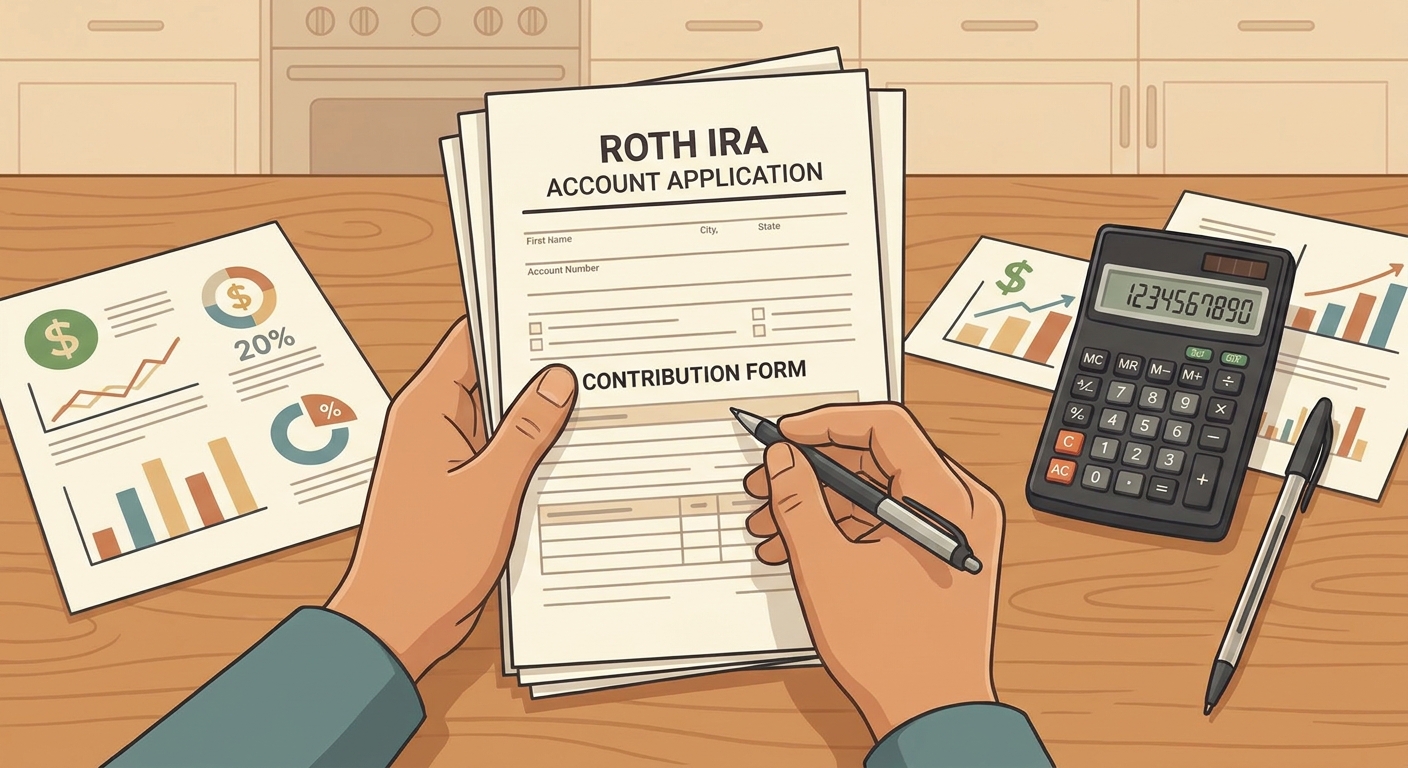
Penalty-free vs. tax-free
A Roth IRA distribution can be:
- Tax-free and penalty-free (the ideal).
- Penalty-free but taxable (what we’re covering today).
- Taxable and penalized (worst case).
A distribution of Roth IRA earnings is generally tax-free only when it is a qualified distribution, meaning it meets the 5-tax-year rule and a qualifying event applies (commonly age 59½, disability, death, or a first-time home purchase up to the limit).
Many people remember part of that rule, but miss that penalty exceptions do not automatically make earnings tax-free.
The ordering rules
Before we talk exceptions, we need the IRS ordering rules because they decide what dollars you are actually withdrawing. In general, Roth IRA distributions come out in this order:
- Regular contributions
- Conversions and rollovers (generally oldest first, with special timing rules)
- Earnings
Why this matters: withdrawing your regular contributions is tax-free and penalty-free at any age, because you already paid tax on them. No exception needed.
The penalty and the income tax complications usually start when you pull out earnings, or when conversions are involved.
Quick conversion nuance (worth knowing): conversions have their own ordering layers, and taxable conversion amounts are generally treated as coming out before nontaxable conversion amounts. Also, each conversion can have its own 5-tax-year clock for the 10% penalty if you take converted amounts out too soon. That is separate from the 5-tax-year rule for qualified distributions.
Penalty-free but taxable
To make Roth IRA earnings tax-free, you generally need a qualified distribution. That typically means:
- You have met the 5-tax-year period (the clock starts with your first Roth IRA contribution year), and
- One of the qualifying events applies (commonly age 59½, disability, death, or a first-time home purchase up to a limit).
If you do not meet the qualified distribution test, earnings you withdraw are usually:
- Taxable as ordinary income, and
- Potentially subject to the 10% penalty, unless an exception applies.
So the “penalty-free but taxable” sweet spot happens when:
- You end up withdrawing earnings, and
- The distribution is not qualified (so earnings are taxable), and
- You qualify for a 10% penalty exception for that withdrawal.
Exceptions people mix up
These three are the most common reasons I see people reach for Roth IRA money early:
- First home
- Higher education
- Birth or adoption
All three can help you avoid the 10% penalty. But none of them magically turns nonqualified Roth IRA earnings into tax-free money.
Also, these are not the only penalty exceptions out there. Depending on your situation, other exceptions may apply (for example, certain high medical expenses, some health insurance premiums while unemployed, or disability).
Exception: First home
What it does
You may be able to avoid the 10% early-withdrawal penalty on up to $10,000 of distributions used for a first-time home purchase (lifetime limit). The IRS definition of “first-time” is generally forgiving: it typically means you have not owned a home in the prior two years.
When it is still taxable
This is the point people miss: the first-time home purchase rule can be a qualifying event for tax-free earnings only if you have also met the 5-tax-year rule. If you have not met the 5-tax-year rule, the homebuyer rule may still help you avoid the 10% penalty, but Roth IRA earnings can remain taxable.
Which dollars it can cover
The exception applies to the portion of the distribution that would otherwise be hit with the 10% penalty. In real life, because of ordering rules, you might be withdrawing:
- Only contributions (no tax, no penalty, and the home exception is basically irrelevant), or
- Contributions plus some earnings (the home exception can remove the penalty on the earnings portion, but the earnings can still be taxable if the distribution is not qualified).

Exception: Education
What it does
Certain qualified higher education expenses can qualify you to avoid the 10% early-withdrawal penalty. Think tuition, fees, required supplies, and some room-and-board situations depending on enrollment status and the specific rules.
When it is still taxable
Same theme: if you are under 59½ and you tap earnings in a way that is not a qualified distribution, those earnings can be taxable as ordinary income, even though the education exception can remove the 10% penalty.
Which dollars it can cover
Again, ordering rules first. Contributions come out first and are already tax-free and penalty-free. The education exception becomes relevant if you pull enough to reach earnings. At that point, the exception can apply to the earnings portion, removing the penalty but not the income tax if your distribution is nonqualified.
Exception: Birth or adoption
What it does
The tax code allows penalty-free withdrawals for certain birth or adoption expenses, up to $5,000 per parent per child (so two parents could potentially take $5,000 each for the same child). The distribution still has to meet the timing and definition requirements.
When it is still taxable
If you withdraw Roth IRA earnings before meeting the qualified distribution test, those earnings can still be taxable, even if the birth or adoption exception eliminates the 10% early-withdrawal penalty.
Which dollars it can cover
The exception can apply to amounts that would otherwise be penalized. Practically, that means it tends to matter when your withdrawal reaches:
- Earnings, or
- Certain conversion amounts that are still within their own penalty windows.

Example
Let’s walk through a simple scenario that shows how people get surprised.
Scenario
- You are 32.
- You have contributed a total of $18,000 to your Roth IRA over the years.
- Your Roth IRA is now worth $25,000, meaning $7,000 is earnings.
- You withdraw $22,000 to pay qualified education expenses this year.
What comes out?
Ordering rules say your distribution is:
- First $18,000 of contributions (not taxed, no penalty), then
- $4,000 of earnings (potentially taxed and potentially penalized).
Do you owe the 10% penalty?
If the education exception applies to your situation and expenses, that can remove the 10% penalty on the $4,000 earnings portion.
Do you owe income tax?
Because you are withdrawing earnings and (in this scenario) you do not meet the qualified distribution requirements, the $4,000 of earnings is generally taxable as ordinary income.
In plain English: the exception can waive the 10% penalty, but it does not erase income tax on nonqualified Roth IRA earnings.
This is the exact “escape the penalty but not tax-free” outcome.
Quick reference
Here’s the cleanest way to think about it.
- Regular contributions: typically tax-free and penalty-free when withdrawn, regardless of age.
- Conversions: can have their own penalty timing rules, including separate 5-tax-year clocks. Taxes and penalties depend on what you converted and when.
- Earnings: tax-free only if the distribution is qualified; otherwise often taxable, and possibly penalized unless an exception applies.
If you are aiming for “penalty-free but taxable,” that is almost always about the earnings line item.
Before you withdraw
1) Ask: am I just withdrawing contributions?
If your withdrawal amount is clearly less than your total lifetime Roth IRA contributions, you may be in the simplest category.
2) If earnings are involved, separate taxes from penalties
Write down two separate answers:
- Is this distribution qualified (tax-free on earnings)?
- Even if not qualified, do I meet a 10% penalty exception?
3) Get your records in order
There is no special pre-approval process here. You are generally responsible for keeping enough records to substantiate any exception you claim if the IRS ever asks. Keep:
- Settlement statements for home purchases
- Itemized tuition bills and proof of payment
- Birth or adoption paperwork and any related eligible expense records
4) Know what forms show up at tax time
Your Roth IRA custodian will typically issue a Form 1099-R for distributions. Depending on what you withdrew, you may also need Form 8606 (to track Roth IRA basis and ordering) and Form 5329 (to calculate the penalty or claim an exception).
5) Consider alternatives first
I’m a big fan of treating retirement accounts like a “break glass” option. Depending on the situation, alternatives might include:
- A payment plan with the school or provider
- 0% APR promo offers (only if you can pay it off within the promo period)
- A dedicated sinking fund in a high-yield savings account for upcoming known costs
FAQ
If I qualify for the first-time home exception, are my Roth IRA earnings automatically tax-free?
No. The homebuyer rule can help with the 10% penalty. Roth IRA earnings are tax-free only if the distribution is qualified, which generally means you have met the 5-tax-year rule and a qualifying event applies. If it’s not qualified, the earnings can still be taxable.
Can I choose to withdraw earnings first to use an exception?
Not for Roth IRAs. The IRS ordering rules generally control what is deemed distributed first, regardless of what you intend the withdrawal to be.
What’s the most common way people accidentally create a taxable Roth IRA withdrawal?
They withdraw more than their total contributions, hit earnings, and assume an exception makes it “tax-free.” Exceptions often remove the penalty, not the income tax on nonqualified earnings.
Should I ask my Roth IRA provider to withhold taxes?
It depends on your situation. If part of your distribution will be taxable, withholding may help you avoid an ugly surprise at tax time. A tax pro can help you estimate the right amount.
The takeaway
When you hear “Roth IRA exception,” translate it in your head as: possible 10% penalty relief, not “automatic tax-free.” The taxes hinge on whether the distribution is qualified and whether the money coming out is earnings.
If you’re considering an early withdrawal, do yourself a favor: list your total Roth IRA contributions, estimate how much of your withdrawal would touch earnings, then evaluate penalty exceptions as a second step. That one small workflow can prevent a very expensive misunderstanding.