
If you’ve ever stared at a collections account on your credit report and thought, “I’d happily pay this if it would just disappear,” you’re not alone. That exact feeling is why pay-for-delete letters exist.
A pay-for-delete request is simple in theory: you offer to pay a debt (sometimes in full, sometimes as a settlement) and ask the collection agency to remove its negative tradeline from your credit reports.
In real life, it’s more complicated. Some collectors will consider it. Many will not. And even when someone says “yes,” the results can vary depending on who is reporting the account and how the bureaus process updates.
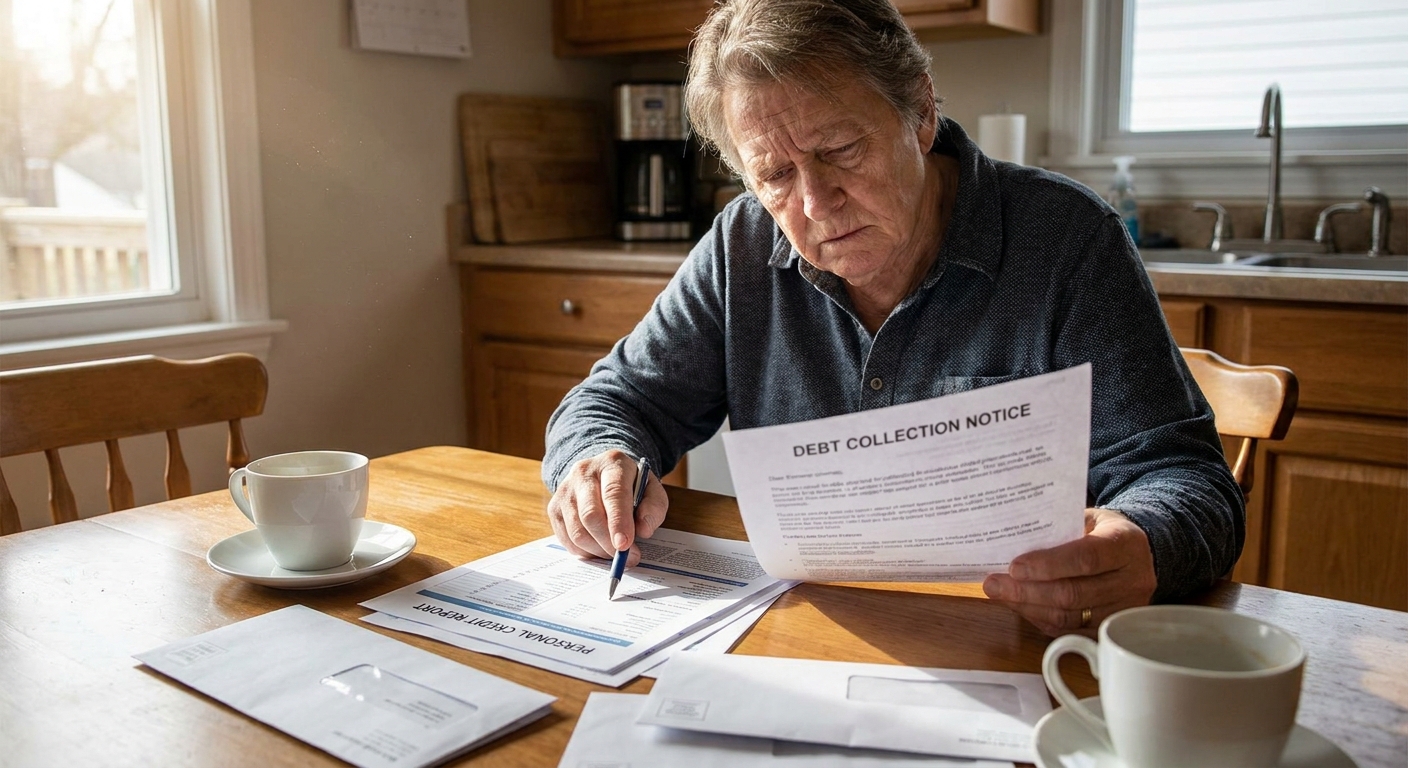
What a pay-for-delete is
A pay-for-delete letter is a written offer to a debt collector that says, essentially:
- You will pay the account (in full or as an agreed settlement).
- In exchange, the collector agrees to delete their collection entry from your credit reports (Equifax, Experian, and TransUnion).
Quick definition: a tradeline is the line item a company reports to the credit bureaus (the account entry you see on your credit report).
This is different from asking the collector to mark the account “paid” or “settled.” A paid collection can still remain on your report for years. Pay-for-delete is about removal, not just updating the balance to $0.
Pay-for-delete vs. a dispute
These get mixed up a lot, so here’s the clean separation:
- Pay-for-delete: You are not claiming the account is wrong. You are offering payment in exchange for removal.
- Factual dispute: You are saying something is inaccurate or unverifiable (wrong balance, wrong dates, not your account, duplicate listing, etc.) and you want it corrected or removed because it doesn’t meet reporting requirements.
If the account has real errors, a dispute is usually the better first move because you’re asking for what you’re legally entitled to: accurate reporting.
Medical debt exception
This is the big update many guides miss: paid medical collections are generally removed from consumer credit reports under current major credit bureau policies. In plain English, if the collection is medical and you pay it, you often do not need a pay-for-delete agreement for it to come off.
Two practical notes:
- Confirm it is coded as medical on your credit reports. If it is not coded correctly, you may need to dispute the classification.
- Give updates time to process. After payment, removals and updates can take several weeks depending on the furnisher and bureau.
Also, medical debt reporting policies have changed more than once in recent years. If your account is medical, it is worth double-checking the current bureau rules before you negotiate anything.
Validate first
Before you negotiate or pay, consider requesting debt validation. Under the FDCPA, you can ask a collector to provide information verifying the debt. This is especially important if:
- You do not recognize the collector or the original creditor.
- The amount looks wrong.
- The dates do not line up.
- You suspect identity theft or a mix-up.
Validation does not automatically erase a legitimate debt, but it can stop you from paying the wrong company or paying the wrong amount. It also forces the conversation onto specifics instead of pressure.
Is pay-for-delete legal?
Generally, pay-for-delete is not prohibited by federal law. You’re basically negotiating how the collector will report (or not report) their tradeline.
That said, there are two important guardrails:
- Credit bureaus have policies favoring complete and accurate reporting. Many collection agencies refuse pay-for-delete because it can conflict with bureau expectations and data furnishing agreements.
- Collectors cannot re-age debt or change key dates to keep it on your report longer. The timeline for how long negative information can be reported is tied to the date of first delinquency.
Also, be careful with what you put in writing. If the debt is close to the statute of limitations in your state, making a payment or acknowledging the debt may restart the clock for being sued in some states, and in others it may not. Rules vary a lot, so if you are near that line, check your state’s rules or get local legal advice. This article is general information, not legal advice.
Why results vary
People get wildly different outcomes with pay-for-delete because you’re dealing with a chain of decisions and systems that do not always align.
1) The collector may not delete
Some agencies have a blanket policy: they will only update to “paid” and will not delete. Others allow deletions only in limited cases, like if you pay in full quickly after placement.
2) Ownership matters
There’s a big difference between:
- A collector collecting for the original creditor (the creditor still owns the debt), and
- A debt buyer that purchased the debt and now owns it.
Debt buyers often have more flexibility in negotiations because they control the account, but they also may be more aggressive and less predictable.
3) You might have two entries
You can have:
- An original creditor tradeline showing charge-off, and
- A collection agency tradeline showing collections.
A pay-for-delete with the collector typically addresses the collector’s tradeline, not the original creditor’s history. If you’re expecting everything to vanish, this is where many people get disappointed.

What they may agree to
Common yes outcomes
- Update to paid in full with a $0 balance.
- Update to settled (paid for less than full balance) with a $0 balance.
- Stop monthly updates, meaning they stop sending new balance or status changes each month. The tradeline can still remain, but it becomes static.
- Delete their tradeline (true pay-for-delete), sometimes only after payment clears.
Common no outcomes
- Deleting accurate late-payment history on the original creditor tradeline.
- Changing the date of first delinquency to make the account look newer or older.
- Deleting a charge-off just because you paid. Paying changes the balance, not the historical event.
If someone promises anything that sounds like “We’ll change the dates” or “We can wipe your entire credit history clean,” that’s a huge red flag.
Safer alternatives
Pay-for-delete is a tool. It’s not the only tool, and in many situations, it’s not even the best one. Here are alternatives I consider “safer” because they are more predictable and less dependent on a collector’s willingness.
1) Dispute real inaccuracies
If anything is wrong, dispute that specific item. Strong dispute targets include:
- Account is not yours.
- Incorrect balance or status.
- Duplicate collections from the same debt.
- Wrong dates (especially date opened or date of first delinquency).
- Collector reporting but cannot verify the debt.
Practical tip: pull your reports from all three bureaus and look for mismatches. Inaccuracies are more common than they should be.
2) Goodwill requests
If your issue is late payments on a credit card or loan that you’ve otherwise brought current, a goodwill letter is usually the better fit. This is especially true if you’ve been a good customer for a long time and the late payment was a one-time mess-up.
Goodwill is not designed for collections as much as it’s for late payments and fee reversals, but it can be powerful in the right scenario.
3) Negotiate the best reporting update
If deletion isn’t available, don’t leave empty-handed. Aim for:
- A written agreement on the settlement amount and that the balance will be reported as $0.
- Clarity on whether it will be reported as paid in full or settled.
- Confirmation the settlement satisfies the debt, and whether they will forgive the remainder (and not sell it).
Even when the tradeline remains, cleaning up the balance and status helps you move forward.
4) Consider aging
Most negative items do not stay forever. Collections and charge-offs generally fall off after about 7 years from the date of first delinquency, though exact timing can vary by bureau and reporting details.
If a collection is old and you’re close to it aging off, paying might not be the highest-impact move for your score. In that situation, focusing on building positive history (on-time payments, low utilization, a thicker credit file) can sometimes do more for you.
Important: “waiting” does not solve legal risk if you are within the statute of limitations. That is a separate timeline from credit reporting.
If you try pay-for-delete
If you’re going to take a shot at pay-for-delete, treat it like a clean negotiation and protect yourself.
Step by step
- Confirm the details: who owns it, the account number, the balance, and whether you might be close to the statute of limitations where you live.
- Request validation if you have any doubts. Get clarity before money changes hands.
- Decide your offer: paid in full or a settlement. Collectors often bought the debt for pennies, so settlements can be possible, but there are no guarantees.
- Ask for deletion in writing: keep it short and specific. Ask for deletion from all three bureaus.
- Do not pay until you have a written agreement from the collector that clearly states what they will do.
- Pay in a trackable, controlled way: keep proof of payment and copies of everything. If you’re cautious about giving access to your bank account, avoid open-ended ACH authorization and use a one-time payment method where possible.
- Check your reports: verify whether the tradeline was removed or updated as promised. A practical window is 30 to 60 days, though timing can vary.
What your letter should include
- Your name and address
- Collector’s name and address
- Their account number and (if available) the original creditor
- Your offer amount and deadline
- The specific action requested: deletion from Equifax, Experian, and TransUnion
- A statement that you will pay after written acceptance
What to avoid
- Long explanations of why you fell behind (save that for goodwill letters).
- Admitting the debt is yours if you genuinely aren’t sure.
- Agreeing over the phone without written confirmation.

Sample letters
These are short templates you can customize. Keep copies of what you send.
Debt validation letter sample
[Your Name]
[Your Address]
[City, State ZIP]
[Collector Name]
[Collector Address]
[City, State ZIP]
Re: Request for validation
Account number: [Account #]
To whom it may concern,
I am requesting validation of the alleged debt referenced above. Please provide the information you are able to, including the name of the original creditor, the amount claimed (with an itemization of any interest and fees), and documentation showing I am the correct consumer for this account.
If you are reporting this account to the credit bureaus, please ensure your reporting is accurate. I am not refusing to pay, but I am requesting verification before discussing any payment options.
Sincerely,
[Your Name]
Pay-for-delete letter sample
[Your Name]
[Your Address]
[City, State ZIP]
[Collector Name]
[Collector Address]
[City, State ZIP]
Re: Pay-for-delete request
Account number: [Account #]
Original creditor: [Name, if known]
To whom it may concern,
I am willing to resolve the account referenced above. If you agree in writing to request deletion of your collection tradeline for this account from Equifax, Experian, and TransUnion, I will pay $[amount] as [paid in full / full settlement] within [X] days of receiving your written acceptance.
This offer is not an acknowledgment of liability. Please confirm your agreement on company letterhead or in a written email from an authorized representative, including that the account will be reported with a $0 balance and that you will not sell or transfer any remaining balance if this is a settlement.
Sincerely,
[Your Name]
Will it boost your score?
Sometimes, yes. But it depends on what else is in your credit profile.
- If a collection is one of the few negative marks, removing it can be meaningful.
- If you have several delinquencies, high utilization, and multiple derogatory items, deleting one collection may not feel like a miracle.
Scoring models also treat collections differently. For example, some newer FICO versions ignore paid collections, but many lenders still use older versions that do not. In other words: getting the balance to $0 is still good, but deletion can be better when you can get it.
Reality check
I’m a big fan of tactics that work reliably. Pay-for-delete is not that. It can work, and it’s fair to ask, but you should go in expecting one of these outcomes:
- Best case: written agreement, you pay, tradeline is deleted.
- Middle case: you pay, account updates to paid or settled, tradeline remains.
- Worst case: you pay without a written agreement and nothing changes beyond the balance.
If your main goal is a stronger credit profile, your time is often better spent on the fundamentals alongside any cleanup: on-time payments, keeping credit card utilization low, and avoiding new negative marks.
FAQs
Should I call or send a letter?
You can start with a call to see if they even consider pay-for-delete, but always get the final agreement in writing before you pay.
Does paying a collection remove it automatically?
No. Paying usually updates the account to a $0 balance and “paid” or “settled.” Removal is a separate request and is not guaranteed. Medical collections are a common exception because paid medical collections are generally removed under current bureau policies.
Can I do pay-for-delete with the original creditor?
Typically, no. Pay-for-delete is mostly a collection tradeline negotiation with the party reporting the collection. Original creditors generally do not delete accurate negative history, but you can try goodwill adjustments for late payments in certain situations.
If they delete it, will it stay gone?
Usually, yes, but keep your paperwork. If it reappears due to data syncing issues, you’ll want the written agreement and proof of payment to help resolve it quickly.
My bottom line
Pay-for-delete letters can be worth trying when you have a collection that is hurting your credit and you’re ready to resolve it, but they are not a sure thing. If there’s any inaccuracy, dispute first. If you have any doubts about the debt itself, validate it before you negotiate. If deletion is off the table, negotiate the cleanest “paid” or “settled” reporting update you can get. And if the account is old, don’t ignore the power of time plus strong new positive habits.
Next step checklist:
- Identify whether the debt is medical, and whether it should be removed after payment under current reporting policies.
- Confirm who owns the debt and who is reporting it.
- Request validation if anything looks off.
- Only pay after you have clear terms in writing.
- Recheck all three bureau reports 30 to 60 days after resolution.