
I’m a spreadsheet guy. When I was digging out of debt, I could usually “fix” a money problem by finding a better rate, a cheaper option, or a tighter plan. Prescription coverage is different. Sometimes the best plan still says, “Nope, not covered.” And when the medication matters, that no can feel personal.
The good news is Medicare Part D has a formal process for getting a drug covered even when it is not on your plan’s list. It’s called a coverage determination, and it can include a formulary exception or a tiering exception. If the plan denies you, there are multiple appeal levels.
This guide walks you through it in plain English, including what your prescriber must say, the timelines that matter, and how to keep the paperwork from turning into a part-time job.

First: confirm what’s being denied
Before you start an exception request, confirm why the plan is refusing to cover the medication. The reason determines the right next step.
- Not on the formulary: The drug is not on your plan’s covered drug list at all. This is a formulary exception situation.
- On the formulary, but too expensive: The drug is covered, but it’s in a high-cost tier and you want a lower tier. This is a tiering exception situation.
- Covered, but blocked by rules: Prior authorization, quantity limits, step therapy, or “must try X first.” This can still be handled through a coverage determination and appeal, but it is not always called a tiering exception.
- Actually Part B, not Part D: Some drugs are covered under Medicare Part B instead (often when they are administered in a doctor’s office or outpatient setting).
Quick clarifier: injectable or infused does not automatically mean Part B. Some self-administered injectables are Part D. The site of administration and whether the drug is “usually self-administered” are big factors.
If you are unsure, call your plan’s customer service and ask this exact question: “Is this being denied because it’s not on the formulary, because of a restriction, or because it’s being billed under Part B?”
Key terms (no insurance-speak)
Coverage determination
This is the plan’s official decision about whether it will cover a Part D drug for you and under what terms. It is the doorway to exceptions and appeals.
Formulary exception
You are asking the plan to cover a drug that is not on its formulary, because the drugs it does cover in that category are not appropriate for you (for example, they caused side effects or did not work).
Tiering exception
You are asking the plan to cover a drug at a lower cost-sharing tier because a lower-tier alternative is not appropriate for you.
Important: plans generally do not have to grant a tiering exception for drugs on a specialty tier (often the highest tier) and some drugs are designed to stay where they are. Still, it can be worth asking your plan to confirm whether your drug is eligible for a tiering exception.
Redetermination
If the plan denies your coverage determination, your first appeal is called a redetermination. It is basically “please reconsider,” backed up with medical documentation.
Quick checklist before you start
This is the stuff that keeps the process from stalling out:
- Your plan name and member ID
- The drug name, strength, and dosage form (tablet, capsule, inhaler, injectable)
- Your pharmacy name and phone number
- Your prescriber’s name and contact info (and fax, if they use it)
- A short list of alternatives you tried (rough dates and what happened)
- The exact denial reason (not on formulary, restriction, tier issue, Part B vs Part D)
Step-by-step: request a Part D exception
Step 1: confirm your prescriber will support it
Your doctor, nurse practitioner, or other prescriber is the engine of this process. A plan can deny a request simply because the medical justification is missing or too vague.
When you contact the office, keep it simple:
- Tell them your Part D plan won’t cover the drug (or won’t cover it at the tier you need).
- Ask if they can submit a coverage determination request with a supporting statement.
- Ask if they believe your situation is urgent and needs an expedited request.
Step 2: submit a coverage determination
You (or your prescriber) can request a coverage determination. Many plans accept requests by phone, fax, mail, and sometimes through an online portal.
If your plan asks for a form, you can usually find it on the plan website by searching the plan name plus “coverage determination” or “exception request.” Many plans use CMS model forms, but the plan’s own version is what you want to use if they provide it.
To avoid delays, have these basics ready before you call or submit anything:
- Your plan member ID information
- The drug details (name, strength, dosage form)
- Your pharmacy’s information
- The reason you need this drug instead of the plan’s alternatives
- Your prescriber’s contact details

The prescriber statement (the make-or-break piece)
If I could put one thing in bold, highlight it, and tape it to your fridge, it’s this: the plan is looking for medical necessity, not frustration.
For exceptions, plans typically require a prescriber supporting statement. In plain terms, your prescriber needs to explain why this drug is the right drug for you.
Your prescriber’s supporting statement should typically address:
- Why the requested drug is medically necessary for your condition
- Why formulary alternatives are not appropriate, such as:
- You tried them and they did not work (include dates if possible)
- You had adverse reactions or contraindications
- You have other conditions or drug interactions that make alternatives unsafe
- For tiering exceptions: why lower-tier alternatives would be ineffective or harmful for you
- Urgency: if waiting could seriously jeopardize your life, health, or ability to regain maximum function
Practical tip: if you have a history of trying other meds, bring a simple list to your appointment or message your prescriber through the patient portal. Names, rough dates, and what happened is enough.
Timelines that matter
Medicare Part D uses specific timeframes. Plans can be faster, but generally not slower.
Coverage determination
- Standard: typically 72 hours
- Expedited: typically 24 hours (when waiting could seriously jeopardize your life, health, or ability to regain maximum function)
Level 1 appeal (redetermination by the plan)
- Standard: typically 7 days
- Expedited: typically 72 hours
Two important nuances: first, there are different rules for requests about payment back versus requests for coverage of a drug you need. Second, the clock can depend on when the plan gets the required information, which is another reason the prescriber statement matters.
If your medication is time-sensitive, do not be shy about asking your prescriber: “Can you request an expedited decision and explain the clinical risk of waiting?”
If it’s approved: what happens next
If your plan approves a formulary exception, it will cover the medication under your Part D benefit, but you may still pay whatever cost sharing applies under the approved terms.
If your plan approves a tiering exception, it should place the drug in the lower-cost tier you were granted, which can reduce your copay or coinsurance.
Two money-minded reminders:
- Ask how long the exception lasts. Some approvals are time-limited and may need renewal. Also ask whether it ends at the calendar year.
- Save every approval notice. If the pharmacy system keeps rejecting the claim, having the approval letter and effective dates is the fastest way to fix it.
If the plan says no: the appeal path
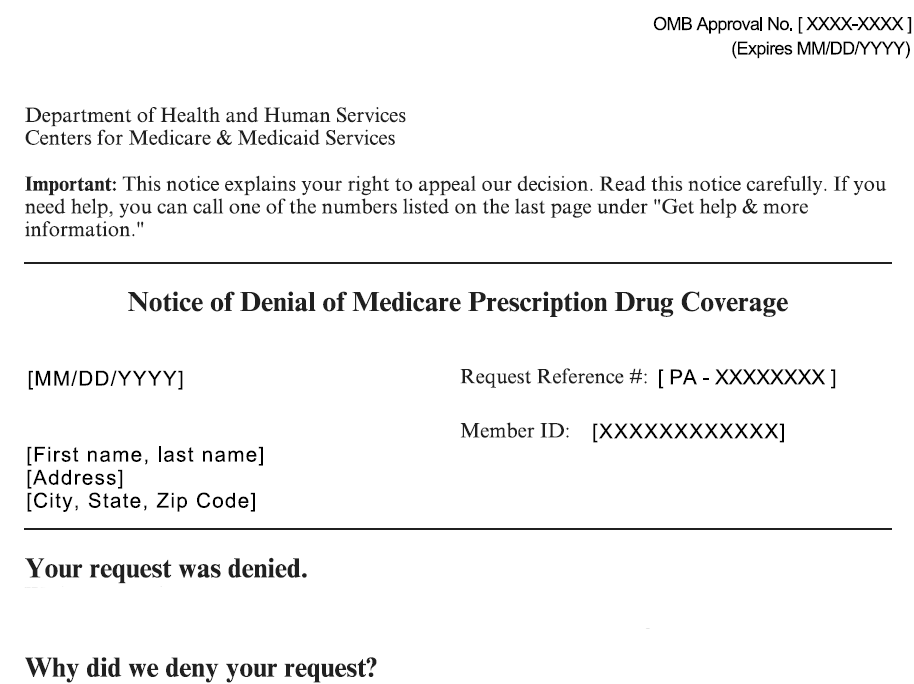
A denial is not the end of the road. Medicare’s Part D process has multiple levels. Each step has deadlines, so read the denial notice carefully and act quickly.
Big deadline: you typically have 60 days from the date on the denial notice to request the next level of appeal.
Level 1: redetermination by the plan
This is your first appeal. You are asking the plan to reconsider the denial, usually with additional medical documentation from the prescriber. You can often request it using the plan’s appeal form, in writing, or by phone.
Best move here: ask your prescriber to submit more detail, especially around failed alternatives, side effects, and contraindications.
Level 2: independent review (IRE)
If the plan upholds the denial, the next step is an independent review organization. This is a third party that reviews the case.
Level 3: ALJ hearing
If you continue to be denied and the amount at stake meets the required threshold, you may be able to request a hearing with an Administrative Law Judge.
Level 4: Medicare Appeals Council
If you disagree with the ALJ decision, you can ask the Medicare Appeals Council to review it.
Level 5: federal district court
The final level is federal court, again subject to an amount-in-controversy requirement.
That sounds like a lot because it is. But many cases get resolved earlier, especially once the prescriber’s documentation is specific and complete.
While you wait: don’t go without meds
Exceptions and appeals take time, and pharmacies do not hand out “time” when you run out of meds. Here are realistic bridge options to ask about while the decision is pending.
Ask about a temporary alternative
Sometimes a clinically acceptable alternative is available for a short period while the exception is processed. You are not giving up on your preferred drug. You are buying time.
Ask about a transition fill
If you recently joined a plan or changed plans, you may qualify for a temporary transition supply in certain situations. In many cases, it’s a one-time temporary fill, and the plan may require you to start the exception process during that window. Call the plan and ask if transition fills apply to your specific drug and situation.
Check whether a different form is covered
Some plans cover one form and not another, like a capsule versus tablet, or one brand versus an authorized generic. Ask the pharmacist to run an alternative NDC if appropriate and ask your prescriber if that substitution is medically acceptable.
Look for legitimate savings help (with Medicare reality checks)
Depending on the drug, there may be help through:
- State Pharmaceutical Assistance Programs (SPAPs) (available in some states)
- Charitable foundations (often diagnosis-based and funding can open and close)
- Manufacturer patient assistance programs (PAPs) for people who meet eligibility rules
Important: most manufacturer copay cards do not work with Medicare. If someone says “just use the copay card,” double-check the fine print.
Also, if you pay using a discount card or cash price outside the Part D benefit, that spending often does not count toward your Part D out-of-pocket tracking (TrOOP). That can affect how quickly you move through Part D phases. Before you choose a discount price, ask the pharmacy or plan whether the claim will be processed through Part D or not.
Common denial reasons (and fixes)
- “You didn’t try covered alternatives.” Fix: have your prescriber document what you tried, what happened, and why trying again is not appropriate.
- “Not medically necessary.” Fix: the prescriber should tie the request to your diagnosis, treatment history, and when relevant, clinical rationale. Specifics beat generalities.
- “Missing information.” Fix: confirm the plan has the supporting statement and any required forms. Faxed paperwork gets lost more than anyone wants to admit.
- “Expedited not justified.” Fix: ask the prescriber to clarify the harm of waiting, or proceed under standard timelines while you use bridge options.
Paperwork tips (so this doesn’t eat your week)
This process goes better when you treat it like a mini project:
- Start a simple log with dates, names, phone numbers, and what was said.
- Save proof: fax confirmations, portal messages, and screenshots of submission receipts.
- Ask for a case number every time, and write it down.
- Request decisions in writing if you only receive them by phone.
My call script
If phone calls make you tense, you’re not alone. Here’s a script that keeps things moving:
“Hi, I’m calling about a Part D coverage determination. My plan is not covering my medication. I need to request a formulary exception or a tiering exception, depending on what applies. Can you tell me the exact reason it’s being denied and the fastest way to submit the request with my prescriber’s supporting statement? Also, what is your decision deadline for standard and expedited requests?”
Before you hang up, ask for:
- A reference or case number
- The fax number or portal instructions (if your prescriber is sending records)
- Confirmation of what documents they still need
- The expected decision date
FAQ
Can I request a Part D exception myself?
You can start the request, but in practice you usually need your prescriber’s supporting statement for the plan to approve it. If you submit it alone, be ready for the plan to ask for medical documentation.
Exception vs appeal: what’s the difference?
An exception is what you ask for during the coverage determination, like covering a non-formulary drug or lowering the tier. An appeal is what you file after a denial, starting with a redetermination.
If my exception is approved once, will it stay approved?
Not necessarily. Exceptions can be time-limited, and formularies can change each year. Ask the plan how long the approval lasts and whether you will need to renew it.
Will the pharmacy automatically know once it’s approved?
Sometimes yes, sometimes no. Keep the approval notice and effective dates. If the claim still rejects, the pharmacy can call the plan’s pharmacy help desk to reprocess it.
Bottom line
When a Part D plan won’t cover your medication, you have a structured path: request a coverage determination, pursue a formulary or tiering exception with a strong prescriber statement, and appeal if needed. The paperwork is annoying, but it’s also a leverage point. The more specific your prescriber’s clinical justification, the better your odds.
If you’re in the thick of this right now, focus on two things today: get the request officially opened and get your prescriber’s supporting statement moving. Everything else follows from that.