
If you have ever looked at the annual 401(k) limit and thought, that is it? The mega backdoor Roth is the strategy people are talking about when they say they are getting tens of thousands more into Roth every year.
It is powerful, legal under current IRS rules, and very plan-dependent. Meaning: two people with the same income at two different employers can have totally different results. Rules and plan terms can change, so always confirm what is allowed before you act.

What a mega backdoor Roth is
A mega backdoor Roth is a way to move money into a Roth account by:
- Making after-tax (non-Roth) contributions to your 401(k) beyond the normal employee deferral limit, then
- Converting those after-tax dollars to Roth either inside the plan or by rolling them out to a Roth IRA.
The “mega” part is the size. It can potentially let you get a lot more into Roth than the usual 401(k) employee deferral limit.
Mega backdoor vs backdoor Roth IRA
These get mixed up all the time, so here is the clean separation:
Backdoor Roth IRA
- You contribute to a Traditional IRA (often non-deductible), then convert to a Roth IRA.
- Used mostly by people whose income is too high for direct Roth IRA contributions.
- Main headache is the pro-rata rule if you already have pre-tax IRA money.
Mega backdoor Roth
- Uses your 401(k), specifically after-tax 401(k) contributions (not Roth 401(k) contributions).
- Not primarily about income limits. It is about whether your employer plan allows the right features.
- Main headaches are plan features, timing, and taxes on earnings before conversion.
If you already read our backdoor Roth IRA article, think of this as its bigger, more employer-dependent cousin.
The three 401(k) buckets
Most people know about pre-tax and Roth. The mega backdoor uses a third bucket that many plans hide in the fine print.
- Pre-tax 401(k): Contributions reduce your taxable income now. Withdrawals are taxed later.
- Roth 401(k): Contributions are taxed now. Qualified withdrawals are tax-free later.
- After-tax 401(k): Contributions are taxed now, but earnings are generally pre-tax until you convert or withdraw them.
Key point: After-tax 401(k) is not the same thing as Roth 401(k).

Who can do it
You “qualify” only if your 401(k) plan supports the steps. Income does not automatically disqualify you the way it can with a Roth IRA.
You generally need
- After-tax employee contributions are allowed in your 401(k) plan (again, different from Roth 401(k)).
- One of these conversion paths is allowed:
- In-plan Roth conversion of after-tax money to Roth 401(k), or
- In-service distribution that lets you roll after-tax money out to a Roth IRA while still employed.
- You have “room” under the plan’s overall annual limit (more on that next).
Why it may not work
- Your plan does not offer an after-tax option at all.
- Your plan allows after-tax contributions but does not allow in-plan conversions or in-service rollovers.
- Your plan caps after-tax contributions to a small percentage of pay.
- You are a highly compensated employee and the plan fails applicable nondiscrimination testing (often ACP testing for after-tax). In that case, after-tax contributions may be refunded. The details vary by plan design, so confirm with your administrator.
The limits that matter
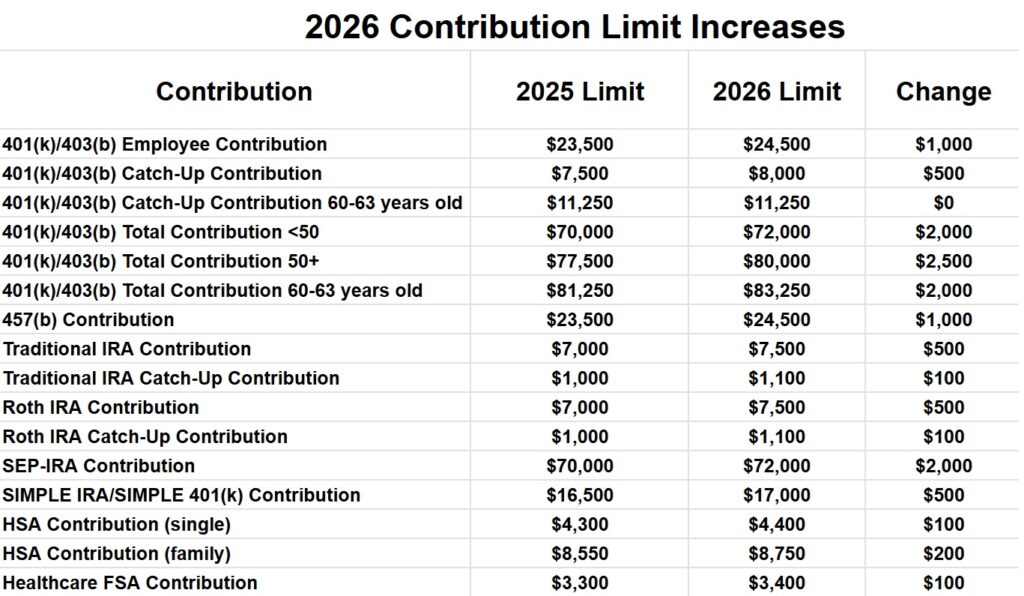
There are two different ceilings people confuse. In IRS-speak, these are often discussed as the 402(g) elective deferral limit and the 415(c) annual additions limit.
1) Employee deferral limit
This is the familiar limit that applies to what you put in as pre-tax and Roth 401(k) salary deferrals combined. If you are 50+, catch-up rules may apply.
2) Overall annual additions limit
This bigger limit includes:
- Your employee deferrals (pre-tax or Roth)
- Employer match and profit sharing
- After-tax contributions
The mega backdoor Roth uses the gap between what has already gone in (you + employer) and that bigger overall limit.
Important: limits change over time. Always verify the current year’s numbers on the IRS website or with your plan administrator before you fund anything.
How it works
Here is the clean workflow most people aim for:
- Max your regular 401(k) deferrals if that fits your plan, goals, and cash flow.
- Estimate employer contributions so you do not accidentally exceed the overall limit.
- Turn on after-tax 401(k) contributions through payroll.
- Convert quickly using either:
- an in-plan Roth conversion, or
- an in-service rollover to a Roth IRA (sometimes paired with a rollover of pre-tax earnings to a Traditional IRA).
- Repeat throughout the year if your plan allows frequent conversions.
The goal is simple: minimize earnings in the after-tax bucket before conversion. The taxes tend to show up on the earnings portion, not on the after-tax contributions themselves.
Conversion vs rollover
Both can work. The “best” one is usually the one your plan actually allows and the one you can execute cleanly.
Option A: In-plan Roth conversion
What it is: You keep the money inside the 401(k) but convert the after-tax source to Roth inside the plan.
Upsides:
- Often easier operationally if your plan offers automatic or frequent conversions.
- No separate IRA paperwork or custodian coordination.
Tradeoffs:
- Your Roth money stays in the 401(k) menu of investments and plan rules.
- If your after-tax subaccount has earnings when you convert, those earnings are typically taxable in the year of conversion.
Option B: In-service rollover to a Roth IRA
What it is: While still employed, you distribute the after-tax 401(k) money out of the plan and roll it into a Roth IRA.
Upsides:
- Roth IRA gives you more investment flexibility and often lower fees.
- Cleaner long-term control, especially if you change jobs later.
Tradeoffs:
- Many plans do not allow in-service distributions until a certain age (commonly 59½) or only allow them a limited number of times per year.
- You must be precise about where contributions and earnings go. In many plans, you can direct after-tax contributions (basis) to a Roth IRA and send earnings to a Traditional IRA to avoid current tax on the earnings. Not all administrators process this cleanly, so ask first.
The catch
The mega backdoor Roth has three catches I see trip people up.
Catch 1: Plan support
Most of the battle is plan design. Some employers offer after-tax but block conversions or rollovers. Others allow rollovers but only once per year. Some offer neither.
Catch 2: Earnings can create taxes
After-tax contributions themselves have already been taxed. But any earnings that build up in the after-tax account before you move the money to Roth are where taxes can show up.
- If you do an in-plan Roth conversion and there are earnings in the after-tax source, those earnings are generally taxable in the year of conversion.
- If you do an rollover, you can often route earnings to a pre-tax account (like a Traditional IRA) and route basis to the Roth IRA, which can reduce or avoid current tax on the earnings. This depends on plan distribution mechanics.
This is why people who do this successfully often convert frequently, sometimes each pay period or monthly, depending on plan rules.
Catch 3: Overfunding the overall limit
If you contribute after-tax aggressively and then your employer match or profit-sharing comes in heavier than expected, you can push past the annual additions limit. Fixing it can mean refunds and paperwork, and it is not the fun kind.
Common mistakes
- Confusing Roth 401(k) with after-tax 401(k). They are different buckets with different rules.
- Not converting soon enough, letting earnings pile up and create a tax bill or extra rollover complexity.
- Forgetting employer contributions when calculating how much after-tax room you have left.
- Assuming in-service rollovers are allowed. Many plans restrict them heavily.
- Rolling everything to a Roth IRA without separating earnings. Depending on how the distribution is processed, pre-tax earnings can create taxable conversion dollars.
- Missing the administrator’s timing rules. Some require specific forms or have processing windows.
Questions to ask
If you want to know whether you can do this at your job, these questions get you to an answer fast:
- Does the plan allow after-tax employee contributions (not Roth)?
- Is there an after-tax subaccount that is tracked separately?
- Does the plan allow in-plan Roth conversions of after-tax contributions?
- Does the plan allow in-service distributions of after-tax money while I am still employed?
- Are in-service distributions limited by age, tenure, or frequency (for example, once per quarter)?
- How often can I convert or roll out, and is there a fee?
- Can distributions be processed so that after-tax contributions go to Roth and earnings go to pre-tax (Traditional IRA) if needed?
- Are there percentage-of-pay limits on after-tax contributions?
- Are after-tax contributions subject to nondiscrimination testing and how are refunds handled if the plan fails?
When it makes sense
This strategy tends to be a fit when:
- You already save aggressively and want additional tax-advantaged space.
- You have a stable emergency fund and you are not carrying high-interest debt.
- You expect to be in the same or higher tax bracket later, or you value tax diversification.
- Your plan allows quick conversions or clean rollovers, keeping taxes on earnings minimal.
If you are still building financial breathing room, it is usually better to nail the basics first: employer match, high-interest debt payoff, emergency fund, then ramp up retirement savings.
Example
Here is a simple, hypothetical example that shows why this can feel “mega.” Numbers are round on purpose. Always use the current-year IRS limits for real planning.
- Assume the overall annual additions limit is $70,000.
- You max your employee deferrals at $23,000.
- Your employer contributes $7,000 in match or profit sharing.
That means you have roughly $40,000 of remaining space ($70,000 minus $23,000 minus $7,000) that could potentially be filled with after-tax 401(k) contributions. If your plan lets you convert those after-tax contributions to Roth promptly, you can end up moving a large amount into Roth each year compared with the standard limits most people think about.
Your plan’s rules decide how smooth this is and how often you can convert or roll out.
Two quick notes people miss
Catch-up rules
Catch-up contributions can change the math depending on age and current law. Some catch-up amounts are treated differently than regular deferrals, and rules have been shifting under SECURE 2.0. If you are near a catch-up threshold, confirm how your plan applies catch-up and how it interacts with the overall annual additions limit.
Roth IRA conversion timing
If you roll to a Roth IRA, be aware that Roth IRAs have separate “five-year” rules for certain withdrawals, and conversions can have their own clocks for penalty purposes before age 59½. This is not a reason to avoid the strategy, but it is a reason to keep good records and understand the rules before you rely on early access.
Tax forms and recordkeeping
Conversions and rollovers often generate tax forms such as Form 1099-R (and IRA reporting like Form 5498). Keep records of your after-tax basis and how the rollover was split between Roth and pre-tax accounts.
The bottom line
The mega backdoor Roth can be one of the best ways for high savers to build tax-free retirement money, but it is not available to everyone and it is not automatic.
If you take one thing from this page, make it this: the strategy only works if your 401(k) plan allows after-tax contributions plus a way to convert or roll them out. Once those pieces are in place, the rest is execution and avoiding preventable tax surprises.
Next step: get your plan’s summary or call the administrator, confirm after-tax contributions and the conversion or distribution options, then set a conversion cadence that keeps earnings in the after-tax bucket as small as practical.