
When I was clawing my way out of debt, the money stress was loud. Like, keep-you-up-at-2-a.m. loud. I learned the hard way that mental health care is not a luxury purchase. It is health care. And once you are on Medicare, the big question becomes: what does Medicare actually cover for therapy, counseling, and psychiatric care, and what will you pay out of pocket?
This guide breaks it down in plain English, with the key limits and cost-sharing rules that trip people up.
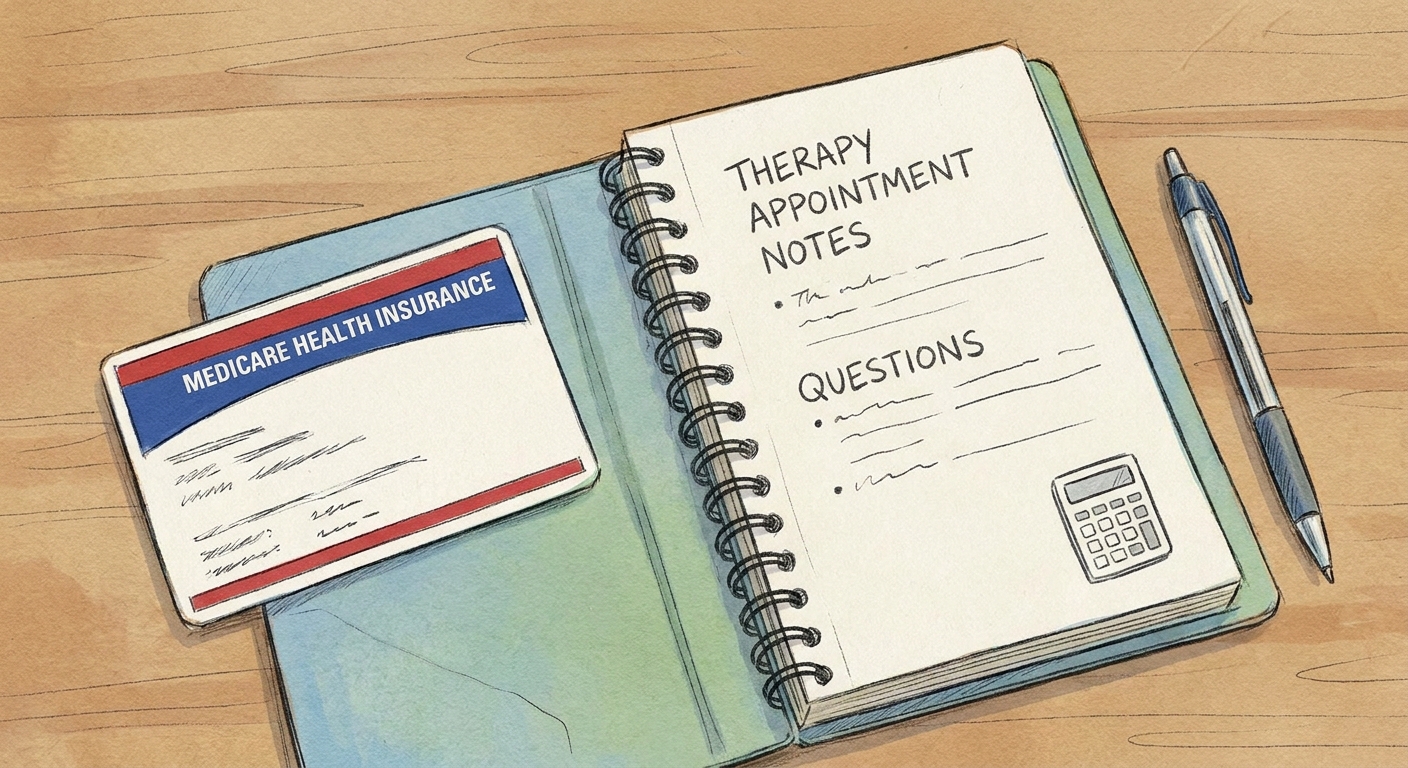
The two Medicare parts that matter most
Mental health coverage under Original Medicare mainly shows up in two places:
- Medicare Part B for outpatient mental health services, like therapy visits and many behavioral health telehealth appointments.
- Medicare Part A for inpatient care in a general hospital and for inpatient psychiatric hospital services.
If you have a Medicare Advantage plan (Part C), it must cover everything Original Medicare covers, but the copays, networks, and prior authorization rules can look different. The coverage rules below are still the foundation.
Part B outpatient mental health: what is covered
Part B generally covers outpatient mental health services when they are medically necessary and provided by an eligible professional who accepts Medicare (or agrees to bill Medicare).
Common Part B covered services
- Individual therapy
- Group therapy
- Family counseling (when it is part of your treatment plan)
- Psychiatric evaluation and diagnostic assessment
- Medication management visits with a qualified prescriber
- Substance use disorder treatment (many outpatient services fall under Part B)
- Partial hospitalization programs (PHP) in certain outpatient hospital settings (this is more intensive than weekly therapy but not an inpatient admission)
Part B also covers annual depression screening in a primary care setting, when the setting can provide follow-up treatment and referrals.
If you are trying to figure out whether a specific clinician can bill Medicare, here are the provider types people most often see under Part B for mental health care:
- Psychiatrists and other medical doctors
- Clinical psychologists
- Clinical social workers
- Nurse practitioners (NPs) and physician assistants (PAs) (often for medication management)
- Marriage and family therapists (MFTs) and mental health counselors (MHCs) (newer Medicare-eligible provider types, explained below)
Not every person who uses the title “therapist” is automatically Medicare-eligible. The safest move is to ask one direct question before you book: “Are you enrolled with Medicare and able to bill Medicare for psychotherapy visits?”

What you pay for outpatient therapy under Part B
This is the part that matters for budgeting.
The basic cost-sharing rule
For most outpatient mental health services under Part B, you typically pay:
- Your Part B deductible (if it has not been met yet for the year), then
- 20% coinsurance of the Medicare-approved amount.
Medicare pays the remaining 80% of the Medicare-approved amount after your deductible is met.
Cost details people miss
- Provider acceptance matters. If your provider accepts assignment, they agree to the Medicare-approved amount. If they do not, your costs can be higher.
- Hospital outpatient settings can change the bill. A therapy visit billed through a hospital outpatient department can come with a facility charge and a different Medicare-approved amount than a private office visit. That can raise what you owe even when the therapy is identical.
- Your plan structure matters. Under Original Medicare, the 20% coinsurance is common. Under Medicare Advantage, you might see a flat copay per visit instead of 20%, and you may have plan-specific requirements.
- Medigap can reduce your share. Many Medicare Supplement plans help cover Part B coinsurance, which can make ongoing weekly therapy far more affordable.
If you are pricing therapy on Medicare, ask the provider: “Do you accept Medicare assignment?” and “Will this be billed as an office visit or hospital outpatient?” Those two answers can change your out-of-pocket number.
Newly covered providers: MFTs and MHCs
For a long time, a frustrating Medicare gap was that some common therapy providers could not bill Medicare, even when they were fully licensed and doing great work.
Medicare has now expanded outpatient mental health coverage to include services provided by:
- Marriage and family therapists (MFTs)
- Mental health counselors (MHCs)
In practical terms, this expansion began rolling out in 2024, and it can expand your options, especially in areas where psychologists and psychiatrists have long waitlists.
What to do with this information
- Confirm Medicare enrollment. Even if a counselor is licensed, they still need to be enrolled with Medicare and set up to bill it.
- Confirm the setting. Ask whether they see Medicare patients in private practice, a clinic, or a hospital outpatient department, because billing can affect your cost.
- Ask what they typically bill. If they can share the Medicare-approved amount they usually see, great. If they prefer, you can ask which billing code they typically use for a standard session. Either way, you are just trying to estimate your 20% coinsurance.
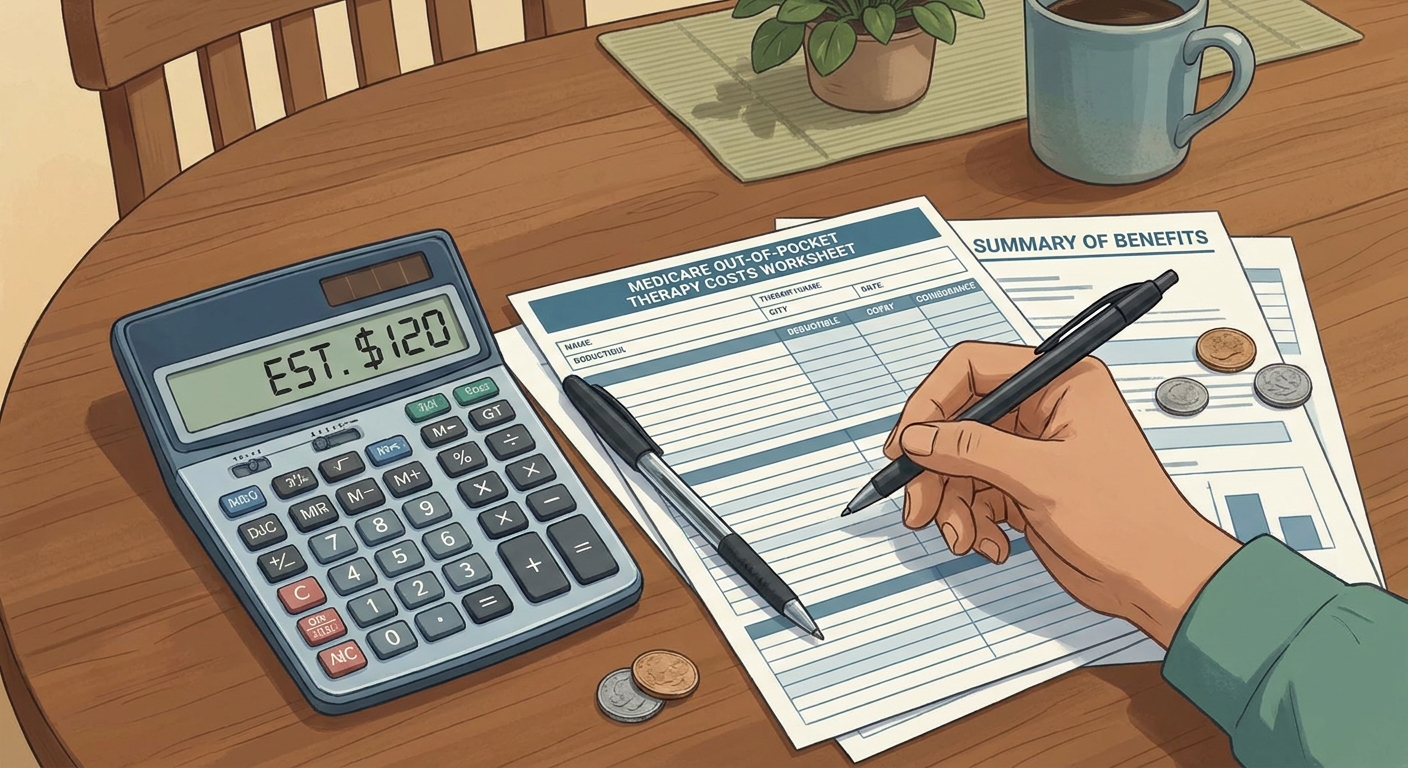
Telehealth mental health on Medicare
Telehealth can be a lifeline, especially if you have mobility limits, transportation challenges, or you simply do better talking from home.
What Medicare generally covers
Medicare covers many behavioral health services delivered via telehealth when Medicare requirements are met, including certain therapy and counseling visits. You still usually owe the normal Part B cost sharing: deductible (if applicable) plus 20% coinsurance of the Medicare-approved amount.
Telehealth fine print to ask about
- Type of visit. Confirm the appointment is billed as a Medicare-covered telehealth service, not a non-covered wellness coaching session.
- Provider type. Confirm the clinician is an eligible Medicare provider and is enrolled to bill Medicare.
- Location and current policy. Telehealth rules have changed over the past few years and can be time-limited based on federal policy updates. Before you assume anything is permanent, confirm current requirements with Medicare (1-800-MEDICARE) or your Medicare Advantage plan.
If you are comparing in-person vs telehealth, also ask whether the telehealth visit is billed through a hospital outpatient department, since that can affect the total Medicare-approved amount and your share.
Part D and psychiatric medications
This is one of the most common cost surprises: most take-home, maintenance mental health medications (like antidepressants and anti-anxiety meds you pick up at the pharmacy) are usually covered under Medicare Part D (or a Medicare Advantage plan that includes drug coverage).
Part B generally covers a narrower set of outpatient drugs, typically medications administered in certain clinical settings or tied to specific covered services. If you are starting a new medication, check your plan’s formulary and ask the pharmacy what your copay will be under Part D before you get to the register.
Part A inpatient mental health: general vs psychiatric hospital
When mental health treatment requires inpatient care, Medicare Part A is the main payer under Original Medicare.
Inpatient care in a general hospital
If you are admitted to a general hospital for a condition that includes mental health treatment, Part A covers medically necessary inpatient hospital care. Your costs follow the normal Part A inpatient cost structure (deductible and daily amounts depending on length of stay).
Inpatient services in a psychiatric hospital
Medicare Part A also covers inpatient psychiatric hospital services in a freestanding psychiatric hospital, but there is a unique rule you absolutely need to know:
Medicare has a 190-day lifetime limit for inpatient psychiatric hospital services in a freestanding psychiatric hospital.
This limit applies specifically to inpatient stays in a freestanding psychiatric hospital. Once you have used 190 days over your lifetime in that type of facility, Medicare generally will not pay for additional inpatient psychiatric hospital days there. Inpatient psychiatric care provided in a psychiatric unit of a general hospital does not count toward that 190-day freestanding psychiatric hospital limit.

How the 190-day limit works
Think of the 190-day limit like a lifetime punch card for one specific setting: freestanding inpatient psychiatric hospitals.
- It is lifetime, not yearly. You do not get a fresh 190 days each year.
- It is setting-specific. It applies to inpatient services in a freestanding psychiatric hospital, not every inpatient stay that involves mental health treatment.
- It can matter more than you think. If someone has multiple serious episodes over decades, those days can add up.
What to ask if inpatient care is on the table
If a doctor is recommending inpatient treatment, it is fair to ask:
- “Is this admission to a general hospital or a freestanding psychiatric hospital?”
- “If it is a freestanding psychiatric hospital, can you help me confirm whether Medicare Part A applies and whether I have used any of my lifetime 190 days?”
If you are helping a parent or spouse, keep a folder with prior discharge paperwork. It can help you track facility types and dates if questions come up later.
Medicare Advantage: the extra rules to watch
Medicare Advantage plans must cover what Original Medicare covers, but in real life, the experience can feel very different.
- Networks: you may need an in-network therapist or psychiatrist for the best price.
- Prior authorization: some plans require approval for higher levels of care (and sometimes even ongoing outpatient therapy).
- Cost structure: you might pay a flat copay per visit instead of 20% coinsurance.
If you have Medicare Advantage, pull up your plan’s Evidence of Coverage and look for “outpatient mental health” and “telehealth.” If you cannot find it fast, call the member services number on your card and ask what your per-visit cost is for therapy and medication management.
Choosing a therapist on Medicare
If you want the most bang for your mental health buck, this is the practical process I would follow.
- Step 1: Decide the care level. Weekly therapy, medication management, intensive outpatient, or inpatient.
- Step 2: Confirm the provider can bill Medicare. Ask directly if they are enrolled with Medicare and accepting Medicare.
- Step 3: Confirm assignment. “Do you accept Medicare assignment?”
- Step 4: Ask where it is billed from. Private office vs hospital outpatient department.
- Step 5: Estimate your share. Ask what the Medicare-approved amount typically is, and plan on roughly 20% after the deductible, unless you have a Medigap plan that covers it. If you are in Medicare Advantage, ask for the exact copay.
FAQ
Does Medicare cover therapy for anxiety and depression?
Yes. Medicare Part B can cover outpatient therapy and counseling for conditions like anxiety and depression when services are medically necessary and provided by an eligible provider who can bill Medicare.
Does Medicare cover family therapy?
Medicare Part B can cover family counseling when it is part of the treatment plan for the Medicare patient. It is not meant to cover general relationship counseling unrelated to a diagnosed treatment plan.
Do I need a referral to see a therapist with Medicare?
Under Original Medicare, a referral is not always required, but some clinics or hospital outpatient systems may still ask for an order or documentation to support medical necessity. Medicare Advantage plans often have their own network and referral rules, so check your plan.
How much will I pay per therapy session with Medicare?
Often, you pay the Part B deductible (until you meet it) and then 20% of the Medicare-approved amount. Your exact cost depends on the provider, whether they accept assignment, and whether the visit is billed in a hospital outpatient setting (which can change the approved amount and add facility charges). Medicare Advantage plans may use copays instead of 20% coinsurance.
What is the 190-day psychiatric hospital limit?
It is a lifetime limit under Medicare Part A for inpatient psychiatric hospital services in a freestanding psychiatric hospital. Once you have used 190 days in that specific setting over your lifetime, Medicare generally will not pay for additional inpatient psychiatric hospital days there.
A quick money tip if you expect ongoing therapy
If you know you are likely to do weekly or biweekly therapy, it can be worth building a small “health care buffer” into your monthly budget. Even a set-aside amount for coinsurance can reduce the stress of choosing between your mental health and your bills. That trade-off is brutal, and you deserve better than that.
If you want, tell me what type of coverage you have (Original Medicare only, Medicare plus Medigap, or Medicare Advantage) and whether your therapy is in-person or telehealth. I can help you think through the most likely cost-sharing scenario and the questions to ask before your first appointment.