
If you have ever stared at your car loan balance and thought, how is my payoff still this high? you are not alone. I felt that same gut-punch anxiety in my debt payoff days, and car math was one of the quickest ways to get overwhelmed.
One of the most common points of confusion I see is this: your auto policy might offer something called loan/lease payoff coverage (sometimes labeled “GAP” or “loan/lease gap” by insurers), but it is not always the same thing as true gap insurance. And it is definitely not the same as new-car replacement coverage.
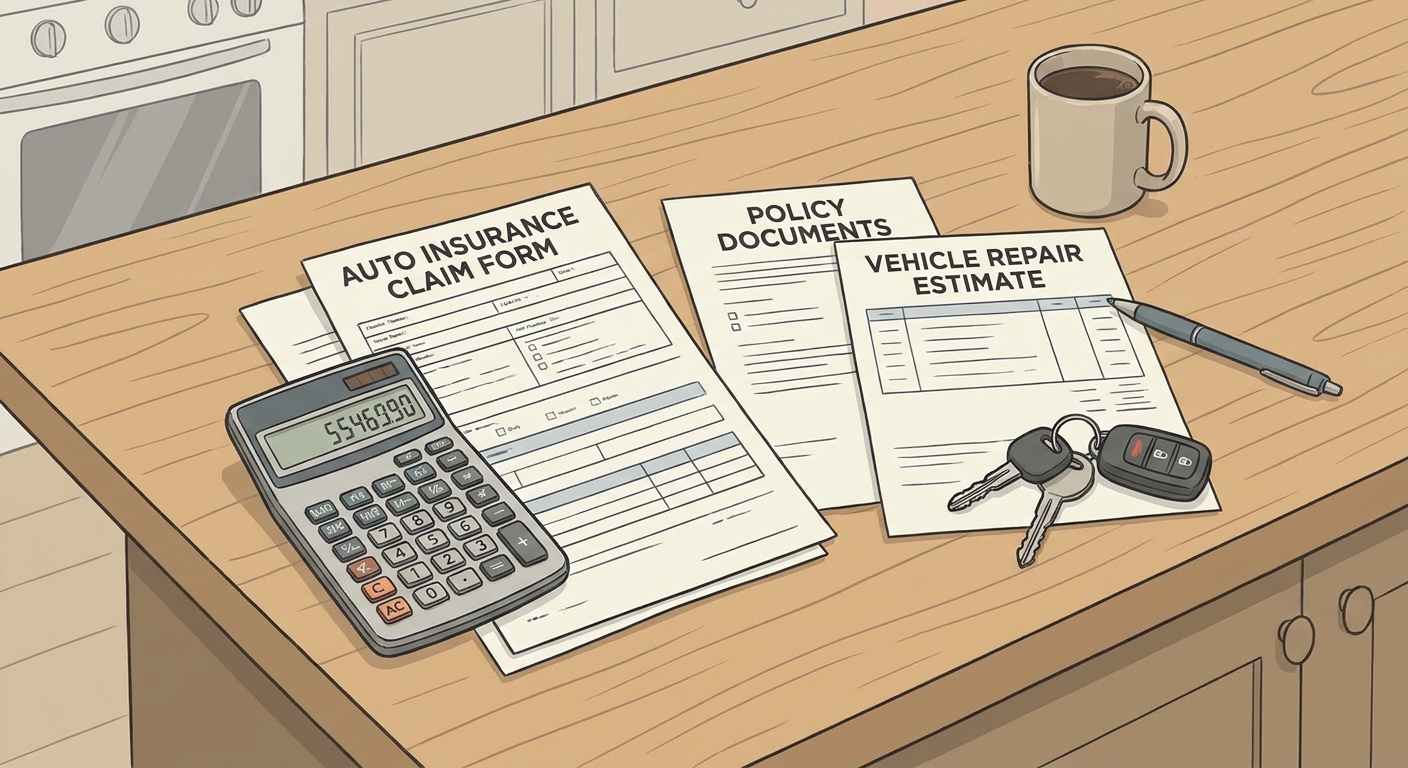
Names, rules, and payouts can vary by insurer, state, and policy form, so the only reliable source is the language in your contract. Still, the patterns are consistent enough that you can avoid the most common total-loss surprises.
Let’s break down what each one does, why “percentage above actual cash value” matters, and where people get caught off guard after a total loss.
Start with ACV vs what you owe
When your car is totaled or stolen, your standard collision or comprehensive claim usually pays actual cash value (ACV).
ACV is basically what your car was worth right before the loss, factoring in depreciation, mileage, condition, and local market prices. It is not what you paid for it, and it is not what you still owe.
The gap happens when:
- Your loan/lease payoff (what your lender says it takes to close the account today)
- is higher than
- Your settlement (often ACV minus your deductible, plus applicable taxes and fees where required, plus or minus any adjustments)
This is most common early in the loan, with long terms (72 to 84 months), small down payments, high interest rates, and rolled-in costs like negative equity, taxes, fees, and add-ons.
If you are new to the terms: being upside down (also called negative equity) means you owe more on the loan than the car is worth right now.
One more thing that helps explain the “why is this payoff so high?” feeling: your payoff amount can include interest through the payoff date and may include late fees or other charges, depending on your loan and your payment history.
What loan/lease payoff coverage does
Loan/lease payoff coverage is typically an add-on to your auto insurance policy. In most cases, you can only buy it if you carry collision and comprehensive (because it only applies when there is a covered total loss).
The big “gotcha” is in how it pays.
Many insurers structure it like this:
- The policy pays your car’s ACV (under your collision or comprehensive coverage), then
- The loan/lease payoff add-on pays a limited extra amount above ACV, often a percentage (for example, 25% of ACV), subject to the terms of your policy.
That percentage can help. But it is not an unlimited promise to erase whatever you owe.
Why the percentage matters
The extra coverage is tied to the car’s value, not tied to your loan balance. If your payoff is far above ACV, a capped percentage may not reach it.
Also, your deductible still matters. Some policies calculate the add-on percentage from ACV before the deductible is applied, while others apply it differently. The details vary by form, but the theme is the same: it is limited.
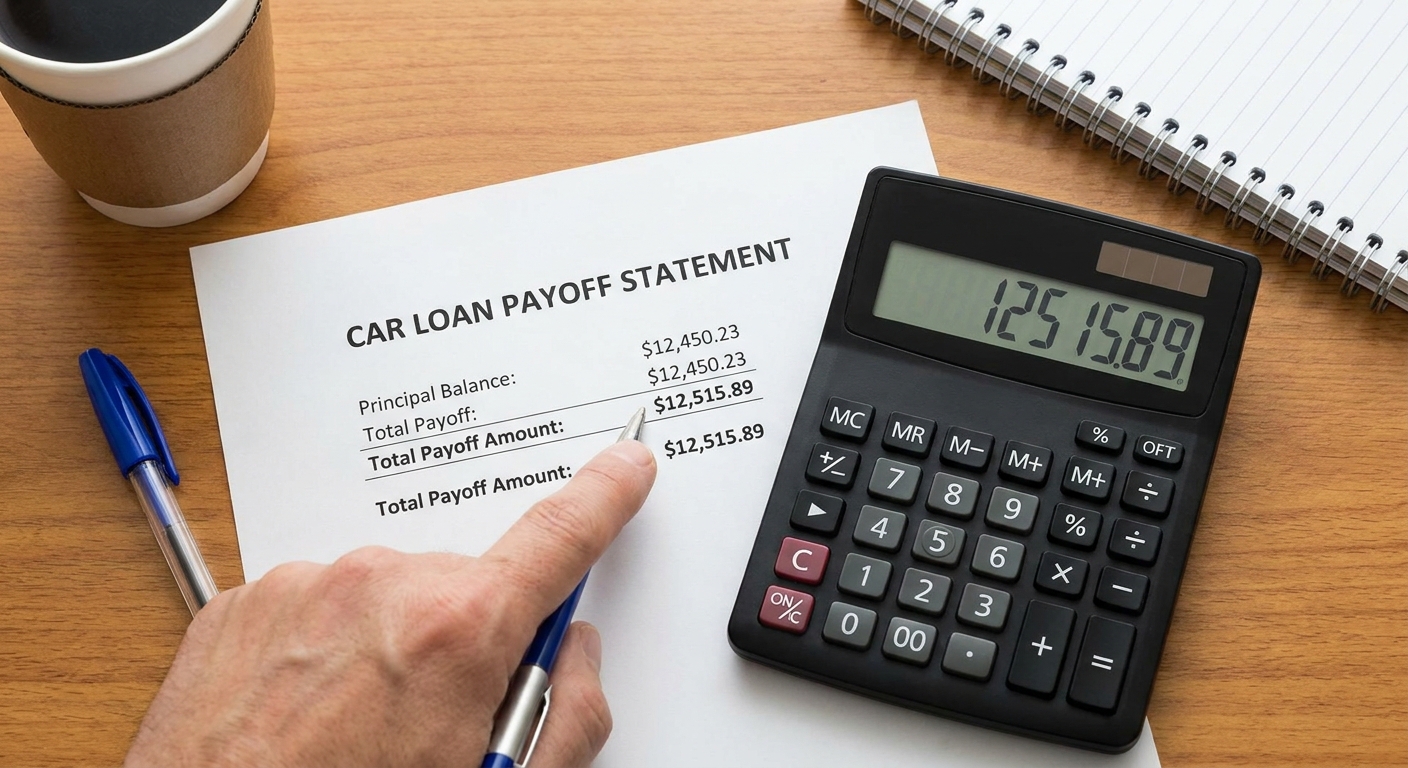
Total loss example with real math
Let’s use a simple scenario to show how a “25% above ACV” payoff add-on can come up short.
The setup
- Car is totaled in an accident.
- ACV (market value): $24,000
- Deductible: $1,000
- Loan payoff balance: $32,500
- Loan/lease payoff add-on: pays up to 25% above ACV
What pays out
- Base insurance settlement: $24,000 ACV minus $1,000 deductible = $23,000
- Loan/lease payoff add-on: 25% of $24,000 = $6,000
- Total paid toward the loan: $23,000 + $6,000 = $29,000
The remaining balance
Loan payoff: $32,500
Minus total paid: $29,000
Still owed out of pocket: $3,500
This is exactly the kind of surprise that makes people say, “Wait, I had gap.” Sometimes they did not. Sometimes they had limited payoff coverage.
How this differs from gap insurance
Gap insurance (true GAP) is designed to cover the difference between what your auto insurer pays for the vehicle and what you still owe on the loan or lease, up to the product’s limits and rules.
In plain English: it aims to fill the gap to the payoff, rather than giving you a fixed percentage boost above ACV.
That said, gap products have their own fine print. Some will not cover certain add-ons, overdue payments, carry-over balances, or fees. It depends on whether you bought it through a dealer, lender, or insurer and the exact contract terms.
Also, wording matters here. Some insurers call their endorsement “GAP,” even if it functions like a capped payoff benefit. That is why the policy form and its payout rules matter more than the label.
If you are trying to decide whether paying for gap makes sense for your situation, I break it down step-by-step here: Gap Insurance on Car Loans and Leases: When It’s Worth Buying.
How this differs from new-car replacement
New-car replacement coverage is a different animal.
Instead of focusing on your loan balance, new-car replacement is designed to help you replace a totaled newer vehicle with a new vehicle of the same or similar make and model (and sometimes similar trim or options), or pay the replacement cost, depending on the insurer’s rules.
This is usually limited to a specific time window and mileage limit (commonly within the first year or two, but it varies by insurer).
This coverage is about getting you back into a comparable new vehicle, not about paying off a loan that is upside down.
Can you need both?
Yes. You can total a nearly-new car, owe more than ACV because of financing structure, and also want enough money to replace the vehicle. Different coverages solve different problems.

Quick comparison
| Coverage type | What it is trying to do | How it commonly pays | Where people get surprised |
|---|---|---|---|
| Loan/lease payoff coverage | Reduce leftover balance after a total loss | Often adds a capped amount above ACV (example: 25% of ACV) | Cap may not reach your payoff, especially if you are deeply upside down |
| Gap insurance | Cover the difference between settlement and payoff | Typically pays the shortfall up to contract limits | Exclusions and limits vary. Not every “gap” product is identical |
| New-car replacement | Help you replace a totaled newer car with a new one | Replaces the vehicle or pays replacement cost under rules | Only available for newer vehicles and within time and mileage limits |
When payoff coverage may be enough
I am a big fan of paying for coverage that actually matches the risk. Limited payoff coverage can be a reasonable choice when the gap risk is smaller.
It can be “enough” when most of these are true:
- You made a solid down payment (or had meaningful equity at trade-in).
- You did not roll negative equity into the new loan.
- Your loan term is not stretched to the max.
- Your interest rate is decent.
- Your current payoff is only a little above ACV, and a percentage bump would likely close most of the distance.
Even then, do not guess. Ask your insurer how the add-on is calculated, whether there is a percentage cap, and whether there is also a dollar maximum.
When payoff coverage may fall short
This is where I want you to be extra careful.
A percentage-above-ACV add-on is more likely to leave you with a balance when:
- You financed with little to no down payment.
- You rolled in negative equity from the last car.
- You financed taxes, fees, warranties, or other add-ons.
- You chose a 72 to 84 month term.
- Your APR is high (common when rates are up or credit is still being rebuilt).
- Your vehicle depreciates fast relative to your payoff pace.
If you check more than one of those boxes, you should at least price out true gap and compare it to the limited payoff option.
Lease note to check
If you have a lease, do not assume you need to buy gap separately. Many leases include GAP coverage already, but not all do, and the details can vary. Check your lease agreement and ask the leasing company what is included before you pay for overlapping coverage.
What to ask before you buy
A lot of confusion disappears with a 5-minute call. Here are the specific questions I would ask:
- Do I need collision and comprehensive for this to apply?
- Is this loan/lease payoff coverage capped at a percentage of ACV? If yes, what percentage?
- Is there a dollar maximum?
- How is the add-on calculated around the deductible? Is the percentage based on ACV before the deductible, after the deductible, or handled another way?
- Does it apply to both collision and comprehensive total losses? (Accident vs. theft, for example.)
- Are there exclusions for rolled-in balances, late payments, or fees?
- Does it pay the lender directly? (Often yes.)
Then compare that to your current numbers: payoff balance, estimated ACV, and deductible.
FAQ
Is loan/lease payoff coverage the same as gap insurance?
Not always. Many loan/lease payoff add-ons are limited to a percentage above ACV, while gap insurance is typically designed to cover the shortfall to your payoff (subject to contract limits and exclusions). Because labels vary by insurer and state, rely on the policy form, not the marketing name.
If I have payoff coverage, should I skip gap?
It depends on how upside down you are and how the payoff add-on is capped. If your payoff is far above ACV, a percentage add-on may not cover the full difference.
Does new-car replacement pay off my loan?
New-car replacement is mainly about replacing the vehicle, not cleaning up an upside-down loan. Depending on the insurer’s rules and how the claim is handled, you can still have a payoff problem if you owe more than the settlement value.
What is the fastest way to reduce gap risk without buying extra coverage?
Make a larger down payment, avoid rolling negative equity, choose a shorter term if possible, and pay extra toward principal early in the loan. The early months are when depreciation and interest can hit hardest.
The bottom line
Loan/lease payoff coverage can be a helpful safety net, but it is often a limited boost above ACV, not a guarantee that your loan disappears after a total loss. True gap insurance is usually the product meant to bridge the settlement-to-payoff difference, and new-car replacement is aimed at getting you back into a new vehicle, not fixing your loan balance.
If you are on the fence about whether gap is worth it in the first place, this is the piece to read next: Gap Insurance on Car Loans and Leases: When It’s Worth Buying.