
If you are stuck between leasing and buying, you are not alone. On paper, leasing looks like the cheaper monthly option, and buying looks like the “adult” option. In real life, both can be smart or expensive depending on your driving habits, how long you keep cars, and how much flexibility you need.
In this guide, we will compare the total cost, mileage rules, and the big exit risks that catch people off guard. No dealership jargon, just the math and the real-world tradeoffs.

Quick decision: lease or buy?
If you only read one section, make it this one. Here is the simple way I think about it.
Leasing tends to fit when
- You want a lower payment and you prefer a predictable 2 to 3 year cycle.
- You drive a consistent number of miles and it is within common limits like 10,000 to 15,000 miles per year (some brands and programs go higher).
- You want a newer vehicle under warranty most of the time.
- You are okay with rules around wear, modifications, and early exit.
Buying tends to fit when
- You keep cars for a long time (5+ years), especially 8 to 10 years.
- You drive a lot, have an unpredictable commute, or take frequent road trips.
- You want the freedom to sell anytime without lease penalties.
- You want the lowest total cost per year of ownership over the long run (most of the time).
Bottom line: leasing is often a “pay for the years you use” plan with strict terms. Buying is often a “pay more upfront, but keep value and flexibility” plan.
Monthly payment vs total cost
Leases often win on monthly payment because you are paying for depreciation during the lease term, plus financing charges and fees. With a purchase loan, you are paying toward the full price of the vehicle (minus your down payment and trade).
What you are really paying for in a lease
- Depreciation portion: (Selling price minus residual value) spread across the lease months.
- Rent charge: the finance charge on a lease, based on a “money factor” (quick translation: money factor × 2400 ≈ APR).
- Taxes and fees: acquisition fee, registration, doc fees, sometimes a disposition fee at the end.
What you are really paying for when you buy
- Purchase price: the negotiated price matters a lot more than the monthly payment.
- Loan interest: depends on APR and term.
- Depreciation: it still happens, you just own it instead of renting it.
When people say “leasing is cheaper,” they usually mean “my payment is lower.” That can be true. But the better question is: how much money leaves your life per year of driving?

Total cost quick math
If you want the simplest math that actually matches real life, compare what you pay over a time window and what you have left at the end.
Lease: what leaves your life
- Due at signing
- Monthly payments × months
- Expected end costs (disposition fee, mileage, wear)
Buy: what leaves your life
- Down payment
- Monthly payments × months
- Minus what you could sell the car for at that point (estimated resale value)
Mini example (simplified)
36 month lease: $3,000 due at signing + $349 × 36 = $15,564. Add $400 disposition + $500 wear/miles (example) = $19,464 total.
Buying and selling after 36 months: $3,000 down + $520 × 36 = $21,720. If you sell it for $14,000, your net cost is $10,720 (before taxes, interest details, and maintenance differences).
That is not saying buying always wins. It is saying you want a total-cost view, not a “payment” view.
Depreciation: who eats the loss?
Most new cars depreciate fastest in the first 1 to 3 years. This is the heart of the lease vs buy decision.
If you lease
You are essentially paying for the vehicle’s expected depreciation for 2 to 3 years. The leasing company takes on the risk of what the car is worth at the end, because they set the residual value (the predicted value at lease-end).
That sounds great, but you pay for that convenience through fees and less flexibility. Also, if you put money down on a lease and the car is totaled, that money can be hard to get back. More on that in the risks section.
If you buy
You take the depreciation hit, but you also keep the option to hold the car longer. This is how buying can win on total cost. After your loan is paid off, you can get years of low monthly cost driving, even though maintenance will rise.
A value-spender move is not “always buy” or “always lease.” It is picking the option where you are paying for what you actually use, without paying expensive penalties for the way you live.
Mileage: the common lease budget buster
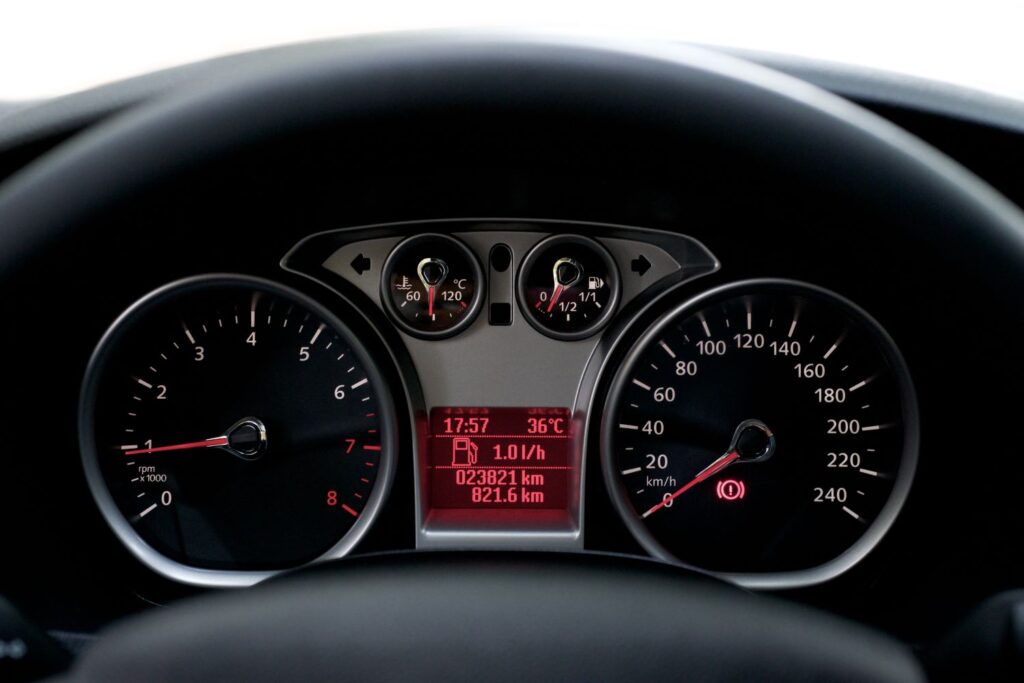
Mileage limits are where leasing gets real. Many leases are built around 10,000, 12,000, or 15,000 miles per year. Some lenders offer higher-mileage programs, and some brands price miles differently. If you go over, you typically pay a per-mile charge.
How mileage overage is charged
Overage fees commonly land around $0.15 to $0.30 per mile, sometimes more depending on the contract. That does not sound scary until you do the math.
- 2,000 miles over at $0.25 per mile = $500
- 6,000 miles over at $0.25 per mile = $1,500
- 10,000 miles over at $0.25 per mile = $2,500
And that is usually due at turn-in, right when you are trying to decide what to do next.
Two mileage rules that surprise people
- It is usually averaged across the whole lease. Driving more in year one is fine if you drive less later, as long as you do not exceed the total miles allowed.
- Buying extra miles upfront can be cheaper. If you already know you will drive more, ask for a higher-mileage lease from the start.
If your commute is changing, you do rideshare, or you road trip a lot, buying is often the less stressful option.
Wear-and-tear charges
When you buy a car, a scratch is your scratch. When you lease a car, a scratch can become a bill.
Common lease turn-in charges
- Tire replacement if tread is below the minimum in the contract
- Wheel curb rash beyond “normal”
- Cracked windshield
- Body dents, large scratches, or paint damage
- Missing keys, missing cargo cover, missing floor mats
Most leases allow “normal wear,” but the definition is contract-specific and the inspection can feel subjective. If you have kids, pets, tight street parking, or you just know life happens, this is a real cost category to plan for.
Tip: ask the dealer (or leasing company) for their wear-and-tear guide before you sign, not when you return the car.
Upfront costs and down payments
A lot of leases are advertised with a tempting low monthly payment, but they are quietly assuming money due at signing.
Typical lease upfront costs
- First month’s payment
- Acquisition fee
- Registration and taxes
- Down payment (often called “cap cost reduction,” meaning it reduces the amount you are financing)
Why big down payments on leases are risky
If the vehicle is stolen or totaled, your insurance settlement generally pays the leasing company (the owner of the car). Many manufacturer captive leases in the U.S. include GAP coverage, and many others offer it, but it is not universal. You have to confirm what your specific contract includes.
Here is the part people miss: a cap cost reduction is rarely refundable. In plain English, putting $3,000 down to save $80 a month can still hurt if the car is gone six months later. In some cases, certain prepaid amounts or refunds might apply depending on your insurer, taxes, and contract language, but you should not count on getting that down payment back.
If you lease, I generally prefer keeping money due at signing low and letting the payment be the payment, especially if your emergency fund is not rock solid yet.
Exit risks
This is the area that makes leasing feel “cheap” until it suddenly does not. Leases are built to be kept for the full term, and leaving early is where the penalties hide.
Early termination
Ending a lease early can mean paying remaining payments and fees, minus whatever value the car brings at sale. It can be thousands of dollars.
Lease transfer or swap
Some leases allow you to transfer to another driver (often with a fee). This can be a lifesaver if your situation changes, but not every leasing company allows it and not every lease is attractive to take over.
Trading in a leased car
You can sometimes trade in a lease before the end, but the math depends on your payoff and the car’s current value. If the car is worth less than the payoff, you have negative equity, just like with a purchase. The difference is that you are working within a contract and timelines.

Lease buyout: smart or mistake?
At the end of many leases, you can buy the car for the residual value listed in your contract (plus taxes and fees). This is where you want to pause and do a quick, unemotional check.
Buyout math in plain English
- Find your buyout price: residual value plus any purchase option fee, plus taxes and registration.
- Estimate the market value: what the car would sell for today in your area with similar miles and condition.
- Compare: if market value is higher than your buyout, buying can be a deal. If market value is lower, you are likely overpaying.
When buying out a lease can be a great move
- You like the car and it has been reliable.
- You kept the miles low and the car is in great shape.
- The residual value is lower than current market value.
- You want to avoid turn-in fees and start driving payment-free sooner.
When buying out a lease is usually not worth it
- The residual value is higher than what similar cars are selling for.
- You are buying just to avoid a wear-and-tear bill, but the car is not a good long-term fit.
- You need a different vehicle type soon, like a larger car for a growing family.
One extra tip: call the leasing company directly for the official payoff amount. Dealer quotes can be fine, but you want the number straight from the source.
Rates, incentives, and taxes
Lease deals can swing based on manufacturer incentives and how strong the residual value is for that model. A great lease is often a combination of:
- High residual value (the car holds value well)
- Low money factor (cheap financing)
- Strong rebates or incentives
- Reasonable fees
Buying deals tend to show up as low APR offers, rebates, or discounted pricing. Here is the key: you can negotiate the selling price on a lease, not just the monthly payment. Always ask for the price, residual, money factor, fees, and total due at signing.
Quick tax reality check: sales tax rules vary a lot by state. Some states tax the monthly lease payment, some tax more upfront, trade-in credits vary, and buyout taxes can surprise people. Ask how your state taxes leases and lease buyouts before you decide.
Real-world scenarios
Scenario 1: predictable commuter
You drive 11,000 miles a year, keep cars clean, and love having a newer vehicle under warranty. Leasing can fit well, especially if you can keep the upfront costs low and the model leases well.
Scenario 2: high-mileage driver
You drive 18,000 to 22,000 miles a year, you visit family often, or you travel for work. Buying is often cheaper and far less stressful than worrying about overage fees.
Scenario 3: you keep cars forever
If you are the type who drives a vehicle for 8 to 10 years, buying usually wins on total cost. The long “no car payment” stretch is where the savings live, assuming you pick a vehicle that can age gracefully without constant expensive repairs.
Scenario 4: uncertain life season
New job, possible move, growing family, or you might need a different type of vehicle soon. Buying a reliable used car with a solid resale market can be the flexible option, because exiting a lease early can be costly.
Checklist before you decide
- Estimate your annual miles honestly. Look at your past oil change stickers or maintenance app history.
- Pick a time horizon: are you a 3-year person or a 10-year person?
- Compare total cost, not just payments: include due-at-signing, fees, and expected end-of-term charges.
- Ask about exit options: early termination, transfer rules, and the disposition fee.
- Budget for insurance: leases often require higher liability limits, and premiums can be higher on a new car.
- Be honest about repairs: leases keep you in warranty, buying shifts more repair risk onto you, especially with used cars.
- Plan for the next move: if you lease, will you likely lease again, buy it out, or switch to buying?
If you want a quick rule of thumb: leasing is best when your life and driving are predictable. Buying is best when you want freedom, you drive a lot, or you plan to keep the car long enough to make depreciation boring.
My take as a recovering debt-stress person
When I was digging out of debt, the goal was not a “cheap payment.” The goal was room to breathe in the budget, fewer surprise bills, and the ability to pivot if life changed. Leasing can be a clean, predictable path for the right driver, but it can also be a trap if you underestimate miles, put too much down, or need to exit early.
If you are deciding right now, do this: write down your realistic miles, how long you want to keep the vehicle, and how much cash you can safely put down without touching your emergency fund. Those three answers usually make the decision pretty obvious.
One last note: if you are self-employed or you drive for work, taxes can change the math. The right move can look different for business use, so it is worth a quick check with a tax pro.