
If you have cash you want to keep safe, your first instinct is probably a high-yield savings account (HYSA). That is usually a great instinct. But Series I Savings Bonds (I Bonds) are one of the few “boring” products that can be genuinely useful in the real world, especially when inflation is doing its thing.
The catch is that I Bonds are not a savings account. They are a U.S. Treasury savings bond with strict purchase limits, a required holding period, and a built-in early redemption penalty.
So the question is not “Which is better?” The question is: When do I Bonds make sense compared to a HYSA (or even T-bills)?
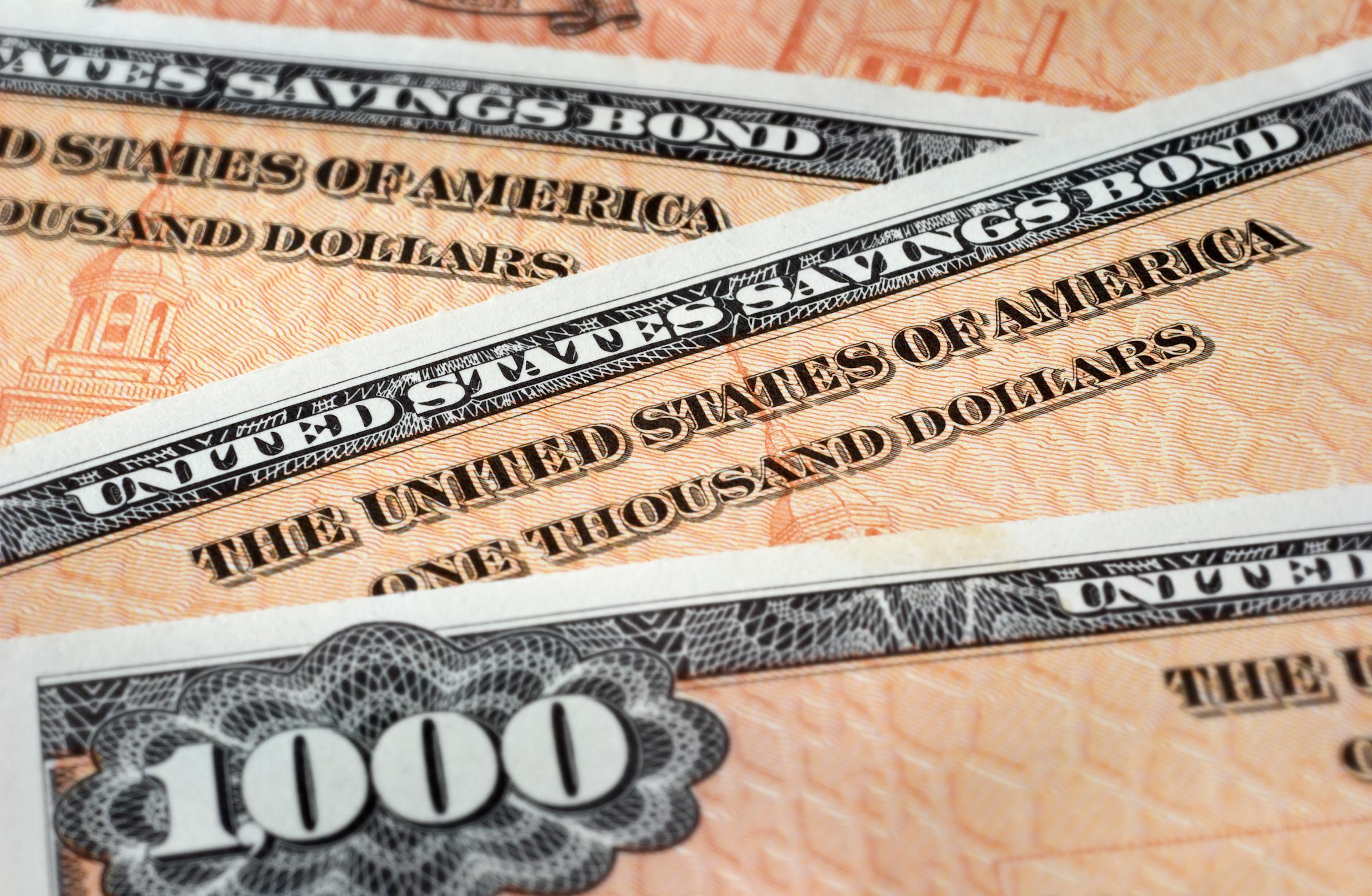
At a glance
- Best for fast access: HYSA (liquid anytime)
- Best for inflation-linked savings you can leave alone: I Bonds (12-month lockup)
- Purchase limits: I Bonds are capped; HYSAs are not
- Taxes: HYSA interest is usually taxed each year; I Bond interest is federal-only and typically deferred until redemption
- Safety: HYSAs are typically FDIC/NCUA-insured up to applicable limits; I Bonds are backed by the U.S. government
Quick definition: what you are actually buying
High-yield savings account (HYSA)
A HYSA is a bank or credit union deposit account that pays a higher interest rate than a traditional savings account. Your money stays liquid, you can add or withdraw as needed, and the rate can change at any time.
Series I Savings Bonds (I Bonds)
I Bonds are U.S. government savings bonds designed to help protect savers from inflation. You buy them from the U.S. Treasury (typically through TreasuryDirect). They do not trade on the market like regular bonds, and their interest is structured differently than a bank account.
How I Bond interest works
I Bonds have two interest components:
- Fixed rate: Set when you buy the bond and stays the same for the life of that bond (up to 30 years).
- Inflation rate: Resets every 6 months based on inflation data (announced twice a year, typically in May and November).
Those two pieces combine into a “composite” rate that determines how fast your bond’s value grows.
Two practical takeaways (in plain English):
- If inflation rises, newly issued I Bond inflation components rise and existing I Bonds adjust at their next reset.
- If inflation cools, I Bond rates can fall. They are not guaranteed to beat your HYSA every year.
One accuracy tweak that matters: the composite rate is floored at 0%. In other words, it will not go negative. That means your redemption value will not decline due to interest, but it can stagnate during a 0% composite period.
Also, interest accrues monthly and compounds semiannually. Practical note: TreasuryDirect values often show a 3-month “lag” for bonds less than 5 years old because the early redemption penalty is baked into the displayed value.

Purchase limits
I Bonds are capped. That is not a small detail, it is the detail.
- $10,000 per person per calendar year when purchased electronically through TreasuryDirect.
- Up to $5,000 more in paper I Bonds per year per tax return if you buy them with a federal tax refund (typically by filing your return and using IRS Form 8888, subject to program rules).
For a couple, that can be $20,000 per year electronically (plus a potential paper amount via a refund strategy), but it is still not “move your entire emergency fund today” money for many households.
HYSAs do not have purchase limits. If you want to park $30,000, $80,000, or $200,000 in a HYSA, you can.
Liquidity rules that matter
1-year lockup
After you buy an I Bond, you cannot redeem it at all for the first 12 months. This is why I Bonds are usually a poor choice for a first-time emergency fund.
Early redemption penalty (years 1 to 5)
If you redeem an I Bond before you have held it for 5 years, you forfeit the last 3 months of interest.
Quick example: if you redeem at 18 months, you effectively give up interest from months 16 to 18.
30-year maximum life
I Bonds can earn interest for up to 30 years. You can redeem anytime after the first year, but after 30 years they stop earning interest.
By contrast, a HYSA is liquid right now. No lockup. No “last three months” penalty. If you need to cover a deductible tomorrow, savings wins by a mile.

Taxes: I Bonds vs HYSA
HYSA taxes
HYSA interest is typically taxable in the year you earn it. Banks generally issue a 1099-INT when interest is $10 or more , and you pay federal and possibly state income tax depending on where you live.
I Bond taxes
I Bond interest is subject to federal income tax, but it is generally:
- Not subject to state or local income tax.
- Tax-deferred until you redeem the bond (or until it matures, whichever comes first).
That tax deferral can be meaningful if you are trying to keep your taxable income lower this year, or if you expect to redeem in a year where your tax bracket is lower.
Possible education tax exclusion
In some situations, I Bond interest may be excluded from federal tax when used for qualified education expenses, subject to IRS rules and income limits. This is not automatic and it is not for everyone. Common gotchas include: the bonds generally need to be in the taxpayer’s name, the taxpayer generally must be age 24 or older when the bond is issued, and income phaseouts apply.
Bottom line: if you live in a state with income tax, the “no state tax” feature alone can make I Bonds more competitive than a HYSA at the same stated rate.
I Bonds vs T-bills
If you are choosing between I Bonds and Treasury bills (T-bills), you are usually making a different decision than “I Bonds vs HYSA.” Here is the clean way to think about it:
- T-bills tend to be great for short time frames (typically 4 to 52 weeks) when you want a known yield and you want your money back on a predictable date. (If you buy and hold to maturity, the yield is effectively locked in. If you sell early through a brokerage, the price can move.)
- I Bonds are built for inflation protection over time, but they come with the 12-month lockup and the 3-month interest penalty if you cash out before 5 years.
Both are backed by the U.S. government, and both are typically exempt from state and local income taxes. The difference is access and time horizon.
When I Bonds make sense
You already have an emergency fund
If your emergency fund is fully stocked in a HYSA and you are looking for a place for “tier two” cash, I Bonds can be a strong next step. Think of this as money you do not expect to touch for at least a year.
You want inflation protection for medium-term goals
Saving for something 2 to 5+ years away, like a future car purchase, a home repair fund, or a sabbatical cushion, can be a good fit. You trade liquidity for inflation-linked growth.
You live in a state with income tax
If your HYSA interest is taxed by your state, the I Bond state-tax exemption makes the comparison more favorable, especially at higher balances (within the purchase limits).
You struggle with “accidental spending”
I am a value-spender, not a deprivation guy, but I also know myself. If the money is too easy to access, it can quietly disappear into upgrades and impulse purchases.
The 12-month lockup can act like a guardrail for money you truly want to keep untouched.
When a HYSA is the better move
Your emergency fund is not funded yet
If you might need the cash within the next 12 months, do not put it in I Bonds. A HYSA is designed for exactly this use case.
You need one bucket for all your savings
I Bonds have purchase caps. If you are building a large cash position quickly, a HYSA is simpler and scalable.
You are rate-chasing and willing to switch banks
HYSA rates can be very competitive, but they move. If you are comfortable moving money to keep a top rate, you can sometimes beat I Bond outcomes, especially when inflation is low and I Bond composite rates fall.
You want predictable access for recurring goals
For sinking funds (property taxes, annual insurance premiums, holiday spending), savings accounts are just easier. I Bonds are not meant for frequent ins and outs.
A simple decision framework
If you want a quick gut-check, run your money through these questions:
- Will I need this money in the next 12 months? If yes, HYSA.
- Is my emergency fund already strong? If no, HYSA first.
- Am I okay locking this up for a year to get inflation-linked returns? If yes, consider I Bonds.
- Am I hitting the annual I Bond purchase limits? If yes, use a HYSA or consider T-bills for additional cash.
I Bonds shine as a second layer of savings, not the only layer.
Common I Bond mistakes
- Putting your full emergency fund into I Bonds: The 12-month lock is real. Do not learn this one the hard way.
- Ignoring the 3-month interest penalty: If you redeem before 5 years, mentally subtract three months of interest when comparing returns.
- Assuming I Bonds always beat a HYSA: The inflation component can drop, and the composite rate can hit 0%. Always compare what you can earn today with what you might earn over your holding period.
- Forgetting taxes: HYSA interest hits your taxes annually. I Bond interest usually does not until redemption, and it is state-tax-free.
- Getting spooked by the TreasuryDirect balance: The displayed value can look “short” in the first 5 years because it reflects the 3-month interest penalty.
My “best of both” setup
If you want a clean approach that works for most people:
- Keep 3 to 6 months of essentials in a HYSA for true emergencies.
- After that’s funded, consider buying I Bonds each year (within limits) for the portion of cash you can leave alone for at least 12 months.
- For short, specific timelines (like 3 to 12 months), look at T-bills as a complement if you want a Treasury option without the 1-year lock.
That combo gives you liquidity, decent yield, and inflation protection where it actually helps.
Bottom line
I Bonds make sense when you want inflation-aware savings and you can commit to at least a one-year hold, ideally longer. A HYSA makes sense when access and flexibility matter most, especially for your emergency fund and shorter-term goals.
If you are deciding where to put your next $1,000, here is the simplest rule: Emergency cash belongs in a HYSA. Extra cash you can lock up belongs in I Bonds, up to the annual limit.