
A bonus. A tax refund. A surprise check you weren't counting on. It feels like a deep breath you didn't know you needed.
But windfall money is sneaky. When cash shows up all at once, it's easy to spend it in a blur and end up right back where you started. I've done that. More than once. The goal here is to turn a one-time bump into lasting relief.
Below is the exact order I use for any “extra” money so you don't have to debate it for days or bounce between “save” and “pay off debt” forever.
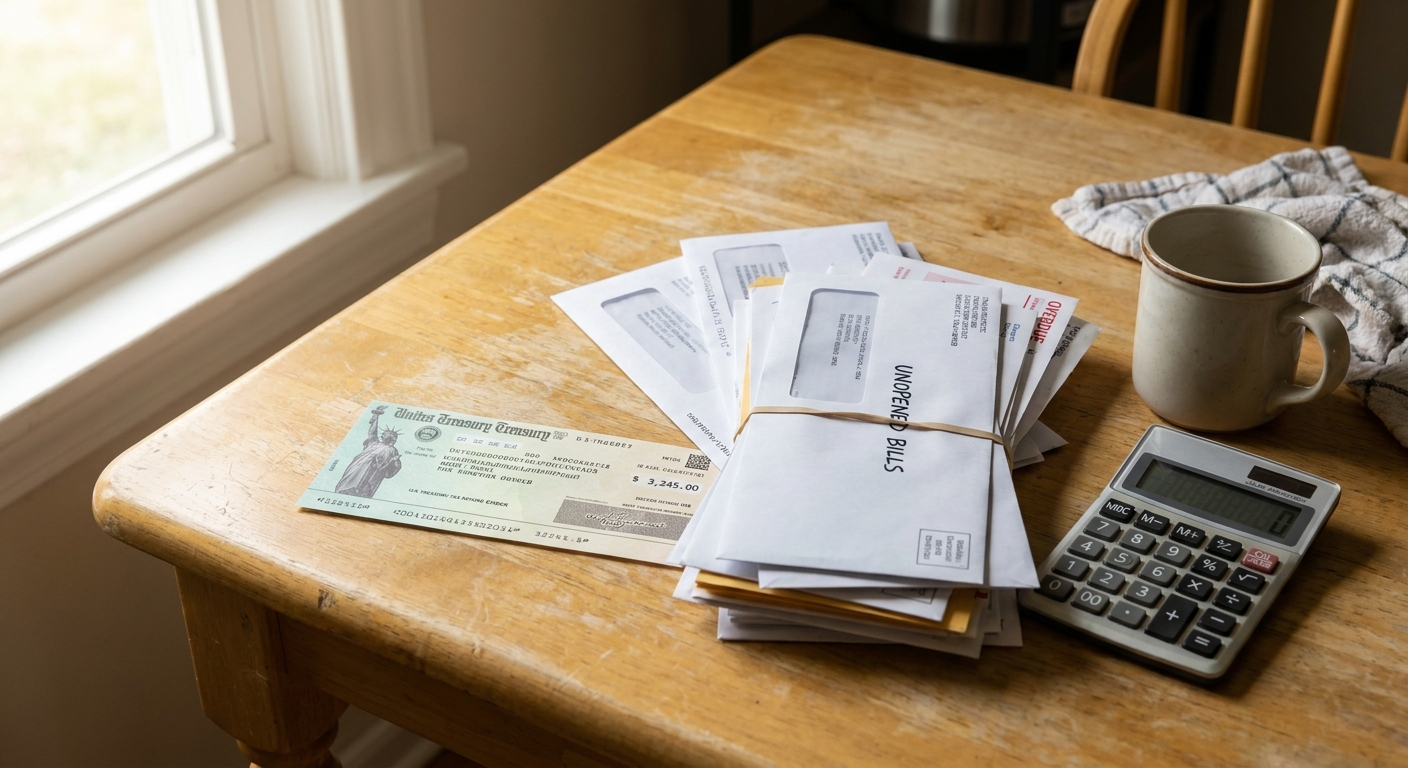
The windfall order (simple and reliable)
Think of this as a priority ladder. You don't have to do every rung. You just start at the top and work down until the money is gone.
- Catch up on essentials (if you're behind)
- Build a starter emergency fund
- Pay off high-interest debt
- Get the full employer match
- Finish your fully funded emergency fund
- Fund near-term goals
- Invest more (beyond match)
- Spend a small, planned slice
Now let's break down each step with clear targets.
Before you start: use the net amount
One quick but important note: plan with the after-tax amount that actually hits your account, not the headline number.
Work bonuses, in particular, are often withheld at higher “supplemental” rates (plus FICA and state taxes). So a $5,000 bonus on paper might land closer to $3,000 to $4,000 in your bank account depending on your situation. Your refund check is already net. Your bonus usually isn't.
Action: Wait until the money clears, then assign dollars using that net number so you don't over-commit.
1) Catch up on essentials first
If any of these are true, do this step before anything else:
- You're behind on rent or mortgage.
- You have a past-due utility notice.
- You're juggling overdrafts or negative balances.
- You skipped prescriptions, car insurance, or necessary car repairs.
This isn't “bad money management.” This is triage. Getting current stops late fees, prevents service shutoffs, and buys back mental bandwidth. You can't build momentum while you're putting out fires.
Action: Make a short list of what could cause a crisis in the next 30 days. Pay those first.
2) Build a starter emergency fund
If you don't have cash set aside, windfalls disappear the first time life does what life does. A starter emergency fund is your financial shock absorber.
How much is “starter”?
- $1,000 is a common starting point if your windfall is small.
- One month of expenses is even better if your windfall is larger or your income is variable.
Put it somewhere boring and separate, like a high-yield savings account. The goal is quick access, not big returns.

3) Pay off high-interest debt
After you've got a starter cushion, your next best move is usually high-interest debt. This is the stuff that keeps you stuck because the interest works against you every day.
What counts as high-interest?
- Credit cards (often 20% to 30% APR)
- Some personal loans
- Payday loans (priority emergency)
Action: Pay extra toward the balance with the highest interest rate first (the “avalanche” method). If you need a motivation boost, paying off the smallest balance first can be worth it. The best plan is the one you'll actually stick with.
Quick rule: If you have a credit card charging double-digit interest, it should usually come before extra investing or big goal saving.
4) Get the full employer match
If your job offers a 401(k) or similar plan with a match and you're not getting the full match, you're leaving part of your compensation on the table.
Action: Use your windfall to free up cash flow so you can raise your paycheck contribution going forward. In other words, the windfall helps you afford the higher contribution each pay period.
Example: If you bump your 401(k) contribution by $150 per paycheck, use part of the windfall to cover the temporary squeeze in your budget while you adjust.
5) Finish your emergency fund (3 to 6 months)
Once the match is handled and your high-interest debt is under control, level up your emergency fund.
How big should it be?
- 3 months of expenses if your income is steady and your household is simple.
- 6 months if you're a single income household, self-employed, commission-based, or just sleep better with a bigger buffer.
This is what prevents the “back to the credit card” cycle when your car needs brakes or your hours get cut.
6) Fund near-term goals
These are goals you'll likely pay for within the next 12 to 36 months. If you don't plan for them, they tend to become emergencies.
- Car replacement or major repairs
- Medical deductible
- Moving costs
- Home repairs
- Upcoming travel you truly care about
- Baby expenses
Action: Pick one goal and assign a number and a date. “Save for a car” becomes “$3,000 by March 1.”
7) Invest more
If your emergency fund is solid, high-interest debt is handled, and you're getting the match, investing extra can be a great use of a windfall.
Where to put it
- Roth IRA (if eligible) for long-term retirement savings
- Traditional IRA (depending on income and plan coverage)
- Brokerage account for longer-term goals that aren't retirement
If you're unsure what to buy, a low-cost, broadly diversified index fund is the usual “keep it simple” starting point. The key is to avoid turning investing into a complex hobby unless you really want it to be.
8) Spend a small, planned slice
I'm a value-spender, not a monk. If you treat every windfall like it has to be “perfectly optimized,” you're more likely to rebel and blow it later.
A good rule is 5% to 10% for guilt-free spending once your top priorities are covered. Put a cap on it and choose something you'll actually remember six months from now.
- A needed upgrade you've been putting off
- A meaningful experience
- Replacing something that's costing you time or frustration daily

A quick decision tree
If you want a fast answer without overthinking, walk through this in order:
- Are you behind on essentials? Yes: catch up first. No: next question.
- Do you have at least $1,000 to 1 month of expenses in savings? No: build starter emergency fund. Yes: next question.
- Do you have high-interest debt? Yes: pay it down aggressively. No: next question.
- Are you getting the full employer match? No: adjust contributions and use windfall to support the change. Yes: next question.
- Do you have 3 to 6 months saved? No: grow the emergency fund. Yes: next question.
- Any big expenses coming in the next 1 to 3 years? Yes: fund a goal bucket. No: invest more.
How to avoid lifestyle creep
Lifestyle creep isn't just buying something expensive once. It's adding a new monthly payment that quietly follows you for years.
Guardrails that actually work
- Wait 72 hours before spending any unplanned portion of the windfall.
- Don't create a new monthly bill with one-time money. If you buy something that increases your monthly costs, make sure your regular budget can handle it.
- Use separate accounts for emergency fund and goals so the money isn't sitting in your spending account tempting you.
- Make the “good decision” automatic by scheduling a transfer the same day the money hits.
If your windfall is a work bonus, consider splitting it the moment it arrives. Example: 50% to debt, 30% to emergency fund, 20% to a goal. The exact percentages matter less than deciding ahead of time.
Common windfall scenarios
If you got a $1,000 tax refund
- Get current on essentials if needed
- Otherwise, build starter emergency fund up to $1,000
- If that's already done, throw it at the highest-interest credit card
If you got a $5,000 bonus
Important: Use your net bonus amount, not the gross. A “$5,000 bonus” might not deposit as $5,000 after withholding.
- Set aside $1,000 for a starter emergency fund (if you don't already have it)
- Put most of what's left toward high-interest debt
- Save a small slice for a near-term goal or a planned treat
If you got a $15,000 windfall
Same rule: plan using the net amount you actually received.
- Catch up on essentials if needed
- Get to one month of expenses in savings
- Eliminate high-interest debt
- Adjust 401(k) to capture full match
- Put the rest toward a 3 to 6 month emergency fund, then goals or investing
One note on tax refunds
If your “windfall” is a large tax refund every year, it might be a sign you're over-withholding. That means you gave the government an interest-free loan all year.
You can ask your payroll department or use the IRS Tax Withholding Estimator to dial in your withholding so you keep more in each paycheck instead. Just be careful. The goal is a small refund or a small amount due, not a surprise tax bill.
Your next step
Take five minutes and do this:
- Write down your windfall amount (net, after-tax).
- Start at the top of the windfall order.
- Assign dollars to each step until you hit zero.
That's it. No perfection required. Just a clear plan that turns “extra money” into real progress.