
When you hear “tap your home equity,” what you are really choosing is a type of risk and a type of flexibility. In 2026, that choice matters more than it did a few years ago because many borrowers are still adjusting to higher interest rate environments, tighter underwriting, and the very real possibility of payment swings.
Two of the most common options are a HELOC (home equity line of credit) and a home equity loan (often called a second mortgage). They sound similar because both use your home as collateral, but they behave very differently once repayment begins.

This guide walks through how each option works, what the rates typically look like in structure (not a promise), where people get burned, and how to choose based on what you are funding.
Quick definitions
HELOC
A HELOC is a revolving credit line secured by your home. You can borrow, repay, and borrow again up to your approved limit during the draw period (often 5 to 10 years). Many HELOCs have variable interest rates tied to an index (commonly Prime, sometimes SOFR-based pricing) plus a margin.
Home equity loan
A home equity loan gives you a lump sum upfront and you repay it on a set schedule. These loans are commonly fixed-rate with predictable payments over a fixed term (typically 5 to 20 years, sometimes longer depending on the lender).
Real-world differences
1) How you get the money
- HELOC: Flexible access when you need it. Great for projects with uncertain timing or cost.
- Home equity loan: One-time lump sum. Great when you know the exact amount needed.
2) Rate structure
- HELOC: Commonly variable. Your rate might adjust monthly, quarterly, daily, or on another schedule depending on the contract and index. Some lenders offer intro rates or fixed-rate “lock” features for portions of the balance, but terms vary.
- Home equity loan: Often fixed, which can be comforting if you value payment stability or are worried about future rate increases.
Compliance note: Specific rates depend on credit score, loan-to-value (LTV), occupancy type, property, and market conditions. Treat any advertised rate as a starting point, not a guarantee.
3) Payments and payment shock
This is the biggest practical difference for most households.
- HELOC: During the draw period, you may be allowed to make interest-only payments (depending on the product). When the repayment period begins, your payment can jump because you are now paying principal plus interest, often over a shorter remaining term. Many HELOC repayment periods are 10 to 20 years, and a few products include balloon features, so it is worth reading the fine print.
- Home equity loan: Typically fully amortizing from day one. Your payment is usually steady, which makes budgeting simpler.
If your budget only works when payments are at their lowest possible level, a HELOC is the option most likely to surprise you later.
4) Best uses
- HELOC tends to win for: phased renovations, ongoing expenses (like paying contractors as milestones are completed), an emergency buffer (used cautiously), or short-term borrowing you expect to repay quickly.
- Home equity loan tends to win for: a one-time large cost (roof replacement, major remodel, medical bills), debt consolidation when you want a fixed payment, or any plan where you need a set payoff date.
5) Fees and closing costs
Both products can have closing costs, but the pattern is different by lender.
- HELOC: Some lenders advertise low or no closing costs, sometimes using a streamlined valuation instead of a full appraisal. Watch for annual fees, inactivity fees, or early closure fees.
- Home equity loan: More likely to have traditional closing costs baked in. Some lenders still offer low-cost options, but it is less common than HELOC promos.
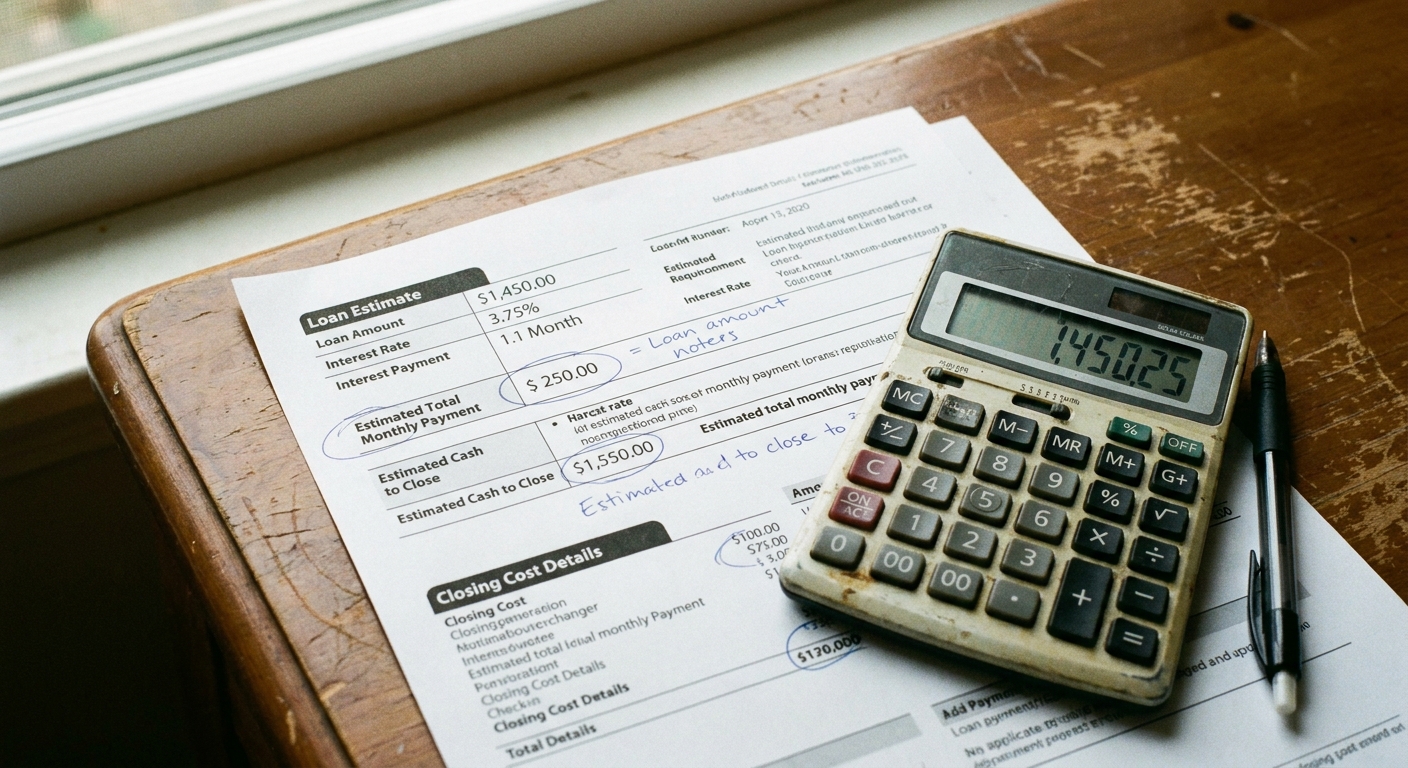
In both cases, ask for written disclosures and a written fee worksheet. For closed-end loans you will typically receive a Loan Estimate . For HELOCs, disclosures often look different (and a Loan Estimate may or may not be provided depending on lender and process). Look for: appraisal or valuation fee, origination or underwriting fee, title fees, recording fees, and any prepayment or early termination terms.
Lien priority
Both a HELOC and a home equity loan are usually second liens behind your first mortgage. That means your first mortgage gets paid first if the home is sold in a foreclosure scenario, and the second-lien lender is next in line.
Practical impact:
- Second liens often come with tighter underwriting than you expect, especially at higher combined loan-to-value (CLTV).
- If you ever want to refinance your first mortgage later, a HELOC or home equity loan may need to be subordinated (the second-lien lender agrees to stay in second position). Subordination is common, but not automatic and can slow down a refi.
CLTV reality: Many lenders cap CLTV somewhere around 80% to 90% for strong borrowers, but caps vary widely by lender, credit profile, occupancy, and property type.
Tax deductibility
In the U.S., interest on home equity debt is generally only deductible if the funds are used to buy, build, or substantially improve the home that secures the loan, subject to IRS limits and your itemization situation.
Timing note: These rules are tied to the Tax Cuts and Jobs Act framework and related IRS guidance. Provisions can sunset or change, so treat this as “current understanding,” not a permanent rulebook.
What that means in plain English:
- Renovations and improvements: Often the cleanest case for potential deductibility.
- Debt consolidation, tuition, vacations: Typically not deductible under the “improve the home” standard.
Reality check: Many households take the standard deduction, so even eligible interest may not change your taxes. Keep receipts and a clear paper trail of how funds were used, and confirm your situation with a qualified tax professional.
Risks to take seriously
Your home is the collateral
With either product, you are converting whatever you borrow into debt that is secured by your house. If you cannot pay, you could ultimately face foreclosure. That is why I treat home equity borrowing as a tool, not a lifestyle.
Variable rate exposure (HELOC)
Variable rates can be fine when you have margin in your budget and a plan to repay. They are rough when you are already stretched and hoping rates cooperate.
Draw temptation (HELOC)
A HELOC can behave like a giant credit card with a much lower interest rate. That is a blessing and a curse. The key difference is that it is secured by your home, so mistakes can come with much higher stakes. Without guardrails, it is easy to keep borrowing and never truly finish the payoff.
Underestimating renovation costs
Renovations almost always run over, whether it is materials, permits, or “since we are already doing this” upgrades. The financing choice should include a buffer and a plan for overruns.
Decision framework
Choose a HELOC if most of these are true
- You need flexible access to funds over time (paying contractors in stages).
- You can handle potential payment increases if rates rise or when the draw period ends.
- You plan to repay aggressively and want the option to borrow and repay repeatedly.
- You have strong spending boundaries, so the line will not become a long-term crutch.
Choose a home equity loan if most of these are true
- You know the exact dollar amount you need.
- You want a fixed rate and predictable payment.
- You are consolidating high-interest debt and need a set payoff timeline.
- You would sleep better knowing your payment will not change next month.
Renovations
Uncertain timing: HELOC often fits
If you are updating a kitchen over several months, paying for materials, then labor, then finishing work, a HELOC can keep you from paying interest on money you are not using yet.
One-and-done projects: home equity loan often fits
If you are replacing a roof, doing a major foundation repair, or paying a single contractor a fixed bid, the lump sum and fixed payment can be simpler.
Renovation tip I love: create a mini “project budget” with three lines:
- Contracted cost (the quote)
- Contingency (commonly 10% to 20%)
- Must-have monthly payment (what your budget can handle even on a bad month)
Debt consolidation
Using home equity to consolidate credit cards can work, but it is a trade: you might lower the interest rate, but you are also moving unsecured debt onto your house .
When it can make sense
- Your credit card balances are high-interest, and you have a realistic payoff plan.
- You have stable income and a budget that supports the new payment.
- You will address the behavior side by lowering spending, building a small emergency fund, and avoiding re-running cards back up.
When it is a red flag
- You are consolidating but keeping the same spending habits.
- You are using a HELOC with interest-only payments just to get the payment down temporarily.
- You cannot explain, in one sentence, how you will avoid new credit card balances.
What lenders look at
- Credit score and history: Higher scores usually mean better pricing and easier approvals.
- Debt-to-income ratio (DTI): Lower is better. Paying down revolving debt before applying can help.
- Equity and CLTV: Lenders cap how much you can borrow relative to your home value and existing mortgage balances.
- Occupancy and property type: Primary residences often get the best terms versus rentals.
What you can do this week: pull your credit reports, list your current mortgage balance, estimate your home value conservatively, and calculate how much cash you actually need.
Questions to ask
For a HELOC
- Is the rate variable? What index (Prime, SOFR-based, or other) and margin are used?
- How often can the rate change? Is there a lifetime cap?
- Is it interest-only during the draw period? When does amortization begin?
- How long is the repayment period, and is there any balloon feature?
- Are there annual fees, inactivity fees, or early closure fees?
- Can I lock part of the balance to a fixed rate? What are the rules and costs?
For a home equity loan
- Is the rate fixed for the entire term?
- What is the term length and monthly payment?
- Is there a prepayment penalty?
- What closing costs will I pay out of pocket versus rolled in?

Alternatives to compare
If you are on the fence, it can help to pressure-test a couple of common alternatives:
- Cash-out refinance : One loan replaces your current mortgage and pulls cash out. It can be cleaner than a second lien, but it resets your first mortgage rate and term, which may be a dealbreaker in a higher-rate environment.
- Personal loan: No collateral, faster process for some borrowers, and sometimes a good fit for smaller amounts. The trade is usually a higher rate and shorter term.
Pick-your-path summary
If you want my “sticky note” rule:
- Choose a HELOC when flexibility matters and you can handle variability.
- Choose a home equity loan when certainty matters and you want a fixed finish line.
Either way, borrow with a payoff plan, not just a payment plan. A lower monthly payment is not a win if it stretches debt out for a decade longer than necessary.
Disclaimer: This article is for educational purposes and is not financial, legal, or tax advice. Loan terms vary by lender and borrower profile, and rules can change. Consider speaking with a qualified professional for guidance specific to your situation.