
A disappointing financial aid offer can feel personal, but most of the time it is simply paperwork, timing, and school policy. Schools build your package using the information they have at the moment and within their budgets and rules. If your situation has changed or your FAFSA does not reflect reality, you can ask the financial aid office to review your file through an appeal (often called professional judgment or a special circumstances review).
This is one of those smart steps that feels intimidating until you see the structure. Your goal is not to vent or negotiate like you are buying a car. Your goal is to document a change, make a specific request, and make it easy for the aid administrator to evaluate your file.

What an appeal can and cannot do
A financial aid appeal asks the school to reconsider your eligibility for need-based aid or adjust parts of your package. It usually works best when there is a verifiable change or an unusual situation that the FAFSA did not capture. Outcomes are never guaranteed and depend on documentation, policy, and available funding.
Appeals commonly help with
- Changed income: job loss, reduced hours, loss of overtime or commission, business downturn, parental retirement, divorce or separation affecting household income.
- Large, unavoidable expenses: medical bills, dental work, mental health treatment, required therapy, caregiving costs, disability-related expenses.
- One-time income that inflated the FAFSA year: severance, bonus, overtime spike, or a one-time taxable event. Certain retirement transactions (like rollovers or conversions) may be treated differently by different schools, so ask what they consider and submit documentation.
- Dependency overrides: unsafe home environment, abandonment, or other unusual circumstances that make parental information unavailable or unsafe to obtain. (For example, parental incarceration alone is not automatically enough. The key factor is whether you can reasonably access parental support or information.)
- Cost adjustments: childcare while attending school, disability-related costs, special equipment required for a program, and some commuting costs (varies by school).
Appeals usually do not help with
- Wanting more merit aid simply because another school offered more (you can still ask, but it is a different process).
- Preferences like a nicer dorm or meal plan upgrades.
- Expenses without documentation.
- Situations the school has already reviewed and denied without any new information.
Important note: schools have discretion. Two students with similar stories can get different outcomes depending on documentation, funding limits, and school policy.
Need-based appeal vs merit reconsideration
These get mixed up all the time. A quick way to tell what you are doing:
- Need-based appeal: You are asking for a professional judgment review because the FAFSA data does not match your current reality. This is about income, assets, household changes, or allowable expenses.
- Merit reconsideration: You are asking the school to re-review institutional scholarship awards based on your academics, achievements, or a competing offer. This is not FAFSA-based and may be handled by admissions or a scholarship committee.
- What to say if you are unsure: “Can you tell me whether I should submit a professional judgment request, a merit reconsideration request, or both?”
Before you write: gather facts and pick the appeal type
Financial aid offices move fast. The more organized you are, the better your chances and the quicker the decision.
Step 1: Identify your appeal reason
- Special Circumstances (income or expense changes): You provide updated numbers to reflect current ability to pay.
- Unusual Circumstances (dependency override): You cannot reasonably obtain parental info or contact is unsafe or not possible.
- Cost of Attendance adjustment: You ask the school to recognize an allowable expense so you can qualify for additional aid up to the new cost of attendance.
Step 2: Confirm the school’s process
Many colleges have an online appeal form. Some require a signed letter, some want both. Search your portal for “Special Circumstances,” “Professional Judgment,” or “FAFSA Appeal.” If you cannot find it, email the financial aid office and ask what they prefer.
Step 3: Check timing (verification and corrections)
If your file is selected for verification or you have FAFSA corrections pending, some schools will pause an appeal review until those steps are complete. Ask your school if you should submit now or wait until verification is cleared.
If you are still working through FAFSA steps, keep an eye on timing. Appeals often depend on the aid year being processed. If you need help planning the timeline, see our guide to FAFSA deadlines (then come right back here to write the appeal).
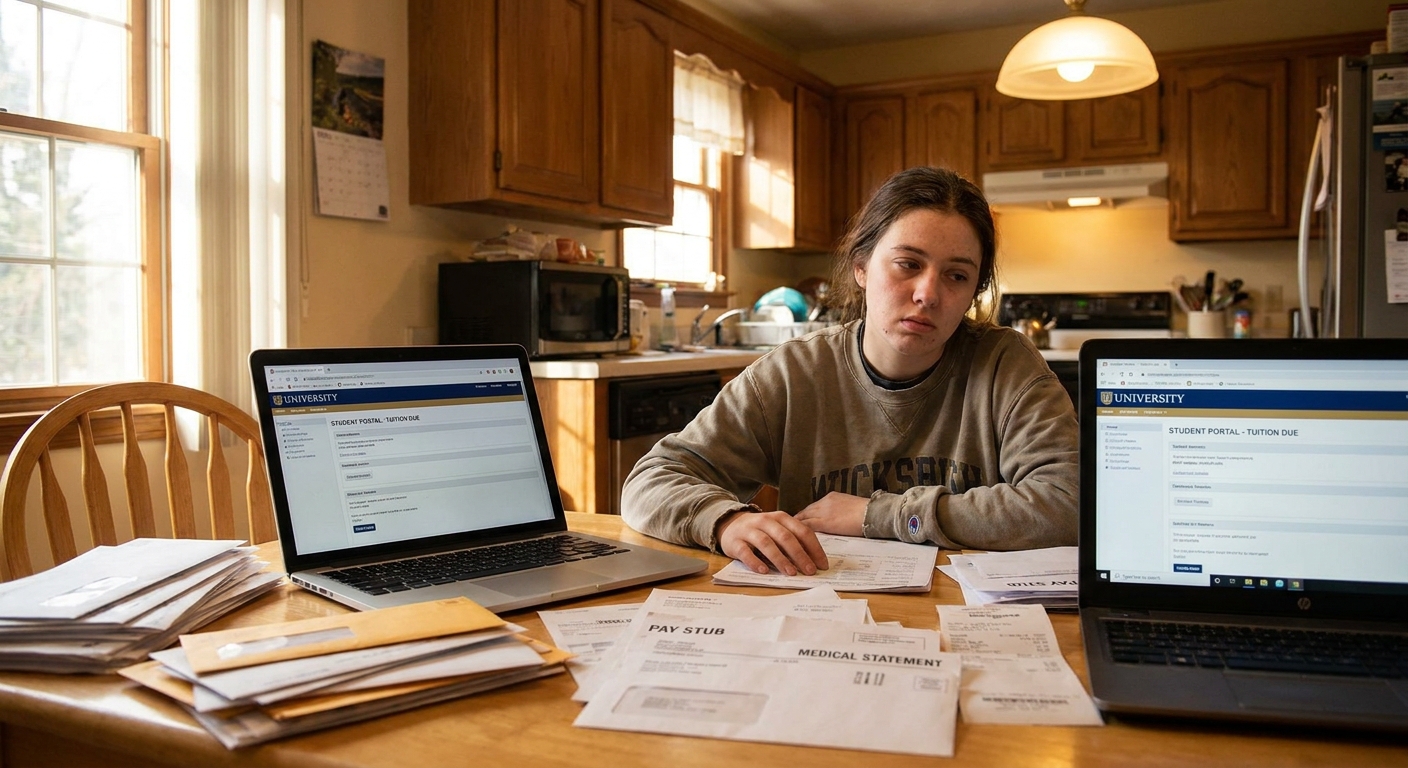
The tone that works: calm, specific, document-first
The best appeal letters read like a short, well-organized case file. Aim for:
- Respectful and steady: Assume the reader wants to help but needs proof.
- Concrete: Use dates, amounts, and before-and-after income if relevant.
- Brief: One page is ideal, plus attachments.
- Clear ask: “Please review my aid eligibility due to X and consider adjusting my need-based aid” is stronger than “I need more money.”
If your letter feels emotional, that is normal. Write the honest version first, then edit it into a professional version that keeps the facts and removes the heat.
Appeal letter structure (copy this)
1) Heading and identifiers
- Your full name
- Student ID (if you have it)
- Date
- School name and financial aid office
- Phone and email
2) Subject line
Use something obvious and searchable, like:
- “Financial Aid Appeal for 2026–2027: Special Circumstances Review”
- “Request for Professional Judgment Review Due to Income Change”
- “Request for Dependency Override Review”
3) Opening: gratitude + what you are asking for
One to three sentences. Thank them for the offer and state that your family’s circumstances have changed, and you are requesting a review.
4) The situation: what changed and when
Two to five short paragraphs. Include:
- What happened
- When it happened
- How it affects ability to pay
- Numbers (income before and after, monthly medical payment plan, etc.)
5) Documentation: list what you attached
Make it easy to audit. Bullet your attachments.
6) Closing: the request again + next steps
Ask for a recalculation or review, note you can provide additional documentation, and include a polite thank you.

What to include (and what to leave out)
Include these details
- Dates: “Reduced hours began February 12, 2026.”
- Dollar amounts: “Household income decreased from about $82,000 to about $56,000.”
- Who is affected: student, parent, spouse.
- How ongoing the issue is: temporary, indefinite, or expected end date.
- Your plan: working part-time, payment plan, applying for scholarships, living at home, etc.
Avoid these common mistakes
- Threats or comparisons: “School X gave me more” can backfire unless you are specifically requesting a merit reconsideration and you phrase it tactfully.
- Unverifiable claims: “We are struggling” without documents.
- Oversharing: Provide enough context to justify the request, not a full life story.
- Sending originals: Upload PDFs or copies unless asked otherwise.
Privacy reminder
Only send what the school asks for. When appropriate, redact sensitive information like full account numbers and Social Security numbers on supporting documents before uploading.
Document checklist by reason
Requirements vary by school, but these are commonly accepted documents. When possible, submit PDFs and label files clearly (example: “Hayes_Marcus_2026_JobLoss_Letter.pdf”).
Income change or job loss
- Termination letter or unemployment approval letter
- Recent pay stubs showing reduced hours
- Last year’s W-2 and most recent tax return (if requested)
- If self-employed: profit and loss statement, invoices, bank statements (school-specific)
Medical or dental expenses
- Itemized bills or statements
- Proof of payment or payment plan
- Insurance explanations of benefits (if relevant)
- A short letter explaining ongoing costs
Divorce, separation, or death in the family
- Divorce decree or separation documentation
- Child support documentation (received or paid)
- Death certificate (if applicable)
- Household size changes and who provides support
Dependency override (unusual circumstances)
- Third-party statements (counselor, social worker, clergy, teacher, doctor) describing the situation
- Any legal documents (restraining order, police report) if available and safe to share
- Your own written statement with timeline and current living and support situation
Safety note: If obtaining documents puts you at risk, tell the financial aid office. Dependency override processes are designed for situations where traditional documentation is not possible.
Appeal letter template (fill in)
You can paste this into a document and customize it. Keep it to one page when possible.
[Your Name]
[Student ID]
[Phone] | [Email]
[Date]
Office of Financial Aid
[College/University Name]
Subject: Financial Aid Appeal for [Aid Year] Due to [Special Circumstances / Unusual Circumstances]
Dear Financial Aid Team,
Thank you for my financial aid offer for the [Aid Year] school year. I am grateful for the opportunity to attend [School Name]. I am writing to request a review of my financial aid eligibility due to a change in my family’s financial circumstances that is not accurately reflected on my FAFSA.
What changed: [Briefly explain the event, for example: “On March 4, 2026, my parent, [Name], was laid off from their job at [Employer].”]
How it affects our ability to pay: [Include before-and-after income, loss of benefits, ongoing expenses, and whether the change is temporary or ongoing. Use numbers. Example: “Our household income is expected to decrease from approximately $78,000 to approximately $52,000 for 2026.”]
Supporting documents: I have attached the following documentation for your review:
- [Document 1]
- [Document 2]
- [Document 3]
If possible, I am requesting a professional judgment review to reassess my Student Aid Index (SAI) and reconsider my eligibility for need-based grants and other aid. I am happy to provide any additional information you may need.
Thank you for your time and consideration.
Sincerely,
[Your Full Name]
Example language for common scenarios
1) Reduced income (hours cut)
“Beginning January 15, 2026, my hours were reduced from 40 hours/week to 24 hours/week due to company-wide scheduling changes. My average monthly gross pay has decreased from approximately $3,600 to approximately $2,150. I have attached my last four pay stubs and a letter from my employer confirming the change.”
2) High medical bills
“In 2025 and 2026, our family incurred significant out-of-pocket medical expenses related to [general description]. These costs were not discretionary and are ongoing. We have paid approximately $4,800 out of pocket in the past six months and are currently on a $220/month payment plan. I have attached itemized statements and proof of payment.”
3) One-time income event
“My FAFSA year income was higher than normal due to a one-time payment of $9,500 in [month/year]. This payment is not recurring and does not reflect our current financial situation. I have attached documentation showing the one-time payment and current year-to-date earnings.”
4) Dependency override request
“I am requesting a review for a dependency override due to unusual circumstances that prevent me from safely obtaining parental information. I currently support myself through [work/savings/other]. I have attached statements from [third party] and documentation describing my situation.”
How to submit and follow up
Submission tips
- Submit through the school’s preferred method (portal upload, email, or form).
- Use a clear file naming system and combine multi-page items into one PDF when possible.
- If emailing, put your name and student ID in the subject line.
Follow-up timeline
- After 3 to 5 business days: Confirm they received your appeal if you did not get an automated confirmation.
- After 10 to 14 business days: Ask for a status update if they provided no timeframe.
- If you have a deposit deadline: Mention the date politely and ask if an extension is possible.
Keep follow-ups short: “Just checking on the status of my professional judgment request submitted on [date]. I’m happy to provide additional documentation.”
About Cost of Attendance (COA) increases
A COA adjustment can increase the maximum amount of aid you are allowed to receive, but it does not automatically create free money. Most often, a higher COA opens room for additional loans or work-study. Grant increases depend on program rules and available funds, so ask what types of aid can change at your school.
If your appeal is denied: next moves
A denial does not mean you did anything wrong. It may mean the school cannot adjust need-based aid, your documentation did not meet their criteria, or funds are limited. Here are practical next steps:
- Ask what would change the decision: “Is there any additional documentation that would be helpful?”
- Request a payment plan: Many schools offer low-fee or interest-free monthly plans, though some charge a setup or enrollment fee.
- Revisit cost of attendance: cheaper housing, meal plan changes, commuting, used textbooks.
- Look for department scholarships: These are often less competitive than campus-wide awards.
- Consider a different path: community college for gen eds, in-state options, or a gap semester to work.
If state aid or scholarship deadlines are coming up, ask whether your appeal affects eligibility or timing, and what you should do to protect your spot.
Quick checklist
- I used a clear subject line and included my student ID.
- I stated exactly what changed and when.
- I included numbers (income before and after, expense amounts).
- I attached documents that support my claim.
- I made a specific request (professional judgment review, COA adjustment, or dependency override review).
- I kept the tone calm and the letter around one page.
- I submitted before school deadlines and followed up appropriately.
If you are feeling stuck, start with the template above and fill in the facts first. The letter does not need to be perfect. It needs to be clear, truthful, and documented.