
If you can qualify for a VA loan, it is often the cheaper path long term. The catch is that not everyone has VA eligibility, and sometimes a specific property or timing issue makes FHA the practical backup.
In this guide, I will walk you through the real cost drivers that matter: down payment, the VA funding fee versus FHA mortgage insurance (MIP), credit and underwriting expectations, property rules, seller concessions, and a few total-cost examples you can sanity-check against your own situation.
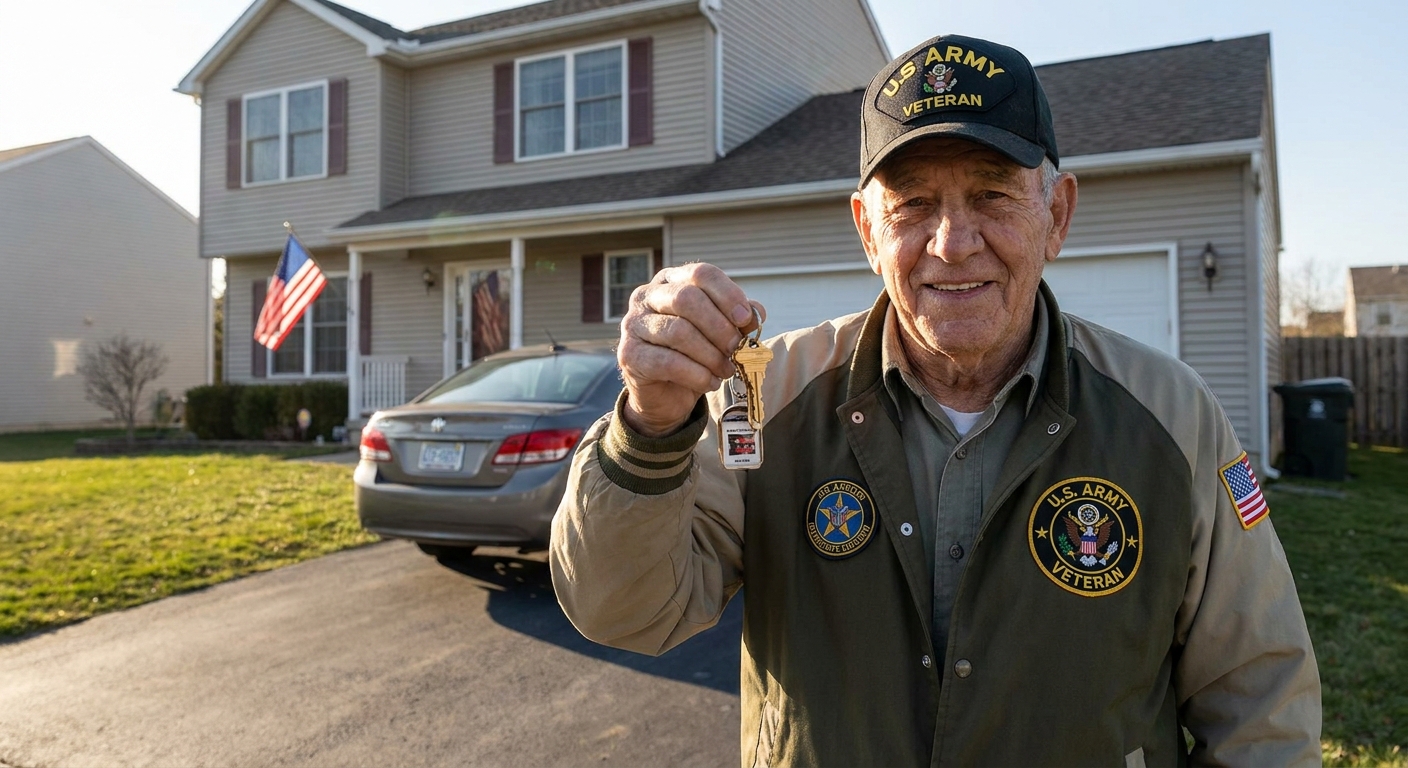
Quick answer: which loan saves more?
VA loan usually wins when:
- You can put little to nothing down and you want the lowest monthly payment.
- You want to avoid monthly mortgage insurance.
- You have decent credit but not a huge cash cushion for closing.
FHA loan can make sense when:
- You are not VA-eligible.
- Your credit profile needs more flexibility and you are comfortable paying ongoing mortgage insurance.
- You are buying a property that a VA appraiser or lender may be stricter about, and your local FHA execution is smoother.
My rule of thumb: If you are eligible for VA, get a VA quote first. Then compare it to FHA on total cash-to-close and the payment after insurance. VA is hard to beat when rates are similar.
Eligibility: who can use FHA vs VA?
FHA eligibility
FHA loans are insured by the Federal Housing Administration and are open to most buyers who meet credit, income, and occupancy rules. You typically need to use the home as your primary residence.
VA eligibility
VA loans are backed by the Department of Veterans Affairs and are limited to eligible service members, veterans, and some surviving spouses. Lenders typically verify eligibility through a Certificate of Eligibility (COE).
If you are unsure whether you qualify, a VA lender can often pull the COE quickly with your permission.

Down payment: how low can you go?
VA
- Common option: 0% down for many purchases when you have full entitlement and the price is at or under the home’s reasonable value.
- Good to know: If you have full entitlement, county loan limits generally do not cap your zero-down ability. Loan limits and down payment requirements typically show up when you have reduced entitlement (for example, you still own a home with a VA loan) or when you are buying above appraised value.
- Down payment may come up when: You have reduced entitlement, you are buying above appraised value, or lender overlays apply.
FHA
- Minimum down payment: 3.5% if your credit score is 580+ (per FHA guidelines).
- 10% down scenario: If your score is 500 to 579, FHA guidelines call for 10% down. Many lenders also set higher minimum scores than the FHA floor, so lender shopping matters.
On pure down payment, VA is the standout. But do not stop there. The bigger difference is often the insurance cost you pay over time.
The big cost difference: VA funding fee vs FHA MIP
VA funding fee (one-time, can be financed)
Most VA borrowers pay a one-time funding fee. The amount depends on factors like whether it is your first VA loan use, your down payment amount, and your service category. Many borrowers roll this fee into the loan balance instead of paying it out of pocket.
Ballpark: For many first-time VA users with 0% down, the funding fee is often around 2.15% of the loan amount. With a down payment of 5% to 9.99%, it is commonly around 1.5%, and with 10% or more down it is commonly around 1.25%. Subsequent use is typically higher.
Important: Some borrowers are exempt from the funding fee, such as veterans receiving VA disability compensation and certain qualifying surviving spouses. If you are exempt, the VA loan often becomes even more cost-effective.
FHA mortgage insurance premium (upfront + monthly)
FHA has two layers of mortgage insurance:
- Upfront MIP: Commonly 1.75% of the base loan amount, often added to the loan amount if you do not pay it at closing.
- Annual MIP (paid monthly): Ongoing mortgage insurance included in your payment. The exact percentage varies by term, loan amount, and down payment.
Here is the part people miss: FHA monthly MIP can stick around for a long time. For many 30-year FHA loans with less than 10% down, MIP lasts for the life of the loan unless you refinance into something else later. If you put 10% or more down, FHA MIP typically drops off after 11 years.
So the decision is often this: VA tends to be a higher one-time fee (unless exempt) with no monthly MI, while FHA is a smaller upfront add-on plus a monthly charge that can really add up.
Interest rates and payment impact
Rates change daily. VA loans often price competitively because of the VA guaranty, but pricing is lender-dependent and market-dependent, so do not assume. FHA rates can also be competitive, but the monthly MIP can make the effective payment higher even if the interest rate looks similar.
When you compare quotes, ask each lender for:
- Interest rate and APR
- Total monthly payment broken out by principal, interest, taxes, insurance, and any MI
- Cash to close, with a clear list of lender fees and third-party fees
- Whether discount points are included, and how much they cost
Qualifying: credit, income, and DTI
Both programs are known for being more forgiving than many conventional loans, but they do it in different ways.
FHA underwriting approach
- Often more flexible on credit history and lower scores (depending on the lender).
- Clear rules around debt-to-income (DTI), with some flexibility based on compensating factors.
- Mortgage insurance is part of the deal, so the program is built for smaller down payments.
VA underwriting approach
- Focuses heavily on residual income, meaning money left over after major obligations.
- DTI can be flexible if residual income is strong.
- No monthly MI helps your DTI and your payment, which can make qualifying easier than you would expect.
Real-world takeaway: If your credit is bruised, FHA is often easier to get to “yes.” If your income is solid but your down payment is thin, VA can be a game changer.
Appraisal and property rules
Both FHA and VA loans come with property requirements because the loans are backed by the government. The home needs to be safe, sound, and sanitary.
VA appraisal basics
- The VA appraiser checks value and flags issues tied to the VA’s Minimum Property Requirements (MPRs).
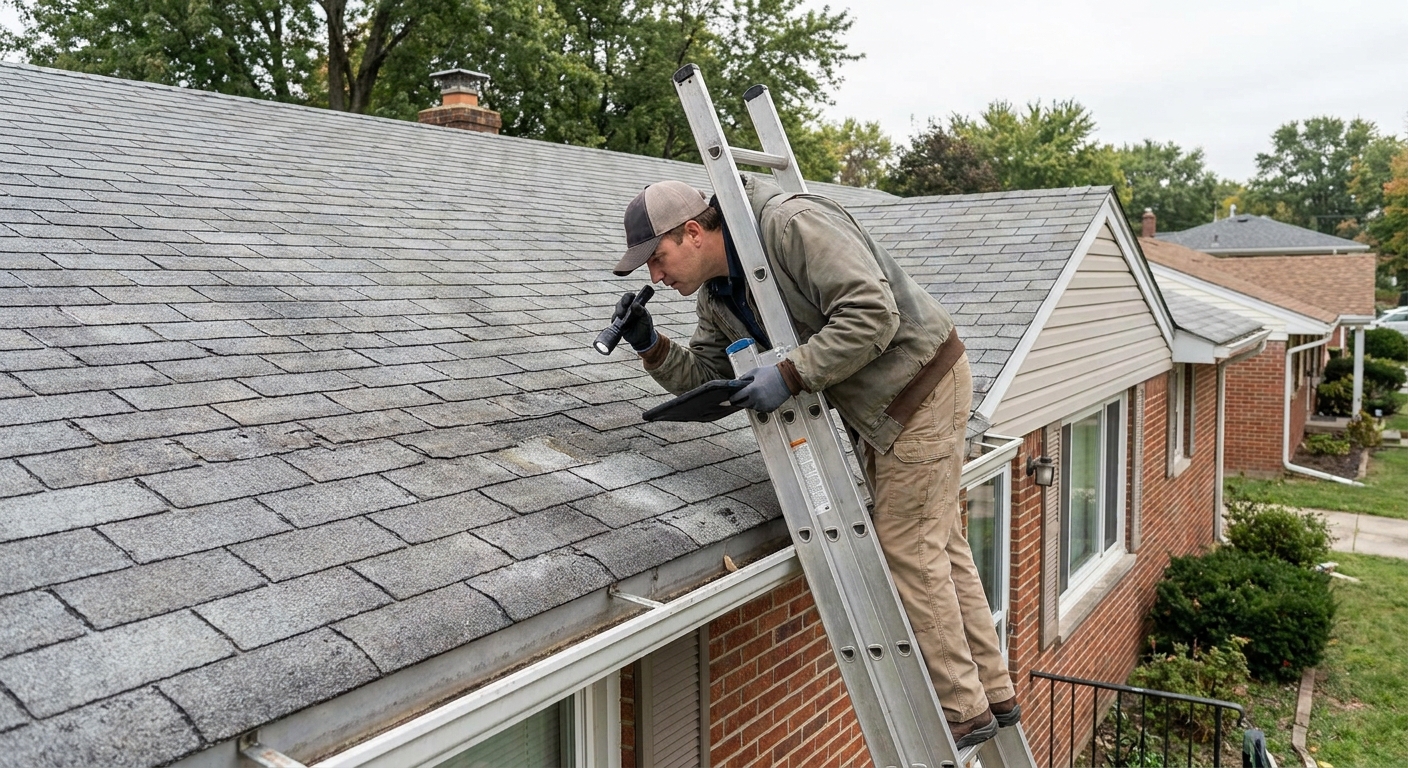
- Common sticking points: peeling paint on older homes, missing handrails, roof concerns, non-working utilities, water damage, broken windows.
FHA appraisal basics
- The FHA appraiser also evaluates value and flags issues tied to FHA Minimum Property Standards.
- Common sticking points are similar: safety hazards, roof life concerns, exposed wiring, missing or nonfunctional essential systems, and health and safety repairs.
Neither program is “impossible,” but fixer-uppers and certain as-is listings can be tougher. If you are shopping older housing stock, ask your agent to help you avoid obvious red flags before you spend money on inspections.
Seller concessions: who can pay what?
Seller concessions are when the seller helps pay some of your closing costs. They can be huge when you are low on cash.
VA concessions
VA has a key concept that trips people up: there is a 4% cap on certain seller-paid concessions (things like paying off debts, funding fees, and other non-closing-cost items). This 4% limit is separate from certain “normal” closing costs the seller may pay, depending on how your lender structures the deal.
Translation: VA can be very flexible, but the buckets matter. Make sure your lender and agent are speaking the same language when you ask for help from the seller.
FHA concessions
FHA typically allows seller concessions up to 6% of the purchase price. In many markets, FHA buyers lean on concessions to cover prepaid items and standard closing costs.
Practical move: When you ask for concessions, be ready to justify them with a clean offer price and a reasonable request based on local norms.
Total-cost examples (realistic math)
Let’s run simple examples so you can see where the money goes. These are estimates to illustrate structure, not a quote. Taxes, homeowners insurance, and local fees vary widely, so I am focusing on what differs between FHA and VA: down payment, upfront fees, and monthly insurance.
Example 1: $300,000 purchase, minimal down payment
- VA scenario (first use, not exempt): 0% down. Funding fee around 2.15% of $300,000, which is about $6,450. Many borrowers finance it, bringing the starting loan amount to roughly $306,450. No monthly mortgage insurance.
- FHA scenario (3.5% down): 3.5% down is $10,500. Base loan is about $289,500. Upfront MIP is commonly 1.75% of the base loan, about $5,066, often financed (total loan about $294,566). Monthly MIP depends on your exact case, but a common ballpark for a high-LTV 30-year FHA loan is around 0.55% annually. On a $289,500 base loan, that is roughly $1,592 per year, or about $133 per month.
What typically saves more over time: If rates are similar, VA often wins on monthly payment because FHA’s monthly MIP can be a meaningful line item.
Example 2: $300,000 purchase, you plan to move in 5 years
If you expect to relocate in a few years, the comparison can tighten.
- VA: The funding fee is front-loaded. If you finance it, you pay interest on it, but you avoid monthly MI.
- FHA: The monthly MIP adds up every month you keep the loan. If you refinance or sell quickly, you might not pay it for decades, but you still pay it while you are there.
What typically saves more: VA still often wins, but the break-even depends on whether you are exempt from the funding fee and what interest rate and APR each lender offers.
Example 3: You are exempt from the VA funding fee
This is the easy one. If you qualify for a VA funding fee exemption, you may get:
- 0% down
- No monthly MI
- No funding fee
In many cases, that combination is the lowest total-cost option available to a homebuyer.
If you want the most accurate answer for your situation, ask for a Loan Estimate for both options and compare line by line. The truth is in the monthly MI line and the cash-to-close number.
When FHA might beat VA
- Big rate difference: If your VA quote comes back with a meaningfully higher rate or APR than FHA from the lenders you have access to, the payment gap can narrow. This is why you shop and compare APR, not just the headline rate.
- Property issues or timing: Some transactions run into VA appraisal timing or repair requirements that make FHA the smoother path in that local market.
- You are not eligible for VA: Obvious, but important. FHA is often the best low-down-payment alternative.
That said, I would still shop multiple VA lenders before assuming VA is “more expensive.” Pricing can vary a lot by lender.
Decision checklist
Pick VA first if most of these are true:
- You are eligible for VA financing
- You want the lowest monthly payment possible
- You are short on down payment cash
- You want to avoid ongoing mortgage insurance
Lean FHA if most of these are true:
- You are not VA eligible
- Your credit profile fits FHA better right now
- You have a plan to refinance later once your equity or credit improves (often into a conventional loan to remove MIP)
- Your target homes are more likely to pass FHA smoothly in your area
Questions to ask your lender
- Am I eligible for a VA funding fee exemption?
- What is my total cash to close on VA vs FHA?
- What is the monthly payment on each option, including any MI?
- On FHA, is my MIP life-of-loan, or does it drop off after 11 years because I am putting 10% or more down?
- How long is the rate lock, and what happens if the closing date slips?
- Are there lender overlays that make qualifying stricter than the base program?
- Are these loans assumable, and does assumability matter in my market right now?

Bottom line
If you have VA eligibility, start there. Between the no-down-payment option and the lack of monthly mortgage insurance, VA financing is often the clearest path to a lower payment and a lower total cost.
If VA is not available to you, or the property and timing make it difficult, FHA is a solid Plan B that can still get you into a home with a relatively small down payment. Just go in with eyes open about how mortgage insurance affects your payment now and your options later.
If you want, I can help you think through the comparison quickly. Grab two Loan Estimates, one VA and one FHA, and compare: cash to close, monthly MI, and APR. Those three items usually reveal the winner fast.