
If you are buying your first home, it is tempting to reduce the decision to one headline: FHA is 3.5% down and conventional is 5% to 20% down. Real life is messier. And to be clear, that conventional headline is not always true. Some first-time buyer conventional programs go as low as 3% down .
I learned this the hard way back when I was crawling out of debt and trying to rebuild my credit. A loan is not just a rate and a down payment. It is a set of rules that affects your monthly payment, your ability to qualify, the kind of home you can buy, and how long you will pay mortgage insurance.
This guide walks through what first-time buyers should compare beyond the down payment, in plain English, with the goal of helping you choose the loan structure that fits your finances now and your plans later.

Quick definitions (so the rest makes sense)
FHA loan is insured by the Federal Housing Administration. Because the government insures part of the lender’s risk, FHA often allows lower credit scores and smaller down payments. The trade-off is a specific kind of mortgage insurance called MIP and some property condition rules.
Conventional loan is not backed by the government. Most conventional loans follow guidelines set by Fannie Mae and Freddie Mac. If you put less than 20% down, you typically pay PMI, which can often be removed later.
- PMI = private mortgage insurance (common on conventional loans with under 20% down)
- MIP = mortgage insurance premium (required on FHA loans)
Down payment: the real range
Let’s clean up the most common misconception: conventional is not automatically 5% down.
FHA: 3.5% is the typical starting point
FHA is widely known for the 3.5% down option (for borrowers who meet credit and other requirements). It can be a powerful tool when cash is tight.
Conventional: can be 3% down for first-time buyers
Many conventional loans do require 5% down or more, especially depending on property type, borrower profile, and lender rules. But there are also conventional options designed for first-time buyers that go as low as 3% down. You might see these under program names like HomeReady or Home Possible, or described as a 97% loan-to-value option.
What to do with this: When a lender quotes conventional, ask: “Do I qualify for any 3% down conventional programs?” If yes, ask what the income limits, education requirements, and PMI costs look like. The down payment is only one part of the math.
Mortgage insurance: the monthly cost people underestimate
Mortgage insurance is usually the biggest long-run difference between FHA and conventional. Two buyers can have the same home price and the same down payment, but very different total costs depending on how insurance works.
FHA: MIP has two parts and can stick around
- Upfront MIP: Typically 1.75% of the loan amount. Most people roll it into the loan, which increases your balance and interest paid over time.
- Annual MIP: Paid monthly. The percentage depends on your loan term, loan amount, and loan-to-value.
- Cancellation rules: If you put less than 10% down, MIP generally stays for the life of the loan. If you put 10% or more down, MIP typically lasts 11 years .
That “life of the loan” part is why a lot of FHA buyers plan a future refinance into a conventional loan when credit and equity improve.
Conventional: PMI is often removable
- PMI cost: Depends heavily on credit score, down payment, and sometimes property type. With strong credit, PMI can be surprisingly cheap.
- Cancellation rules: When you reach about 20% equity (often 80% loan-to-value), you can typically request PMI removal, and by law it must drop off at a certain point for many loans if you are current and meet requirements.
What to do with this: Ask each lender for a written breakdown that shows the monthly mortgage insurance amount and the rules for removing it. Do not accept “it will drop off eventually” as an answer.

Credit score reality: guidelines vs lender overlays
Online, you will see simple credit score minimums. In practice, your lender can require more. Those extra requirements are called credit overlays.
FHA is often more flexible, but not always
FHA guidelines are generally friendlier to lower credit scores and limited credit history. That is why FHA is a common first-time buyer path. But some lenders add overlays and may want higher scores, lower debt-to-income ratios, or extra cash reserves.
Conventional can be stricter, but rewards good credit
Conventional loans usually want stronger credit, especially if you are putting a small amount down. The upside is that higher credit scores can unlock:
- Lower interest rates
- Cheaper PMI
- More loan options, including certain first-time buyer conventional programs
What to do with this: When you rate shop, do not just ask, “Can I qualify?” Ask, “What is your overlay for my credit score range and DTI?” Two lenders can treat the same borrower very differently.
Debt-to-income ratio (DTI): the approval bottleneck
Your DTI is the percentage of your gross monthly income that goes toward debt payments. It is one of the biggest reasons preapprovals fall apart late in the process.
FHA may allow higher DTI, depending on the full file
FHA can be more forgiving with DTI for some borrowers, especially with strong compensating factors like cash reserves, stable income, or a solid payment history. But again, lender overlays matter.
Conventional DTI tends to be less forgiving
Conventional approvals often tighten up when credit is borderline or the down payment is small. If you are carrying car payments, student loans, or credit card minimums, conventional can feel like a narrower path.
What to do with this: Before you pick a lane, run your numbers two ways with a lender: FHA and conventional at the same purchase price. If one option pushes your DTI right to the edge, that is a risk signal .
Loan limits: the quiet deal breaker
Sometimes the decision is not philosophical at all. It is math.
FHA limits can cap your price range
FHA has loan limits that vary by county. In many areas, FHA limits are lower than conventional conforming limits. In a high-cost market, that can mean an FHA loan simply cannot cover the purchase price you need, even if you otherwise love FHA’s flexibility.
Conventional has conforming limits too, and jumbo is a different world
Conventional loans also have conforming limits (set by Fannie Mae and Freddie Mac). Above that, you are typically looking at a jumbo loan, which can come with different rates, down payment expectations, and underwriting standards.
What to do with this: Early in your search, ask your lender: “What are the FHA and conventional loan limits in my county, and how do they affect my maximum home price?” This is especially important if you are shopping near the top of your budget.
Appraisal and property standards: what you can buy
First-time buyers are often shocked that the loan type can influence which homes are realistically in play.
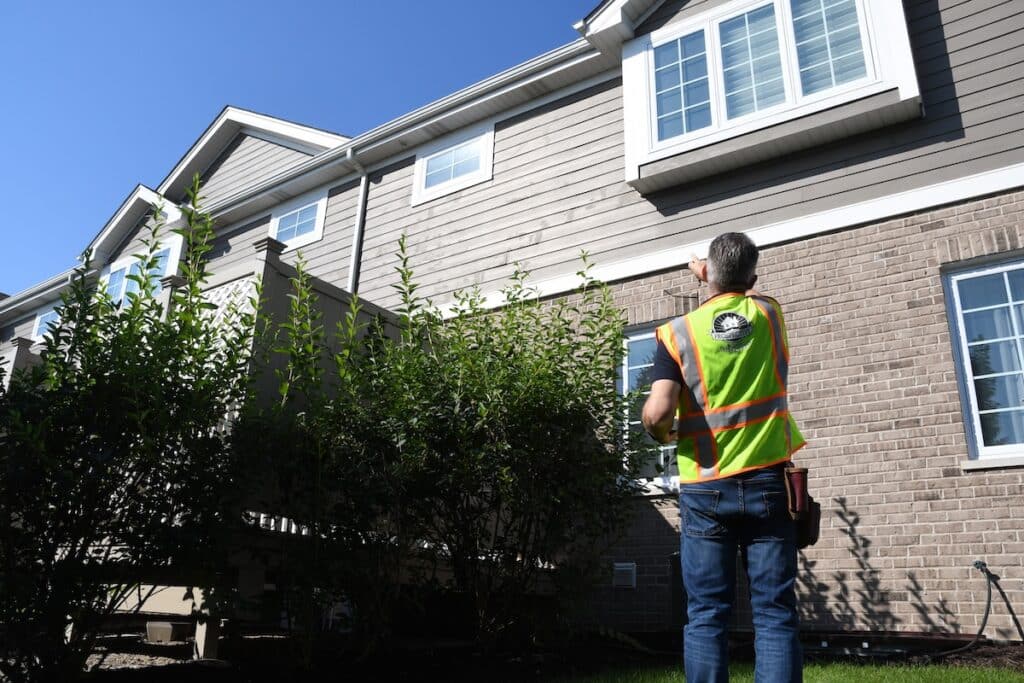
FHA appraisals tend to be more condition-focused
FHA appraisals are designed to protect the lender and the borrower by ensuring the home meets basic safety and livability standards. This can create friction with:
- Peeling paint (especially on older homes)
- Missing handrails
- Roof or electrical issues
- Obvious health and safety concerns
It does not mean you cannot buy an older home with FHA. It means the home may need certain fixes before closing, which can be hard in a competitive market.
Conventional appraisals can be less strict on minor items
Conventional appraisals still evaluate value and overall condition, but the standards are often more flexible about minor repairs. In hot markets, that flexibility can help keep deals together.
What to do with this: If you are looking at fixer-uppers or older homes, ask your agent and lender what appraisal issues they see most often in your area for FHA vs conventional.
Interest rates: why the advertised rate is not the whole story
You might hear that FHA rates are lower. Sometimes they are. But total borrowing cost depends on rate + mortgage insurance + upfront fees + how long you keep the loan.
FHA can look cheaper upfront
If you have a lower credit score, FHA may offer a more attractive rate than conventional. That can reduce the payment on paper.
Conventional can win over time
If you have decent credit and expect to stay in the home for several years, conventional can be cheaper long-run because:
- PMI can drop off
- You may avoid the upfront MIP cost
- You may refinance less urgently
What to do with this: Ask lenders for the same comparison every time: APR (not just interest rate), itemized closing costs, and the monthly payment broken out by principal, interest, taxes, insurance, and mortgage insurance.
Long-run cost scenarios: three real-life paths first-time buyers take
Here is how this usually plays out in the wild. Not everyone needs the same loan. You need the loan that fits your timeline.
Scenario 1: You need maximum qualifying power right now
If your credit is still healing or your down payment is thin, FHA can be the bridge that gets you into a home sooner. The plan that often works best is:
- Use FHA to buy
- Work on credit and savings for 12 to 36 months
- Refinance to conventional when it clearly lowers total cost
Scenario 2: You have solid credit and expect to stay put
If your credit is strong and you see yourself in the home for a while, conventional often shines because PMI can fall off and you avoid lifetime MIP. Even with a slightly higher rate, the total long-run cost can come out ahead.
Scenario 3: You plan to move in a few years
If you are pretty sure you will move or upgrade within 3 to 5 years, focus heavily on:
- Total cash needed to close
- The monthly payment you can live with
- Whether the home will pass appraisal without drama
In shorter timelines, upfront affordability can matter more than long-run insurance math. But still run the numbers, especially if FHA’s upfront MIP is being financed into the loan.
How to shop lenders without getting overwhelmed
Rate shopping is one of the highest-impact money moves you can make in the mortgage process. And it is not just about finding the lowest rate. It is about comparing the full structure.
Bring these questions to every quote
- What is the interest rate and the APR?
- How much is monthly PMI or MIP?
- Is there upfront MIP being rolled into the loan?
- What are the total closing costs and which are lender fees vs third-party fees?
- Are you adding any overlays beyond standard FHA or conventional guidelines?
- What is the rate lock period and cost?
- For conventional: when and how can PMI be removed?
- What are the loan limits for FHA and conventional in this county, and do they affect my purchase price range?
- Do I qualify for any 3% down conventional options, and what are the requirements?
Tip from my spreadsheet-loving brain: Put each lender quote into the same simple table: loan type, rate, APR, monthly payment, mortgage insurance, cash to close, and a note about PMI removal or MIP duration. Clarity beats hype every time.

A simple decision checklist
If you want a quick gut-check, use this as your starting point.
FHA may fit if:
- Your credit score is still recovering or thin
- You need a lower down payment and have limited savings
- Your DTI is higher and you need flexibility to qualify
- You are comfortable with the idea of refinancing later
- The home price fits within FHA loan limits where you are buying
Conventional may fit if:
- Your credit is solid and stable
- You want mortgage insurance that can go away
- You qualify for a 3% down first-time buyer program and the PMI looks reasonable
- You are buying a home that might raise FHA appraisal flags
- You plan to stay long enough that long-run cost matters a lot
- You need the higher conforming loan limit in your area
Bottom line
Down payment is the headline, but mortgage insurance rules, lender overlays, appraisal standards, loan limits, and your time horizon are what usually decide which loan feels affordable and stays affordable.
If you take one action after reading this, make it this: get two Loan Estimates for the same home price, one FHA and one conventional, and compare them line by line. Your future self will thank you.
Friendly reminder: Mortgage rules change and lender policies vary. Use this as education, then verify details with a licensed loan officer for your specific situation.