
If you have a W-2 job, taxes mostly happen in the background. Your employer withholds money from each paycheck, sends it to the IRS, and you settle up at tax time.
Freelancing and side gigs are different. When you are self-employed, no one is withholding taxes for you . So the IRS expects you to pay along the way using estimated quarterly tax payments.
This guide breaks it down in plain English: who has to pay, how the “safe harbor” rules work, how to estimate your payments without turning your life into a spreadsheet, and a simple system to avoid penalties.
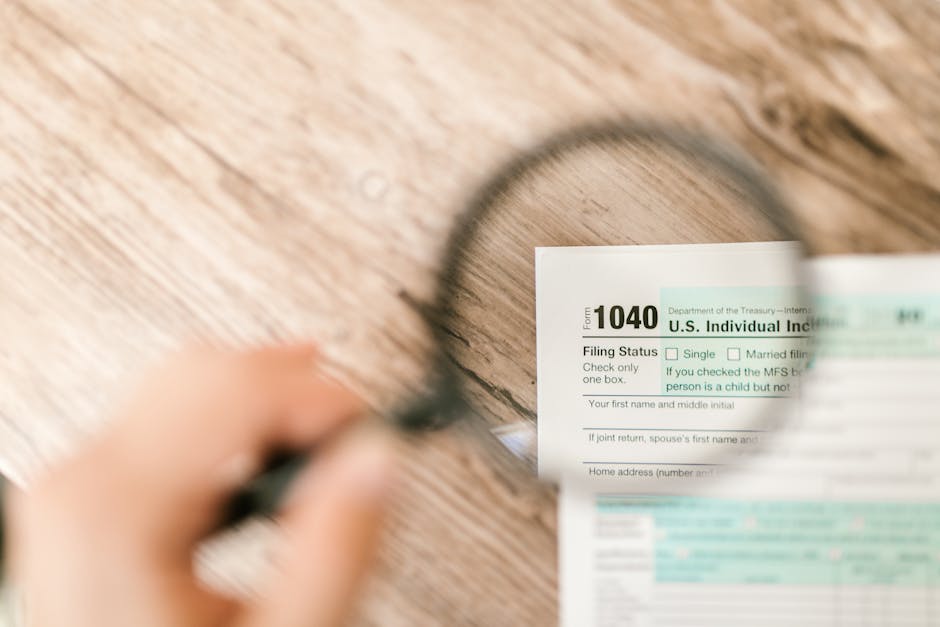
What estimated quarterly taxes are
Estimated taxes are pay-as-you-go tax payments you send to the IRS (and often your state) during the year when you have income that is not covered by withholding.
For most freelancers, these payments cover two buckets:
- Income tax (federal, and possibly state and local)
- Self-employment tax (Social Security and Medicare taxes for self-employed people)
Think of it like this: employees have taxes taken out automatically; self-employed people have to do the “automatic” part themselves.
Who needs to pay estimated taxes
You generally need to make estimated tax payments if both of these are true:
- You expect to owe at least $1,000 in federal tax for the year after subtracting withholding and refundable credits.
- Your withholding and credits will be less than the required minimum payment under IRS rules (more on that in the safe harbor section).
Common income types that trigger estimated payments
- Freelance and contract work (1099-NEC, 1099-K, cash clients)
- Gig apps: rideshare, delivery, task work, creator income
- Small business income (sole proprietor, single-member LLC)
- Interest, dividends, capital gains (if large enough)
- Rental income (sometimes)
When you might not need quarterly payments
You might be able to skip estimated payments if:
- You have a W-2 job and increase withholding enough to cover the tax from your side income.
- Your side gig profit is small and you will owe less than $1,000 total at filing time.
- You are new to freelancing late in the year and your total tax due stays under the thresholds.
Key point: This is not about how many clients you have or whether you got a 1099. It is about whether you are paying enough tax during the year.
Quarterly deadlines (why they feel weird)
The IRS calls them “quarterly” payments, but the dates do not line up with neat three-month quarters.
- April 15: for income earned Jan 1 to Mar 31
- June 15: for income earned Apr 1 to May 31
- September 15: for income earned Jun 1 to Aug 31
- January 15 (next year): for income earned Sep 1 to Dec 31
If a due date falls on a weekend or holiday, it usually moves to the next business day.
There is one common exception for the January 15 payment: you can typically skip it if you file your full tax return and pay the full balance due by January 31. Filing and paying in April does not qualify for this exception and can still trigger a Q4 underpayment penalty.
Safe harbor rules (avoid penalties)
The IRS can charge an underpayment penalty if you do not pay enough throughout the year, even if you pay everything by April.
The good news: you do not have to estimate perfectly. You just need to hit a safe harbor.
Safe harbor option 1: Prior-year method
You generally avoid underpayment penalties if you pay at least:
- 100% of your total tax from last year, or
- 110% of last year’s total tax if your prior-year adjusted gross income (AGI) was more than $150,000 (or $75,000 if married filing separately).
This method is popular because it is predictable. You are basically saying, “I will pay what I paid last year (or a bit more), spread across the year.”
Safe harbor option 2: Current-year method
You can also avoid penalties by paying at least 90% of what you will owe for the current year.
This can work well if your income dropped compared to last year or you are newly self-employed. The trade-off is you need a decent estimate of this year’s profit.
What “total tax” means
When the IRS talks about last year’s “total tax,” they mean the total tax shown on your return, not your refund or balance due. Refund size can be misleading because it depends on withholding and credits.
My practical rule: If your income is fairly steady, the prior-year safe harbor is the simplest way to sleep at night. If your income changed a lot, the current-year method can keep you from overpaying.
How to calculate your payment
You can do this a few ways. Here are the two methods that keep things realistic for normal humans.
Approach A: Safe harbor “set it and forget it” (prior-year method)
This is the cleanest path if you filed a tax return last year.
- Find last year’s total tax on your return.
- Multiply by 1.00 (or 1.10 if you are required to use 110%).
- Subtract expected withholding from any W-2 job (if applicable).
- Divide the remaining amount by 4.
That number becomes your baseline quarterly payment.
Approach B: Current-year estimate (for new freelancers or changing income)
If last year is not a good reference, estimate this year’s net profit and tax.
- Estimate your self-employment net profit for the year (income minus business expenses).
- Add other income you expect (W-2 wages, interest, spouse income if filing jointly).
- Estimate taxes (income tax plus self-employment tax).
- Aim to pay at least 90% of that total during the year (minus withholding).
- Divide by the number of remaining payments.
If that sounds fuzzy, you are not alone. A practical shortcut is to set aside a percentage of your net income as you go (more on that below) and true-up each quarter.

How much to set aside
If you want a simple habit that works even when income is uneven, set aside a percentage of your net income into a separate savings account for taxes.
Common starting points:
- 20% to 25%: often works for lower to moderate incomes, especially with deductions
- 25% to 30%: a safer default for many full-time freelancers
- 30% to 35%: if you are in a higher bracket, live in a higher-tax state, or have strong profits
This is not a perfect calculation. It is a cash flow strategy that keeps you from spending money that does not really belong to you.
If you also have a W-2 job, you may be able to set aside less because withholding covers part of your overall tax bill.
How to pay
You can pay estimated federal taxes in a few common ways:
- IRS Direct Pay from a bank account
- Electronic Federal Tax Payment System (EFTPS)
- Debit or credit card (usually with a processing fee)
- Mailing a check with a payment voucher from Form 1040-ES
What is a voucher?
A voucher is just a payment slip that helps the IRS apply your check to the right tax year and tax type. If you pay online, you still choose the correct reason, such as estimated tax, and the correct tax year.
Pick the right payment type
When paying online, look for wording like:
- Reason for payment: Estimated tax
- Apply payment to: 1040ES (or “Estimated 1040”)
- Tax year: the year you are paying for
If you are also required to pay state estimated taxes, your state typically has its own portal and due dates.
How penalties happen
Underpayment penalties usually come from one of these situations:
- You did not pay enough total tax during the year.
- You paid, but you paid too late.
- Your income jumped mid-year and you never adjusted.
- You assumed “I will just pay in April” and got hit with an underpayment penalty anyway.
Penalty-proof habits
- Use safe harbor if your income is predictable.
- Recalculate quarterly if your income is seasonal or volatile.
- Pay as soon as you can once a quarter. Do not wait until the deadline if you already have the cash.
- Save payment confirmations in a “Taxes” folder (PDF or screenshot).
Estimated taxes vs withholding
This is where a lot of side-gig folks get tripped up.
Estimated payments are payments you send yourself, usually quarterly.
Withholding is money taken from a paycheck automatically, based on your W-4.
Why withholding can be a secret weapon
If you have a W-2 job, increasing withholding can sometimes be easier than making quarterly payments because:
- It is automatic.
- Withholding is treated as if it was paid evenly throughout the year, even if it happens later in the year.
That said, you still need to make sure the total paid in is high enough. Think of withholding and estimated payments as two levers that can work together.
Recordkeeping that helps
Quarterly taxes get dramatically easier when you track two numbers consistently: income and deductible expenses.
A simple system
- Separate bank account: Run freelance income and expenses through one account if possible.
- Tax savings account: Move your tax percentage there every time you get paid.
- Monthly money date: Once a month, total income, total expenses, and estimate profit.
- Receipts: Save digital receipts in a cloud folder by month.
Expenses to track
- Supplies and software
- Business miles and vehicle costs (if eligible)
- Phone and internet business use
- Home office (if you qualify)
- Contract labor
- Professional fees and education
Note: Deductions reduce taxable profit, but they do not remove the need to pay quarterly. They just change the amount.

Quick example
Let’s say your freelance work nets about $2,000 per month after expenses. That is $24,000 for the year.
If you set aside 25%, you save about $500 per month, or $6,000 for the year. You can use that pool to make quarterly payments of roughly $1,500.
Your actual tax could be higher or lower depending on filing status, other household income, deductions, and credits. The point is to create a cushion so quarterly payments are not a panic event.
FAQ
What if I missed a quarterly payment?
Pay as soon as you can. The penalty is generally based on how late the payment is and how much was underpaid. Also look at your full-year plan. You may be able to increase later payments or increase W-2 withholding to catch up.
Do I have to pay the same amount each quarter?
No. Many people pay evenly for simplicity, but if your income is uneven, you can adjust. What matters is paying enough by each deadline based on your situation.
Do estimated taxes include Social Security and Medicare?
Yes, for self-employed income, your estimates should account for self-employment tax (Social Security and Medicare) along with income tax.
Is this different if I have an LLC?
For most single-member LLCs taxed as a sole proprietor, quarterly estimated taxes work basically the same as a freelancer without an LLC.
Your quarterly tax checklist
- Estimate net profit so far this year
- Choose a safe harbor approach (prior-year or current-year)
- Calculate the payment amount (or update your percentage set-aside)
- Pay online and save the confirmation
- Update your tracking sheet and receipts folder
If you want the least stressful path: start with safe harbor, automate your tax savings, and revisit your numbers once per quarter. That combination is how you stay out of penalty territory without obsessing over every dollar.