
If you have both Medicare and Medicaid, you are in a smaller category called “dual eligible.” And if you have ever tried to figure out who pays first, what is covered, and why you are still getting bills sometimes, you are not alone. The rules can feel like a tangle of acronyms and fine print.
A Dual Eligible Special Needs Plan (D-SNP) is one way to simplify that setup. It is a type of Medicare Advantage plan designed specifically for people with Medicare and Medicaid, with extra care coordination baked in.
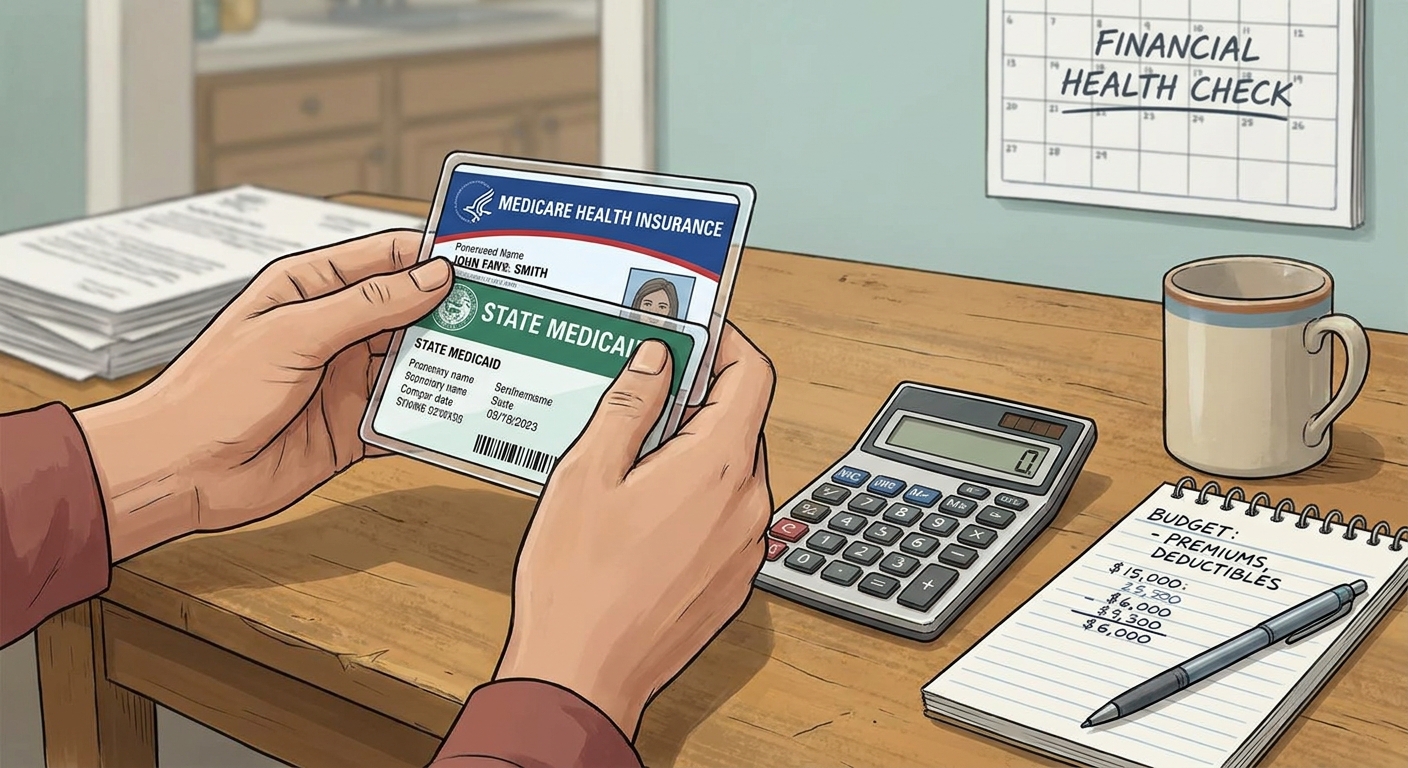
Let’s walk through who can join a D-SNP, how the coverage layers together, what drug coverage usually looks like, and when Medicaid still picks up costs. I will also clear up a very common confusion: enrolling in a D-SNP is not the same thing as qualifying for a Medicare Savings Program.
What a D-SNP is (in plain English)
A D-SNP is a Medicare Advantage plan (Medicare Part C) built for people who have Medicare and some level of Medicaid benefits.
Here is the key idea:
- Medicare remains your primary insurance for most medical services.
- Medicaid acts as secondary coverage for many costs Medicare leaves behind, as long as you meet your state’s Medicaid rules.
- The D-SNP plan sits on the Medicare side and is designed to coordinate more smoothly with Medicaid than a standard Medicare Advantage plan.
Because a D-SNP is a Medicare Advantage plan, it typically includes:
- Medicare Part A (hospital) coverage
- Medicare Part B (medical) coverage
Many D-SNPs also include Medicare Part D prescription drug coverage (these are often called MA-PD plans), but not every D-SNP does. In some areas, a D-SNP may be offered without Part D, and you would pair it with a separate Part D plan. Always confirm before enrolling.
Some D-SNPs are also “integrated,” meaning the plan has extra responsibilities to line up Medicare and Medicaid benefits. The level of integration varies by plan and state.
Who can join a D-SNP
To enroll in a D-SNP, you generally must:
- Have Medicare Part A and Part B
- Have Medicaid, or at least qualify for a specific Medicaid level that the plan accepts
- Live in the plan’s service area
Here is where people get tripped up: “Having Medicaid” can mean different levels of help depending on your state and your situation. D-SNPs often target certain categories of dual eligibility, such as:
- Full Medicaid (your state Medicaid covers a broad range of services, and may pay Medicare cost-sharing depending on your category)
- Partial Medicaid (you might get help with Medicare premiums through a Medicare Savings Program, but not full Medicaid medical coverage)
- Specific dual-eligible groups defined by Medicaid eligibility pathways, like certain long-term services and supports situations
Plans can be very specific about which Medicaid categories they accept. That is why two people in the same city can both be “dual eligible,” but only one qualifies for a particular D-SNP.
How Medicare and Medicaid coordinate in a D-SNP
Think of your coverage as a layer cake:
- Medicare pays first for Medicare-covered services.
- Your D-SNP plan administers your Medicare benefits (instead of Original Medicare), using its network rules, copays, and prior authorization policies.
- Medicaid may pay second for some or all of the remaining costs, depending on your Medicaid category and state rules.
Who pays first
Most of the time, for medical services covered by Medicare, Medicare is primary. Medicaid is generally the payer of last resort, meaning it usually pays after other coverage has paid.
One important nuance: Medicaid does not automatically pay every leftover balance. Whether Medicaid pays Medicare cost-sharing can depend on your Medicaid category, state payment rules, and whether the provider accepts Medicaid. And for some services Medicare does not cover at all (for example, certain long-term care supports), Medicaid can be the main coverage.
Why D-SNP coordination matters
Without coordination, you can end up with:
- Providers billing the wrong program
- Services bouncing between systems
- Confusion about prior authorizations and referrals
- A lot of phone calls when you are already dealing with health issues
D-SNPs are designed to reduce that friction by offering care coordination and benefit guidance specifically for people with both types of coverage.
Important: you still have plan rules
A D-SNP is not the same as “Medicare + Medicaid with no strings attached.” It is a Medicare Advantage plan, which usually means:
- You typically use the plan’s provider network (except emergencies and other required situations)
- You may need referrals to see specialists, depending on plan type
- Some services may require prior authorization
Plan types and access rules
D-SNPs can look very different from county to county. Two things that change how the plan feels day to day are:
- HMO vs. PPO: An HMO usually requires you to stay in network and may require referrals. A PPO may offer more flexibility to see out-of-network providers, but out-of-network costs and rules vary.
- Network size: Some D-SNP networks are broad, and others are tighter. If you have doctors you love, this is a make-or-break detail.
This is why I always recommend doing a quick provider and hospital check before you fall in love with the extra benefits.
Integrated D-SNPs: why it matters
You might see terms like FIDE-SNP (Fully Integrated D-SNP) or HIDE-SNP (Highly Integrated D-SNP). You do not need to memorize the acronyms, but the idea is helpful:
- More integrated usually means Medicare and Medicaid benefits are more deliberately aligned under one plan umbrella.
- That can translate into smoother coordination, clearer cost-sharing guidance, and fewer handoffs.
Integration is not automatically “better” for everyone, but it is worth asking the plan how integrated it is and what that changes for you.
What care coordination typically includes
Care coordination is one of the biggest reasons D-SNPs exist. Exact services vary, but many plans include some version of:
- A care coordinator or case manager who helps line up appointments and services
- Health risk assessments to identify needs early
- Help connecting to Medicaid-covered supports, like transportation or certain in-home services (availability depends on your Medicaid program)
- Medication reviews to reduce harmful interactions and simplify refills
- Transition support after a hospital stay (follow-ups, discharge planning, making sure you have meds)
If you have ever dealt with a loved one coming home from the hospital with a stack of instructions and a new list of prescriptions, you already know why this matters. Coordination is not just paperwork, it can prevent real setbacks.
Drug coverage in a D-SNP (Part D basics)
Many D-SNPs include Medicare Part D prescription drug coverage. That means the plan has a formulary (its covered drug list) and pharmacy network.
However, not all D-SNPs include Part D, so confirm whether your plan is an MA-PD plan or whether you need a standalone Part D plan alongside it.
For dual eligible members, drug costs are often lower than what people pay on a standard Part D plan, because many dual eligible individuals qualify for the Part D Low-Income Subsidy (Extra Help) automatically. In practice, that can mean:
- Lower copays for prescriptions
- Lower or $0 premiums for the drug portion (depending on plan and region)
- Less exposure to the biggest price spikes in Part D
Even so, you still want to confirm:
- Your medications are on the plan’s formulary
- Your pharmacy is in-network
- Any prior authorization or step therapy requirements
If you are helping a parent or grandparent pick a D-SNP, I would put “drug list and pharmacy check” at the top of the to-do list. It is one of the fastest ways to avoid unpleasant surprises in January.
Which costs Medicaid may still pay
Here is the part people care about most: “If I have Medicaid too, do I still pay Medicare copays and deductibles?”
Sometimes yes, often no, and it depends on your Medicaid category and state rules.
Medicaid can help with Medicare costs such as:
- Medicare Part B premium
- Medicare Part A premium (for people who do not qualify for premium-free Part A)
- Deductibles, copays, and coinsurance for Medicare-covered services, depending on your Medicaid category
Medicaid may also cover services Medicare does not
Medicare and Medicare Advantage focus heavily on medical care. Medicaid can cover additional benefits that are very state-specific, such as:
- Long-term services and supports (like certain in-home care or nursing facility coverage)
- Non-emergency medical transportation (in many states)
- Some dental, vision, and hearing services beyond what Medicare covers (varies widely)
Why you might still get a bill
Even with dual coverage, bills can happen. Common reasons include:
- The provider is out of network for the D-SNP plan (and the service is not an emergency)
- A service was not covered or lacked required authorization
- Medicaid eligibility changed and you did not realize it yet
- The provider did not bill correctly (for example, they billed your D-SNP but did not send the remaining balance to Medicaid as secondary)
- State Medicaid payment rules can limit what Medicaid pays on certain Medicare cost-sharing amounts, depending on your eligibility category and the service
If you receive a bill you do not understand, do not pay it immediately out of panic. Call the number on the back of your plan card and ask the plan to explain how the claim processed and whether Medicaid should have been billed.
D-SNP enrollment vs. Medicare Savings Programs
This is a big one.
Enrolling in a D-SNP is choosing a Medicare Advantage plan. It is a health plan enrollment decision.
Qualifying for a Medicare Savings Program (MSP) is a Medicaid-administered financial assistance determination. These programs are federally defined categories (like QMB, SLMB, QI, and QDWI) that states run. Eligibility is based on income and resources (asset rules vary by program and state), and MSPs help pay certain Medicare costs, especially premiums.
In other words:
- A D-SNP can change how your Medicare benefits are delivered (through a private plan network with extra coordination).
- A Medicare Savings Program can change what you pay for Medicare (like Part B premiums and sometimes cost-sharing), and it can also trigger Extra Help for prescriptions.
You can have one without the other
- You might qualify for an MSP that helps pay your Part B premium, but not meet the criteria for full Medicaid medical benefits.
- You might have full Medicaid and Medicare and be eligible for a D-SNP, but still need to make sure your MSP status is correct if you are expecting premium help.
Why this matters in real life
I have seen people assume that joining a D-SNP automatically means Medicaid will start paying their Medicare premium, or that it will “turn on” Medicaid. That is not how it works. Your plan enrollment does not replace the state’s Medicaid eligibility process.
Questions to ask before you enroll
D-SNPs can be a great fit, but you want to double-check the details. Here are questions worth asking the plan or a trusted enrollment counselor:
- What level of Medicaid do I need to enroll in this D-SNP?
- Is this plan integrated (and if so, how does that change coordination and cost-sharing)?
- Are my doctors and hospitals in-network?
- Is the plan an HMO or PPO, and do I need referrals?
- Does this D-SNP include Part D, and are my prescriptions covered?
- Is my pharmacy in-network?
- What extra benefits are included (dental, vision, hearing, OTC allowance, transportation), and what are the limits?
- How does the plan coordinate with Medicaid in my state?
- Who do I call if I get a bill or a coverage denial?
Bottom line
A D-SNP is a Medicare Advantage plan designed for people who have Medicare and Medicaid. The goal is smoother coordination, extra care management support, and benefits built around the reality of being dual eligible.
Just remember the two separate tracks:
- D-SNP enrollment is choosing a Medicare Advantage plan.
- Medicaid and Medicare Savings Programs are state-administered eligibility determinations that affect what Medicaid covers and what it pays for.
If you are considering a D-SNP, focus on three practical checks: your Medicaid level, your provider network, and your prescriptions. Those three items usually determine whether the plan feels like a relief or a headache.
And because Medicaid rules vary so much by state, it is smart to confirm the details with your plan, your state Medicaid office, or a local SHIP counselor before you make changes.
FAQ
Do D-SNPs have $0 premiums?
Many do, but not all. Even when the plan premium is $0, you could still owe the Medicare Part B premium unless Medicaid or a Medicare Savings Program is paying it for you.
Can I switch from Original Medicare to a D-SNP?
Yes, if you meet the plan’s dual eligibility requirements and live in the service area. Many dual eligible individuals have a special enrollment period that allows changes outside the standard Medicare annual enrollment window (often monthly under current rules), but the specifics depend on your Medicaid level and whether you receive Extra Help.
Will a D-SNP cover dental and vision?
Many D-SNPs include extra benefits like dental, vision, and hearing, but the amount and limits vary by plan. Also, Medicaid dental coverage varies a lot by state, so you want to confirm what is covered under each program.
If I lose Medicaid, can I keep my D-SNP?
If you no longer meet the plan’s eligibility requirements, you typically cannot stay enrolled in that D-SNP long-term. The plan should notify you and you will have options to choose different Medicare coverage.
Is a D-SNP the same as Extra Help for prescriptions?
No. Extra Help is a subsidy for Part D costs. Many dual eligible individuals get Extra Help automatically, but it is a separate benefit from the D-SNP plan itself.