
If cataracts are making everyday tasks blurry or unsafe, cataract surgery is often medically necessary. The good news is that Original Medicare generally covers cataract surgery when it is considered medically necessary. The details that affect your bill tend to show up in two places: your Part B cost sharing and any lens upgrade you choose.

How Medicare covers cataract surgery
Cataract surgery is typically covered under Medicare Part B because it is an outpatient procedure for a medical condition.
What Part B usually covers
- The cataract surgery itself when it is medically necessary.
- Facility and professional services related to the procedure, such as the surgeon and the outpatient facility (an ambulatory surgery center or a hospital outpatient department). Routine cataract surgery is usually done with local or topical anesthesia, but anesthesia billing can vary by setting.
- A standard intraocular lens (IOL), which is the artificial lens implanted during cataract surgery.
- Eyeglasses or contact lenses after surgery with an intraocular lens implant (details below).
Even when a service is covered, you can still owe costs through your Part B deductible and coinsurance. In many cases, after you meet your Part B deductible, Medicare pays 80% of the Medicare-approved amount and you pay 20% coinsurance, unless you have other coverage (like Medigap or retiree coverage) that reduces it.
One practical tip: try to use providers who accept Medicare assignment. That can help limit unexpected charges because they agree to take the Medicare-approved amount as full payment.
What standard lens coverage means
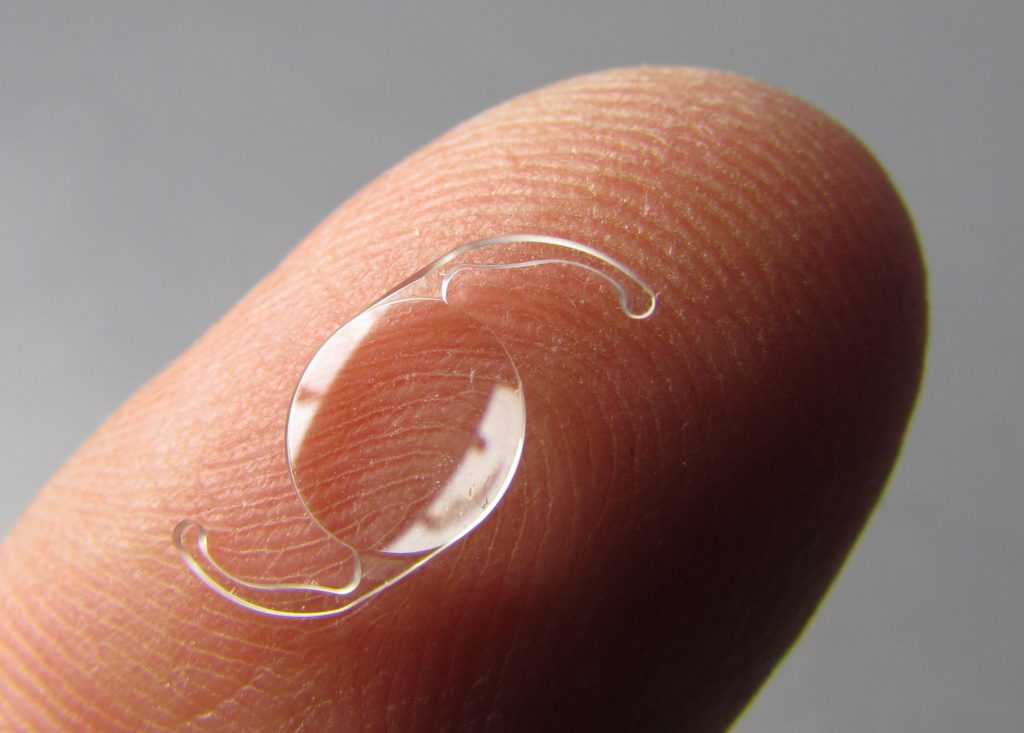
When Medicare covers cataract surgery, it also covers a standard monofocal intraocular lens. In plain terms, that is the basic lens designed to restore vision at one distance (often distance vision). You may still need glasses for other tasks such as reading.
Standard-lens coverage can keep costs lower than some people expect, but what you pay still depends on your deductible status, the 20% coinsurance, where the surgery is performed, and whether you have supplemental coverage.
Why toric and presbyopia lenses cost more
Some lenses are designed to do more than the standard monofocal lens:
- Toric lenses can correct astigmatism.
- Presbyopia-correcting lenses (often described as multifocal or accommodating) are intended to reduce dependence on reading glasses by improving vision at more than one distance.
Medicare generally treats these features as upgrades. In many cases, that means:
- Medicare still covers the portion of the surgery that would have occurred with a standard lens.
- You pay the additional charge for the premium IOL and any related noncovered refractive services or package fees tied to that upgrade.
This is one of those fine-print moments: an upgraded lens can be helpful for your lifestyle, but it is not always covered as a medical necessity in the same way the cataract removal is.
The glasses or contacts benefit
Original Medicare includes a specific benefit many people miss: after cataract surgery with an intraocular lens implant, Medicare helps pay for one pair of eyeglasses with standard frames or one set of contact lenses.
Details that affect what you pay
- This benefit generally applies after each cataract surgery with an intraocular lens implant (so if you have surgery on both eyes at different times, ask how your provider handles the eyewear benefit for each eye).
- Coverage is for basic lenses and standard frames. Premium frames and common upgrades like progressives, premium coatings, or other add-ons can mean an extra out-of-pocket cost.
- It is not an ongoing vision allowance. It is a post-surgery benefit tied to cataract surgery with an implant.
If you have surgery on both eyes, ask your eye care provider about timing so you do not order glasses too early, before your final prescription settles.
It can also help to remember why this benefit stands out: routine eye exams and glasses for general vision correction are usually not covered by Original Medicare. Cataract surgery is one of the exceptions.

What you may pay with Original Medicare
With Original Medicare, your costs often come from three buckets:
- Part B deductible, if you have not met it for the year yet.
- Part B coinsurance, which is typically 20% of the Medicare-approved amount after your deductible (unless you have supplemental coverage that picks up some or all of it).
- Any noncovered upgrade charges, such as presbyopia-correcting or toric lenses, laser refractive add-ons, or premium eyewear options beyond what Medicare considers standard.
Also, do not be surprised by separate bills. Cataract surgery can generate different claims for the surgeon, the facility, and sometimes other related services.
Because pricing and billing can vary by provider and setting, the cleanest way to avoid surprises is to ask for an itemized estimate that separates what is billed to Medicare from what is considered an upgrade you agree to pay.
Medicare Advantage rules
If you have a Medicare Advantage plan, cataract surgery is still a covered Medicare benefit, but your plan can add its own cost and access rules. Two common differences are:
- Network requirements: you may need to use in-network surgeons, facilities, and eyewear providers to get the lowest cost.
- Prior authorization: the plan may require approval before surgery or before certain related services are covered.
Also pay attention to plan-specific copays or coinsurance amounts, and whether your plan has special rules for upgraded lenses or premium packages. Coverage can be similar to Original Medicare, but the steps to get services approved can feel different.

Questions to ask
- Is the surgery being billed as medically necessary under Part B?
- Do you accept Medicare assignment?
- What type of intraocular lens is included in the standard covered amount?
- Is any part of my estimate an upgrade charge (toric, multifocal, premium package fees, laser add-ons)?
- What will my Part B cost sharing be after my deductible and the typical 20% coinsurance?
- How does the post-surgery eyewear benefit work here, and what counts as standard frames and basic lenses?
- If you have Advantage: Is everyone in-network, and do I need prior authorization?
Quick recap
- Yes, Original Medicare typically covers medically necessary cataract surgery under Part B.
- After you meet your Part B deductible, Medicare often pays 80% and you typically pay 20%, unless you have supplemental coverage.
- Medicare generally covers a standard monofocal intraocular lens.
- Toric and presbyopia-correcting lenses are often treated as upgrades, meaning you usually pay the difference.
- After cataract surgery with an implant, Medicare helps cover one pair of eyeglasses with standard frames or one set of contact lenses, generally after each surgery.
- Medicare Advantage plans can add network and prior authorization rules that affect your access and costs.
FAQ
Does Medicare cover cataract surgery on both eyes?
Medicare may cover cataract surgery on each eye when each surgery is medically necessary. Surgeries are usually scheduled separately. Your costs can depend on whether you have met your Part B deductible and what your coinsurance is for each procedure.
Does Medicare pay for laser cataract surgery?
Medicare generally covers medically necessary cataract removal whether it is performed with traditional techniques or with a laser. Where people can get surprised is with the refractive or premium components often marketed alongside laser cataract surgery, such as astigmatism correction, premium IOL packages, and related measurements or services that Medicare may treat as noncovered upgrades. Ask for an itemized breakdown of what is billed to Medicare versus what is optional.
Will Medicare pay for premium frames after cataract surgery?
Medicare’s post-surgery eyewear benefit is commonly limited to standard frames and basic lenses. If you pick premium frames or add-ons, you can owe the difference.
Can a Medigap policy help with cataract surgery costs?
Many people use Medigap to help cover Part B out-of-pocket costs like the 20% coinsurance. Whether it helps, and how much, depends on your specific plan. It generally would not turn a noncovered lens upgrade into a covered expense.