
If your college or career school closed while you were enrolled, you might be able to wipe out some or all of your federal student loans through something called Closed School Discharge. This is one of those programs that sounds too good to be real, but it is very real. And if you qualify, it can remove a huge financial weight without you needing to prove fraud or a disability.
In this guide, I will walk you through which schools qualify, how the timing rules work (including the withdrawal window), what you can expect with refunds, what documentation to gather, what happens with automatic discharge, and what to do if your loans got transferred to a new servicer after the shutdown.

What Closed School Discharge is (and what it is not)
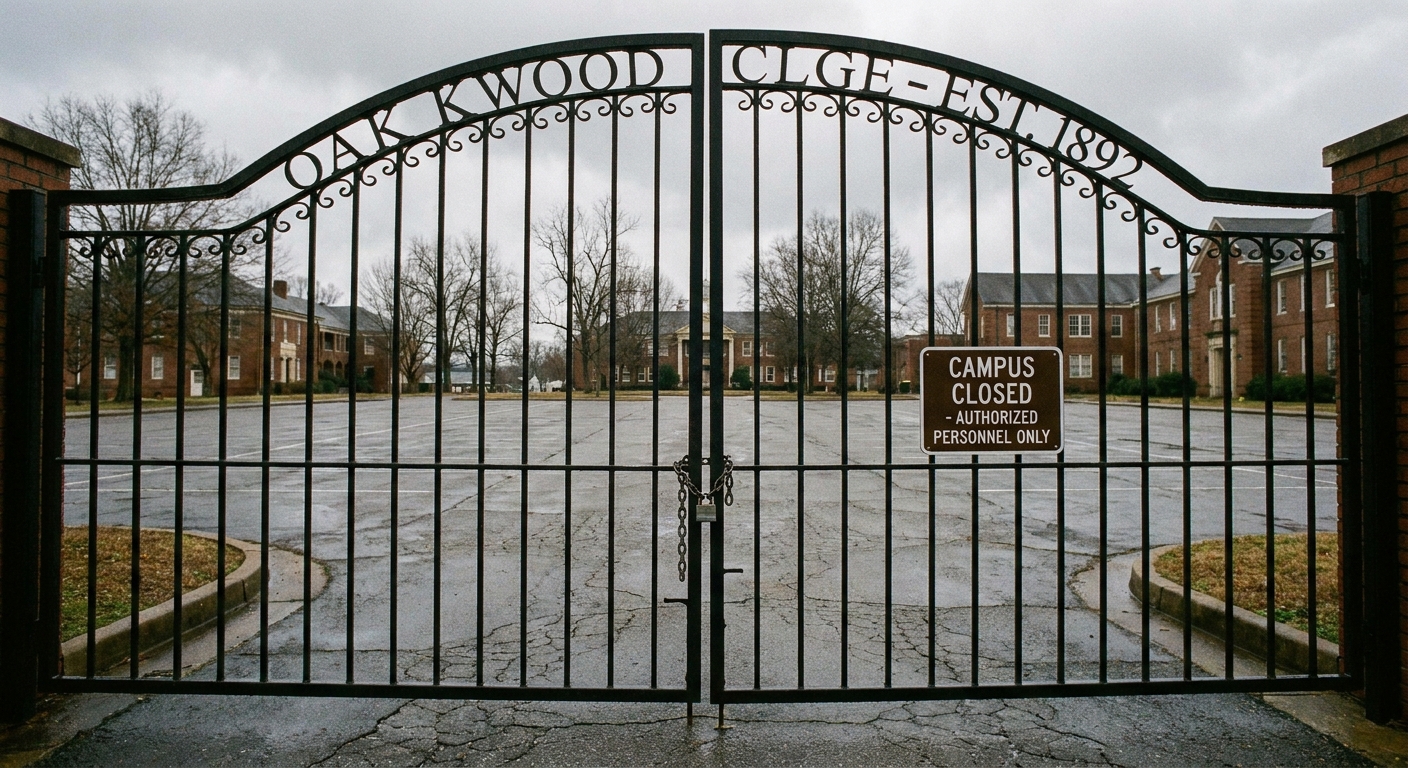
Closed School Discharge is a federal student loan discharge option that can cancel certain federal student loans if your school closed while you were attending or shortly after you left.
It is not the same as other programs
- Not PSLF: You do not need public service employment or 120 qualifying payments.
- Not Borrower Defense: You generally do not need to prove misconduct or misrepresentation to qualify.
- Not TPD: It is not based on disability status.
It is mostly about the school closure and whether you meet the program’s enrollment, withdrawal, and transfer rules.
Automatic discharge: you might not have to apply
Under recent Department of Education rules, many eligible borrowers can receive a closed school discharge automatically if the Department can confirm they qualify.
- Common rule of thumb: If your school closed and you do not re-enroll in another eligible (Title IV) school within a set period, the Department may process an automatic discharge. In many cases that timeline is about one year after the school’s closure.
- Why you still might apply: Applying can help speed things up, especially if your record is messy (servicer changes, unclear last date of attendance, campus closures) or you want to make sure the right loans are targeted.
- Important: If you plan to transfer and complete a comparable program, you may not want an automatic discharge. If you receive a notice about an automatic discharge and you think it would conflict with your plans, read the notice carefully and contact your servicer or FSA.
Bottom line: do not assume you are stuck waiting forever, but also do not assume the system will find you. If you want control and clarity, a manual application is often the cleanest path.
Which loans are eligible
Closed School Discharge is for federal education loans tied to the closed school.
- Direct Loans (Subsidized, Unsubsidized, and Direct PLUS loans): typically eligible if you meet the other rules.
- FFEL Program loans: federally held FFEL loans can be eligible. Commercially held FFEL loans are commonly the problem case and often are not eligible unless you take an additional step (for many borrowers, that step is Direct Consolidation , but confirm your situation before acting).
- Federal Perkins Loans: may qualify in some cases, but Perkins loans can be handled differently because some were school-held or managed outside the main servicer system. If you have Perkins loans, expect extra steps and documentation.
Private student loans are not eligible for Closed School Discharge.
If you are not sure what you have, log in to StudentAid.gov and check your loan list. That site is the easiest “source of truth” for most federal loans.
Quick gut-check: If your loan is listed on StudentAid.gov, it is federal in almost all consumer situations. If it only shows up on a private bank website or a credit report and not on StudentAid.gov, it is likely private or otherwise not a federal Title IV student loan.
Which schools qualify (and how to confirm a closure)
You do not need to hunt down a special “approved list” to apply. What matters is that your school actually closed (or the campus/location you attended closed) and your enrollment timeline lines up with the rules.
That said, the Department of Education and servicers do track official closure dates, and those dates can drive eligibility and automatic discharge decisions.
How to confirm a closure date
- Check official notices from the school, state education agency, or accreditor.
- Review StudentAid.gov and servicer messages for closure references and dates.
- Look for reliable news coverage with the month and year of the closure.
If your situation is a little messy (for example, the school “merged,” your campus closed but the brand still exists elsewhere, or you were in a teach-out), keep reading. Those edge cases often come down to whether you were able to complete your program through a teach-out or transfer.
Eligibility rules that matter most
To qualify, you typically must have been enrolled (or on an approved leave of absence) when the school closed, or you must have withdrawn within the allowed lookback window before the closure.
The withdrawal window (the benchmarks)
The “how long before” piece is where many people get stuck. The lookback window has changed over time. In many cases you will see one of these benchmarks:
- 120 days before the closure date (a common benchmark under older rules).
- 180 days before the closure date (a common benchmark under newer rules, and in some scenarios the Department may apply longer or more flexible timeframes depending on the regulatory era and facts).
If you are not sure which window applies to you, do not guess. Apply (or contact FSA or your servicer) with your last date of attendance and the school’s closure date. Those two dates usually determine the outcome.
Common requirements
- The school closed while you were enrolled, on an approved leave of absence, or you withdrew within the applicable lookback window.
- You did not complete your program at that school.
- You did not complete a “comparable program” through a teach-out or by transferring credits, if that completion makes you ineligible.
Transfer and teach-out rules (the big gotcha)
A lot of borrowers get tripped up here. If your school closed and you:
- Transferred credits and finished a comparable program elsewhere, or
- Completed a teach-out arranged after closure
you may be ineligible for Closed School Discharge for those loans.
What is a “comparable program”? Think “same type of credential, same field, similar outcomes.” For example, moving from one medical assistant certificate program to a teach-out medical assistant certificate program is more likely to be treated as comparable than switching to an unrelated program.
If you are unsure, it can still be worth applying with a clear explanation of what happened and what you did (or did not) complete. Worst case, you get a denial and can evaluate other options like income-driven repayment , a consolidation strategy for certain loan types, or Borrower Defense (if misconduct was involved).
Discharge vs refund
This part matters if you kept paying for months or years after the closure.
What discharge does
- Cancels the remaining eligible loan balance.
- Stops future payments on the discharged loans once processed.
- May remove certain negative credit reporting tied to the discharged loans.
Do you get a refund?
Refund rules are detail-heavy, and this is where people often assume too much. A good working guideline is:
- More likely: refunds of payments made on loans owned by the U.S. Department of Education (common with Direct Loans and some federally held FFEL).
- Less likely: refunds on commercially held FFEL loans. Even if a discharge pathway exists for the balance, refunds are often not handled the same way.
Because refunds can involve multiple servicers and multiple payment periods, treat it like a small audit:
- List the loans you believe should be discharged (loan type, disbursement dates, balances).
- Pull your payment history from your servicer(s).
- Save bank statements for large or unusual payments, just in case.
Important: A refund is not the same thing as the school refunding tuition. Closed School Discharge is about your federal loan. Tuition reimbursement from the school or a state fund is a separate track.
What to gather before you apply
You do not need a mountain of paperwork for every case, but having a small proof packet ready can speed things up and reduce back-and-forth.
Helpful documentation
- Enrollment agreement or acceptance letter
- Unofficial transcript or class schedule showing your last date of attendance
- Financial aid award letter or disbursement records
- School closure notice (email, letter, screenshot of official announcement)
- Teach-out or transfer info, if you were offered one
- Servicer correspondence about the closure or your loans

How to apply
You can apply through the U.S. Department of Education. Start at StudentAid.gov and search for “Closed School Discharge.” If you prefer paper, the Department of Education also provides a printable application in many cases.
Step-by-step
- Log in to StudentAid.gov and confirm the loans associated with the closed school.
- Find the Closed School Discharge application and complete it carefully.
- Upload supporting documents if requested or if your timeline is not obvious.
- Submit and save confirmation (screenshots and emails).
- Continue payments unless and until you receive written confirmation that your loans are in an approved forbearance, payment pause, or otherwise do not require payment while the application is pending.
If you are in repayment right now
Ask your servicer about forbearance while your discharge application is being reviewed. That can prevent you from paying on a loan that may ultimately be discharged. Interest rules vary by loan type and status, so ask what happens to interest while the request is pending.
Timelines
Real-world timelines vary. Processing time depends on factors like how old the loans are, how clear the closure record is, and whether your loans moved between servicers.
Common stages
- Submission received: You get a confirmation or case number.
- Review: The Department of Education and or servicer verifies eligibility.
- Decision: Approved or denied.
- Account updates: Balance changes, credit reporting adjustments, possible refunds.
How to avoid delays
- Make sure your contact info is current on StudentAid.gov and with your servicer.
- Answer document requests quickly.
- Keep a simple log: date, who you spoke with, and what they said.
If your loans moved to a new servicer
This happens a lot. Servicers change for reasons that have nothing to do with your school, and it can make the paperwork trail feel like a scavenger hunt.
What to do
- Use StudentAid.gov as your master list. It will show your current servicer and your federal loan history.
- Pull records from both servicers if you can. Payment history, notices, and forbearance details might live in the old portal.
- Ask the new servicer to confirm they have your full loan file. If something is missing, provide what you have.
- Keep everything in one folder, even if it is just PDFs in Google Drive.
What if you cannot access the old servicer site?
That is normal after a transfer. Call your current servicer and request:
- A complete payment history
- A list of loan status changes (repayment, deferment, forbearance)
- Any messages or notices related to discharge or school closure
If you are hitting a wall, contact the Federal Student Aid Information Center (FSAIC) through StudentAid.gov for guidance on the next best step.
If you already consolidated
This is where people get understandably nervous. Consolidation can change how loans are packaged and tracked. Whether you can get Closed School Discharge after consolidation depends on details like:
- Which underlying loans went into the consolidation
- Whether those underlying loans would have been eligible
- How the Department of Education is treating the consolidation loan in your case
If you consolidated, do not assume you are out of luck. But be prepared to provide extra clarity about which underlying loans are tied to the closed school. Your StudentAid.gov loan breakdown and disbursement history are your best friends here.
Denied? What to do next
A denial does not mean you are stuck forever. It usually means the reviewer believes one of the eligibility rules was not met.
Action steps
- Read the reason for denial carefully and save the letter or email.
- Request reconsideration if you have new documents or if the decision is based on incorrect information.
- Explore other pathways if applicable: Borrower Defense (misrepresentation), income-driven repayment, consolidation planning for certain ineligible loan types, or other discharge options.
If your school closure came with sketchy recruiting or false promises, Closed School Discharge might not be your only option. Borrower Defense has a higher burden of proof, but it can apply when wrongdoing is involved.
If you need to escalate
If your servicer or FSA is unresponsive, you can escalate through official complaint channels. Two common options are the FSA Ombudsman Group and the Consumer Financial Protection Bureau (CFPB) complaint process.
Tax note
Loan discharges can have tax implications. Many federal student loan discharges have been tax-free at the federal level under recent rules, but laws can change and state treatment can differ. If a discharge would be significant for you, consider confirming the current tax treatment with a qualified tax professional or by reviewing current IRS guidance.
Closed School Discharge checklist
If you want the simple version to work from, here is your checklist:
- Confirm your loans are federal on StudentAid.gov.
- Confirm your school (or campus) closed and note the official closure date.
- Check whether you were enrolled at closure or withdrew within the likely lookback window (often 120 or 180 days, depending on timing and rules).
- Gather proof of your last date of attendance.
- Make sure you did not complete a comparable program through a transfer or teach-out (or be ready to explain your situation clearly).
- Decide whether to apply or wait for a possible automatic discharge (applying is often faster and clearer).
- Ask about forbearance while your application is reviewed.
- Track status and keep copies of everything.
Protect yourself from “discharge helpers”
If someone contacts you promising a discharge in exchange for a fee, slow down. You can apply for Closed School Discharge yourself through official channels.
Red flags
- They ask for your FSA ID password.
- They pressure you to act “today only.”
- They guarantee results without seeing your loan details.
If you want help, look for free or low-cost support through legitimate nonprofit credit counseling or your state consumer protection office. For Closed School Discharge specifically, the official application route is usually the cleanest path.
Sources and official next steps
If you want personalized help, your safest next step is to contact your loan servicer or the Federal Student Aid Information Center through StudentAid.gov with your school name, the closure date, and your last date of attendance.