
Getting a medical bill you cannot afford is a special kind of stress. It is not just the number. It is the timing, the confusion, and the fear of what happens if you cannot pay. I have faced bills that felt impossible, too, and I promise you this: you have more leverage and more options than the first statement makes it seem.
This guide walks you through the steps I would take if a big medical bill landed in my mailbox today. We will audit the bill for errors, talk to the billing office, and apply for hospital financial assistance programs, plus a few backup moves if you are still stuck.

First: Don’t panic pay
Goal: Slow the process down so you can confirm what you truly owe.
The worst move is paying a big bill immediately just to make the anxiety stop. Once money leaves your account, it can be harder to negotiate and harder to fix mistakes. Your goal is to slow this down and get clarity.
If you already paid, do not assume you are stuck. You can still ask for a coding review, a rebill to insurance, or whether a refund is possible after corrections.
What to do today
- Open every envelope and portal message and put it in one folder.
- Check the date of service and the provider name. Make sure the bill is actually for you and for the correct visit.
- Look for the word “statement” vs “final bill”. Many early notices are not the final amount after insurance.
- If you have insurance, find the matching Explanation of Benefits (EOB). The EOB is not a bill, but it shows what the insurer says you owe.
If the bill is from a collection agency already, do not ignore it. You can still dispute errors and negotiate, but you want everything in writing from this point forward.
Step 1: Confirm the bill is correct
Goal: Know what you are being charged for, and whether it matches your records and insurance rules.
Medical billing is messy. Errors happen. Sometimes it is a simple duplicate charge. Sometimes it is the wrong coding. Either way, do not negotiate until you know what you are negotiating.
Ask for an itemized bill
Call the billing number and say: “I’d like an itemized bill with all procedure codes and dates of service.” If they can email it through the portal, even better.
Why this matters: a one line bill tells you nothing. An itemized bill lets you spot duplicates, canceled tests, and charges that do not match what happened.
Ask for a billing or coding review
If something looks off, keep it simple and calm:
“Can you request a billing review or coding review for these line items? What documentation supports this code?”
You do not need to accuse anyone. You are asking for clarity.
Match the bill to your EOB (if insured)
- Make sure the provider billed your insurance.
- Confirm the bill reflects insurance adjustments and negotiated rates.
- Check that what you owe matches the EOB’s “patient responsibility.”
If the bill is higher than the EOB, ask the hospital to reprocess it and tell you exactly why the amounts differ.
Common issues to look for
- Duplicate charges for the same medication, lab, or supply.
- Services you did not receive (tests you declined, canceled imaging, etc.).
- Wrong patient or wrong date of service.
- Upcoding (billing for a higher intensity service than the visit you had). If you are unsure, ask what the code means and what notes support it.
- Out of network surprises such as an out of network anesthesiologist at an in network hospital. Depending on the setting and service, the federal No Surprises Act and state rules may limit what you can be billed. If you think this applies, ask the billing office to review it under No Surprises protections.

Step 2: Call and get the right person
Goal: Reach someone who can adjust the balance or walk you through assistance options.
Hospitals often have multiple teams: billing, financial counseling, charity care, and sometimes a separate office for physician groups. The fastest path is getting to someone who can actually change the account.
Use this call script
“Hi, I’m calling about my bill for [date]. I can’t afford the full balance. I want to review it for accuracy and discuss financial assistance or a discount. Who is the best person to speak with?”
Then write down:
- The name of every person you spoke with
- Their department
- The date and time
- Any reference number
This sounds basic, but it is how you avoid repeating your story five times.
Step 3: Negotiate
Goal: Reduce the balance through discounts, corrections, or a settlement you can actually afford.
Negotiating is not begging. It is a normal part of the system. Many hospitals prefer resolving accounts directly with patients rather than placing them with collections.
Ask for a prompt pay or self pay discount
If you can pay a chunk of it (even a small chunk), ask:
- “Is there a self pay discount if I’m uninsured?”
- “Is there a prompt pay discount if I can pay $___ today?”
Even insured patients can sometimes get relief if a deductible makes the bill feel like you are uninsured anyway.
Offer a reasonable settlement amount
If the balance is $5,000 and you can realistically scrape together $1,500, you can say:
“If you can settle the account in full for $1,500, I can pay that today. If not, what is the best discount you can offer?”
Important: ask for written confirmation that the amount is payment in full and that the remaining balance will be adjusted to zero.
Negotiate with facts, not shame
You do not have to share your whole life story. A simple statement works:
“This bill is not affordable with my current income and expenses. I’m trying to resolve it responsibly. What options do you have to reduce it?”
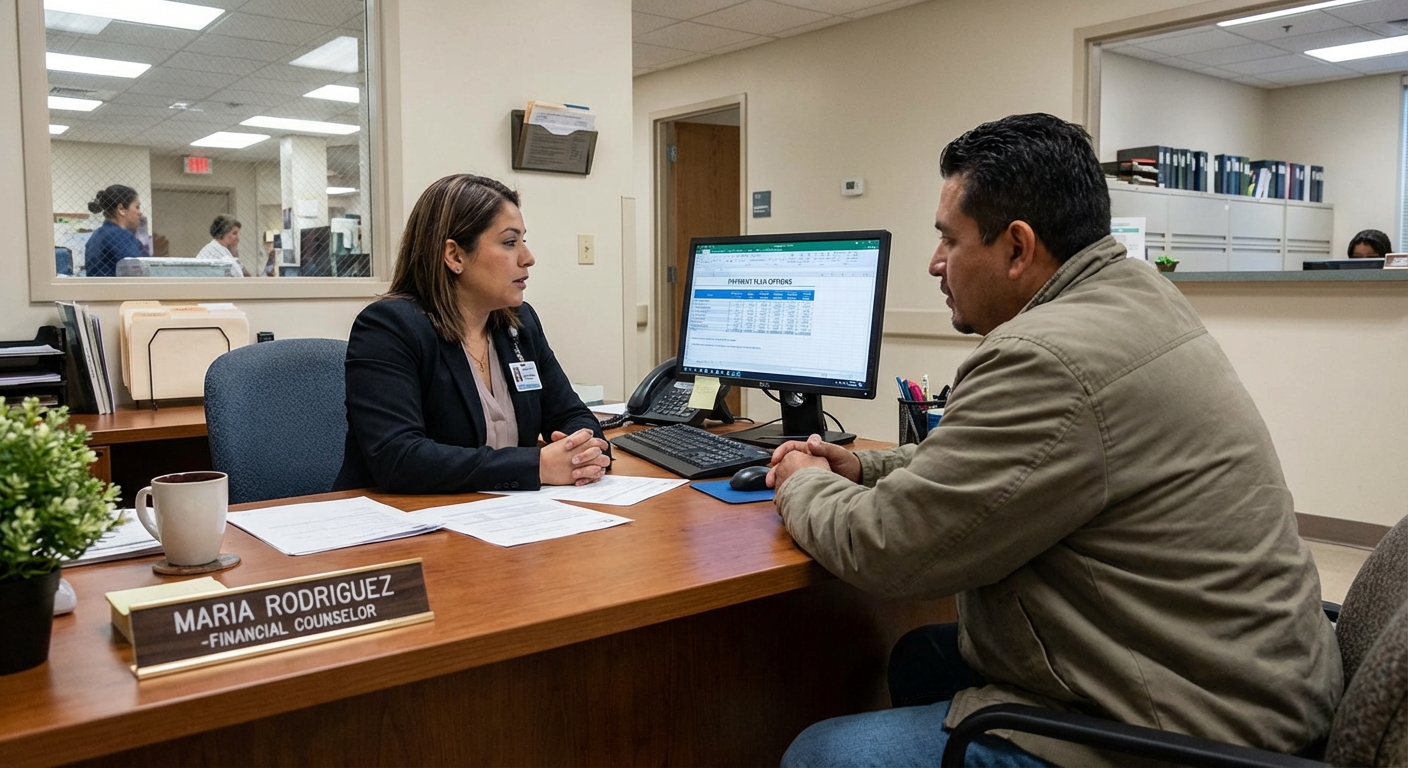
Step 4: Apply for financial assistance
Goal: Get the biggest possible reduction through charity care or hardship programs.
This is the big one, and many people skip it because they assume they will not qualify. Hospital financial assistance programs can reduce bills drastically, sometimes to zero, based on income and circumstances.
Nonprofit hospitals in the US are required to have a financial assistance policy. Many for profit hospitals offer similar programs, too.
Where to find the application
- Search the hospital website for “financial assistance,” “charity care,” or “financial aid policy.”
- Call and ask the billing office to email or mail the application.
- Ask for a financial counselor if the general billing line is not helpful.
What you will usually need
- Recent pay stubs or proof of income
- Last year’s tax return (if you filed)
- Proof of household size
- Proof of residency
- A bank statement or basic expense summary (sometimes)
If your income recently dropped, say so. Many programs can use current income, not last year’s.
Ask for a hold during review
Use this line:
“I’m submitting a financial assistance application. Can you place my account on hold so it does not move to collections while it’s under review?”
Get the hold confirmed in writing if possible.
If you are denied, appeal
Denials happen for missing documents or because they used the wrong income period. Ask what exactly is needed to reconsider. You can also request a copy of the policy and ask how they calculated the decision.
Step 5: Set up a safe payment plan
Goal: Keep the account current without blowing up your budget.
If the bill is valid and you cannot get enough discounted, a payment plan can keep you out of crisis mode.
What a good payment plan looks like
- No interest and no fees (often available, but not guaranteed). Confirm in writing whether interest or fees apply.
- A monthly payment you can actually sustain
- No surprise “balloon” payment after a few months
- Clear terms in writing
Also ask: “Is this plan handled by the hospital, or a third party lender?” If it is a third party, ask what happens if you miss a payment and whether the balance can be sent to collections.
How to choose a monthly amount
My rule: do not build a payment plan that forces you to use a credit card for groceries. Look at your budget and pick a number that still lets you pay rent, utilities, food, and minimum debt payments.
If they push for more, repeat:
“That amount isn’t possible. I can pay $___ per month. If that doesn’t work, I need to apply for financial assistance or discuss a discount.”
Avoid medical credit cards if you can
Some providers steer patients toward financing products that look friendly but can become expensive if you miss promotional terms. A hospital run plan can be safer, but always confirm the terms in writing.
Step 6: If uninsured, check coverage options
Goal: See if insurance can reduce the bill retroactively or protect you going forward.
If you do not have insurance, you may still have options depending on your state, income, and timing.
- Medicaid: Rules vary by state. Some states allow coverage to be applied retroactively (often up to 3 months before the application date) if you would have been eligible during the month of service.
- Marketplace plans: Typically not retroactive, but if you had a qualifying life event you may be able to enroll and protect yourself going forward.
- Hospital presumptive eligibility: Some hospitals can temporarily enroll eligible patients in certain coverage programs.
Ask the financial counselor: “Can someone screen me for Medicaid or any coverage programs that could apply to this date of service?”
Step 7: Know key protections
Goal: Use the rules that are designed to prevent unfair billing.
No Surprises Act basics
The No Surprises Act can limit what you owe in certain situations, like emergency care and some non emergency services at in network facilities when an out of network provider is involved. Protections depend on the setting, the type of service, and sometimes state rules.
If you think a charge qualifies, ask the provider to review the bill under No Surprises rules and tell you what your in network cost sharing amount should be.
Good Faith Estimates (uninsured or self pay)
If you are uninsured or choosing to self pay, you may have the right to a Good Faith Estimate before scheduled care. If you get a bill that is much higher than the estimate, you may be able to use a patient provider dispute process. The details and thresholds can change, so ask the billing office how their Good Faith Estimate process works and what steps to take if the final bill is significantly higher.
Step 8: If collections get involved
Goal: Respond fast, protect your rights, and keep a paper trail.
Ask for validation quickly
Under federal rules, you generally have 30 days after a collector’s first written notice to request debt validation and preserve certain dispute protections. Send your request in writing as soon as possible and keep a copy.
Keep everything in writing
If you negotiate a settlement, get the agreement in writing before paying. Keep proof of payment forever.
Be careful with bank account access
If a collector pressures you for automatic withdrawals, you can choose a safer payment method. You want control over timing and confirmation.
If you are sued, do not ignore it
Statutes of limitations and court rules vary by state. If you receive court papers, consider getting legal advice quickly so you do not miss deadlines.
Timing and credit notes
Goal: Avoid surprises and prioritize the moves that prevent long term damage.
Credit reporting rules for medical debt have changed in recent years and can change again. Some medical collections may not appear immediately, and paid medical collections have been removed under certain credit bureau policies. Because details and thresholds can shift, treat this as a reason to act early, keep accounts from being sent to collections if you can, and check the current rules for the credit bureaus that matter to you.
Quick checklist
- Get organized: bill, itemized bill, EOB, dates, notes.
- Audit for errors: duplicates, wrong codes, services not received.
- Call billing: ask for a financial counselor and options.
- Negotiate: discounts, settlement, prompt pay terms.
- Apply for financial assistance: request a hold during review.
- Set a realistic payment plan: confirm interest and fees, get terms in writing.
- Escalate if needed: appeal denials, request supervisor review.
60 second script
If making the call feels intimidating, here is a short script you can read word for word:
“Hi, I’m calling about my bill for [date]. I can’t afford the full balance. I want an itemized bill, and I’d like to apply for financial assistance or discuss any discounts available. Can you also place the account on hold while we review my options?”
One last thing
Medical bills can overwhelm even solid budgets fast. The win here is taking action before it snowballs. If you want, bookmark this page and tackle one step per day this week. Progress beats perfection, especially with something as stressful as medical debt.