
If you are in the thick of debt payoff, you do not need a “perfect” budget. You need margin. A bare-bones budget is a short-term, everything-but-the-essentials reset that frees up a surprising amount of cash so you can hit your debt hard.
I used versions of this when I was digging out of $60,000 of consumer debt. It is not glamorous, and it is not forever. But it is wildly effective when you need quick wins and faster momentum. (Your results may vary based on income, expenses, and interest rates.)
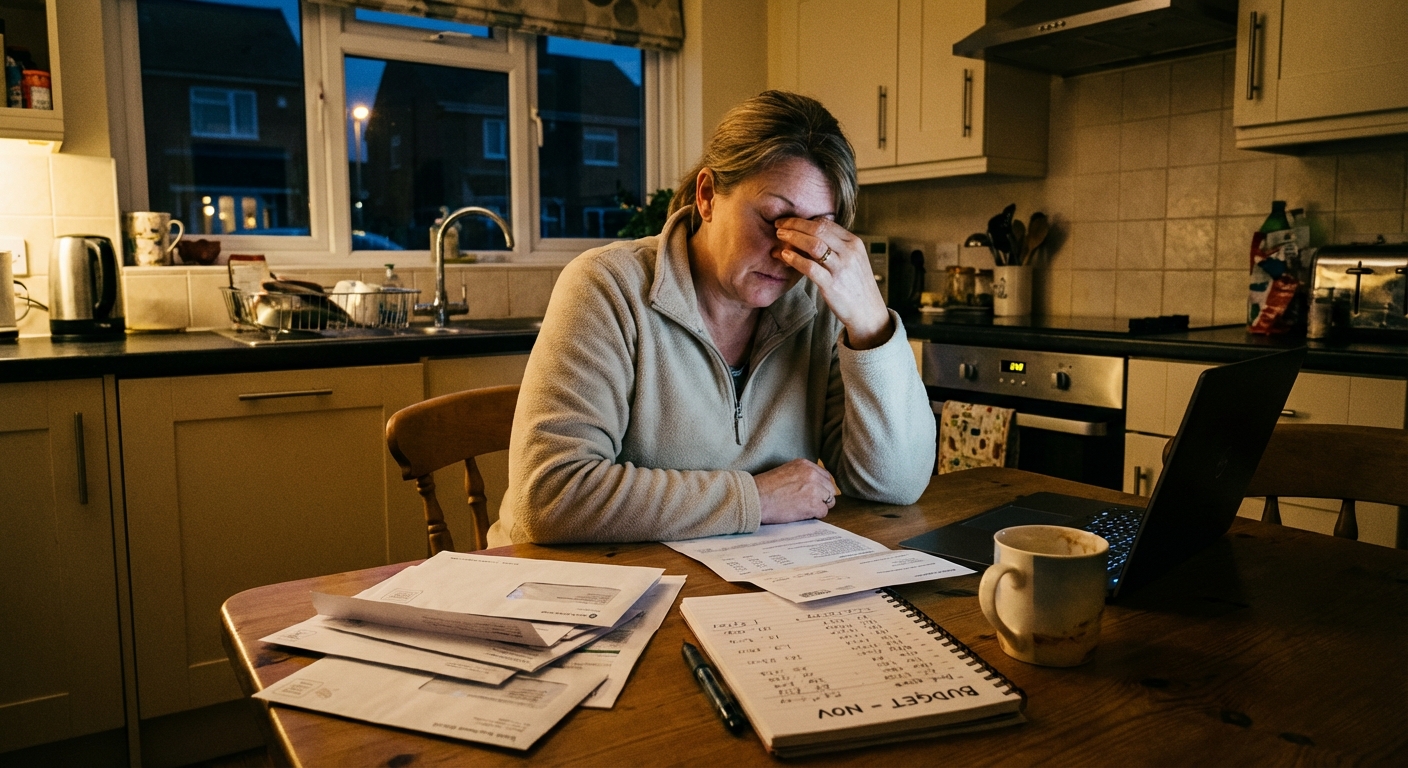
What a bare-bones budget is (and what it is not)
A bare-bones budget is a temporary spending plan that funds only your true needs while you aggressively pay down debt.
It is
- Short-term, often 30 to 90 days
- Laser-focused on essentials and minimum quality of life
- Designed to create extra cash to send to debt every payday
- Built on real numbers from your accounts, not guesses
It is not
- A forever lifestyle
- A punishment for having debt
- A plan that ignores emergencies, medications, or basic sanity
Think of it like wearing a financial “walking boot.” You use it while you heal, then you transition back to normal movement with stronger habits.
Safety note: If “bare-bones” would mean skipping meds, risking housing loss, or letting utilities get shut off, pause. Focus on stabilizing first and look into assistance programs or hardship options.
Step 1: Pick your window and your goal
Before you cut anything, set boundaries. Otherwise, bare-bones budgeting turns into vague misery.
- Choose a time window: 30 days (starter), 60 days (momentum), or 90 days (big results).
- Choose one clear goal: “Pay off Card A,” “Build a $2,000 buffer,” or “Lower my credit utilization (under about 30% is a common benchmark, but lower is better).”
- Choose your payoff method: debt snowball (smallest balance first) or debt avalanche (highest interest rate first). Either works. Consistency is what matters.
If you are stuck, start with 30 days. A month is long enough to see progress and short enough to stay motivated.
Step 2: Audit spending like a detective
This is the part most people skip, then wonder why the budget “doesn’t work.” Your bare-bones plan needs to be based on what you actually spend, not what you hope you spend.
Quick audit checklist
- Pull the last 30 to 60 days of transactions from checking, credit cards, and any payment apps.
- Highlight anything that is recurring: subscriptions, memberships, insurance, car payment, student loans.
- Circle “quiet leaks”: convenience stores, delivery fees, random Amazon orders, in-app purchases.
- Add up spending in three buckets: Needs, Wants, and Maybe.
“Maybe” is the magic category. It includes stuff that feels necessary in the moment, but is negotiable for a season.

Step 3: Define your essentials
Your essentials are the bills that keep you housed, fed, employed, and healthy. Everything else is up for discussion.
Once you define essentials, everything else becomes a lever. That is where the debt payoff momentum comes from.
Typical bare-bones categories
- Housing: rent or mortgage, required HOA fees
- Utilities: electric, gas, water, trash, basic internet (if needed for work)
- Transportation: car payment, fuel, basic maintenance, public transit pass
- Insurance: health, auto, renters or homeowners
- Groceries: planned meals and simple staples
- Medical: prescriptions, necessary appointments
- Minimum debt payments: on every account
- Small starter emergency fund: even $500 to $1,000 can help prevent new debt
Yes, I included a small emergency buffer. A bare-bones budget without any cushion is how people end up swiping the card again the first time life happens.
If you cannot afford minimums: call lenders and ask about hardship plans, rate reductions, or temporary payment options. If you are behind on essentials, prioritize keeping housing, utilities, and transportation stable first.
Step 4: Cut hard, cut smart
The point is to free up maximum cash without breaking your life. Start with the easiest wins that do not require heroic willpower.
High-impact cuts that work fast
- Pause subscriptions (streaming, apps, meal kits, boxes). Keep one if it prevents expensive boredom spending.
- Stop eating out for the window. If you cannot go to zero, set a tiny cap like $25 to $50 per month.
- Switch to planned groceries: simple breakfasts, repeatable lunches, 6 to 10 dinners on rotation.
- Negotiate bills: internet, cell plan, insurance. Ask for promos or re-quote.
- Reduce driving: batch errands, carpool when possible, avoid “just running out.”
- Freeze non-urgent spending: clothes, home decor, gadgets, “little treats.”
Expenses to treat carefully
- Health: do not skip needed care. Look for generic meds, telehealth, or payment plans instead.
- Work tools: if it helps you earn, it stays.
- Childcare: focus on optimizing and using pre-tax options, not risky shortcuts.
If a cut makes you likely to quit the whole plan, it is not a “smart cut.” It is just pain.
Step 5: Build the budget (simple template)
You can do this in any app, a spreadsheet, or on paper. The structure matters more than the tool.
Budget layout
- Income (take-home)
- Essentials total (housing, utilities, food, transportation, insurance, medical)
- Minimum debt payments total (list separately so you do not accidentally bury or double-count them inside “essentials”)
- Irregular bills (optional) (small sinking funds for known non-monthly expenses)
- Starter emergency fund (a monthly amount until you hit your target)
- Debt attack amount = Income minus everything else
Your bare-bones budget is successful when the “debt attack amount” is big enough that you feel it. That is the whole point.
Realistic example (numbers you can copy)
Let’s say your monthly take-home pay is $4,200.
- Housing: $1,450
- Utilities: $250
- Internet and phone: $120
- Insurance: $220
- Transportation (payment, fuel): $450
- Groceries: $450
- Medical: $80
- Minimum debt payments: $380
- Starter emergency fund: $100
Total essential plus minimums: $3,500
Debt attack amount: $4,200 minus $3,500 = $700 per month
That $700 is what you throw at your target debt every month on top of minimums. If you can push that to $900 or $1,100 with extra cuts or extra income, you start seeing balances drop fast.
Step 6: Define day-to-day rules
This is where the plan becomes livable. Write down your rules so you are not renegotiating with yourself every weekend.
Example bare-bones rules
- Groceries only, no delivery apps
- Coffee from home, bring water everywhere
- Entertainment is free or already paid for
- No Amazon browsing unless it is a true replacement item
- Cash envelope or separate debit card for groceries and gas
Rules reduce decision fatigue. Decision fatigue is expensive.

Step 7: Automate the payoff
When I was getting out of debt, the biggest “hack” was not motivation. It was automation.
Set this up once
- Schedule minimum payments on every debt to avoid late fees.
- Schedule your extra payment to your target debt within 24 to 48 hours after payday.
- If you are paid biweekly (26 paychecks a year), schedule the extra payment each payday. Those two “extra” paychecks in a 26-paycheck year can function like bonus debt payments if you apply them on purpose.
If the money sits in checking, it will find a way to disappear. If it leaves quickly, it becomes progress.
Step 8: Protect the plan from real life
Life does not pause because you are budgeting. Build in guardrails so one surprise does not send you back to the credit card.
Guardrails that help
- Starter emergency fund: keep it in a separate savings account.
- Sinking funds (optional): if you know a bill is coming, set aside a small amount weekly.
- One small “sanity line item”: $20 to $50 per month for something that helps you stick with it.
Cash flow matters: line up bill due dates with paydays when you can, or set reminders for partial set-asides so you are not playing overdraft roulette.
A bare-bones budget should feel tight, not fragile.
Retirement investing during bare-bones
This is a common stress point, so here is a simple way to think about it during a temporary window:
- If you get an employer match: consider contributing enough to get the full match, if you can do it without missing essentials or minimum payments. That match is hard to beat.
- If you are not getting a match: it can be reasonable to pause or reduce retirement contributions for 30 to 90 days while you stabilize cash flow and knock out high-interest debt.
- If you are behind on bills or at risk of default: focus on getting current, building a small buffer, and protecting housing and transportation first.
There is no trophy for suffering. The goal is a plan you can follow and sustain.
Common mistakes
- Trying to cut everything at once and burning out in a week.
- Forgetting irregular expenses like car registration, annual subscriptions, or school fees.
- Ignoring food reality. Under-budgeting groceries leads to takeout.
- Not talking to your partner. If one person is “on bare-bones” and the other is not, it gets messy fast.
- No plan for boredom. You will spend money to entertain yourself unless you plan cheap or free alternatives.
How to know it is working
Here are the signs your bare-bones budget is doing its job:
- You can name your monthly debt attack amount without checking an app.
- Your debt balance drops every month, not “most months.”
- You are not relying on credit cards to get through the month.
- You feel more in control, even if it is uncomfortable.
Discomfort is normal. Hopelessness is not. If you feel hopeless, the plan is probably too extreme or too vague.
When to stop and transition back
A bare-bones budget is meant to be temporary. Pick a clear transition point, like:
- One credit card paid off
- $1,000 emergency fund fully funded
- Credit utilization trending down (under about 30% is a common benchmark)
- A specific date, like 60 or 90 days
When you transition back, do it intentionally. Add back a couple categories that matter to you and keep your new debt attack amount as high as you reasonably can. That is how you become a value-spender: you spend on purpose, not by accident.
Quick start: 30 minutes
- Write down take-home income.
- List your essentials and minimum payments.
- Cancel or pause subscriptions right now.
- Set a grocery number you can realistically hit with planned meals.
- Subtract essentials and minimums from income.
- Schedule the extra payment to your target debt after payday.
If you do nothing else today, do step 6. Automated extra payments turn intentions into results.
Smart Cent reminder: You do not need to be perfect to make massive progress. You just need a plan that is clear enough to follow on your worst Tuesday, not your best Monday.