
Groceries are one of those bills that quietly creeps up. A few “quick stops,” a couple convenience items, and suddenly you’re wondering how you spent $240 and still need dinner ideas.
I’ve been there. Back when I was clawing my way out of $60,000 in consumer debt, my grocery budget was one of the first places I looked for quick wins. Not by eating sad meals or skipping food, but by buying with a plan and dodging the store’s little spending traps.
Here are 15 practical, real-life ways to save money on groceries without using coupons. These are the habits that tend to stick because they’re simple and repeatable.
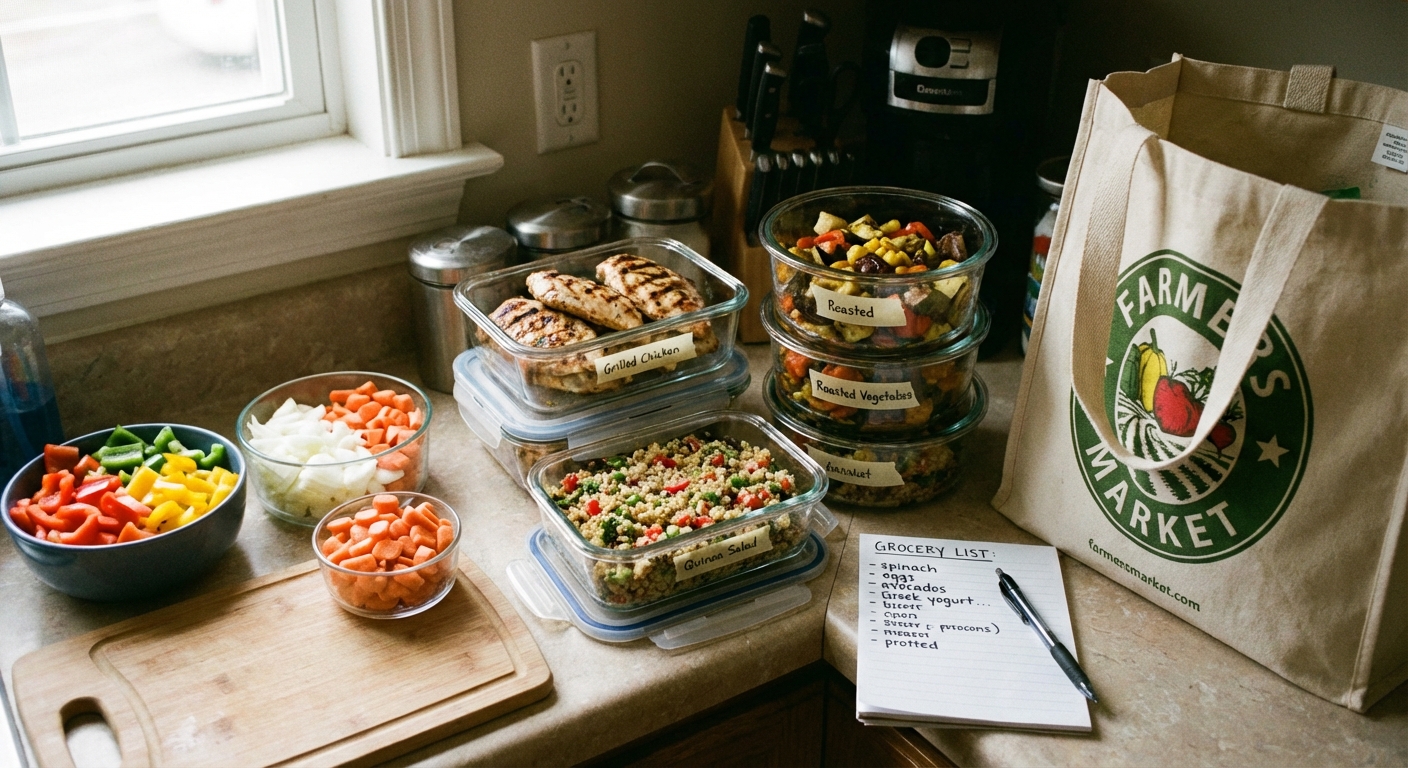
Start with a plan (this is where most savings come from)
1) Build a 10-minute meal plan before you shop
If you want a smaller grocery total, you need fewer “figure it out later” purchases. The easiest approach is a simple weekly meal plan built around what you already have.
- Pick 3 to 5 dinners you know your household will eat.
- Plan for leftovers (two dinners that become two lunches can save a surprising amount).
- Choose overlapping ingredients so you’re not buying one-off items that expire.
My rule: if a recipe needs five specialty items I’ll only use once, it’s a “not this week.”
2) Shop your fridge, freezer, and pantry first
This sounds obvious, but it’s a huge money saver. Before you write your list, do a 2-minute scan:
- What produce needs to be used in the next 2 to 3 days?
- What protein is hiding in the freezer?
- Do you already have rice, pasta, beans, tortillas, broth, or frozen veggies?
Then build meals around those items. This single habit cuts food waste, and food waste is basically you throwing cash away in slow motion.
Quick example: Half a bag of spinach + frozen chicken + pasta can turn into a simple garlic parmesan pasta night, and leftovers become lunch the next day.
3) Use a baseline list so you stop forgetting things
A baseline list is a reusable checklist of what you usually buy: eggs, oats, coffee, yogurt, fruit, lunch items, dish soap, and so on. When you have a baseline list, you avoid the expensive “I forgot, so now I have to run back” extra trip.
Extra trips are where budgets get blown because you’re shopping without a plan.
4) Set a weekly grocery number before you enter the store
Not a vague goal. A number. Example: “We’re spending $135 this week.”
Then keep a running tally on your phone’s calculator as you shop. You don’t need perfection. Even a rough estimate changes your choices in real time.
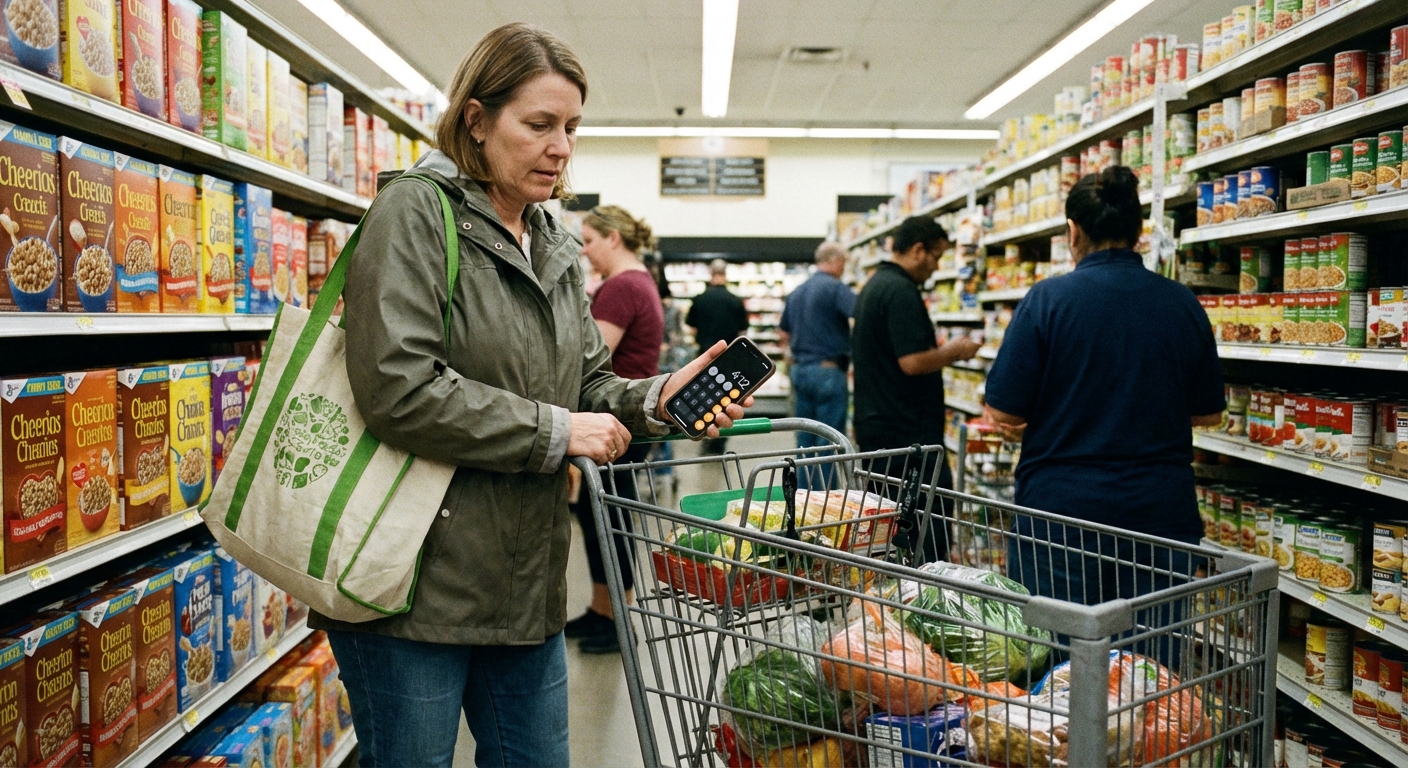
Shop smarter inside the store
5) Buy fewer snacks and more ingredients
Snack food is convenient, tasty, and usually the least cost-effective part of the cart. One of the fastest ways to cut your total is to buy ingredients that can become snacks:
- Popcorn kernels instead of boxed snack packs
- Greek yogurt and frozen fruit instead of single-serve parfaits
- Cheese blocks and crackers instead of pre-made snack kits
- Apples, bananas, oranges instead of “healthy” packaged bars
You still get snacks. You just stop paying the “someone portioned this for me” tax.
6) Avoid pre-cut produce and pre-made meals when you can
Pre-cut fruit, chopped onions, spiralized veggies, deli sides, and heat-and-eat meals can be lifesavers on a chaotic week. But as regular purchases, they’re expensive.
If you want the savings without losing convenience, do this:
- Buy whole produce and batch chop once, right after you get home.
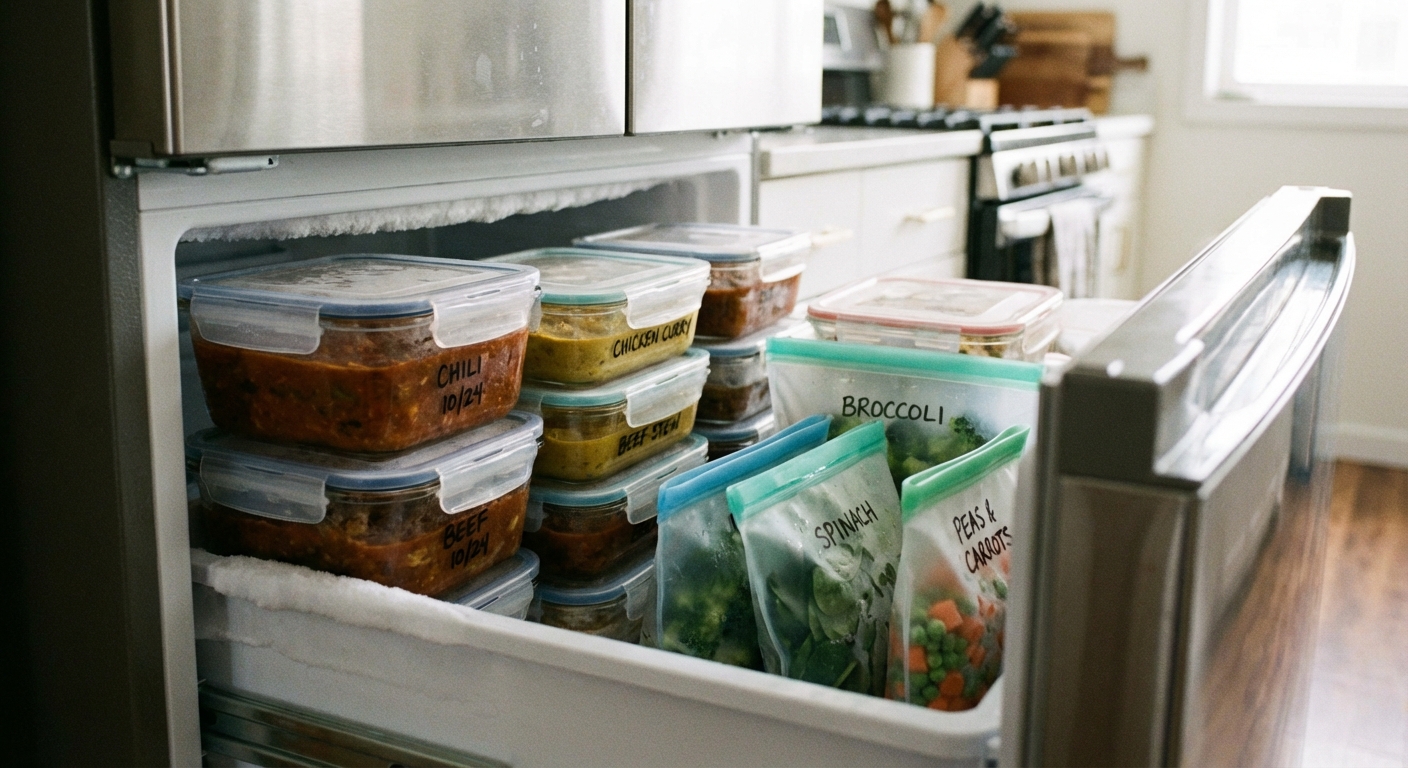
- Cook double portions and freeze your own heat-and-eat meals.
7) Use the unit price label, not the big price
Shelf tags usually show a unit price like “$0.12/oz” or “$0.24 per count.” That tiny number is what makes comparing easier.
Common surprises:
- Bigger isn’t always cheaper, especially on name brands.
- Family packs are only a deal if you’ll use them before they go bad.
- Store brands often win on unit price, but not always.
Quick caveat: Promotions (like BOGO or loyalty pricing) and different “per unit” formats can complicate comparisons, so do a quick sanity check when something looks too good (or too weird) to be true.
8) Choose one or two budget proteins each week
Protein is often the most expensive part of the grocery bill. Instead of buying five different meats, pick one or two budget-friendly proteins and build multiple meals around them.
- Chicken thighs
- Eggs
- Canned tuna or salmon
- Beans and lentils
- Ground turkey when it’s priced well
- Pork shoulder or pork loin (great for leftovers)
This reduces waste and keeps the plan simple.
9) Buy store brand on the boring basics
Store brands have come a long way. I keep name brands for a few make-or-break items, but I go generic on basics like:
- Rice, pasta, oats
- Canned beans and tomatoes
- Frozen vegetables
- Milk, eggs, butter (compare prices and quality)
- Flour, sugar, spices you use often
If you switch just five items to store brand, you’ll feel it in your total.
10) Shop the perimeter with intention, then hit the aisles with a list
You’ve probably heard “shop the perimeter.” It’s decent advice, but the key is intention. The perimeter has expensive traps too.
- In produce: focus on versatile items you’ll actually use.
- In meat: buy what matches your meal plan, not what looks good.
- In dairy: avoid grabbing extras just because they sound nice.
Then go to the aisles and buy only what’s on the list.
11) Don’t shop hungry, rushed, or with no time buffer
When you’re hungry and rushed, you buy convenience. Convenience is expensive. If you can, eat a snack before you go and give yourself 15 extra minutes so you’re not tossing things in the cart to just be done.
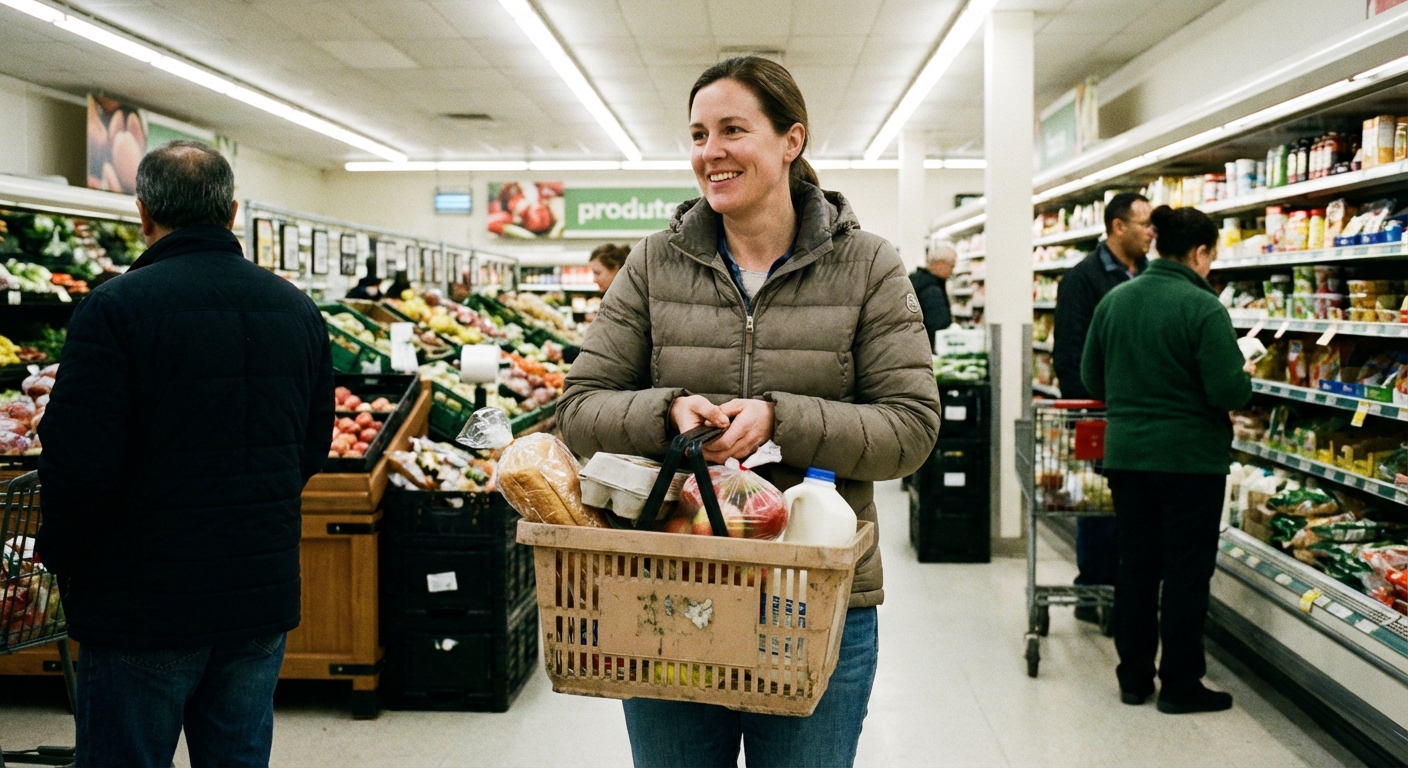
12) Use smaller baskets and fewer just-in-case items
Big carts make big purchases feel normal. If you’re doing a small run, use a basket. If you’re doing a full shop, try a simple one-backup-max rule for pantry items.
Example: if you already have one jar of peanut butter at home, you don’t need three more unless you have a real reason.
Bulk buying and stocking up without overbuying
13) Buy in bulk only for items you can price-lock and actually use
Bulk buying is powerful, but only when it reduces your cost per use and doesn’t create waste. The best bulk buys are the things you consistently use and that store well:
- Rice, oats, pasta
- Beans and lentils
- Frozen fruits and vegetables
- Meat you can portion and freeze
- Toilet paper and basic household staples (when it makes sense)
Skip bulk on items that expire quickly or that your household is meh about.
14) Portion and freeze immediately to prevent mystery freezer waste
If you buy a family pack of chicken or ground meat, portion it the day you get home. Label it with the date using masking tape. This is one of those small habits that makes bulk buying actually work.
When you don’t portion, it’s easy to end up with a frozen brick that never gets used.
Quick food safety note: Freeze things promptly, thaw in the fridge when you can, and when in doubt, follow USDA storage and thawing guidance for your specific item.
15) Keep two emergency meals stocked to avoid pricey takeout
This is my favorite no-coupon hack because it saves money indirectly. When you have nothing for dinner, the grocery bill isn’t the problem. The last-minute takeout is.
Keep two emergency meals stocked at all times:
- Freezer meal: frozen stir-fry veggies + protein + a sauce you like
- Pantry meal: pasta + jar sauce + canned beans or tuna
When life happens, you still eat at home without needing a perfect plan.
Common supermarket money traps
Watch out for these sneaky budget-busters
- Endcaps: they look like deals, but they’re often just featured items.
- Eye-level shelves: the priciest brands get the prime real estate.
- Checkout lanes: the small add-ons can add up fast.
- Seasonal displays: fun, but rarely essential.
A simple rule I use: if it’s not on the list, it needs a really good reason to come home with me.
A simple weekly grocery routine
If you want a repeatable system, here’s the routine I use when I want to keep spending tight without feeling deprived:
- Friday: 10-minute pantry and freezer check.
- Saturday morning: pick 3 to 5 dinners, build the list.
- At the store: calculator tally and list-only aisles.
- After shopping: wash produce and portion protein right away.
None of it is fancy. It’s just consistent.
Mini meal plan example
If you want a plug-and-play version, here’s a simple 5-dinner setup built around overlapping ingredients:
- Tacos: ground turkey (or beans), tortillas, cheese, salsa
- Stir-fry: frozen veggies, rice, eggs or chicken
- Pasta night: pasta, jar sauce, spinach, sausage or white beans
- Sheet pan dinner: chicken thighs, potatoes, carrots
- Breakfast for dinner: eggs, toast, fruit
List basics: tortillas, rice, pasta, jar sauce, salsa, cheese, spinach, frozen stir-fry veggies, potatoes, carrots, fruit, eggs, plus your chosen proteins.
Notice how the same core items show up more than once. That’s where the savings come from.
Quick FAQ
Can I really save money without coupons?
Yes. Coupons can help, but for many households the biggest savings come from planning ahead, avoiding waste, and buying fewer convenience items. Those wins stack every week.
And just to be clear: loyalty pricing or store-member pricing isn’t the same thing as clipping coupons, so it still fits the no-coupon approach if you choose to use it.
What if I don’t have time to meal plan?
Keep it ultra simple. Rotate the same 10 to 12 dinners and swap proteins or veggies based on what you already have. The goal isn’t creativity. The goal is fewer unplanned purchases.
What is a realistic amount to cut from my grocery bill?
It depends on your starting point, but if you currently shop without a list and buy a lot of convenience food, many people can trim 10% to 25% in the first month just by planning, reducing extra trips, and using what they already have. Treat it like a range, not a guarantee.
Bottom line
You don’t need a binder of coupons to lower your grocery bill. You need a plan, a short list, and a few habits that keep you from paying for convenience you didn’t even want that much.
If you try just three changes this week, start with: meal plan for 10 minutes, shop your pantry first, and track your total as you go. Those three are the foundation of everything else.